How Easy It is For a New Disease to Sneak into the US

A new Spotted fever was seen in 2018 and 2019 in the United States in 3 dogs which had fever and hematological abnormalities; blood samples contained Rickettsia reactive antibody and Rickettsia DNA sequences by PCR amplification. These dogs came from 3 separate states: Tennessee, Illinois (signs developed 3 days after returning from a tick-infested area in Arkansas), and Oklahoma. The tickborne Rickettsia parkeri, R. philipii (Rickettsia 364D), and R. rickettsii cause Rocky Mountain spotted fever (RMSF), human spotted fever group (SFG) rickettsioses (mortality as high as 30% without treatment, but historically, a death rate as high as 80%; however, with doxycycline treatment, that rate drops to 0.5 %). R. rickettsii is the only known cause of SFG rickettsiosis in dogs. SFG Rickettsia seroprevalence is high in dogs in the United States and Mexico. In this study, they examined 3 genes (gltA, htrA, and ompA) and 2 intergenic spacer regions (23S-5S and mmpA-purC) in Rickettsia sp. by PCR. These targetted genes of Rickettsia were 100% identical in the 3 dogs. Multilocus genetic analysis placed this new Rickettsia sp. in a clade among SFG Rickettsia between human pathogens R. heilongjiangensis and R. massiliae. They failed to culture and isolate the new Rickettsia sp. from whole blood. The tick species, in these cases, were not identified, but ticks common to the states involved include Amblyomma americanum, Dermacentor variabilis, and Rhipicephalus sanguineus sensu lato, all of which are known to transmit Rickettsia. Haemophysalis longicornis, an invasive tick species recently found in the United States, including in Tennessee and Arkansas, may also be a possible vector of Rickettsia spp. Wilson JM, Breitschwerdt EB, Juhasz NB, Marr HS, de Brito Galvão JF, Pratt CL, et al. Novel Rickettsia species infecting dogs, United States. Emerg Infect Dis. 2020 Dec. https://doi.org/10.3201/eid2612.200272. The appearance of a new tick-borne spotted fever in dogs should not be unexpected; we have seen this before.

Flinders Island Spotted Fever, caused by Rickettsia honei, first discovered on Flinders Island Australia, is transmitted by Aponomma hydrosauri (a reptile-associated tick, now Bothriocroton hydrosauri). It was first identified on Flinders Island in 1991 by Dr Robert Stewart, who suspected the clinical symptoms of his human patients indicated a rickettsial infection. Symptoms included fever, headache, myalgia, a mild cough, and a maculopapular rash. Serological analysis, including the Weil-Felix agglutination and rickettsial-specific immunofluorescence tests, indicated a member of the Spotted Fever Group (SFG) was responsible for the disease. The reptilian vertebrate hosts for the tick on Flinders Island are tiger snakes (Notechis scutatus), copperhead snakes (Austrelaps superbus), and blue tongue lizards (Tiliqua nigrolutea). In 1998, a similar, if not identical, rickettsia was found in ticks in South Texas. In 2008, our entomologists at Brooks, also found the rickettsia in Amblyomma cajennense ticks co-infected with Coxiella burnetii (Q Fever). R. honei has been found in Ixodes and Rhipicephalus ticks in Asia and in Amblyomma cajennense, as we observed, in North America. Its worldwide spread is hard to explain.

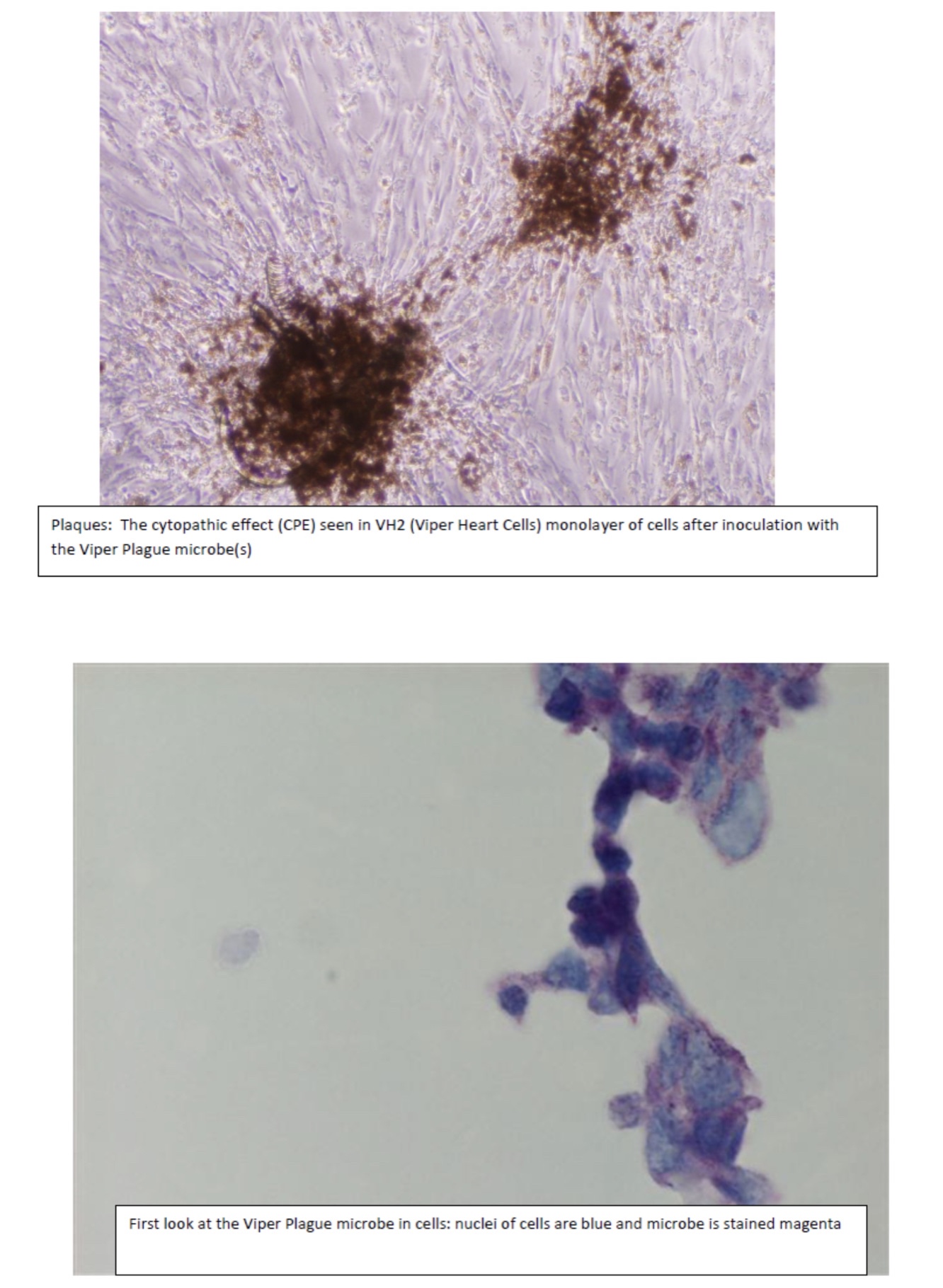
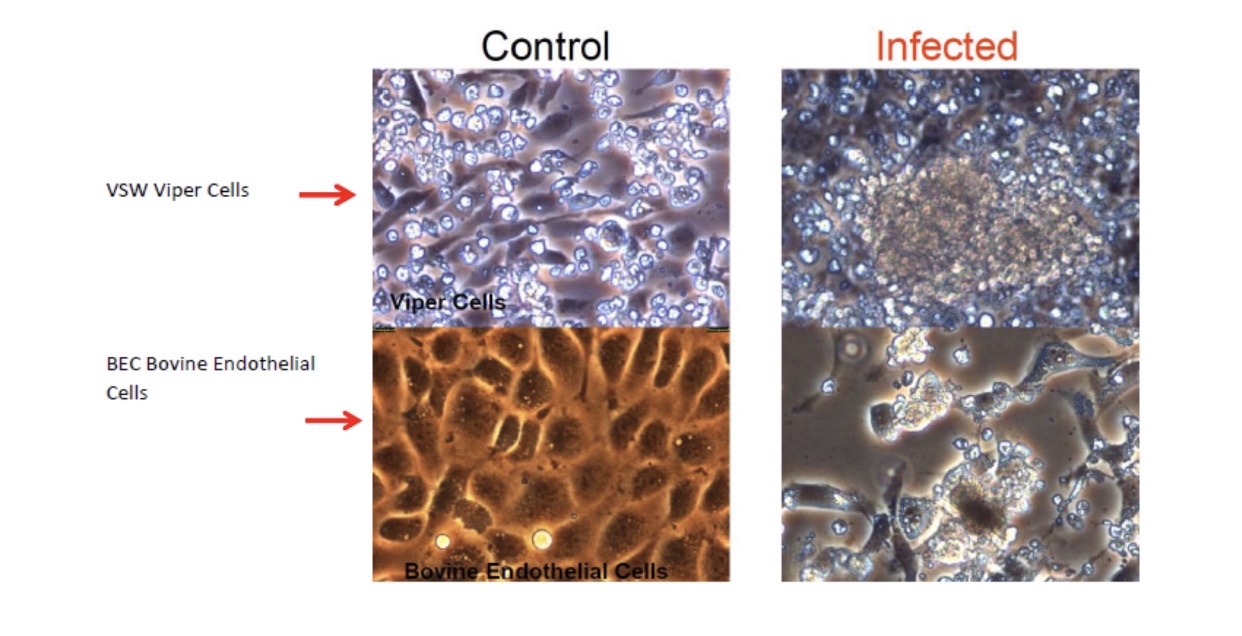
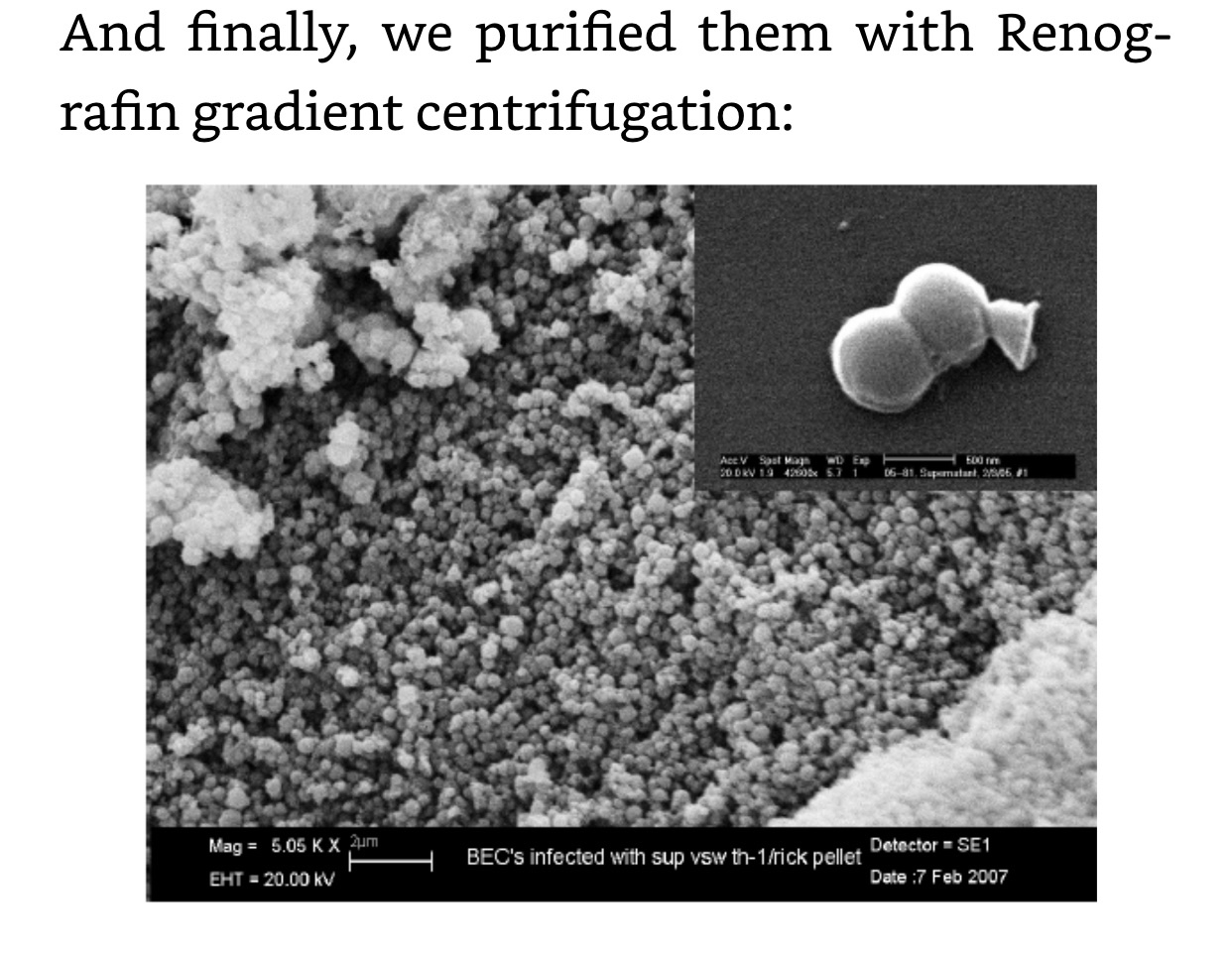
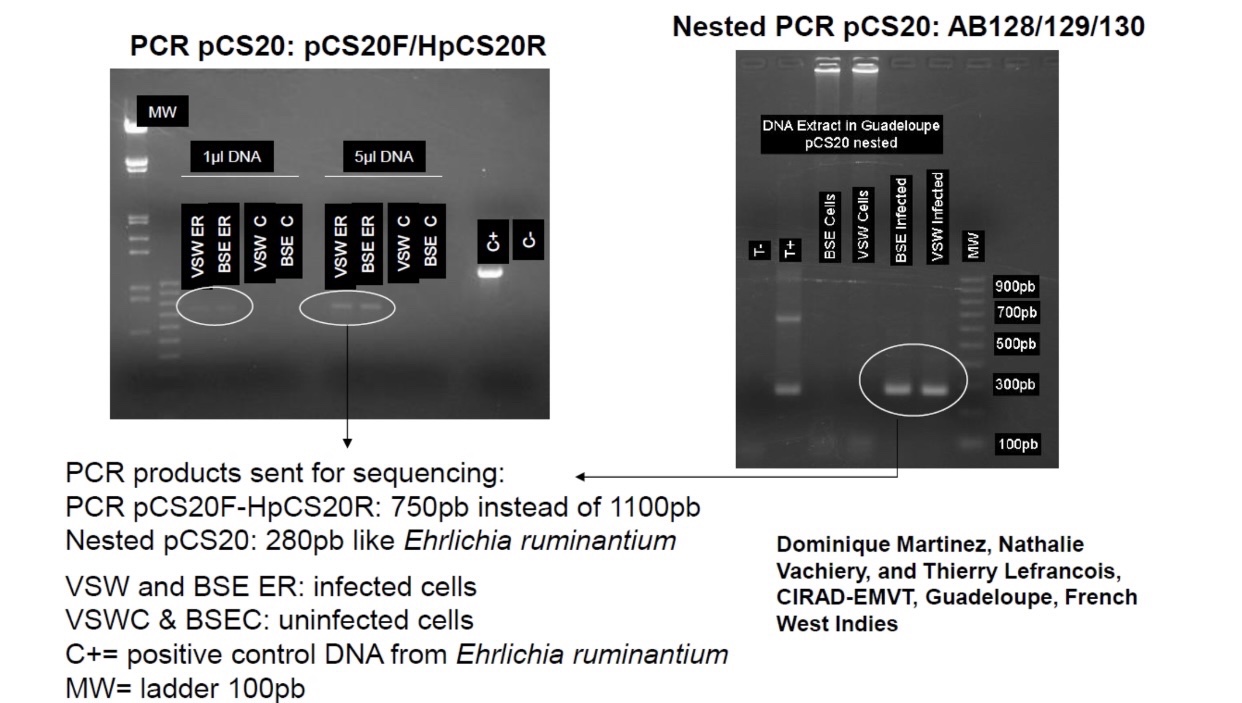
A Spotted fever type Rickettsia from Ghana, West Africa, entered the US in ticks and imported snakes through Florida in 2002. The disease was associated with the Gulf Coast Tick, Amblyomma maculatum, introduced into a snake collection after importation, and the imported Snake Tick Aponomma latum, on the premises. The latter is the most common tick parasite of large snakes in most of sub-Saharan Africa and in the pet trade worldwide. It frequently arrives in the USA on imported pet pythons especially from West African countries such as Ghana. After many snakes died, the outbreak was finally stopped by tick control on the snakes and premises and tetracycline treatment of snakes in prodromal or asymptomatic phases of the disease (otherwise it was 100% lethal after neurological signs appeared even with treatment). Its responses to tetracycline and our inability to consistently culture any free-living microbes from the blood and tissues of acute cases supported it being a Rickettsia or Ehrlichia. Various Rickettsia, Ehrlichia ruminantium (cause of Heartwater), and Orientia tsutsugamushi (cause of Scrub Typhus) target vascular endothelium (Heartwater especially targets brain endothelium) as their main tissue to be infected as did Viper Plague. It was isolated, by blind passage for 4 years, from the livers of snakes, and cultured and isolated in snake and turtle cell lines, and then, the isolates were used to infect various other mammalian cell lines, including mouse, human, and bovine. Because of clinical signs of accumulated peritoneal straw-colored fluid, pneumonitis, gastroenteritis, neurological signs, seizures and sudden death as well as a positive PCR for the genetic marker, it was assumed to be an aberrant Heartwater. The putative causative agent was isolated in viper cells and propagated in turtle cells, but also infected bovine endothelial cells, and human cells (HeLa) as well.

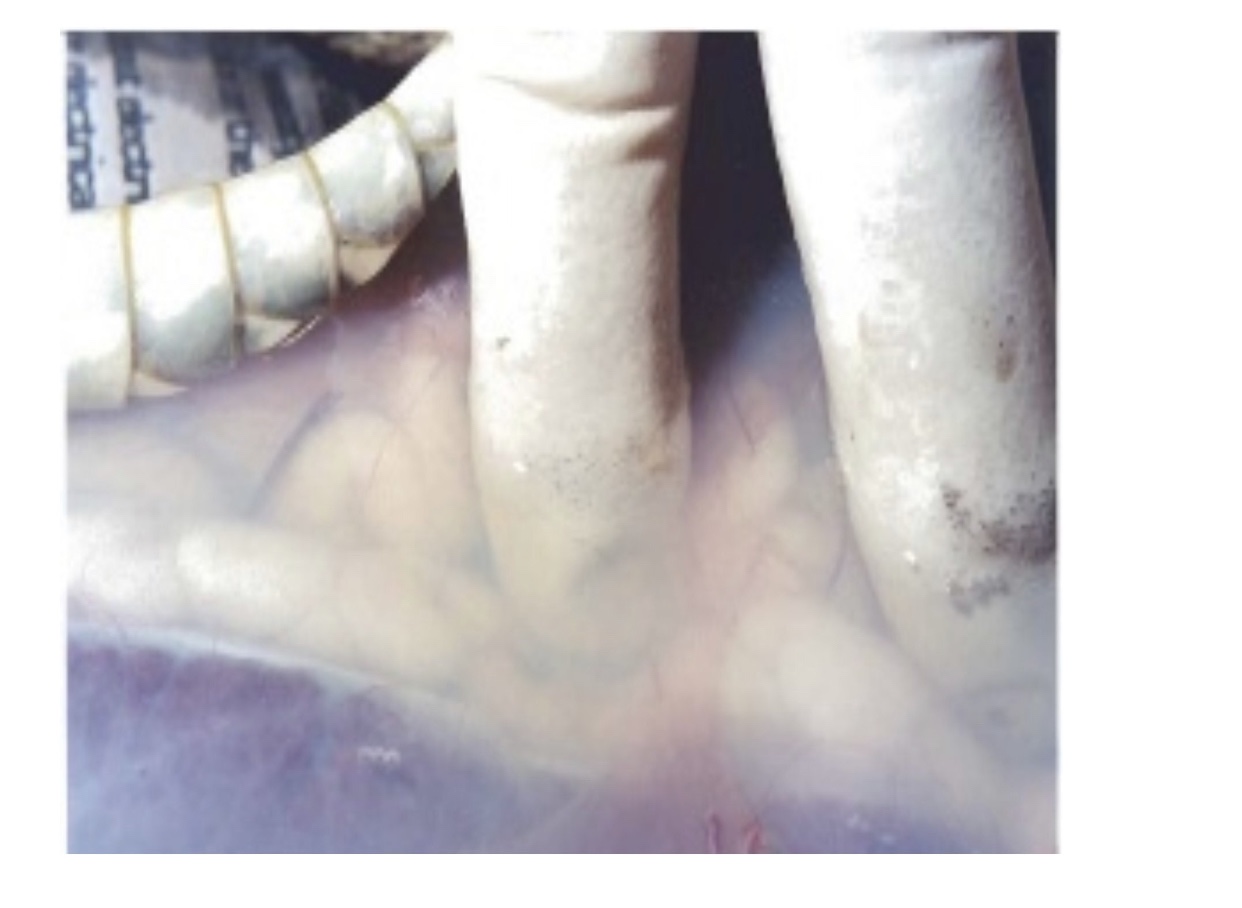
Abundant body-cavity fluid accumulation seen with Viper Plague rickettsiosis
Comparing cytopathic effects of the Viper Plague Spotted Fever Rickettsia in spleen viper cells and bovine endothelial cells
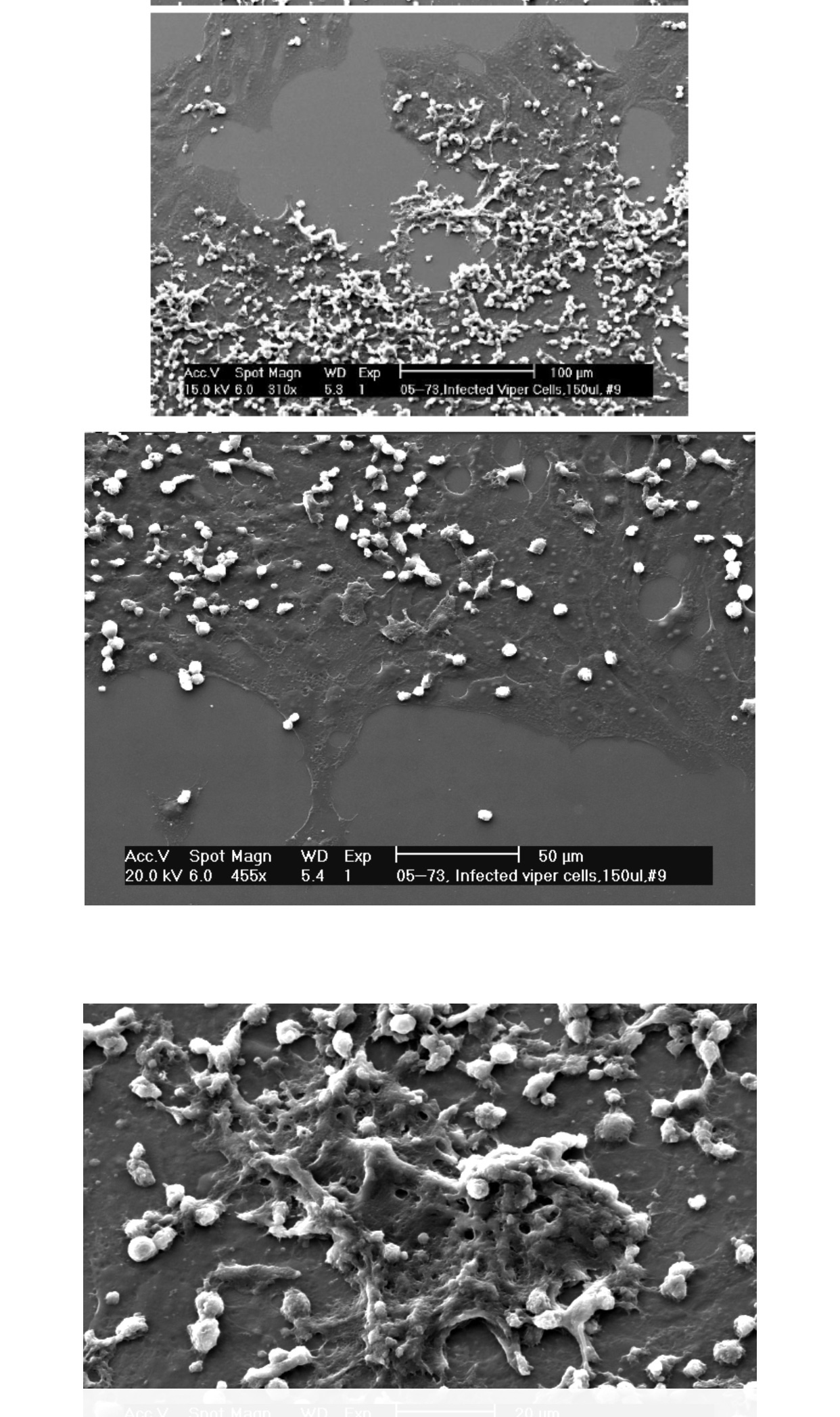
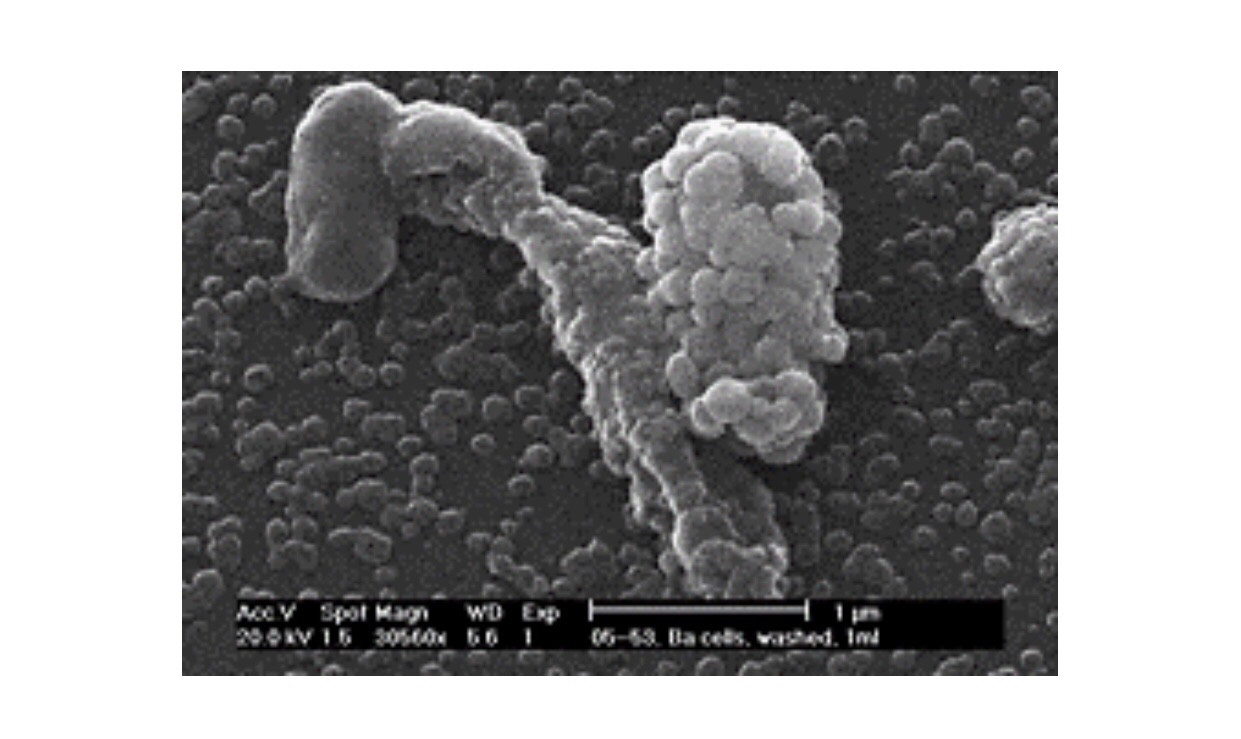
Scanning electron micrographs, at a series of magnifications, of the Viper Plague Rickettsia (white)
The piece of the pCS20 was not a normal size and could not be completely sequenced. Something was seriously wrong. We started to suspect we had “a horse of a different color”. Could this be a completely different organism of a different genus which had acquired the pCS20 genetic marker? We decided to do something completely off the wall and out of the box: we tested a group specific antibody against spotted fever and typhus groups against this microbe to see if it was a Rickettsia of the spotted fever group like Flinders Island spotted Fever or not.

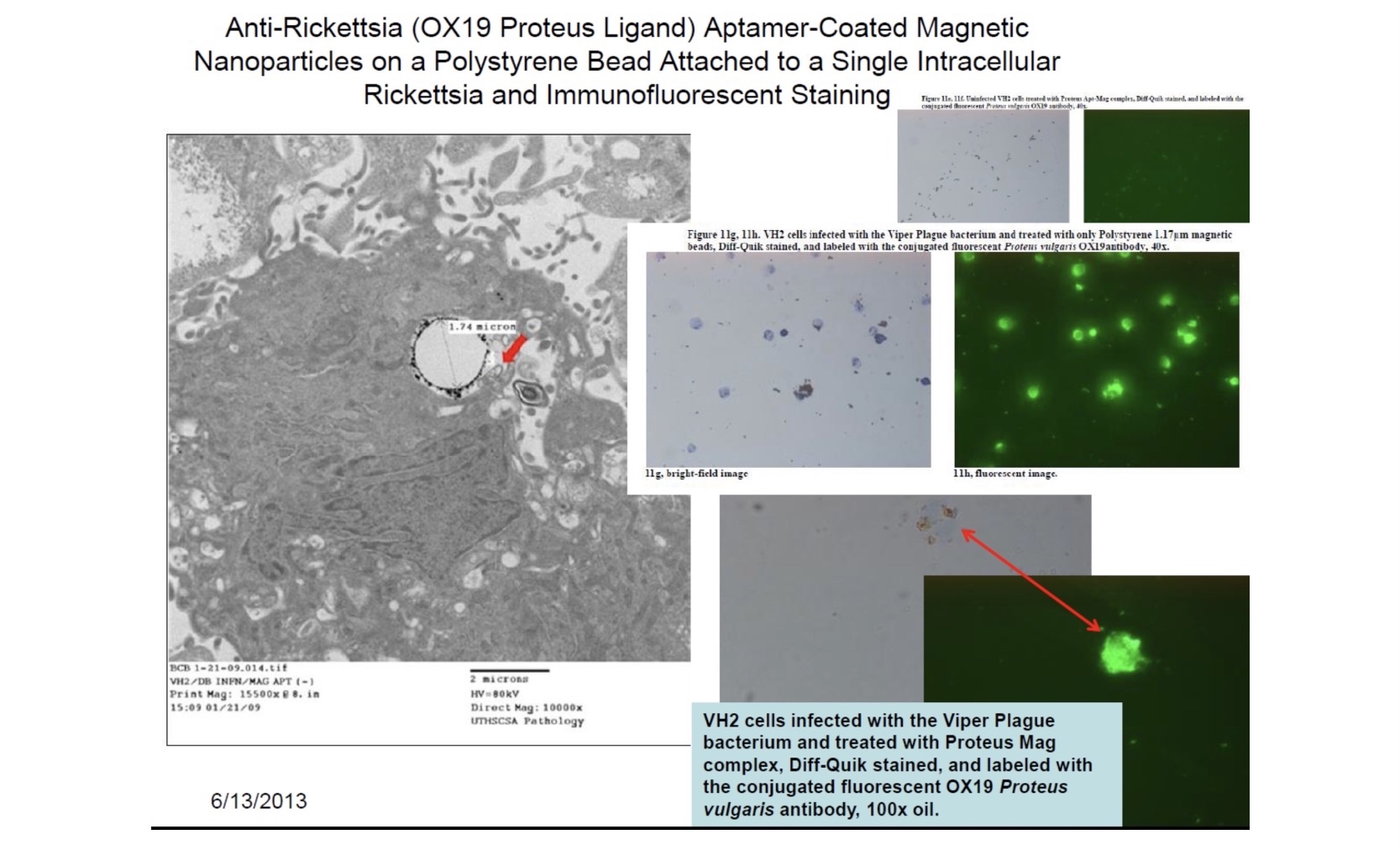
The Heartwater agent is of such concern that it is forbidden, even for research purposes, to be maintained on the US mainland. Snakes belonging to Viperid, Colubrid and Elapid families succumbed to this new disease from July 2002-February 2003 in a private collection into which the snakes imported from Africa through Florida were introduced along with the ticks they carried. However, in spite of being intermingled in the collection, no western diamond-backed rattlesnakes (Crotalus atrox) showed signs of infection or died. This agent(s) may have already appeared in the US as a zoonosis combined with or diagnosed as Q Fever (MMWR, September 1, 1978, V o l. 27, No. 3, 5 May 25, 1978, New York State, the Suffolk County Department of Health Services). During this 1978 outbreak, a total of 11 persons became symptomatic. All were involved in unpacking and de-ticking (Amblyomma nuttalli, Aponomma latum, and Aponomma flavomaculatum) or came in contact with a shipment of 500 ball pythons (Python regius), imported on May 3 from Accra, Ghana. The vipers, which were involved with the 2002 outbreak, were shipped to Florida from Ghana along with ball pythons (some may have been co-mingled in transport bags) from the same vendor(s). Characteristic lesions of abundant straw-colored fluid in the common body cavity, inflammation with abundant mucus in the lungs and intestines, and accompanying diarrhea as well as per acute deaths in many cases with little or no signs beforehand were observed. This unknown Rickettsia tested positive with antibody against the OX19 Proteus vulgaris antigen, the same antigen used in the Weil–Felix Test. This test uses antibody against the OX19 antigen of the Gram-negative, free-living bacterium Proteus vulgaris which cross reacts with spotted fever and typhus groups of Rickettsia. It was the first serological test for the diagnosis of these rickettsial diseases (Edmund Weil and Arthur Felix in 1916). As I have already stated, emerging spotted fever group Rickettsia has already been seen as a zoonosis from reptiles, so except for the unusual genetics, this result should not have been a surprise. What was a surprise was that a Rickettsia could have appropriated genetic material from an Ehrlichia, probably co-infecting the same ticks. Species lines in these types of microbes have become very blurred. We were just very lucky that this worked because overall sensitivity can be as low as 33% and specificity as low as 46%.
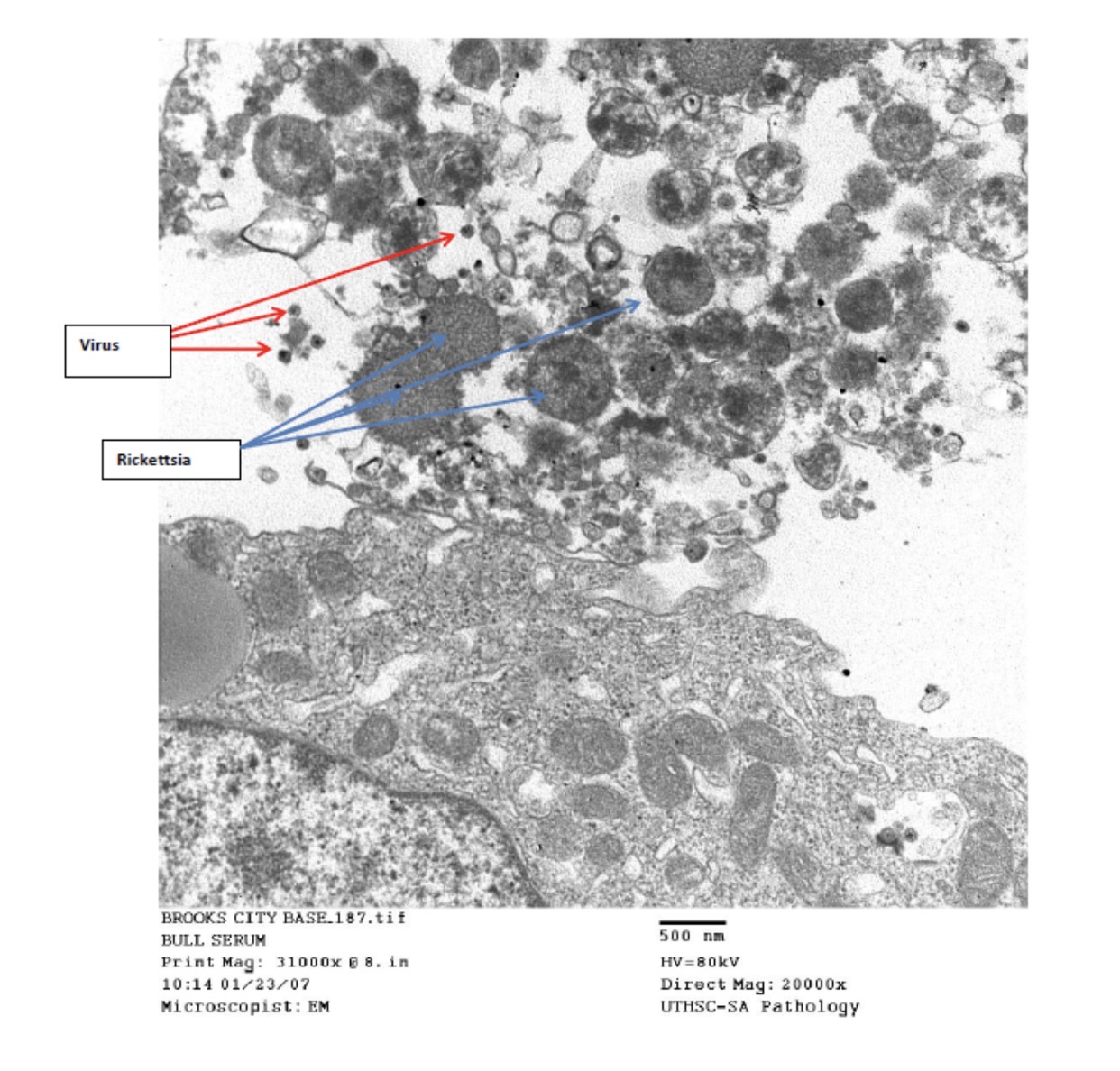
Type D Retrovirus found to be co-infecting with Rickettsia sp.
For more accounts of examples of this problem see this book

Forgotten Technology: Re-inventing the Wheel: Reminding Them Again and Again

DARPA is planning for an airborne COVID detector — Defense Systems https://defensesystems.com/articles/2020/11/11/darpa-sensars-covid-detection.aspx?s=ds_121120&oly_enc_id=&m=1. Once again DARPA has chosen to ignore or is totally unaware of what they already had in-house in the DoD. Trying to get antibody or other anti-ligands to interact in the air is extremely difficult unless one uses nanoparticles. The molecular interaction of ligand and anti-ligand (antigen and antibody) in air was attempted in the past at U.S. Army Edgewood Chemical Biological Center and AFRL; it failed but nanoparticles carrying a water coating had promise spiedigitallibrary.org/conference-pro

“Dr Andy Ellington of the University of Texas, one of the co-inventors of SELEX, unbeknownst to us, had received substantially more support than we had, from DARPA, to develop aptamer sensors for biological warfare agents. DARPA was not under the constraint of “forced collaboration” suffered by the Service Labs and their contractors. He went on to receive more money for developing aptamer “beacons”, with a consortium of other institutions and contractors, that were supposed to interact with the agents on the fly in a biological “attack” cloud and cause them to “light up” by fluorescence (from interaction with laser light) that would reveal their presence remotely. This project was doomed from the beginning for two reasons: (1) the Army had tried the approach with antibody in the early 1990’ s at Aberdeen and failed; and (2) As Dr Eric Holwitt always said, “Most of the volume of air that we are looking in for agents is empty space; it is not that the interaction is not sensitive enough, but that there is no agent with which to interact.” This would later also be a problem with standoff detectors that depended on lasers only; the cross section of the microbes diluted in a cloud was just too small to give a decent return signal, much less any natural spectra that were specific for the agent. They were lucky to just tell the difference between a dust cloud or sand storm and a biological, which just as well have been pollen or fungal spores.—-The Black Dragon Trilogy.https://a.co/e38es8z.

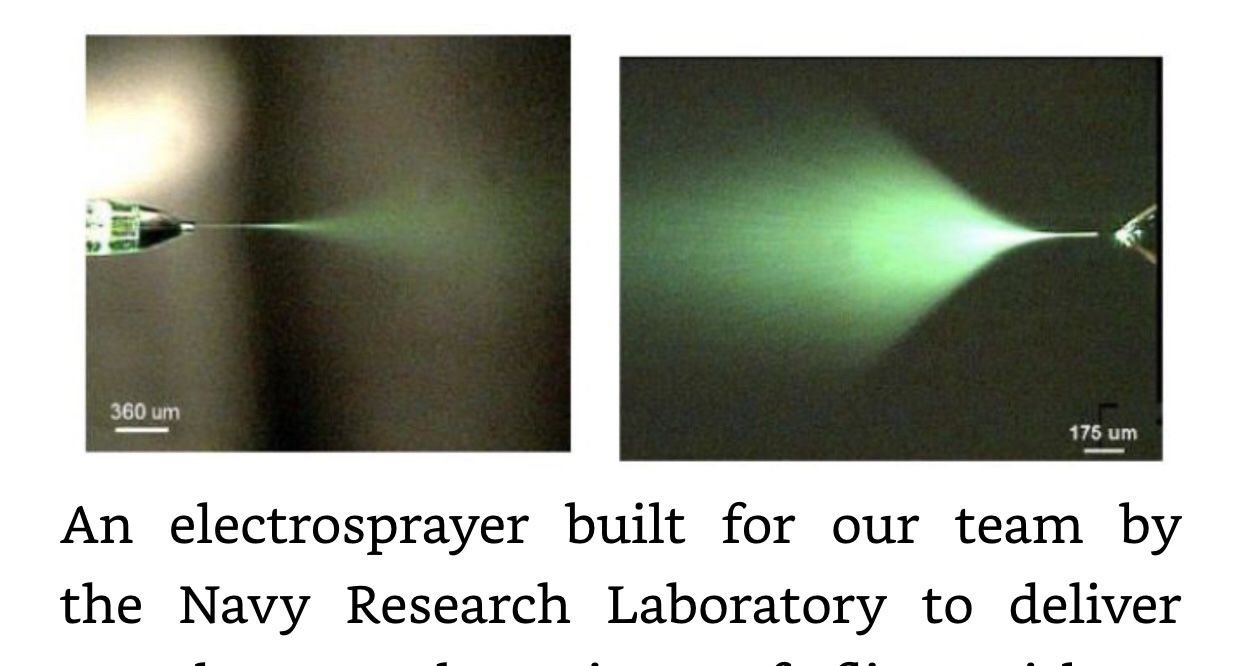
Nano droplets for in air interactions:

Use of nano sprayed droplets with nanoparticles to answer DARPA’s call for real time in air capture and detection of SARS-CoV-2: a.co/167nyLR.
In light of DARPA‘s revisiting on the fly in air detection of microbes, namely SARS-CoV-2: previous post: New Method Supports the Possibility that Fluorescent Aptamer Nanoparticles could Yield Potentially the Fastest Handheld COVID-19 Diagnostic Test
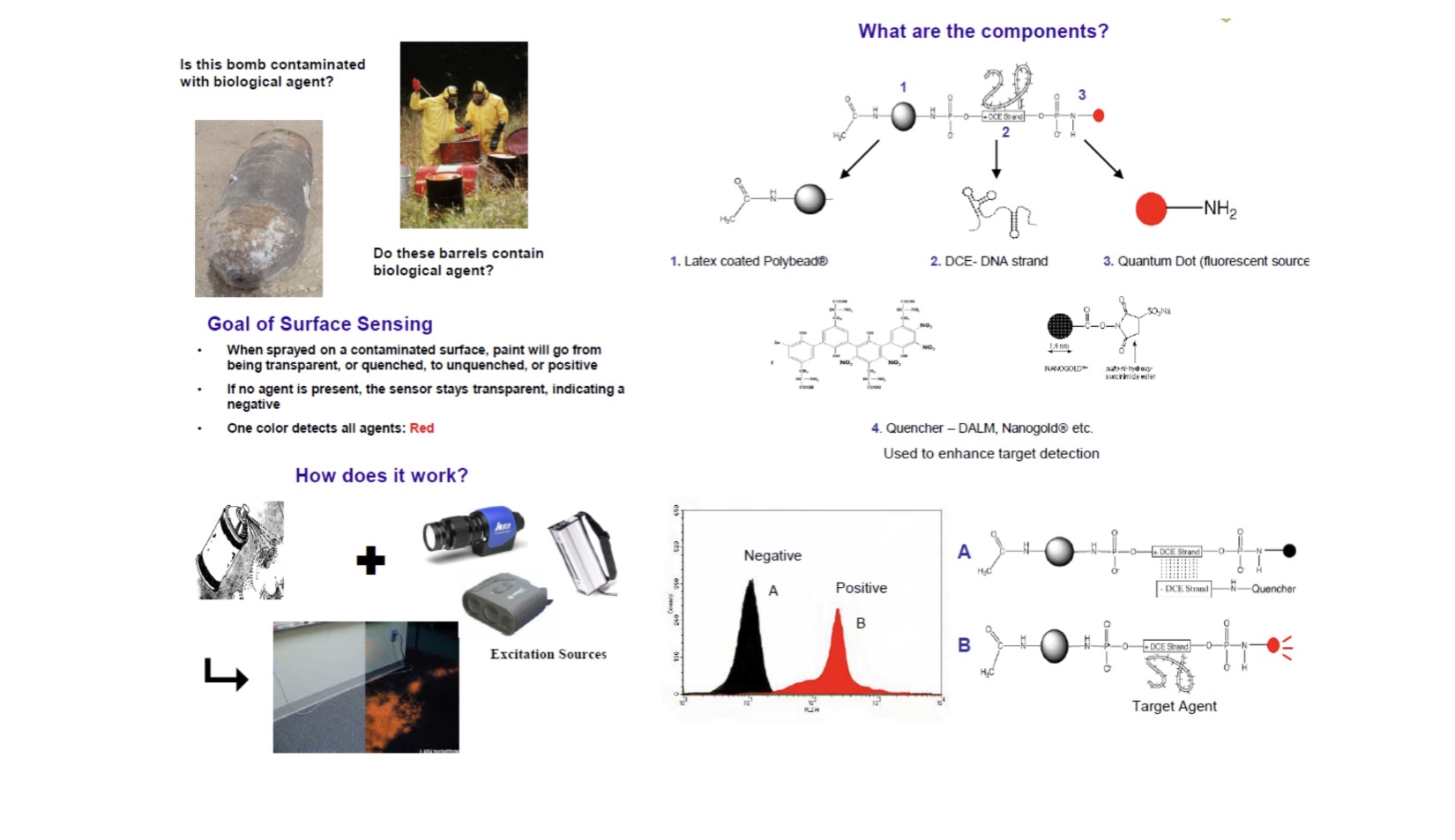
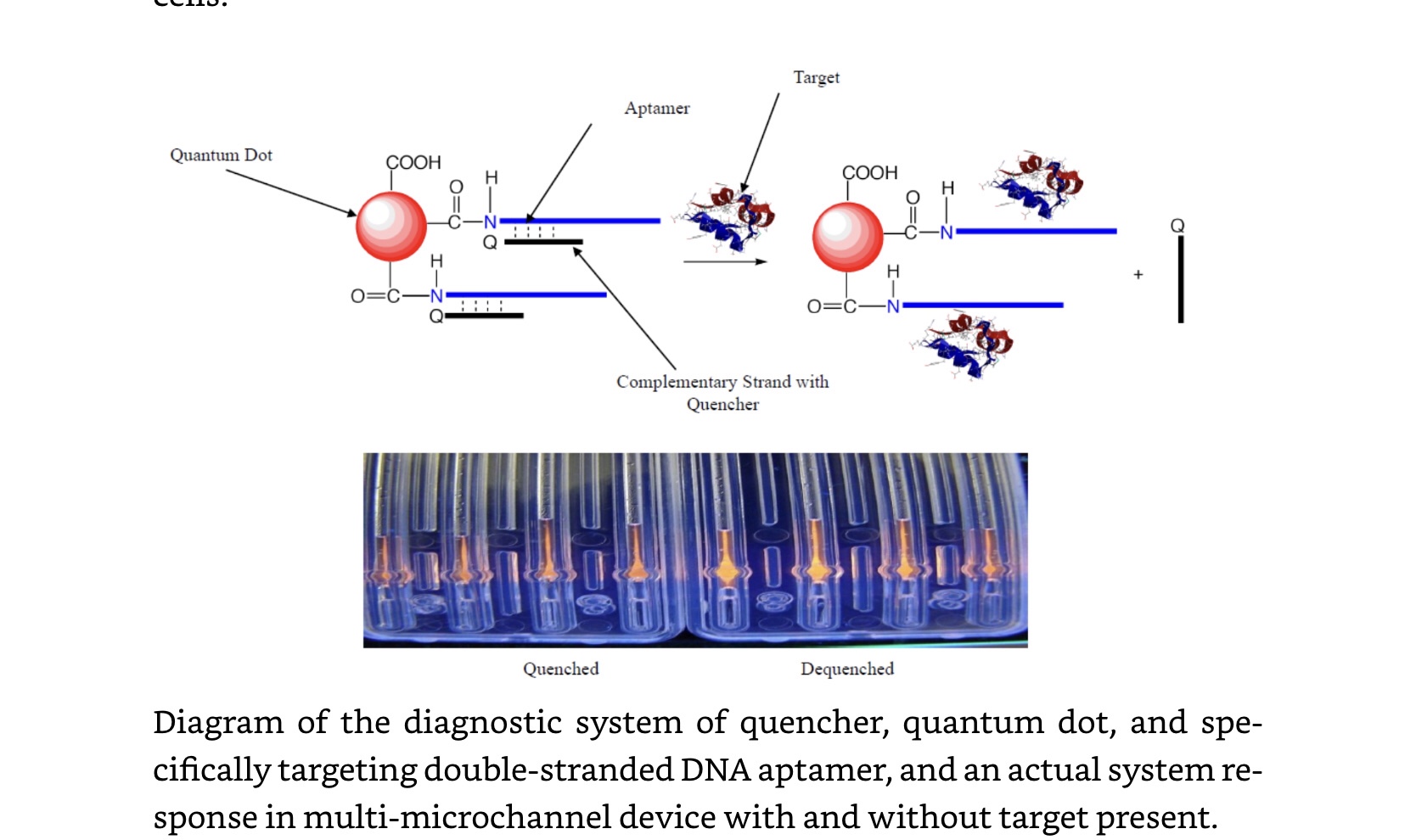
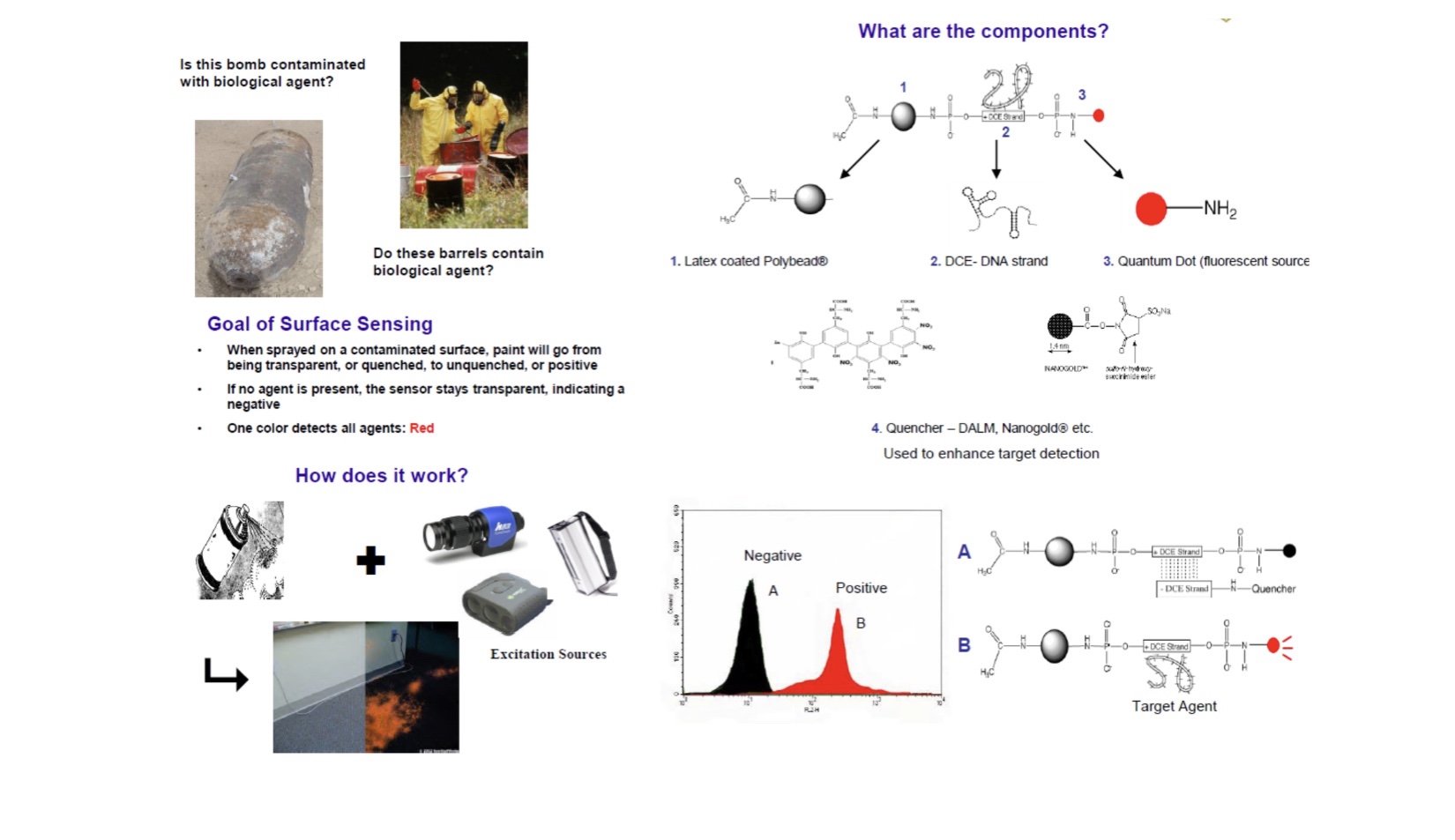
Immediate detection and identification of biological agents on surfaces detected by dequenching of fluorescence on binding and monitoring decontamination by destruction or removal of the fluorescence
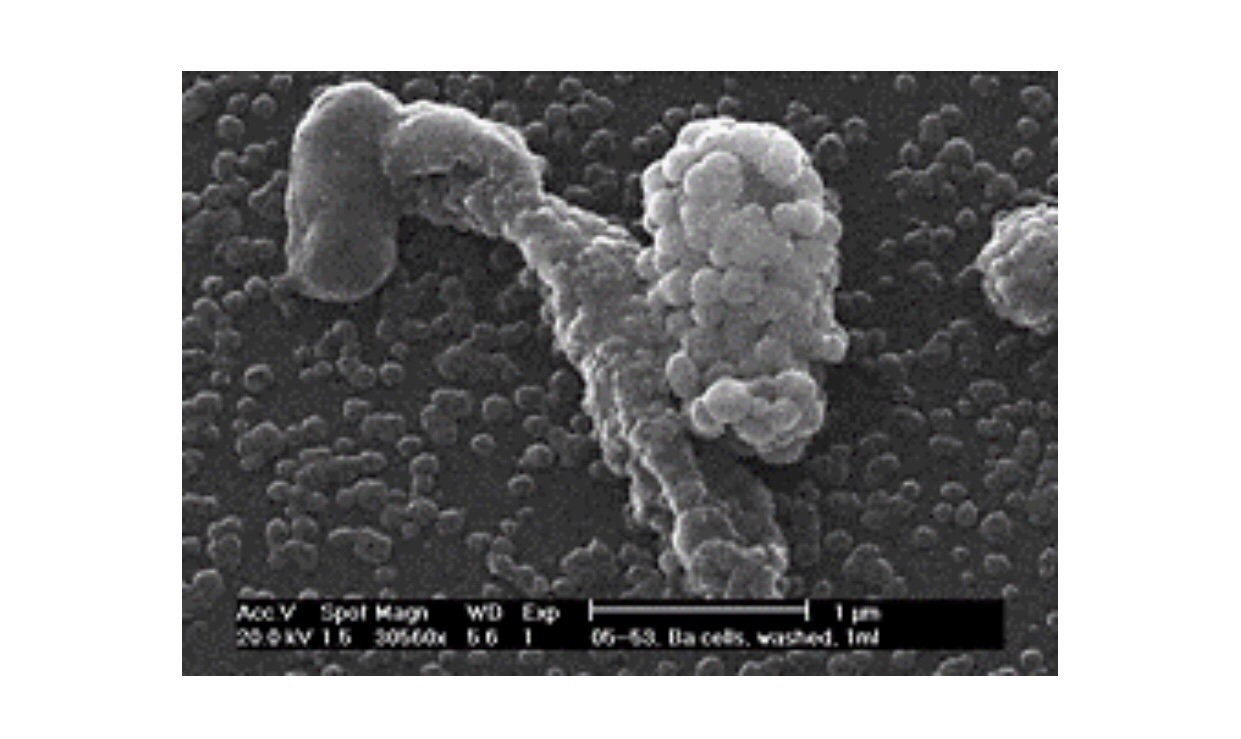
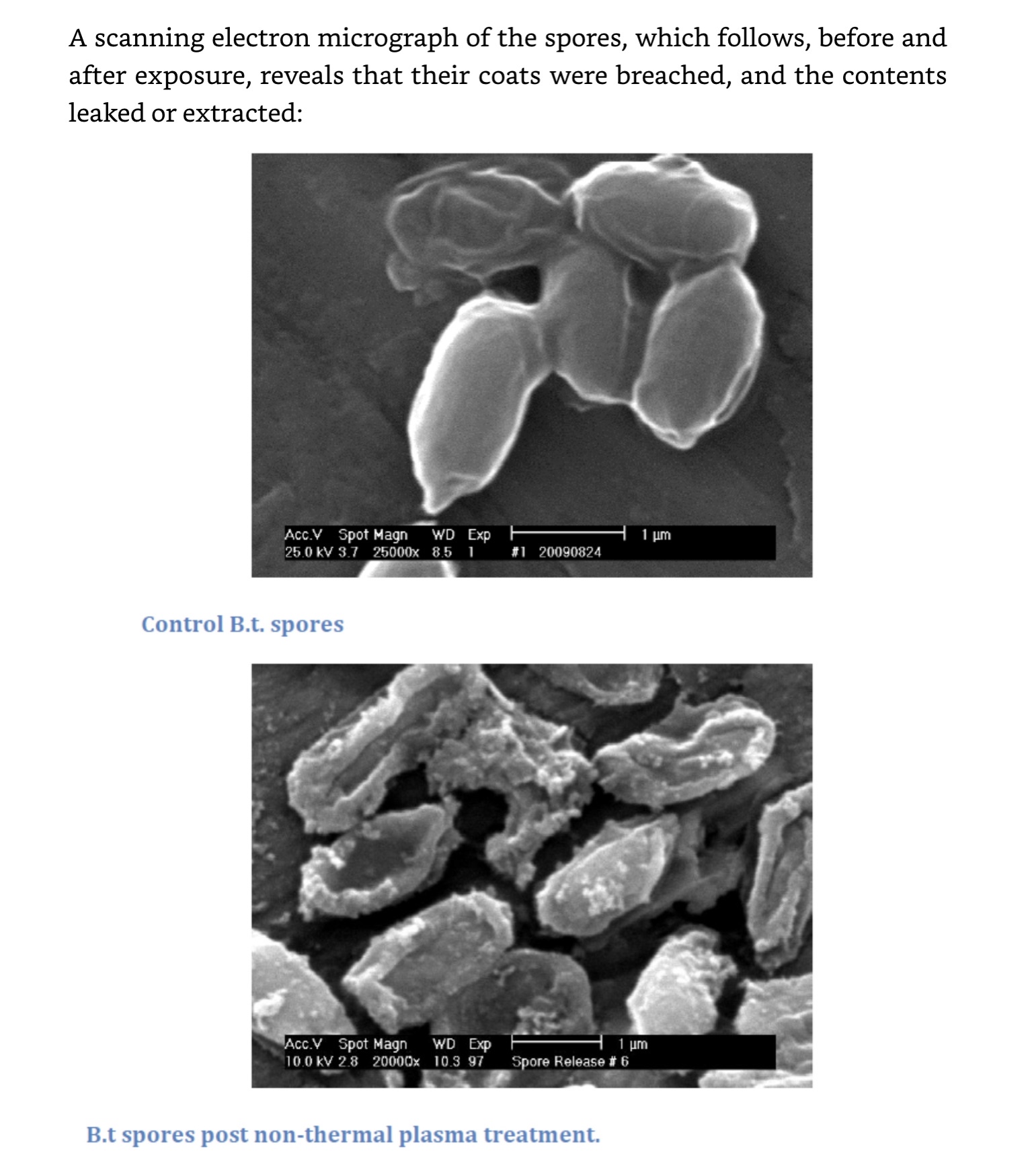
Nanoparticles on anthrax bacteria and spores
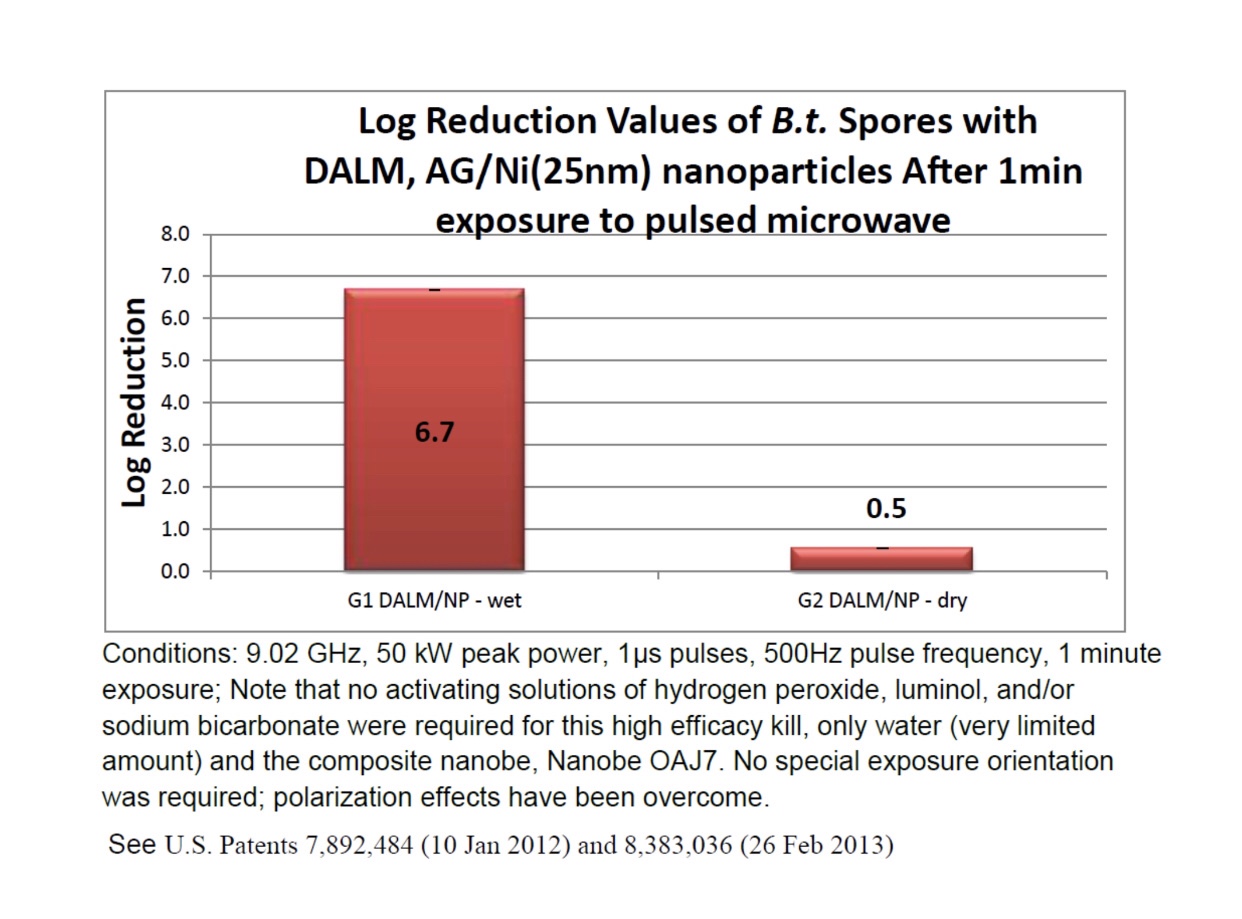
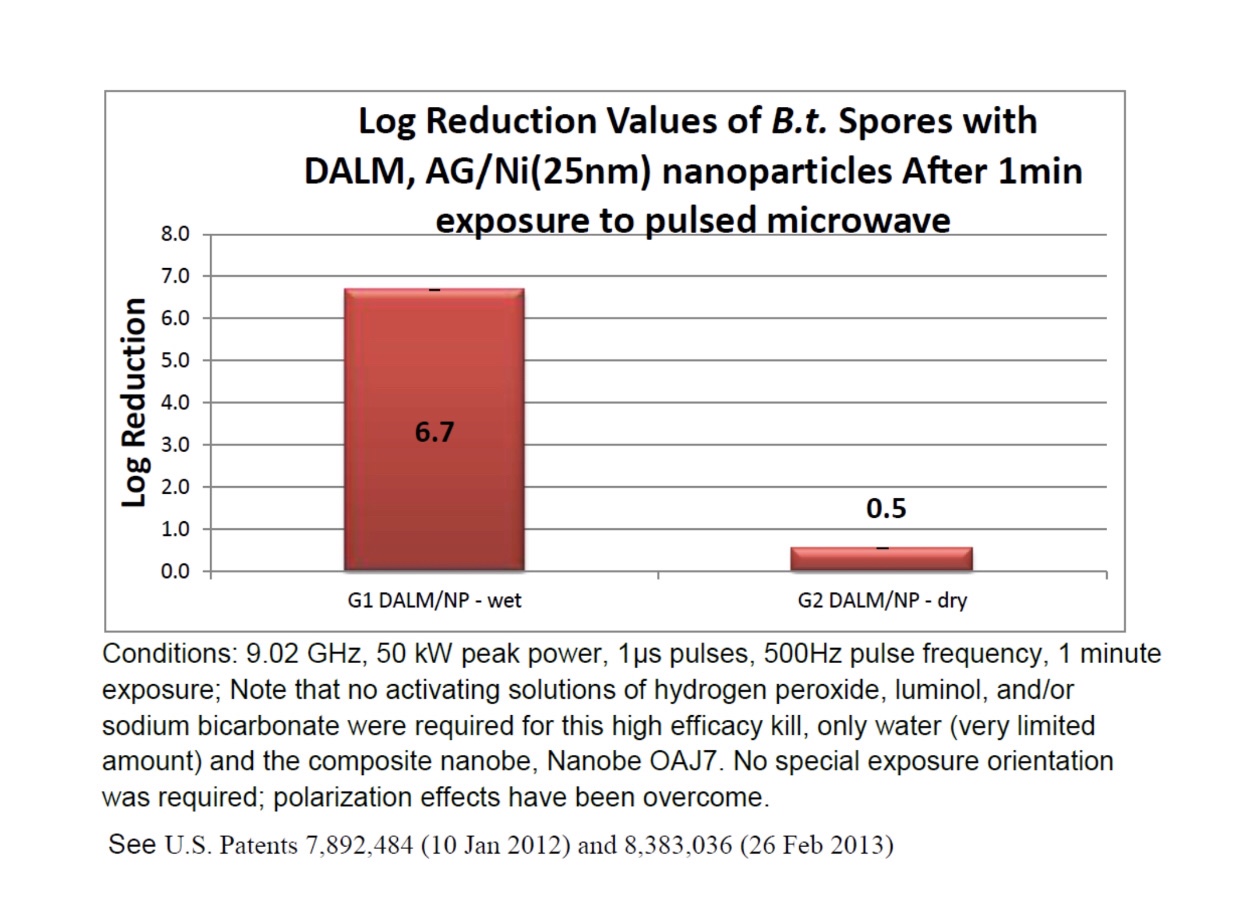
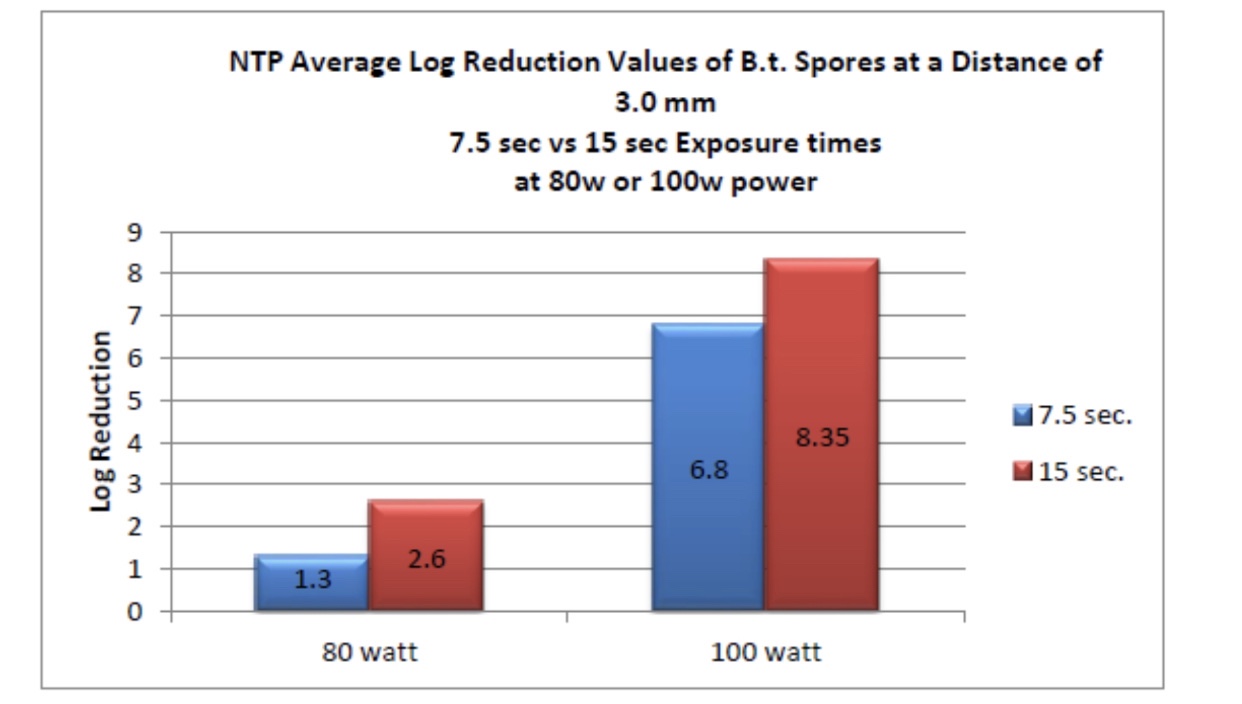
Data showing that on the fly binding of nanoparticles (evidenced by log’s, 10-folds, reduction in numbers of spores) requires at least a “nano-coating” with water, to be bound close enough to transfer their microwave-activated killing power.
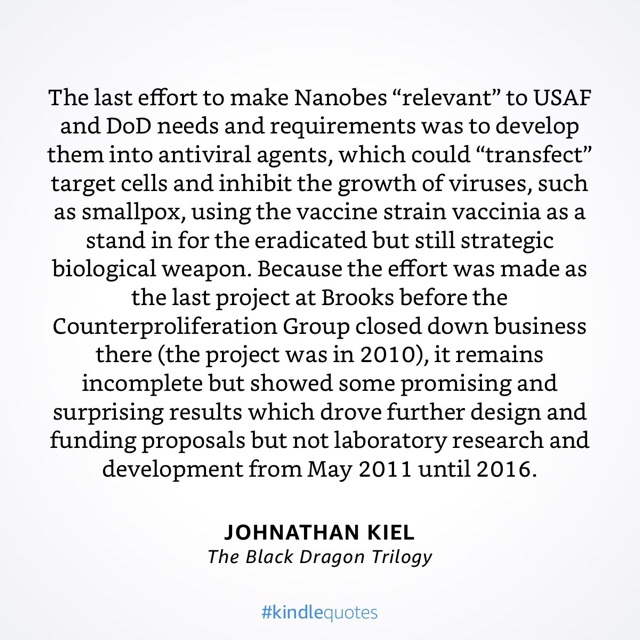
Prophetic that the last research on the use of synthetic Nanobes was as antivirals and after the close of Brooks Counterproliferation Team in 2011, the research completely ended in 2016. a.co/3m1Q4uu

Making Aptamers Against AB Toxins and as Inhibitors of Enzymes: The Value of Small Adaptable Biomolecules for Stability and Delivery, including Inhalation

Recently, it was reported in Kaiser Health News (https://khn.org/news/search-for-a-snakebite-drug-might-lead-to-a-covid-treatment-too/) and the AVMA Animal Health SmartBrief that a new small molecule inhibitor of phospholipase A2, Varespladib, (https://www.nature.com/articles/s41598-019-53755-5.pdf) of snake venom for treatment of snake bite might treat COVID-19 lung disease as well because another PLA2 enzyme in human tissue is in the inflammatory cascade. The Brooks Counterproliferation Team made neutralizing aptamers against AB binary toxins: Botox, Shiga toxin, phospholipase A2 of South American rattlesnake venom, and anthrax toxins; United States Patent US 9,273,345 B2, Mar.1,2016. The snake antivenin aptamers were going to be pursued for this snake (Crotalus durissus terrificus) as well as other significantly dangerous snakes in collaboration with Administración Nacional De Laboratorios E Institutos De Salud (National Administration of Laboratories and Institutes of Health (ANLIS) ) but because of the closure of Brooks in 2011, this never happened.

Many bacterial toxins are AB toxins, that is, they contain a trans-cell membrane cell transporting component B and an affector or toxic effect generator A. Oddly, this motif is seen in the venoms of snakes. The most famous of the AB toxins is produced by the anaerobic bacterium Clostridium botulinum. It is the number one biotoxin on the Select Agent, potential biowarfare/ bioterrorism, list with an estimated human median lethal dose (LD-50) of 1.3–2.1 ng/ kg by injection or 10–13 ng/kg by inhalation. Other species of this genera also produce AB toxins which cause neurological toxicity, tetanus (tetanus toxin produced in wounds by Clostridium tetani), or necrotizing effects (iota toxin of Clostridium perfringens), gangrene. Botulinum toxin is composed of a heavy chain (equivalent to the B chain) and a light chain (equivalent to the A chain) linked together by a single disulfide bond (as many of the snake venoms and related polypeptide hormones such as insulin and nerve growth factor are linked by more than one disulfide linkage). The toxin is produced by the bacteria as an inactive pre-toxin (approximately 150k) which is activated by proteolytic cleavage into the 100kD heavy chain and the 50kD light chain. Botulinum neurotoxin exists as 7 different serotypes, A, B, C, D, E, F and G. All these various serotypes inhibit acetylcholine release from nerve endings, but by targeting different intracellular neuronal protein components of the soluble N-ethylmaleimide-sensitive factor attachment protein receptor (SNARE) acetylcholine transport complex. However, their potencies vary substantially, with some being more toxic and more prevalent clinically in some host species than others. Some are more likely to be associated with human disease like Type A (Western North America) and B (Eastern North America) and others with animal disease, in waterfowl Type C and Type E sporadically among fish-eating birds, such as common loons (Gavia immer) and gulls. Even though botulinum toxicity is usually considered only a toxicity, it can be produced in infants by the consumption of honey contaminated with C. botulinum spores which grow into vegetative forms and produce toxin in vivo, in situ. Occasionally this is seen in adults. An even rarer form is wound botulism related to C. botulinum which grows and produces Type A and Type B toxins, but in at least one case, Type E, in place. Another prominent AB toxin which has seen much press is Shiga (from Shigella dysenteriae shiga toxigenic group of Escherichia coli (STEC), which includes serotypes O157:H7, O104:H4, and other enterohemorrhagic E. coli (EHEC)), which produce related Shiga-like toxin, which is composed of Shiga-like toxin 1 and 2 (SLT-1 and 2 or Stx-1 and 2), with Stx-1 differing from Stx by only 1 amino acid and Stx-2 sharing 56% of its sequences with Stx-1. Shiga toxin inhibits protein synthesis by a mechanism similar to ricin toxin produced by the castor bean, Ricinus communis. After entering a cell, the affector portion of the toxin acts as a N-glycosidase, cleaving a specific adenine from the 28S RNA of the 60S subunit of the eukaryotic ribosome, stopping protein synthesis. Besides causing the gastroenteritis of O157 infection, it also is neurotoxic. The glycosphingolipid, Gb3, is the receptor for Shiga and Shiga-like toxins. It is present in great amounts on renal epithelial cells leading to renal toxicity. Gb3-type receptors are also found in central nervous system neurons and endothelium, which may explain the toxin’s neurotoxicity. Stx-2 increases the expression of its receptor Gb3 and causes neuronal dysfunctions through this positive feedback mechanism. Our group of researchers at AFRL, Brooks City-Base, discovered that curcumin, if given before exposure to the toxin, decreases the Gb3 on target cells. We also developed small synthetic oligonucleotides which bind to the toxin and prevent its action in cell culture. Therefore, Shiga toxicity is a toxigenic disease which is infectious, but not only for the human host. Its genes are encoded on a latent, temperate lambdoid prophage in Escherichia coli. The phage regulatory network is a significant contributor to toxin production and release by this pathogenic E. coli and allows the phage to be released from lysogenic E. coli to co-opt other normally non-hemorrhagic enteric E. coli. This opens another variant from Koch’s Postulates, the conversion of resident microbes which are non-pathogenic into pathogenic ones, violating the first hypothesis by having all hosts carrying potentially pathogenic microbes. This mechanism of toxin genes being conveyed to a susceptible co-opted microbial host does not end with E. coli. It exists in one of the most common bacteria which we vaccinate against in childhood with the classic DPT shot, the toxin of the diphtheria bacterium, Corynebacterium diphtheria. Diphtheria toxin was discovered in 1890 by Emil Adolf von Behring. In 1951, it was discovered that the toxin gene was not encoded on the bacterial chromosome, but by a latent temperate phage infecting all toxigenic lysogenic strains of the diphtheria bacteria. The toxin inhibits protein synthesis as does Shiga and other bacterial toxins and some antibiotics. It does this by acting as the enzyme NAD-ADP-ribosyltransferase (EC 2.4.2.36). It catalyzes the transfer of nicotinamide adenine dinucleotide to the eukaryotic cell elongation factor-2 (eEF2), inactivating this protein so that it cannot participate in the protein synthesizing function of the ribosomes. It ADP-ribosylates the unusual amino acid diphthamide in eEF2. The toxin, like Shiga toxin and snake venoms, is an AB toxin. It is structurally a single polypeptide chain of 535 amino acids composed of two subunits linked by disulfide bridges. Cancer drugs were eventually developed using the toxin, Denileukin Diftitox, which uses diphtheria toxin as an anti-neoplastic pharmaceutical, and Resimmune ™ which is an immunotoxin for cutaneous T cell lymphoma. The latter uses diphtheria toxin (truncated by the cell binding domain) coupled to anti-CD3 antibody. Cholera, which Robert Koch investigated and used the observation of its carrier state in people to disregard his first postulate, is caused by the bacterium Vibrio cholerae, which produces an AB toxin similar to diphtheria toxin and is also co-opted by a bacteriophage which conveys the toxin genes. The cholera toxin is an oligomeric protein made up of six subunits, a single copy of the A (enzymatic “affector” subunit) and five copies of the B subunit (receptor binding), AB5. Subunit B binds and delivers subunit A to the cell where it activates the G protein which activates adenylate cyclase. The five B subunits have a mass of 11 kDa each and form a five-membered ring. The A subunit is 28 kDa and has two functional substructures, the A1 portion of the chain: a globular ADP-G protein-ribosylase and the A2 chain, an extended alpha helix which sits in the center of the B subunit ring. The toxin is similar in structure and mechanism to the heat-labile enterotoxin of Escherichia coli. The subunit A enzyme activates, with different specificity, but essentially the same catalytic activity as subunit A of diphtheria toxin. All these toxins are potential targets for therapeutic neutralizing aptamers which can be selected from a large library of DNA sequences and amplified for clinical use https://patentimages.storage.googleapis.com/4d/9f/d0/ce71a48231f7c5/US9273345.pdf.

Veterans Day: The USAF AFRL Counterproliferation Team Should Not be Forgotten

This blog is their legacy and the book Notes from the Shadows in The Black Dragon Trilogy their history (see Amazon eBooks).

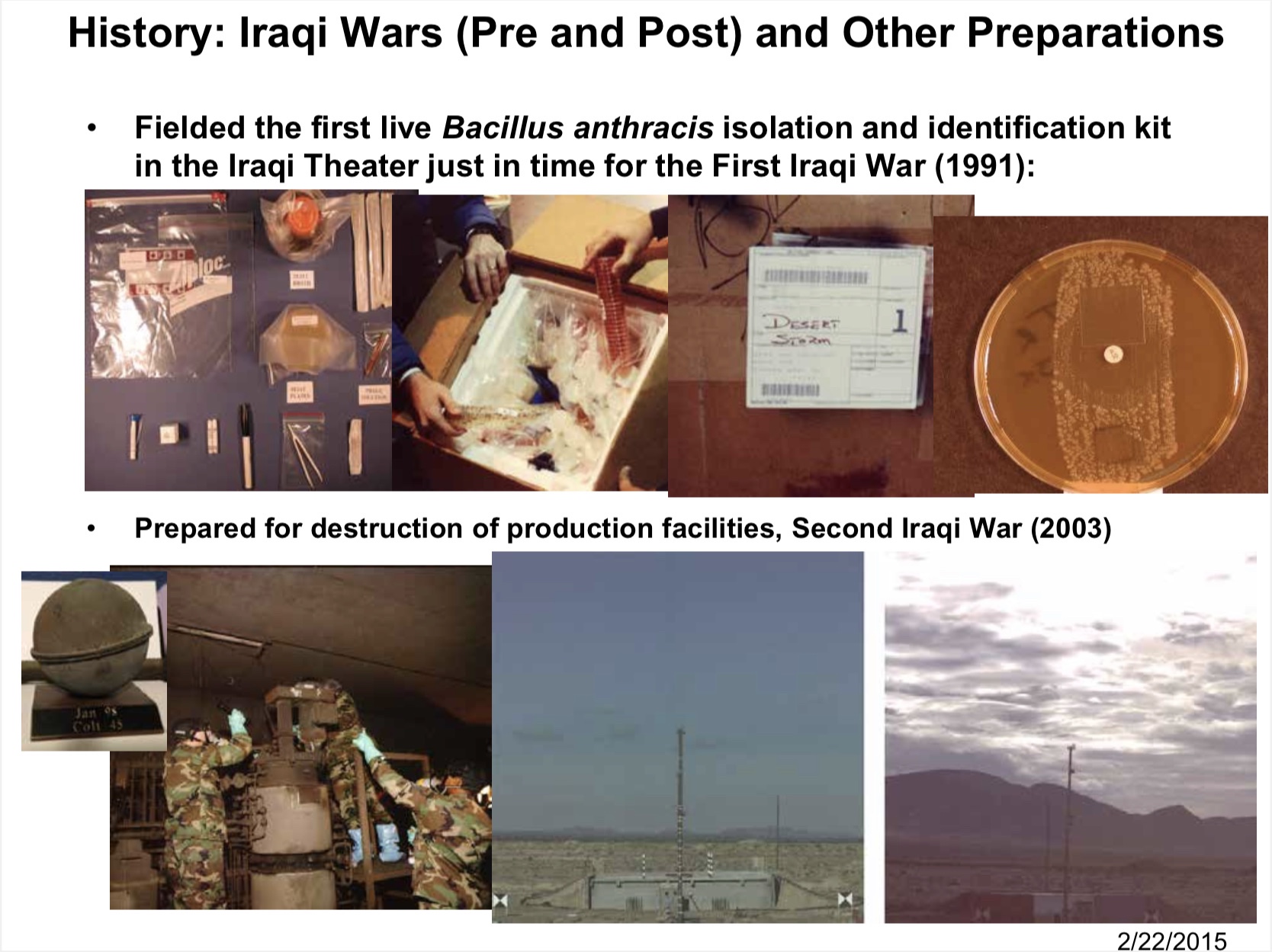
Imbedded in the UN team, one of the Counterproliferation Team brought back the last anthrax from an Iraqi lab before the war in 2003
Cold Plasma championed by the AFRL Counterproliferation Team could have destroyed SARS-CoV-2 on surfaces and in the air without chemicals or potentially harmful UV radiation.
Fighting lethal viruses as well

A House Divided Against Itself Cannot Stand: The Tragedy of Autoantibodies in COVID-19

In an earlier post, I discussed autoantibodies against Interferon I and how this interfered with the first line of defense against SARS-CoV-2. Now recent data has revealed that the virus induces other autoantibodies against other targets which explains the variety of symptoms and perhaps chronic disease following initial COVID recovery. Autoantibodies are not unprecedented in viral diseases. The exclusion of cells in the immune system that produce antibody or cellular immune responses directly against self is a central tenet of immunology. Sir Frank McFarlane Burnet was awarded the Nobel Prize for Medicine and Physiology in 1960 for his work on the immunological recognition distinguishing non-self from self. He coined the term for immune cells’ generating antibodies against self the “forbidden clone”, and formulated the hypothesis, of the same name, that in autoimmunity there exist immune cells able to make antibodies against a variety of self-antigens. He proposed autoimmune disease develops because of the escape of self-reactive clones of lymphocytes’, which are normally deleted during development to generate immune tolerance of self. These autoreactive clones can multiply and cause immune-mediated organ damage through peripheral self-antigen immune recognition and direction of effector cells to kill targets cell in a variety of tissues and organs. He thought these clones might arise as a result of somatic mutation early in lymphoid development. The proposal pre-dated knowledge of the roles of T and B lymphocytes. During his time, the role of autoantibodies was recognized in diseases such as Grave’s Disease, associated with thyroid stimulating antibodies, directed against the human thyroid stimulating hormone receptor. Later in the 20th century, T cells came to be central in theories of autoimmunity and B cells fell off the map. The truth lies somewhere in between. https://pmj.bmj.com/content/postgradmedj/88/1038/226.full.pdf.

However, autoimmunity may persist not only because of detrimental mutation, but also because it serves an evolutionary, beneficial purpose. It has been counterbalanced by apoptosis, which suppresses immune signals while still getting rid of unwanted or unneeded cells, without triggering inflammation. When necrotic tissue infected by pathogens or cells undergoing disease processes contain intracellular pathogens hidden from antibodies or immune surveillance, the tiniest departure from normal surface structure or exposure of internal cell structures to the immune response may be essential to elimination of the pathogen. Various forms of programmed cell death may lead to various levels of immune response exposure: autophagic cell death, necroptosis, elimination by shedding, keratinocyte death by cornification,and cell–cell cannibalism by entosis https://www.ncbi.nlm.nih.gov/pmc/articles/PMC2994033/. These various self- killing mechanisms and autoimmunity may also be important in preventing the development of cancer, or allowing it to proceed, when these countermeasures are out of balance.

The autoimmune response is not new to viral infection https://www.ncbi.nlm.nih.gov/pmc/articles/PMC6723519/pdf/viruses-11-00762.pdf. Examples of infections that yield autoantibodies are those with enteric viruses such as Coxsackie B virus and rotavirus and other types such as influenza A viruses, herpesviruses, measles, mumps, and rubella. Autoimmune B cell responses contribute to mixed cryoglobulinemia, glomerulonephritis, and vasculitis, of hepatitis B and C virus infection. Another example in animals is antibody to feline oncornavirus-associated cell membrane antigen (FOCMA) on the surface of feline lymphosarcoma cells in sera of cats relatively resistant to development of FeLV (feline leukemia virus), Lymphosarcoma, and FeSV (feline sarcoma virus) fibrosarcoma. The antibodies do not exclusively attack viral antigens but consistently bind to 70-kDa proteins on the surface of lymphosarcoma cells https://pubmed.ncbi.nlm.nih.gov/6318434/. Therefore, resistance to cancer, caused by these viruses, is associated with this anti-host cell antibody, not necessarily direct antiviral antibody.

Other chronic disease conditions triggered by viruses and caused by autoimmunity include Type 1 juvenile diabetes and Type 1.5 adult onset autoimmune diabetes. Type 1 diabetes is a lifelong chronic disease characterized by the loss of or severely reduced number of insulin-producing β cells in the islet of Langerhans, presence of islet autoantibodies, and, especially in younger individuals, insulitis consisting of infiltration of the islets predominantly by CD8+ T cytotoxic cells and macrophages. In explanted islets cultured from coxsackievirus B-1-infected islets, the expression of the coxsackie–adenovirus receptor gene was increased and was 10-fold higher in endocrine compared with exocrine cells of the pancreas. There is high suspicion of viral causality because of these observed experimental results https://drc.bmj.com/content/4/1/e000219.

Another autoimmune disease where virus is suspected but not immediately linked is multiple sclerosis (MS). The comparison of chronic canine distemper, which leads to spinal cord and CNS nerve process demyelination, has led to this suspicion by analogy, but incrimination of the canine distemper virus being the cause in human MS has not withstood scientific examination. T cells have been considered the main (MS) protagonists in the pathogenesis of multiple sclerosis. Only recently has evidence arose supporting B cells as major contributors. Rather than merely producing autoantibodies, they collaborate with T cells by priming and regulating T cells, and mediate both pro- and anti-inflammatory interactions. However, despite intensive searching, the target antigen(s) of B cells in MS have not been identified https://www.ncbi.nlm.nih.gov/pmc/articles/PMC4519967/pdf/ijms-16-16576.pdf. The original viral instigator may have only left a ghost antigen behind long after it was eliminated.

Such examples make the autoimmune pathogenesis of COVID not unexpected. Autoantibodies which recognize cell membrane phospholipids cause an autoimmune disease called antiphospholipid syndrome (APS). In APS patients, autoantibodies activate clot-forming cells, putting those patients at higher risk of blood clot formation. These antibodies may also be present in a variety of bacterial or viral infections. However, cause and effect of blood clotting during infection is difficult to prove. Severely ill COVID-19 patients can have high levels of neutrophils, and some have phospholipid-binding antibodies in their blood. Of the patients studied, of those who developed blood clots, only half had the auto antibodies https://stm.sciencemag.org/content/scitransmed/early/2020/11/02/scitranslmed.abd3876.full.pdf. Additionally, the immunological response in severe COVID-19 infection, including TLR7 activation by SARS-CoV2 single-stranded RNA, is sufficient to drive new autoimmunity without the patient’s response against a variety of self-antigens being genetically pre-determined. https://www.medrxiv.org/content/10.1101/2020.10.21.20216192v2.full.pdf. All this being said, the immune system has several possible pathways to follow in COVID-19, some of which I have discussed in earlier posts. The good and bad news is that the progression has these choices. This means that chemically programmable immunity using antigen-aptamer conjugates has a significant probability of re-directing the response down one such pathway that effectively eliminates the SARS-CoV-2 virus without triggering pathogenic autoimmunity or chronic autoimmune disease, which would persist after the virus is gone. There is even a possibility that redirection can ameliorate such residual autoimmunity or even, under ideal conditions, end it. However, until research is supported toward testing these hypotheses, we will never know.

Much Ado About DALM Nanoparticles: Why Diazoluminomelanin (DALM) is Special in Vectoring Nucleic Acids to Many Target Host Cells and Has Great Antiviral Potential for SARS-CoV-2

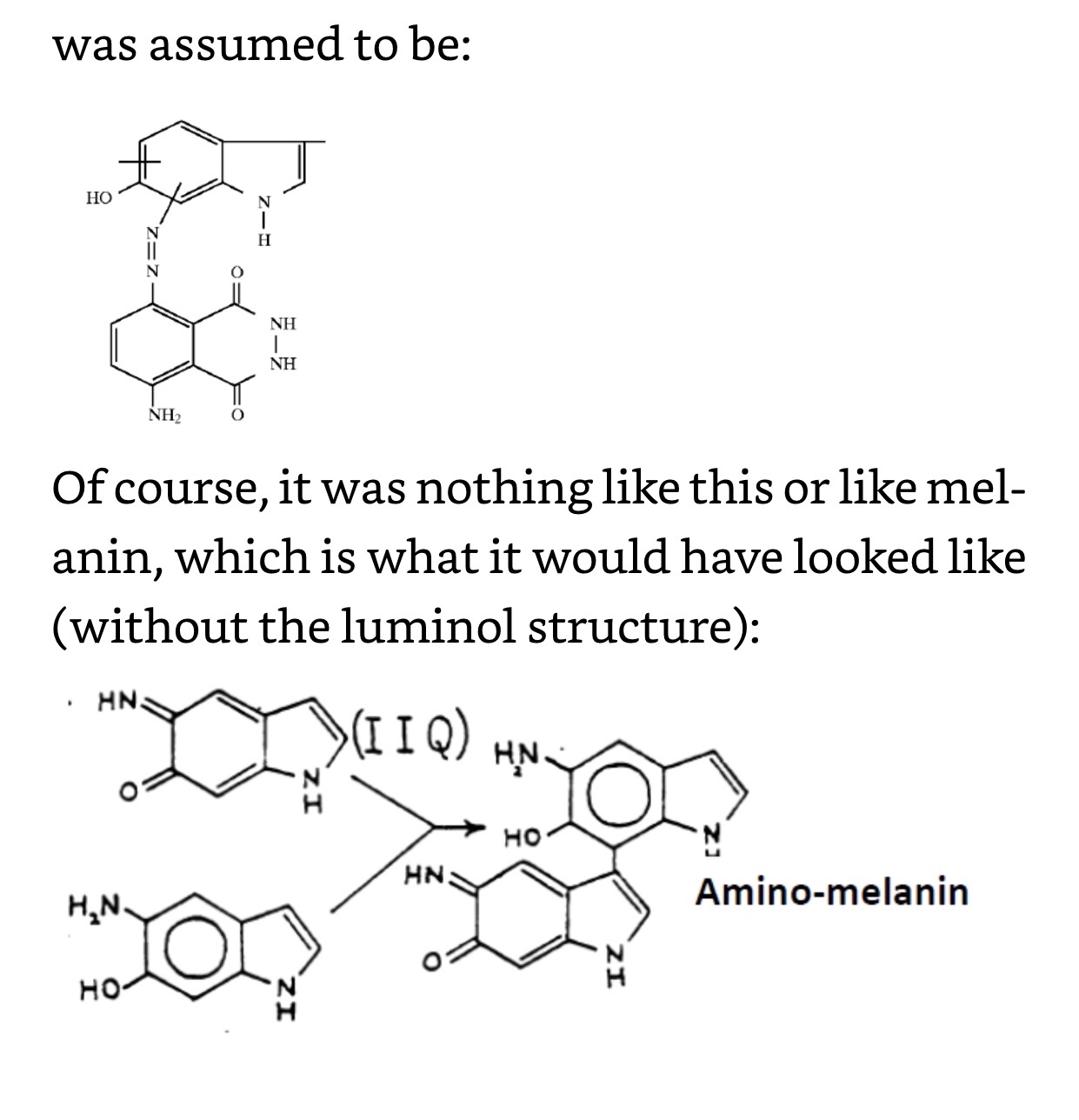
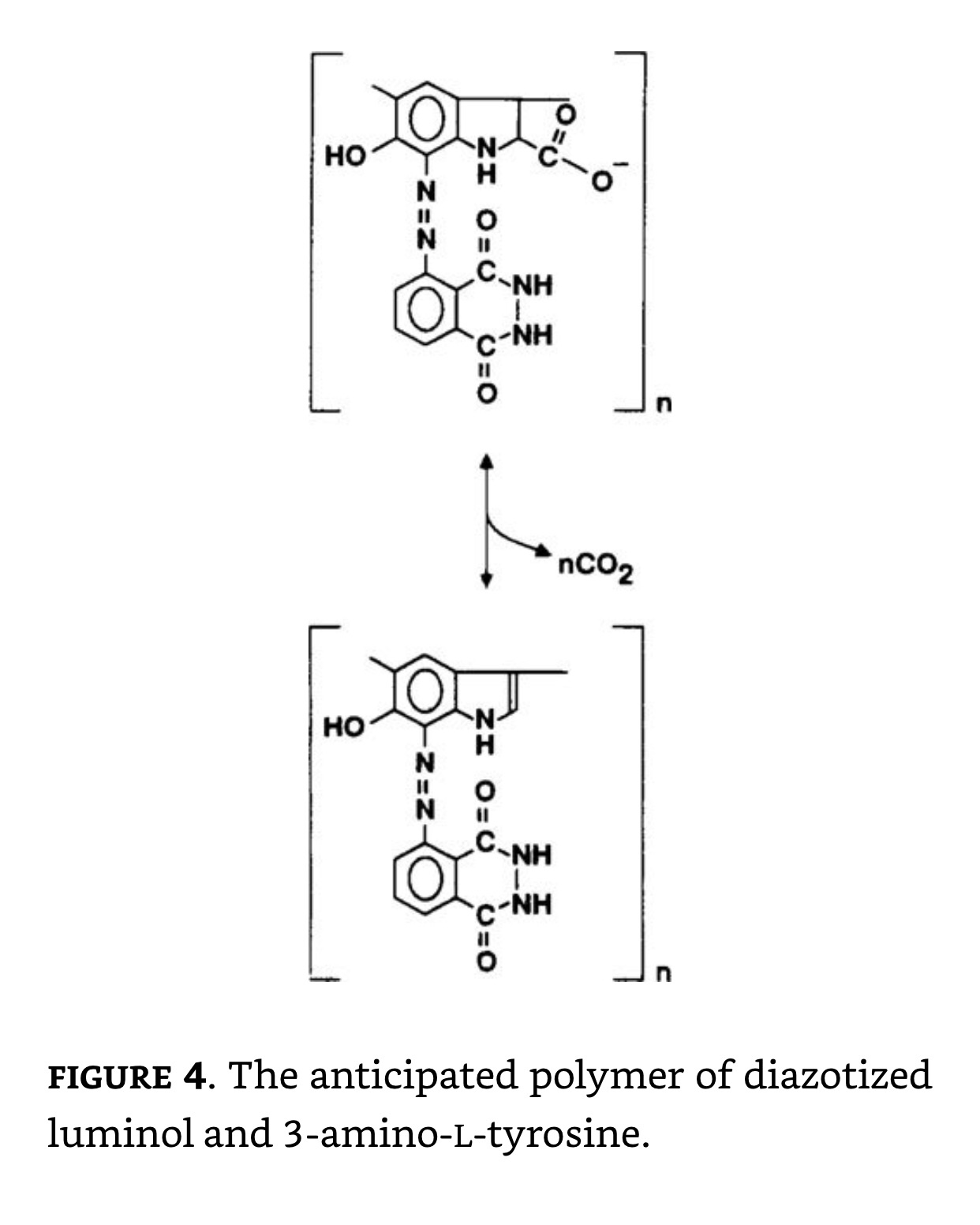
Viruses are such good vectors of engineered genetic material because they are near perfect deliverers of nucleic acids from durable, protective packages into host cells. The nucleic acids delivered take over the replicative machinery of the host cells to reproduce themselves and express proteins which automatically re-package the new nucleic acids. The new virions have the means, by virtue of their coat proteins, to extrude from the cell by fusing with the outer cell membrane, enveloping with cell membrane lipids, by passing through pores formed by transmembrane proteins, or by bursting the cell to be released. How could these wonderfully elegant devices be duplicated without protein to assemble nucleic acids to direct the host cells to build more vectors? Polymers or lipid containers or combinations thereof could duplicate the delivery of nucleic acids across cell membranes to provide expressible genetic elements, but the vectors could not be biosynthetically reproduced, like viruses, to carry on the process to new host cells. This was an advantage to prevent inadvertent uncontrollable transfer, but limited the number of cells producing the new trait or protein. How could both be achieved without loss of control? Could a polymer be made from existing biological feedstock synthetically as well as biosynthetically? Could sufficient but minimal genetic information be transferred to drive host cells to make more vector as well as transfer the designed expressible genes included? Diazoluminomelanin (DALM) is key to the answers. The whole story of this wonderful, amazing material is told in 4 books I wrote and published between 1994 and 2018, inclusive, and previous posts. The three main reasons for the discovery of DALM was (1) to replace the enzyme peroxidase in the hydrogen peroxide and luminol interaction in the chemiluminescent reaction with a single component, (2) find a chemical indicator of radio frequency radiation and microwave absorption, thermochemiluminescence, (3) find a potential application(s) that would justify funding the basic research. The latter made for a moving target of potential applications. The polymer was first synthesized by the following simple reaction:

Solving the structure of the resulting polymer and explaining it’s extraordinary properties would be far more difficult and take much longer.

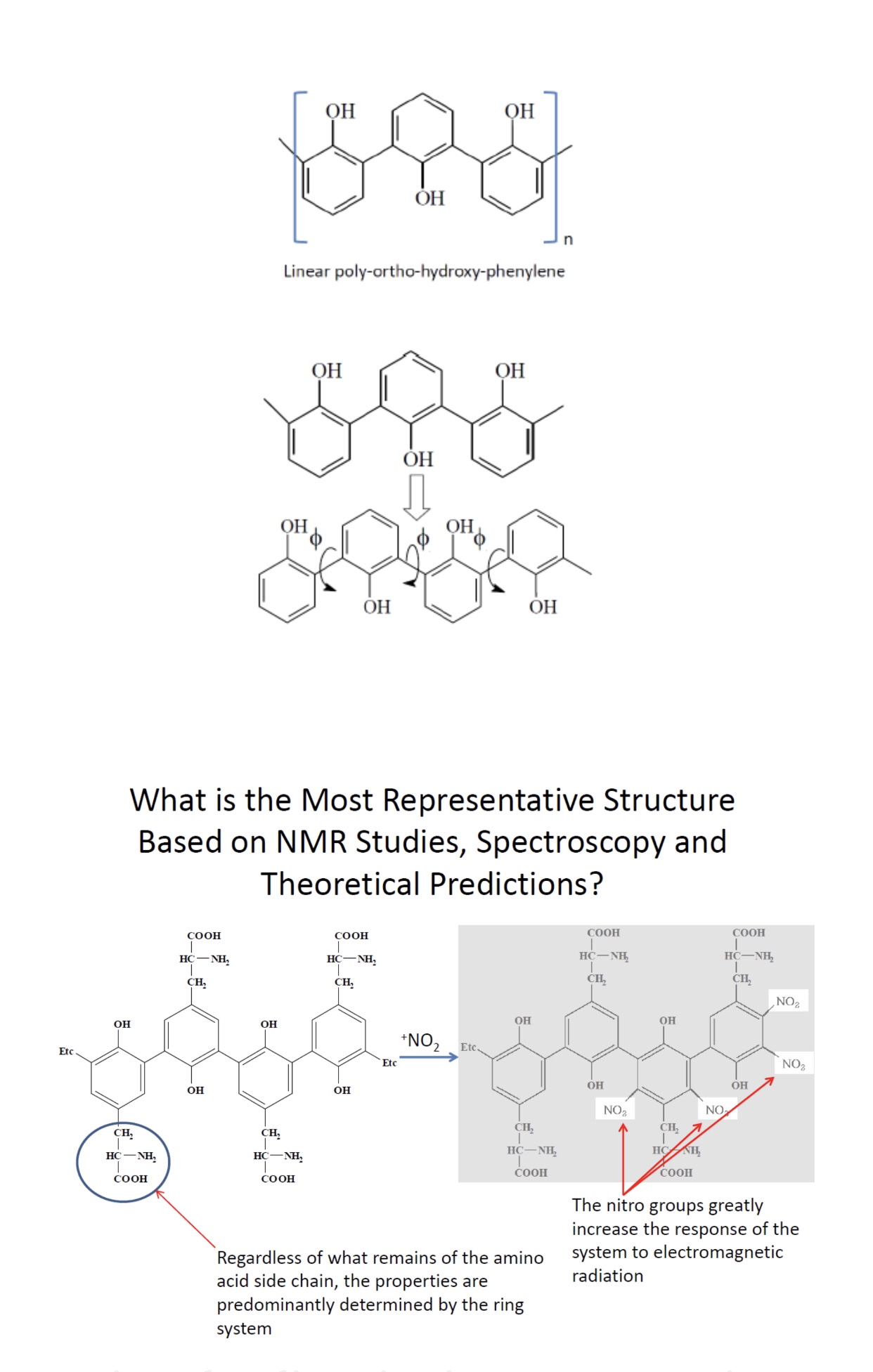
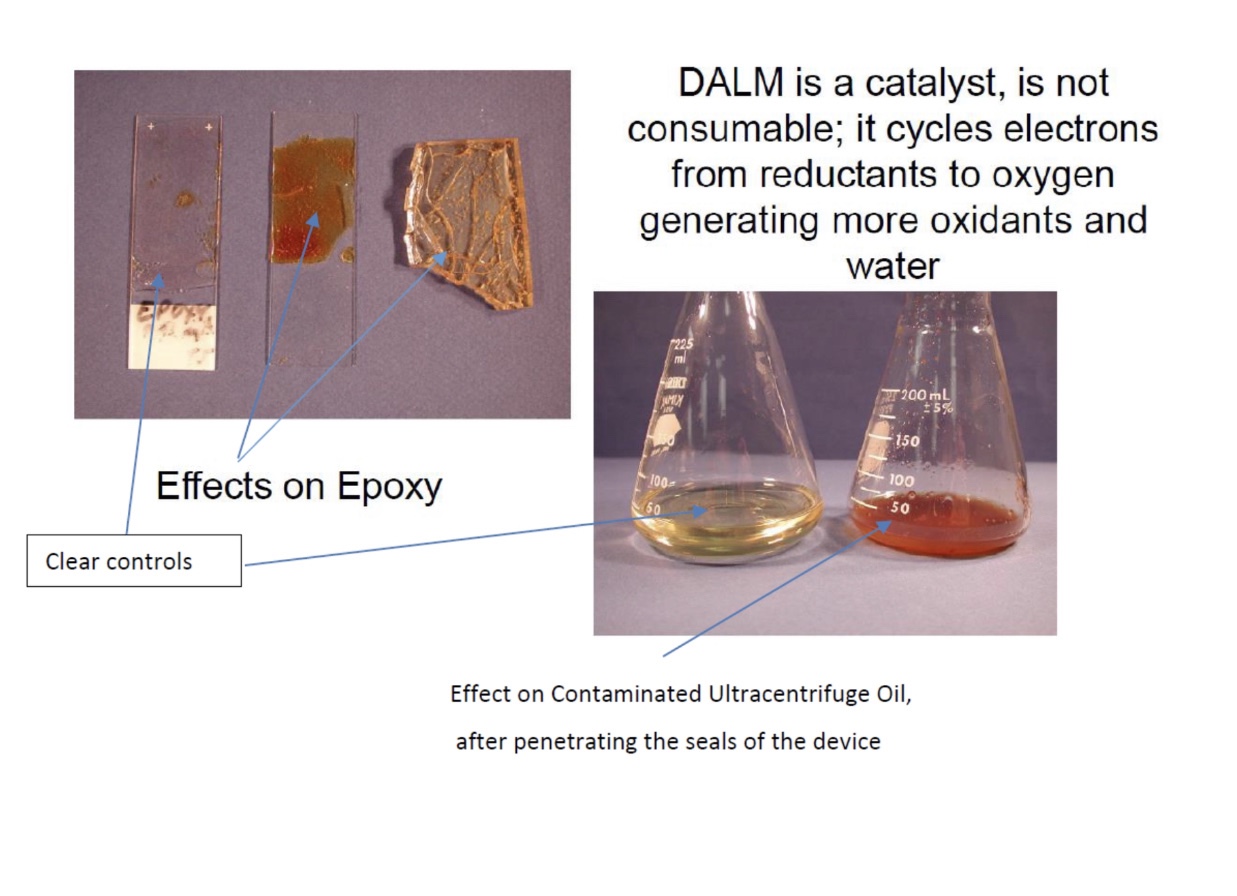
The directly connected benzene rings (phenols) are the essential structure of DALM whether the side chains are present or not; additional nitration of the rings is also likely as well as the fibers being capped at the ends of the aromatic chains with luminol rings directly covalently linked; notice the loss of the intervening diazo groups during ring polymerization; these polymers will continue to grow, albeit slowly, over months, as long as reactants are present.
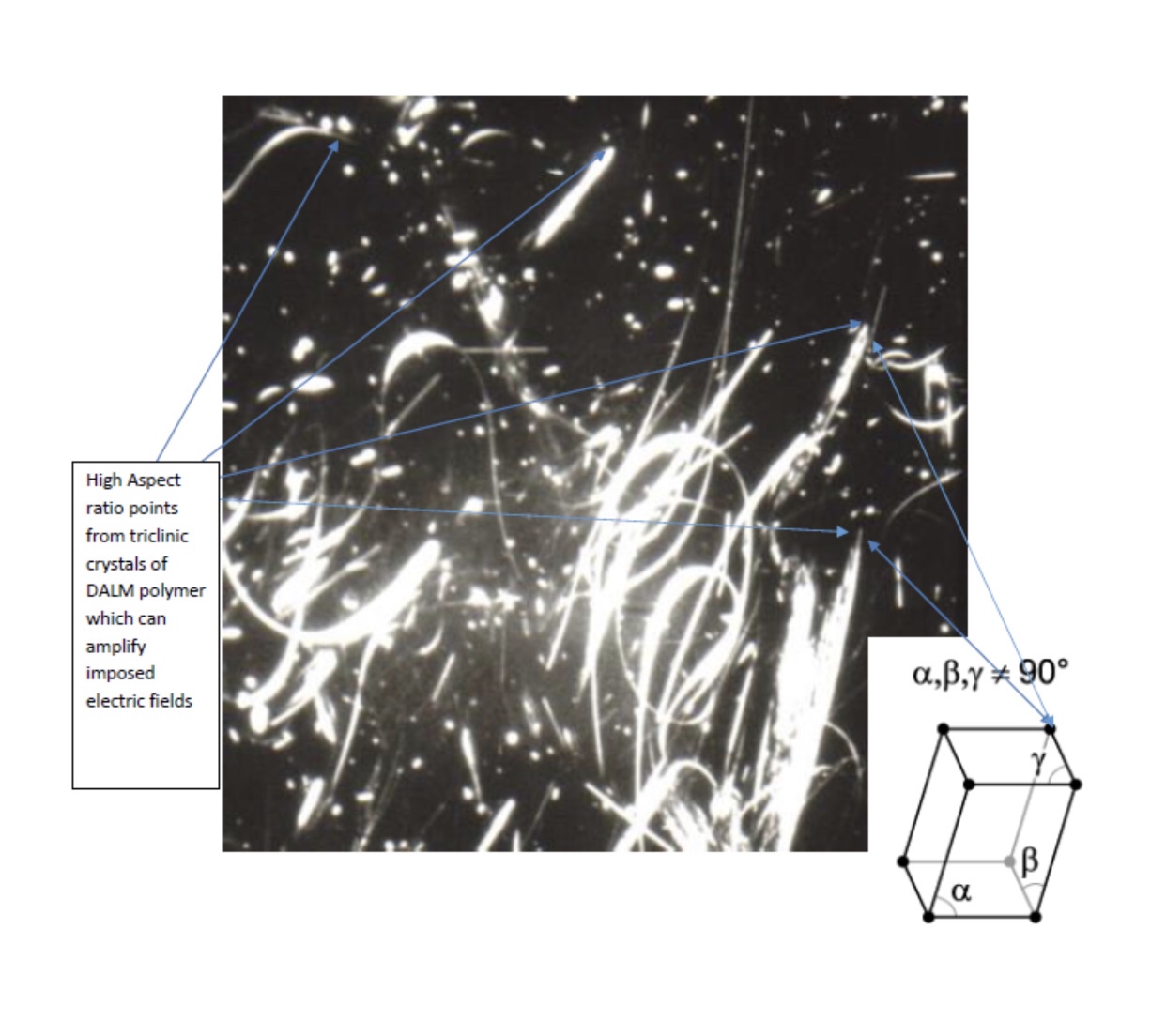
The polymer formed pointed, sharp ribbons and even some quasi-crystalline structures
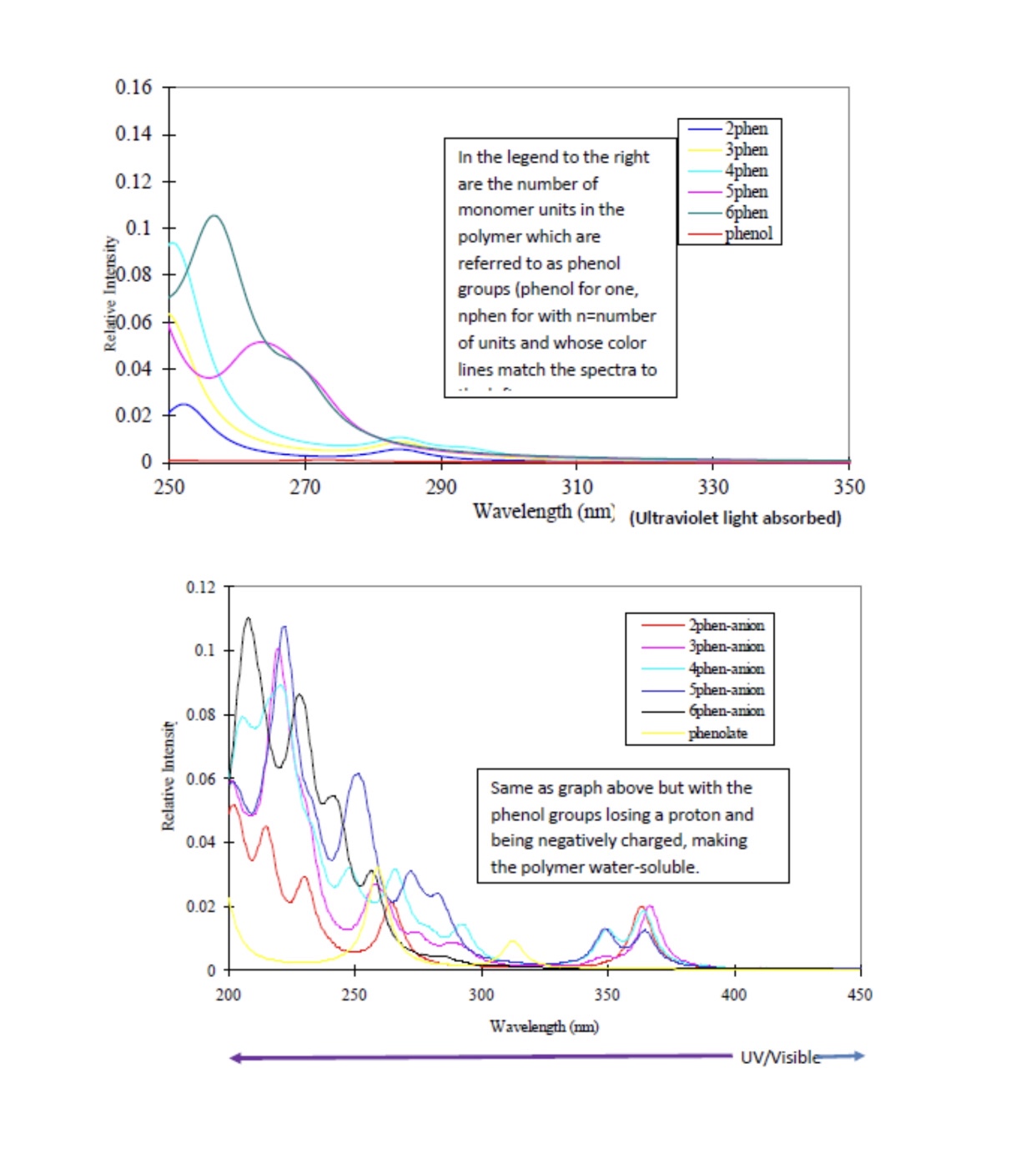
The UV/visible light absorption spectra of DALM depends on the number of phenyl ring units in the polymer as well as whether it is ionized; therefore, if the rings are in plane or rotated out of plane, and/or bound to an ionic substance, the polymer spectrum will change.
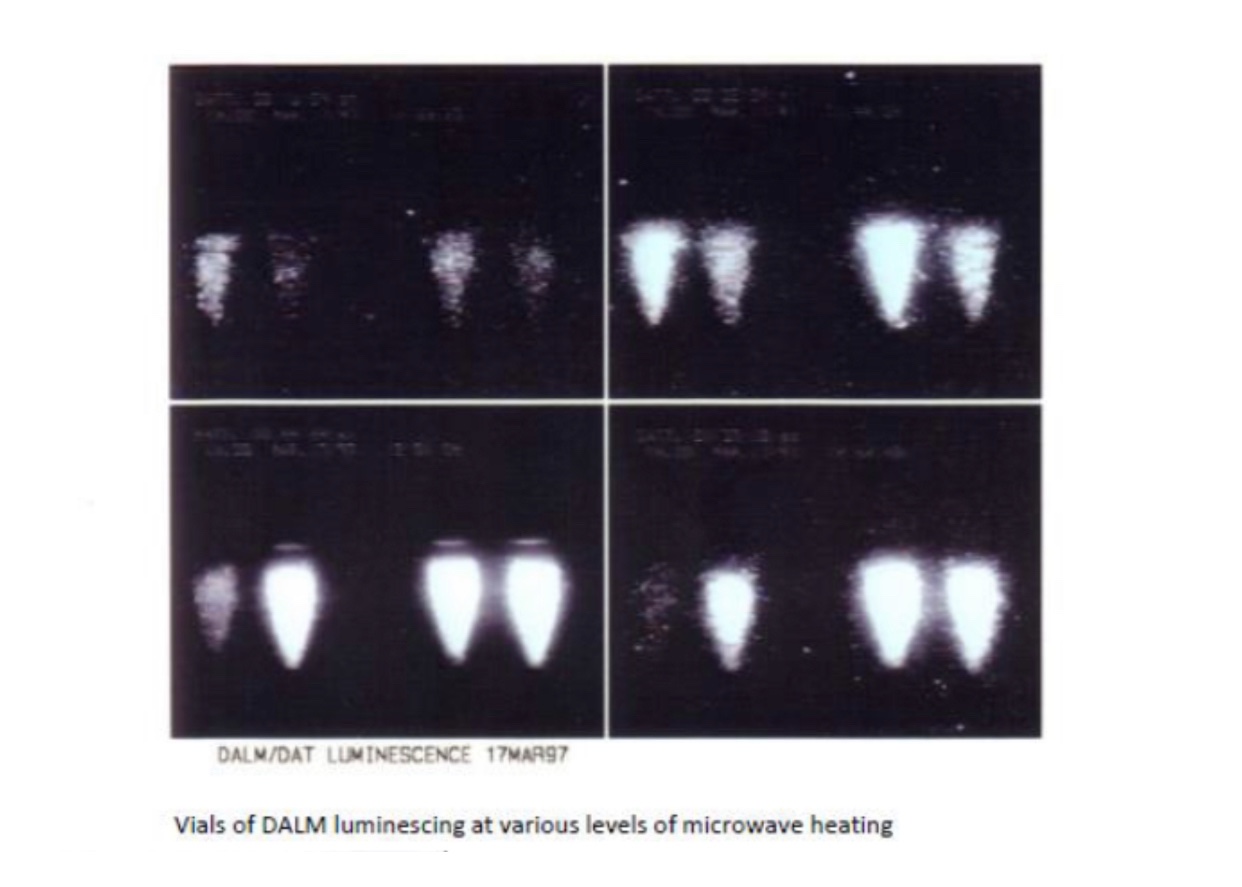
The DALM spectra suggested other properties such as the production of luminescence during oxidation increased by microwave, ultrasound or conventional heating (thermochemiluminescence).
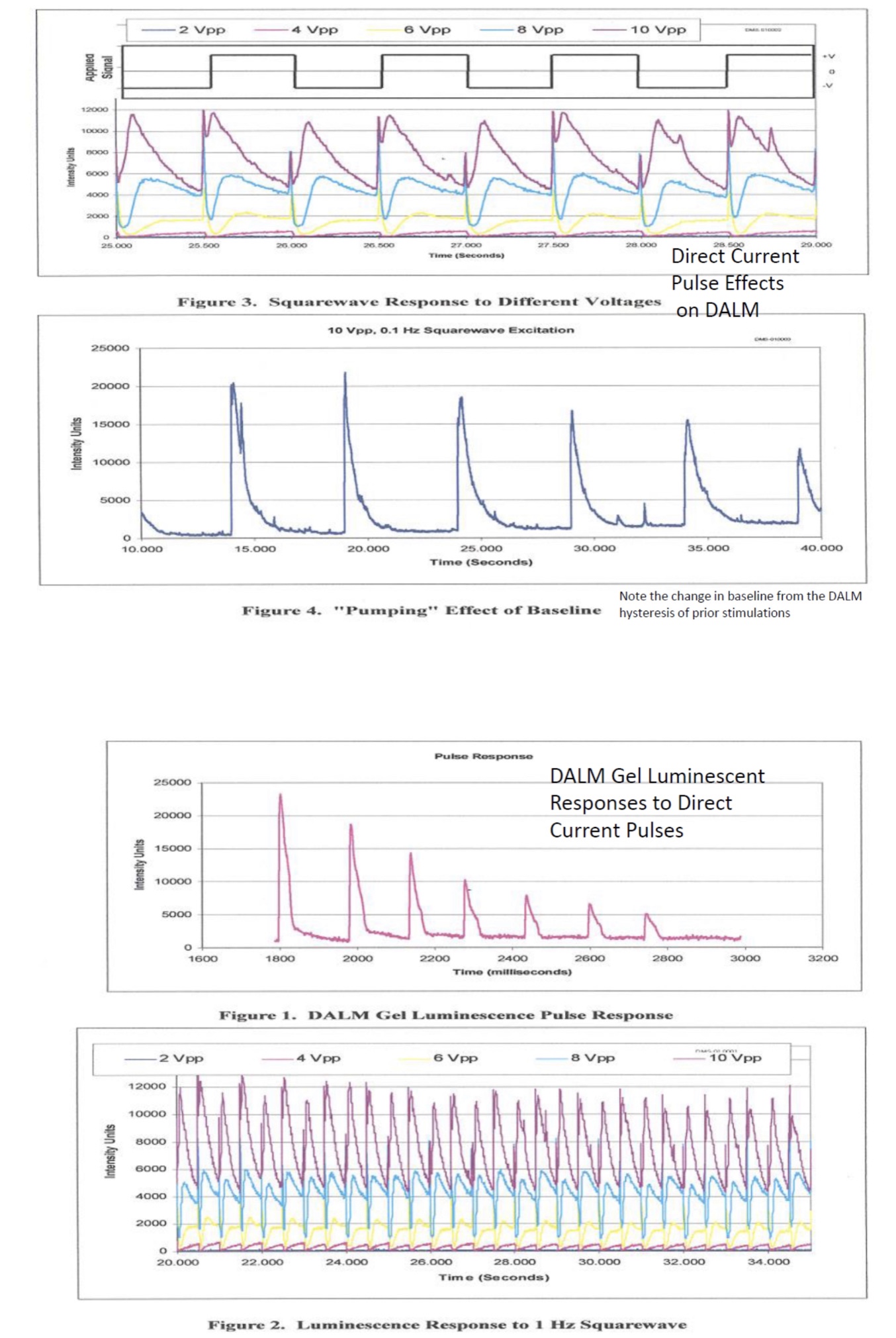
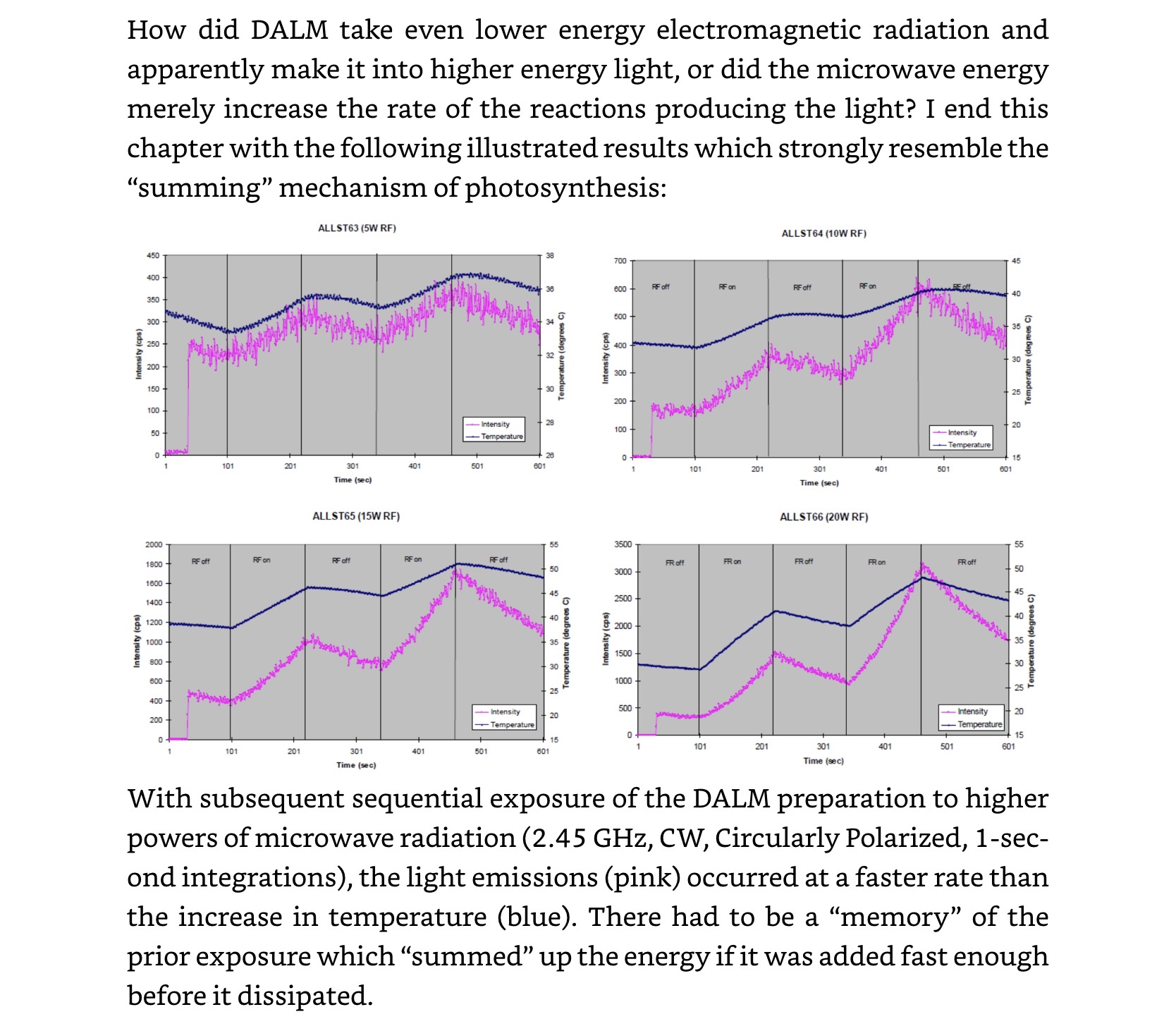
Pulses of Direct Current also yielded luminescence of DALM which was not dependent on temperature (electrochemiluminscence), which was voltage dependent in a positive way, but decreased with repetition; however, the low level steady-state luminescence increased with the number of subsequent pulses (added up).
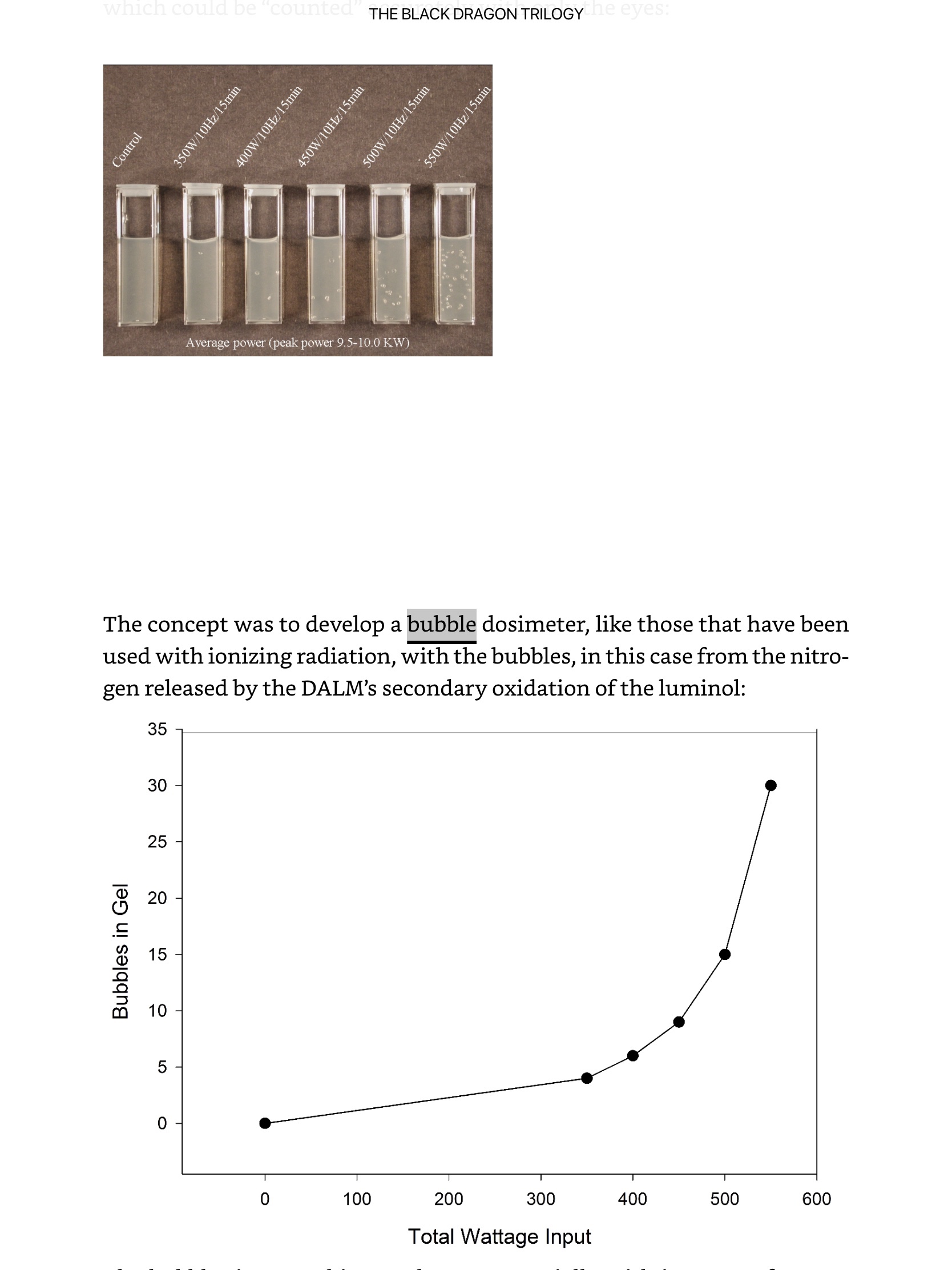
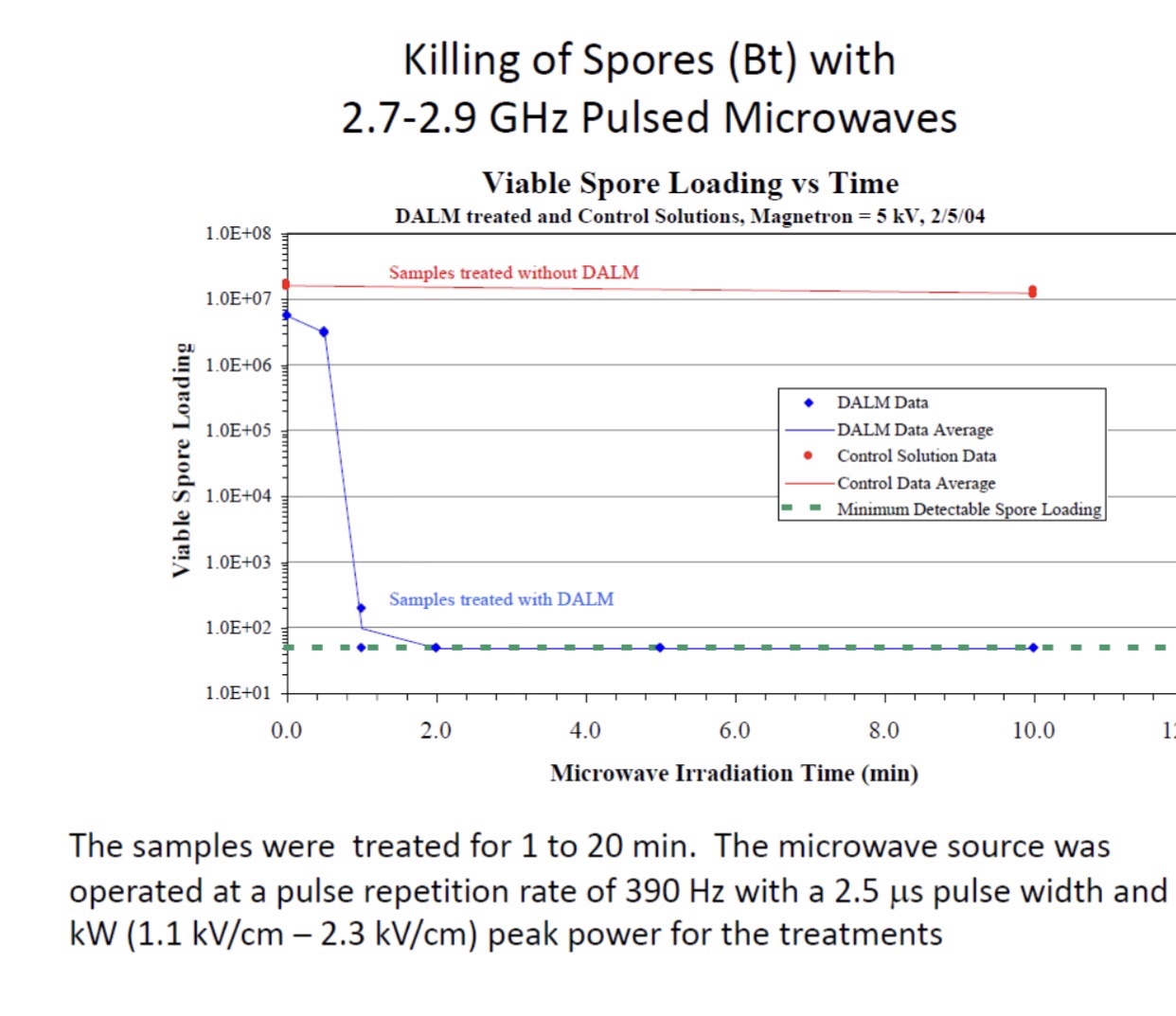
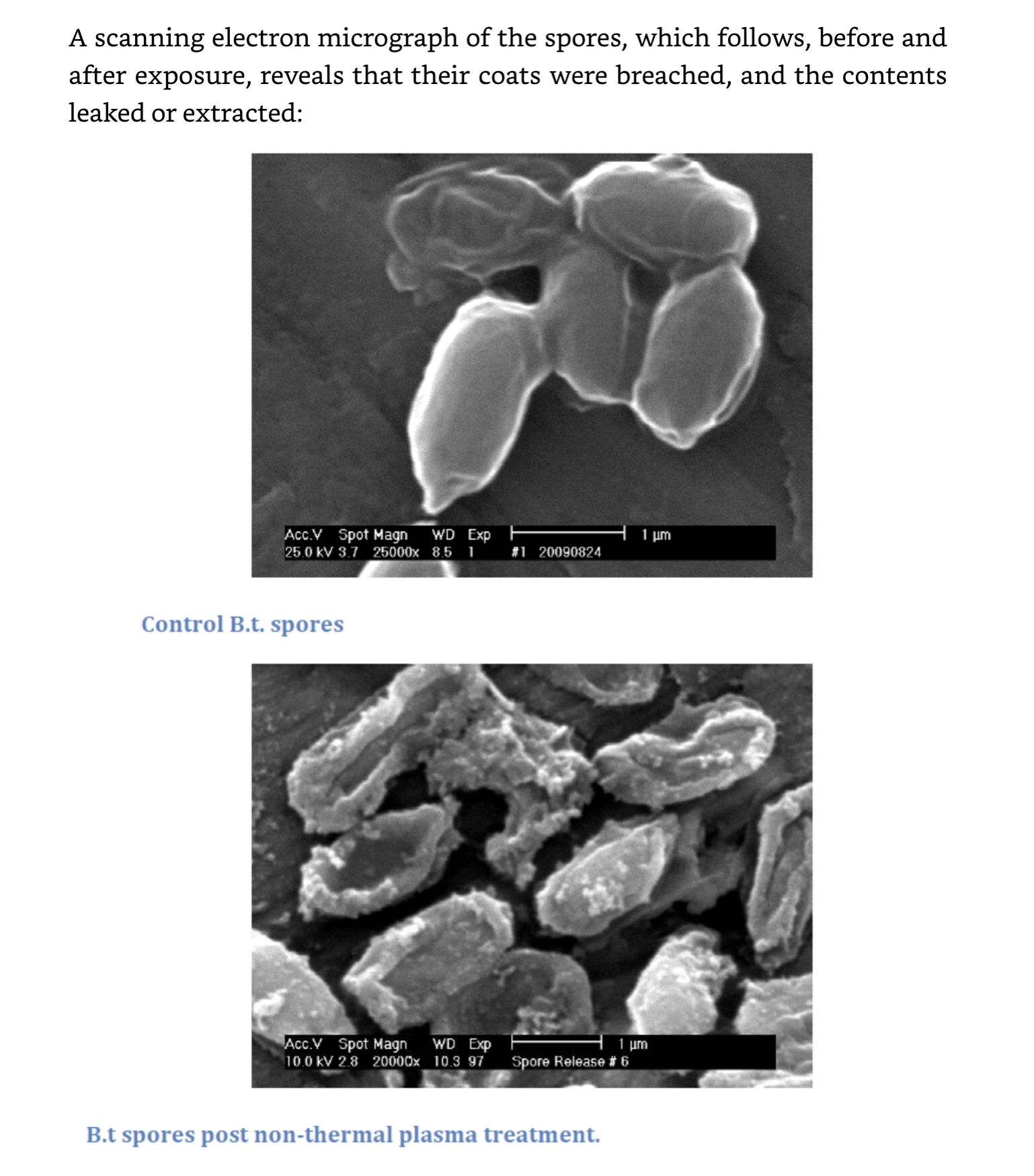
Killing of spores by DALM with pulsed microwaves which would be otherwise insufficient

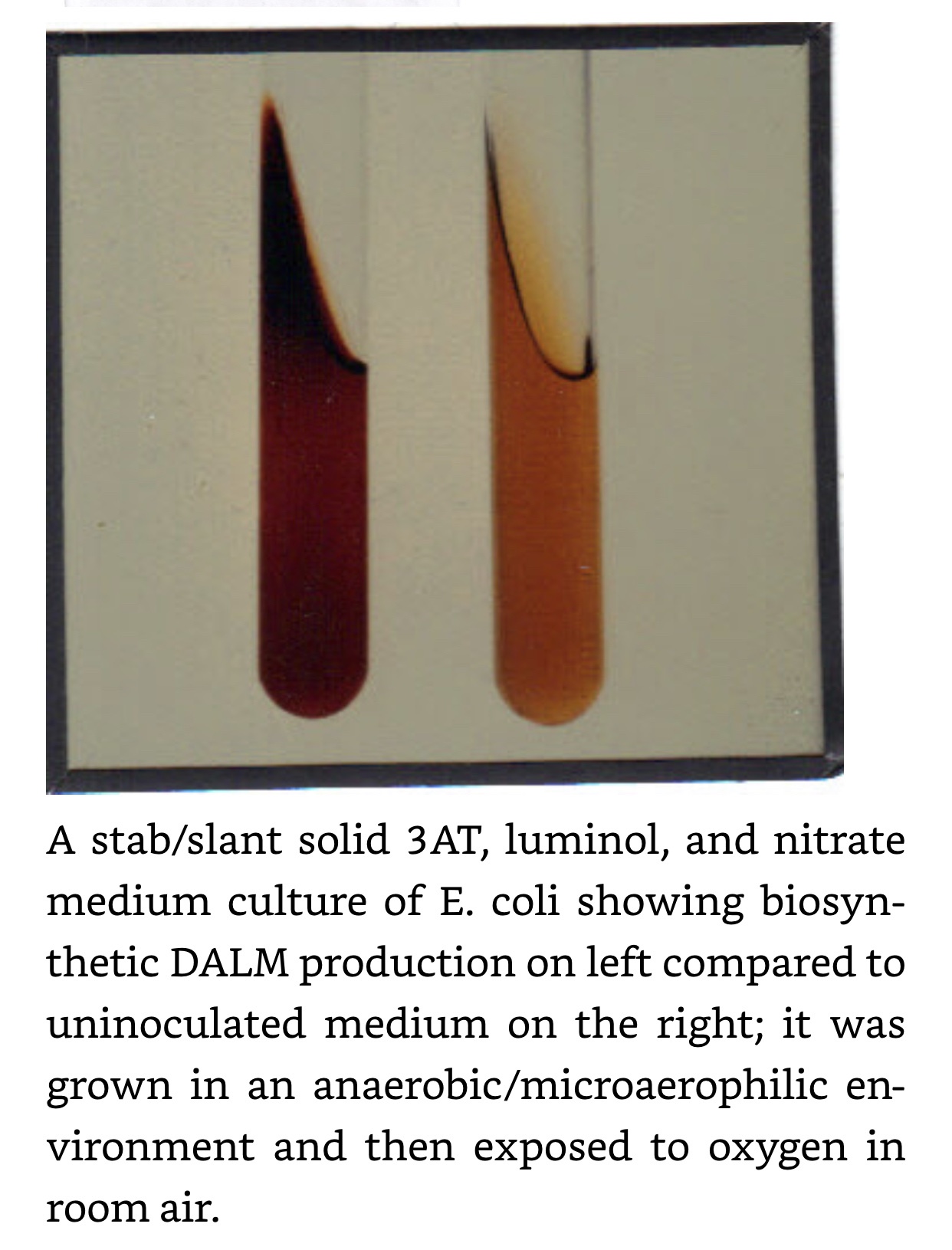
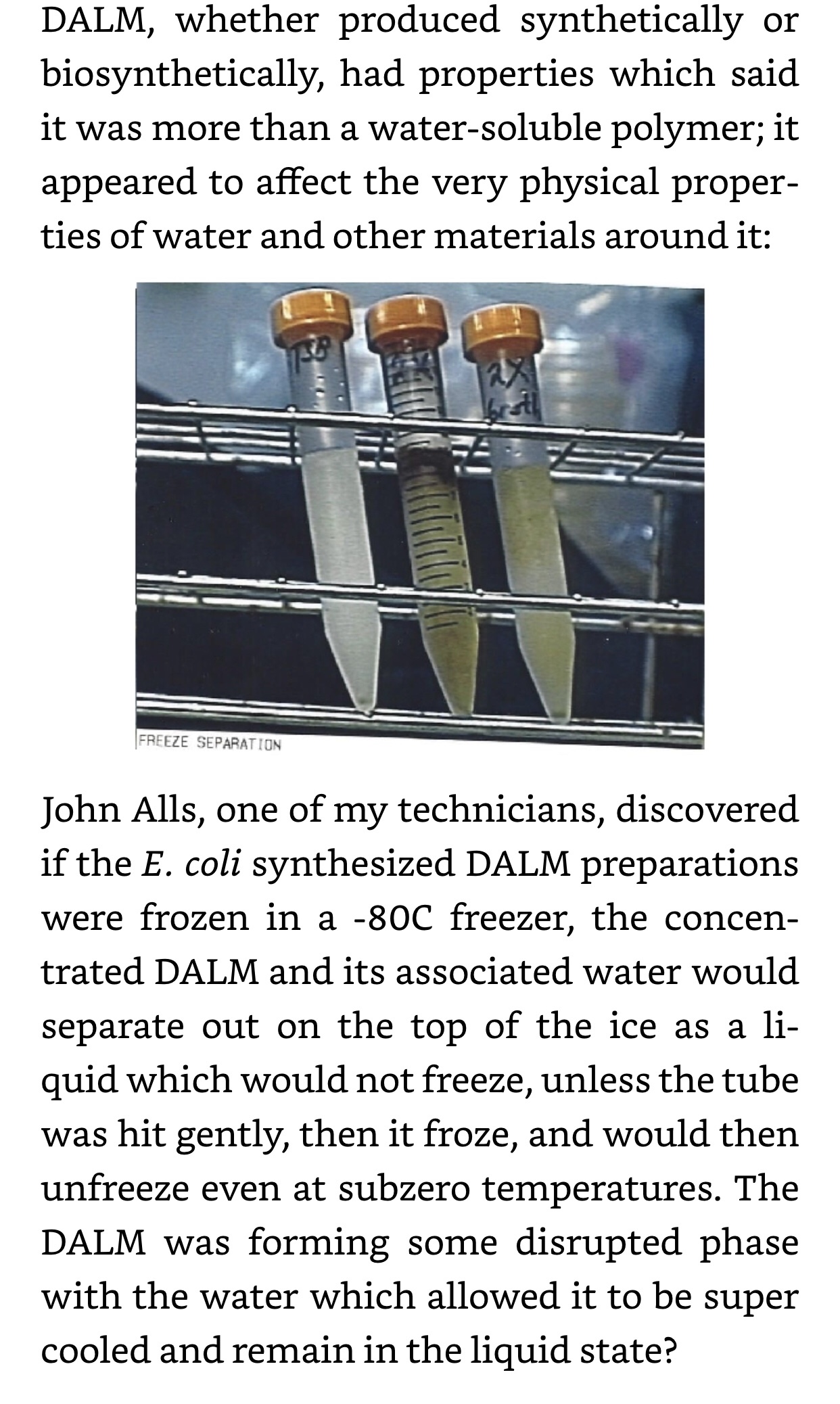
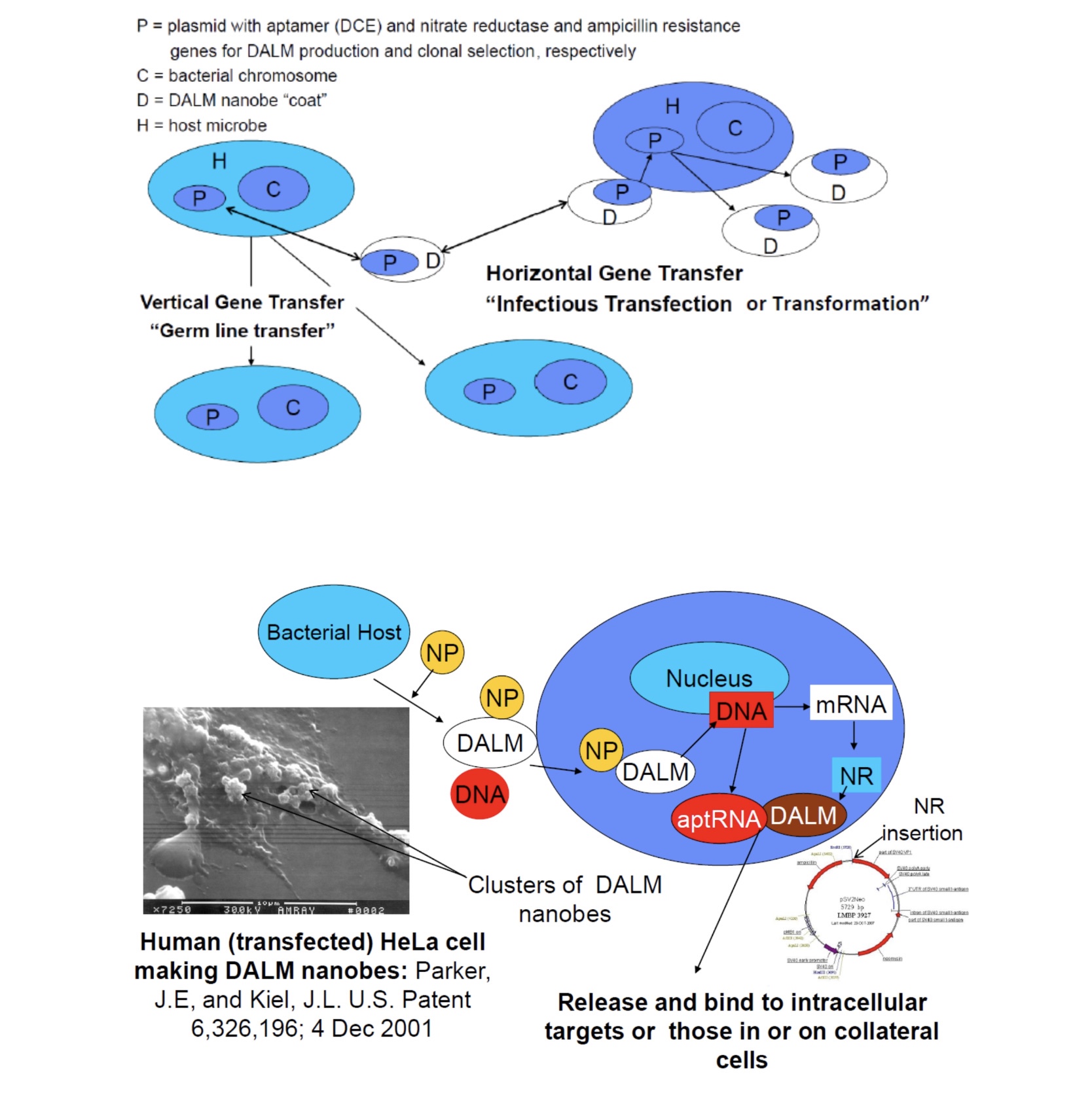
What was most remarkable was that by cloning a subunit of a plant (barley) nitrate reductase gene through plasmids into bacterial to even human cells, endogenous nitrate reductase in bacteria and nitric oxide synthase in animal and human cells could be greatly enhanced in their production of nitrite. They also became capable of endogenously synthesizing DALM when fed nitrate, 3-amino-L-tyrosine and luminol. They produced it in a spheroid nanoparticle form.

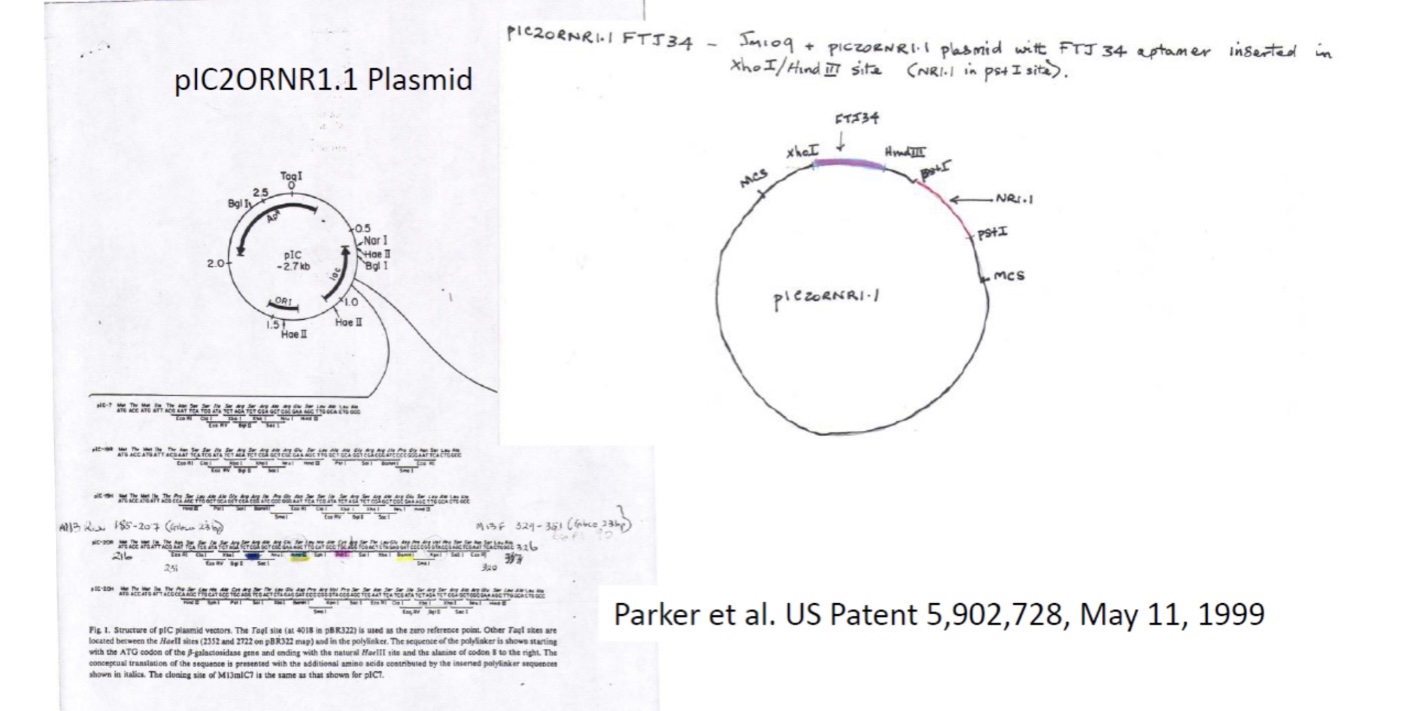
Plasmid used to transfer DALM production to E. coli bacteria
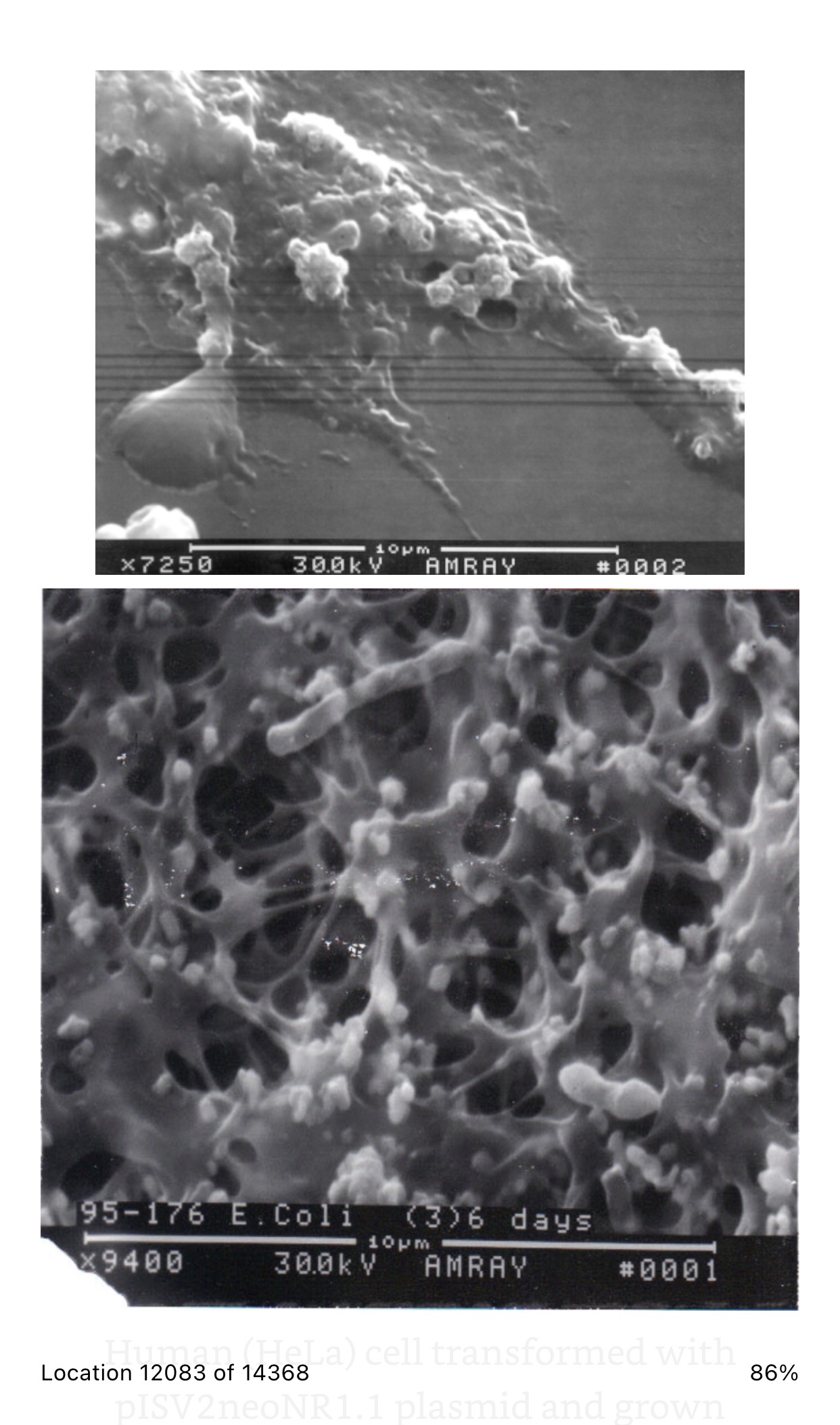
Electron micrographs of DALM nanoparticle clusters (white) of biosynthsized DALM from HeLa NR1 human cells (upper) and E. Coli with plC2ORNR1.1 plasmid (lower).
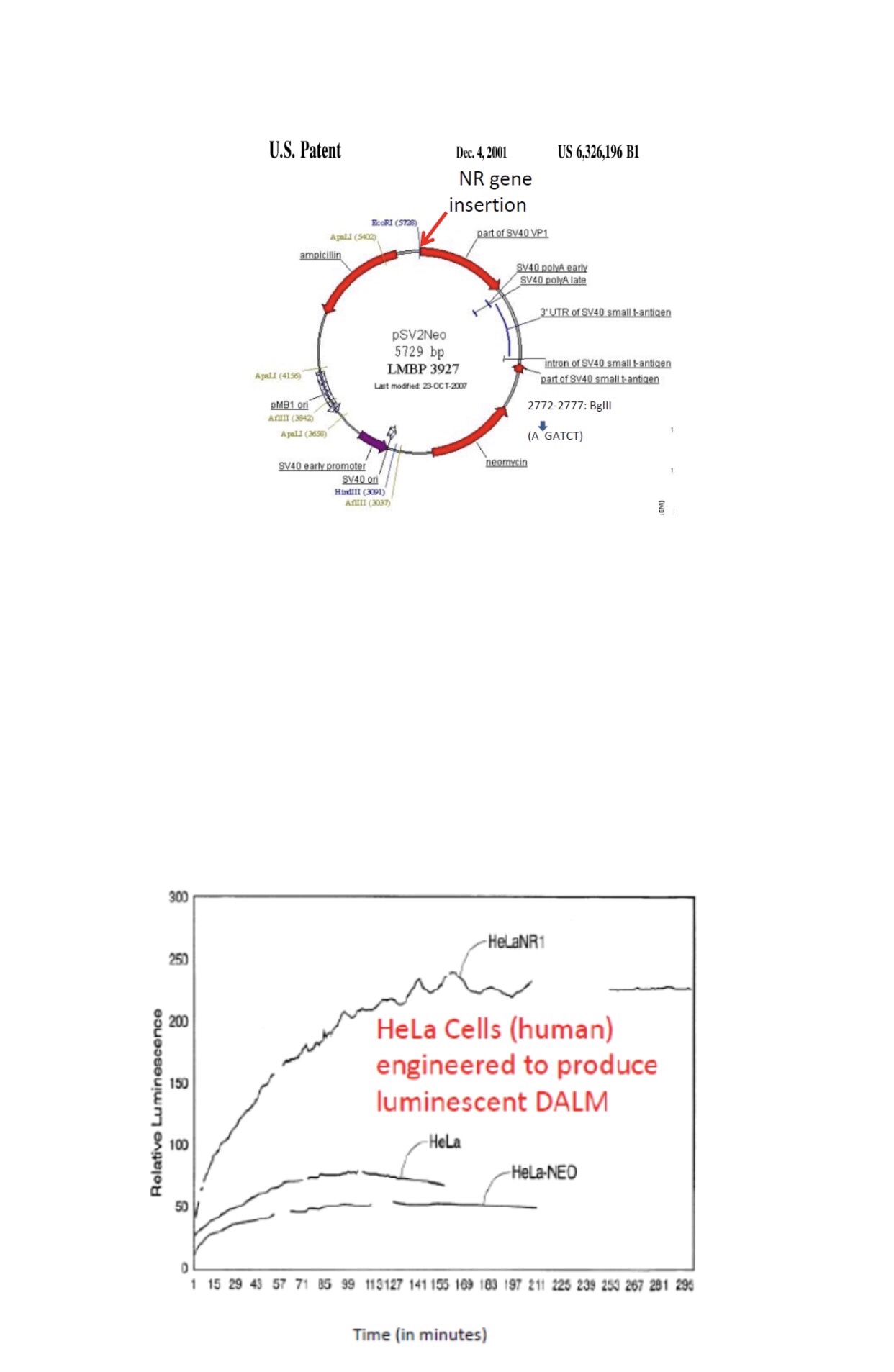
Plasmid for making DALM in human cells and the results
Specific aptamer DALM/iron nanoparticles attached to vegetative and spore forms of anthrax bacteria
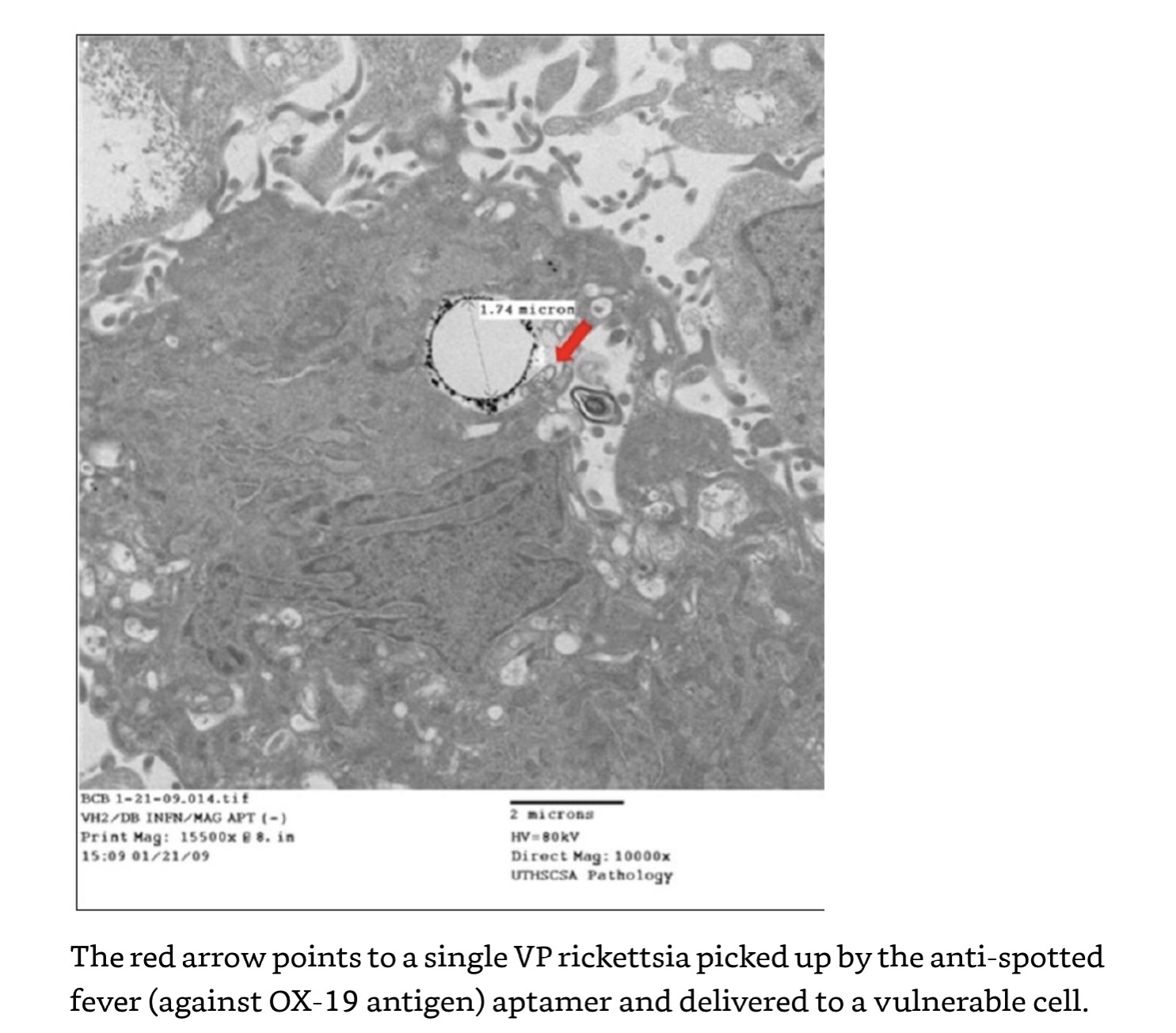
Transmission electron micrograph showing a specific aptamer iron nanoparticle attached to a single spotted fever rickettsia, in turn, attached to a micro bead in a host cell
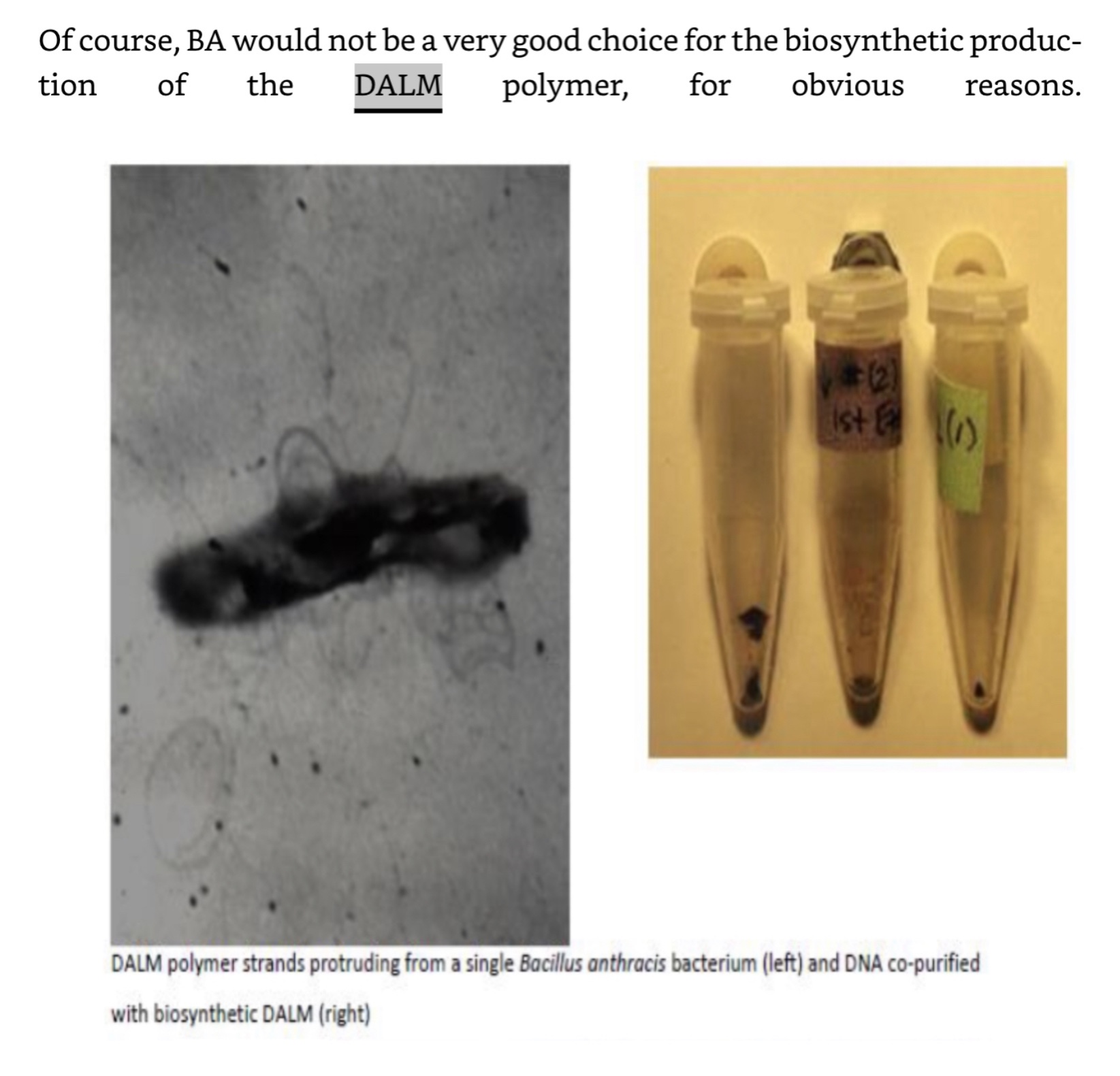
The anthrax bacterium can synthesize DALM from a feedstock growth medium (fibers looping from the bacterium); the black DNA precipitates in the bottom of the centrifuge tubes are DNA co-purified with DALM, which preferentially binds to it, from bacteria which was genetically engineered to produce DALM. Synthetic DALM had been shown earlier to co-polymerize with DNA
https://patentimages.storage.googleapis.com/da/70/20/9be062cddc54bc/US5003050.pdf.
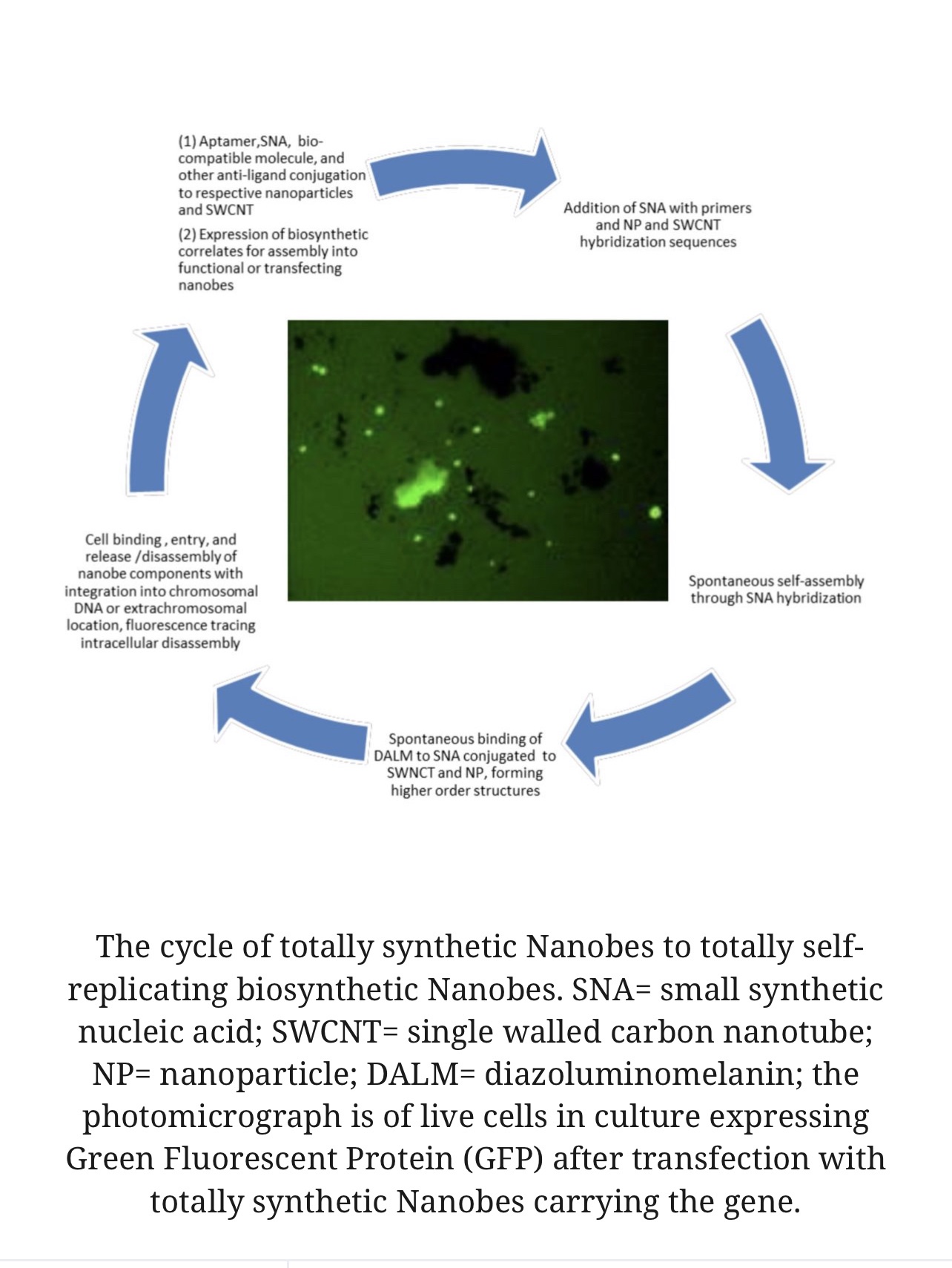
The final proof of the acquired trait of the transformed E. coli to manufacture DALM nanoparticles which transfer the plasmid which conveys the ability to make more such functional DALM plasmid-containing nanoparticles. Subsequently transformed E. coli were observed to do this in three iterations of making such particles transferring them to naive E. coli, which, in turn, made more and transformed more naive E.coli.
Again showing the killing of spores with DALM coated metallic nanoparticles and pulsed microwaves
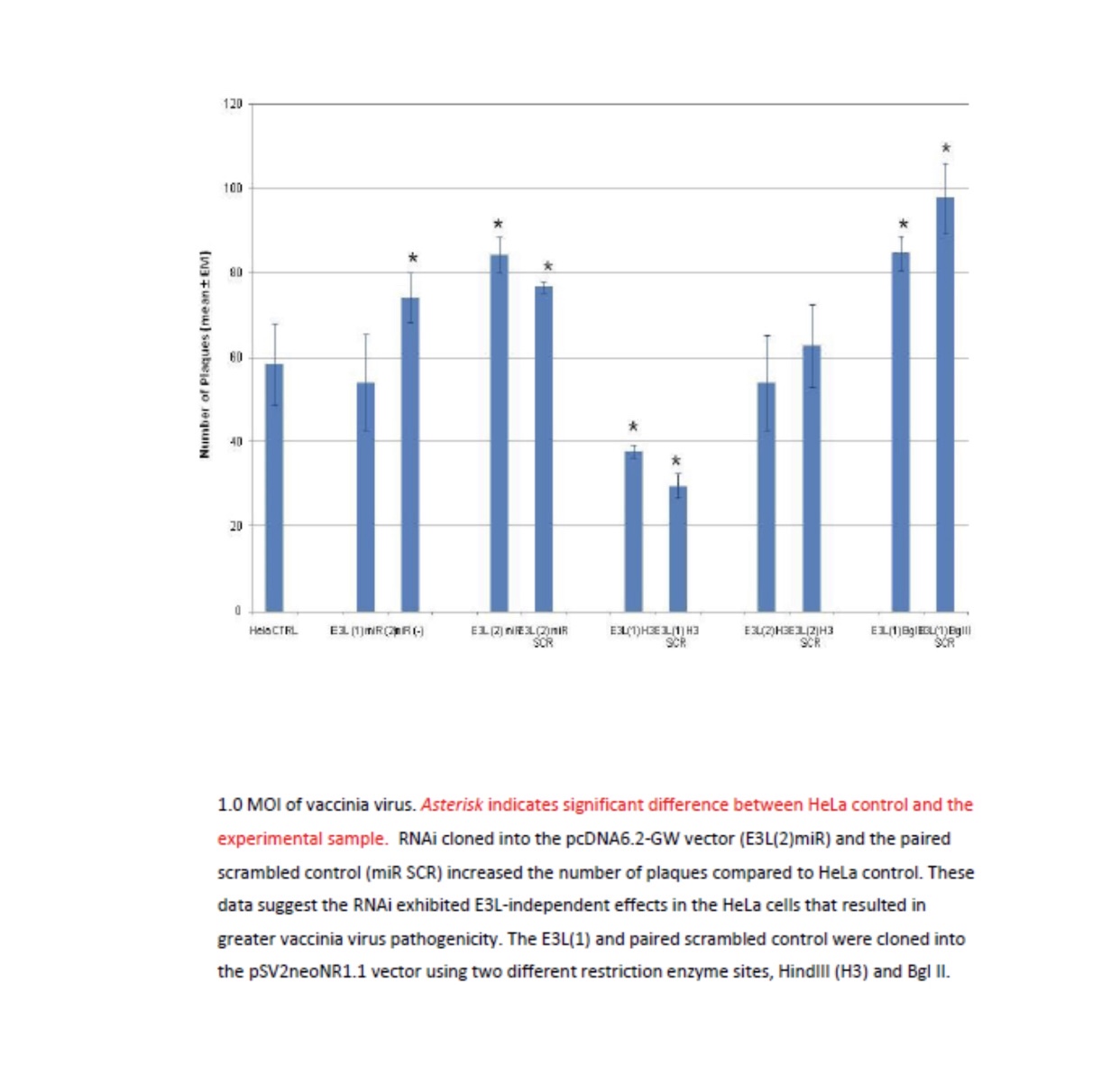
Last experiment showing effects of DALM-generating antiviral ((vaccinia) gene, unfinished business

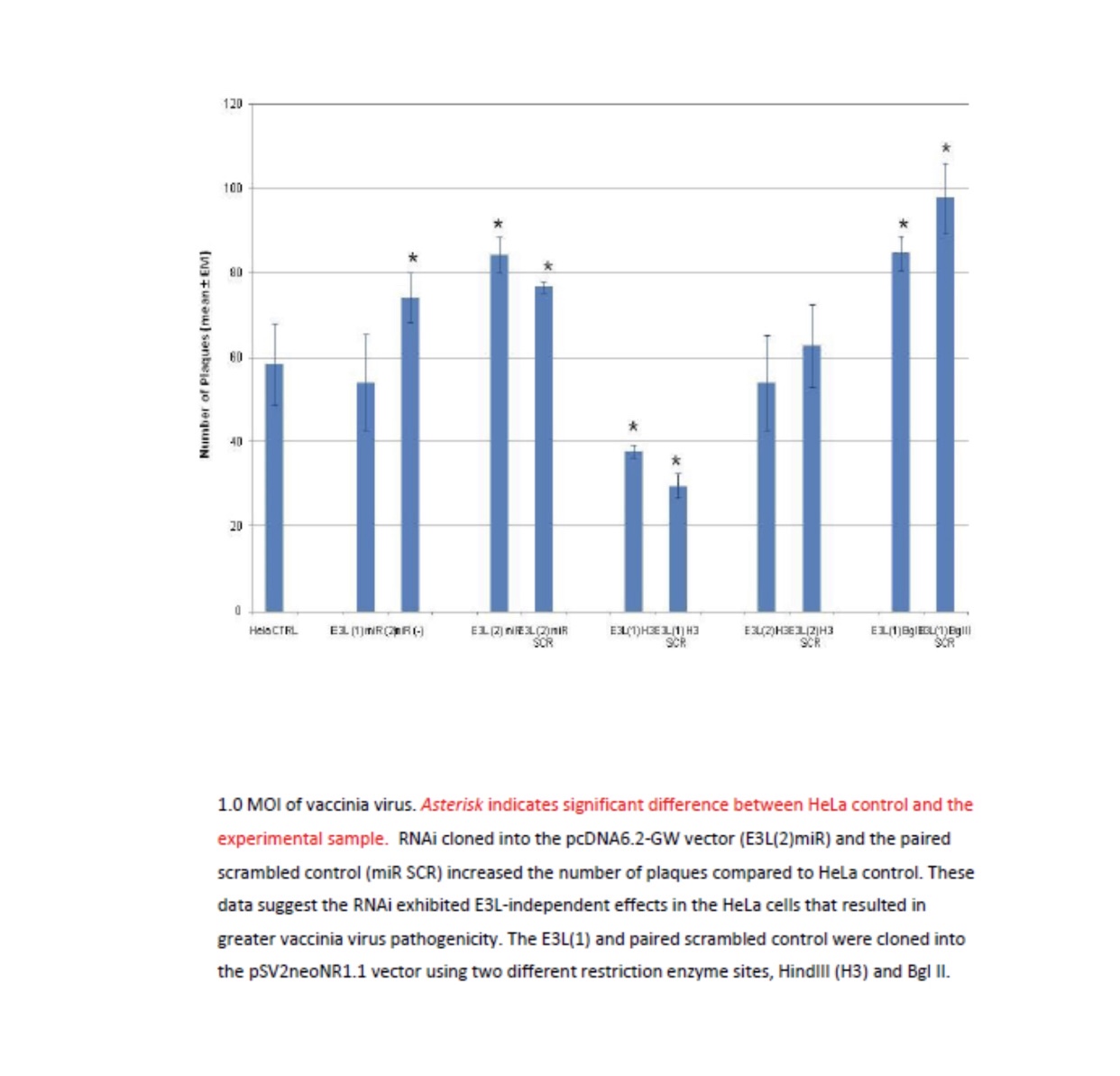
In a previous post, I showed how our last experiments at Brooks showed plasmids containing the nitrate reductase gene subunit could significantly inhibit the replication of vaccinia virus (close vaccine relative of smallpox) and surprisingly how certain arrangements of the gene, with one that produces iRNA, which blocks a viral gene that inhibits apoptosis, actually increases host cell lytic plaques (following viral infection), but did not necessarily increase the subsequent yield of virus. Unfortunately, because of the closing of Brooks further confirmation was not possible, particularly of the latter. What has been confirmed over and over again with many experiments is that DALM produced by these cells could be activated by pulsed microwaves which will destroy cells bearing DALM nanoparticles, external or internal, as a fail safe against transfected or transformed cells, and destroy viral or bacterial pathogens contained within or as bystanders, but spare cells that are not in the immediate vicinity. This would have been a remarkable achievement that makes DALM nanoparticles superior to any gene vector currently available for research or therapy or for vaccine delivery.

Additional Issues with Nucleic Acid Vaccines: Possible Perils and Benefits Important to COVID-19

mRNA vaccines, like those being clinically tested, and possibly alternate DNA vaccines, discussed in an earlier post, not only must lead to the synthesis of the correct protein in situ to yield the appropriate immune response, but also not trigger innate immune responses directly that are pathological. We saw this in our previous research on artificial nucleic acids for treatment of infectious diseases. The toxicity of aptamers noted in our earlier studies may have been influenced by their interactions with the innate immune system, either TLR-9 receptors or other unknown ones that trigger adverse responses. In vitro studies have demonstrated that, in autoimmune-prone mice, dual signaling via the B cell receptor and non-CpG (cytosine/guanine base coupled) DNA results in synergistic B cell activation in a TLR9-independent manner. These results suggest that engagement of a TLR9-independent DNA activation pathway may trigger autoimmunity. TLR9 can mediate either efficient Th1- or Th2-dominated effects depending on whether innate immunity is stimulated by CpG or other certain non-CpG oligodeoxynucleotides (ODN).

Lymphocyte produced Th1-type cytokines produce pro-inflammatory responses responsible for killing intracellular parasites and for promoting autoimmune responses. Interferon gamma is the main Th1 cytokine. Excessive proinflammatory responses can lead to uncontrolled tissue damage. The Th2-type cytokines, including interleukins 4, 5, and 13, promote IgE and eosinophilic responses in atopy, and in addition, interleukin-10, as an anti-inflammatory response. IL-10, produced by CD4 + lymphocytes of the Th-2 subset, not only inhibits synthesis of gamma-interferon by both T cells and NK cells, but also inhibits the synthesis of NOS by mouse macrophages. Th2 responses counteract Th1 mediated anti-microbicidal actions. The optimal scenario is well balanced Th1 and Th2 responses, appropriate for the immune challenge. Allergy may be a Th2 weighted imbalance with Th-1. Immunologists have been seeking ways to redirect allergic Th2 responses toward Th1 responses to try to reduce the occurrence of atopy.

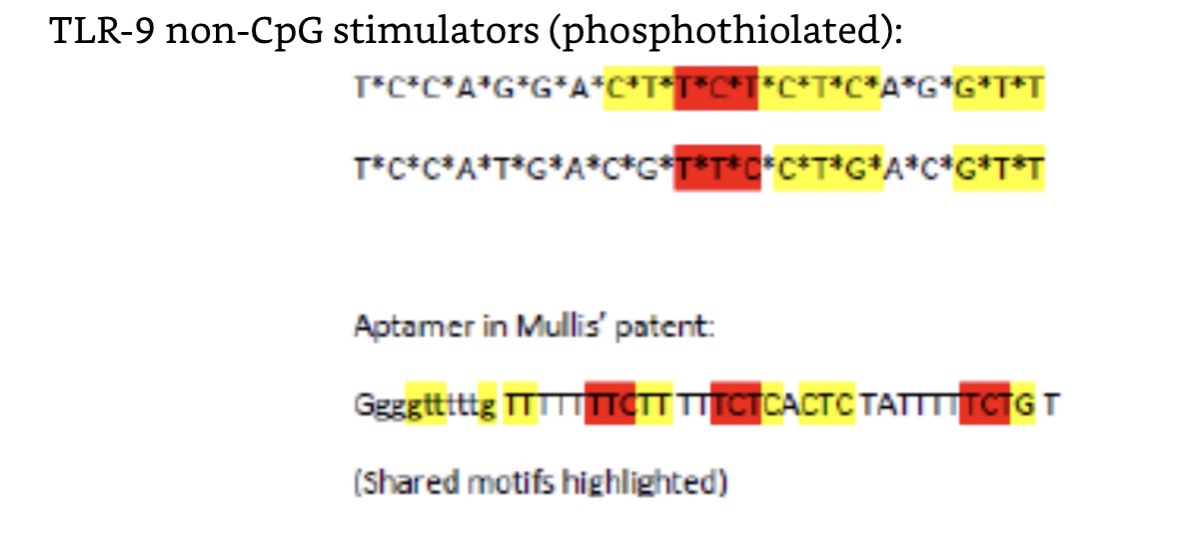
The non-CpG sequences that can be found in aptamers could cause this Th1 to Th2 shift, the latter is usually considered less inflammatory. Therefore, subsets of sequences must be carefully selected in therapeutic or vaccine nucleic acids to avoid these untoward undesirable effects. The following chart shows that some of the aptamers in our studies had these non-CpG sequences:

Examples of sequences that direct the immune pathway

The following types of Toll-like receptors control the off-target consequences of nucleic acid therapeutics and vaccines; the secret is finding a combination with the targeted function of the nucleic acids that is mutually beneficial: TLR3 against Double-stranded RNA of Viruses; Poly (I:C) Synthetic analog of double-stranded RNA ; TLR7 and TLR8 against Single-stranded RNA from Viruses; and TLR9 against Unmethylated CpG DNA of Bacteria, Protozoa, Viruses, and Mitochondrial DNA (possibly pathogenic).

In addition to insights into how the immune system might respond to synthetic artificial nucleic acids, we must also consider how off-target effects might manipulate host nucleic acid functions, protein expression and physiology, in general. There are natural examples (viroids) of such manipulation, some pathological. However, their discovery also led to new approaches to gene therapy such as RNA interference to effect gene expression changes (translation into functional proteins by affecting other genes but not being transcribed themselves). RNA interference (RNAi) inhibits gene expression or translation by neutralizing targeted mRNA molecules. Historically, RNAi has also been known as co-suppression, post-transcriptional gene silencing (PTGS), and quelling.

“Viroids are plant pathogens and one human pathogen, Hepatitis D “virus”, which are made solely of nucleotides composing a single-stranded RNA. Viroid genomes range in size from 246 to 467 nucleotide bases, smaller than any known virus. They were discovered by Theodor Otto Diener, plant pathologist at the Agricultural Research Service in Maryland, in 1971. They do not code for protein and they use RNA polymerase II, a host cell enzyme which mediates messenger RNA (mRNA) synthesis from DNA, for replication, using the viroid RNA for a template. Some viroids are ribozymes, being catalysts which self-cleavage and ligate viroid genomes from larger replication intermediates. The first viroid identified was Potato Spindle Tuber Viroid. Approximately 33 “species” are known. The viroids replicate through a double-stranded intermediate RNA. They are then cleaved by a dicer enzyme into siRNAs (small interfering RNA), which are then incorporated into an RNA-induced silencing complex. The viroid siRNAs hybridize with the plant’s mRNA and cause disease by degradation or inhibition of translation of the mRNA into plant proteins, causing viroid diseases.”— The Black Dragon Trilogy by JOHNATHAN KIEL
https://a.co/3iXtFwv

“Human disease caused by a viroid is hepatitis D, or Delta Agent. Delta Agent is a viroid contained in the Hepatitis B Virus capsid. So, this virus and the Delta Agent simultaneous infect the patient. The hepatitis D viroid RNA complements and hybridizes with human liver cell 7S RNA, a small cytoplasmic RNA component of the signal recognition particle, the structure involved in the translocation of secretory and membrane-associated proteins. The hepatitis D viroid causes liver cell death by binding to and preventing the function of the 7S RNA and perhaps cleaving it.”— The Black Dragon Trilogy by JOHNATHAN KIEL
https://a.co/iUKBaeW

This examination is not meant to discourage taking advantage of nucleic acids for vaccine or therapeutic development but only to encourage the appropriate care needed before proceeding to the clinic.

Not only is the sequence important, but also the manufacturing of the whole delivery system must be well-defined and pure: Nanobes

The Right Stuff: A Vaccine Available to Everyone that can go Anywhere

The initial vaccine candidates from Pfizer and Moderna are both mRNA vaccines, if approved they would be the first mRNA vaccines ever approved. mRNA is an unstable molecule that breaks down when exposed to significant temperature fluctuations, even at ultra-low temperatures. mRNA vaccines require ultra-low temperatures of -70˚ to -80 for storage and shipment. In vaccine form, the importance of mRNA’s temperature stability is greatly amplified. This is an example of advanced biotechnology leading medical practicability: a demanding cold chain difficult to achieve even in the US and advanced countries but impossible in developing countries, not even considering that these requirements will drive the expected cost through the roof. https://www.laboratoryequipment.com/569702-Hurdle-1-Develop-COVID-19-Vaccine-Hurdle-2-Deliver-it-at-Ultra-low-Temperatures/.

Because of the mRNA vaccine ULT demands, Pfizer designed temperature-controlled shipping containers which use dry ice to keep the vaccine vials at -75˚C for 10 days. These are roughly the size of a suitcase and weigh about 70 pounds when fully loaded. However, a shortage of ultra-low temperature (ULT) freezers is anticipated because they are not usually available in most clinics, creating an added expense and probable loss, waste of vaccine, especially since federal distribution of cold-storage vaccines is anticipated to be sent in 1,000-dose shipments. The rush to purchase ULT freezers could lead to a national shortage, hampering distribution of such vaccines. AstraZenca and Oxford’s vaccine, which may be released next, needs -20˚C temperatures to ensure efficacy, a little better.

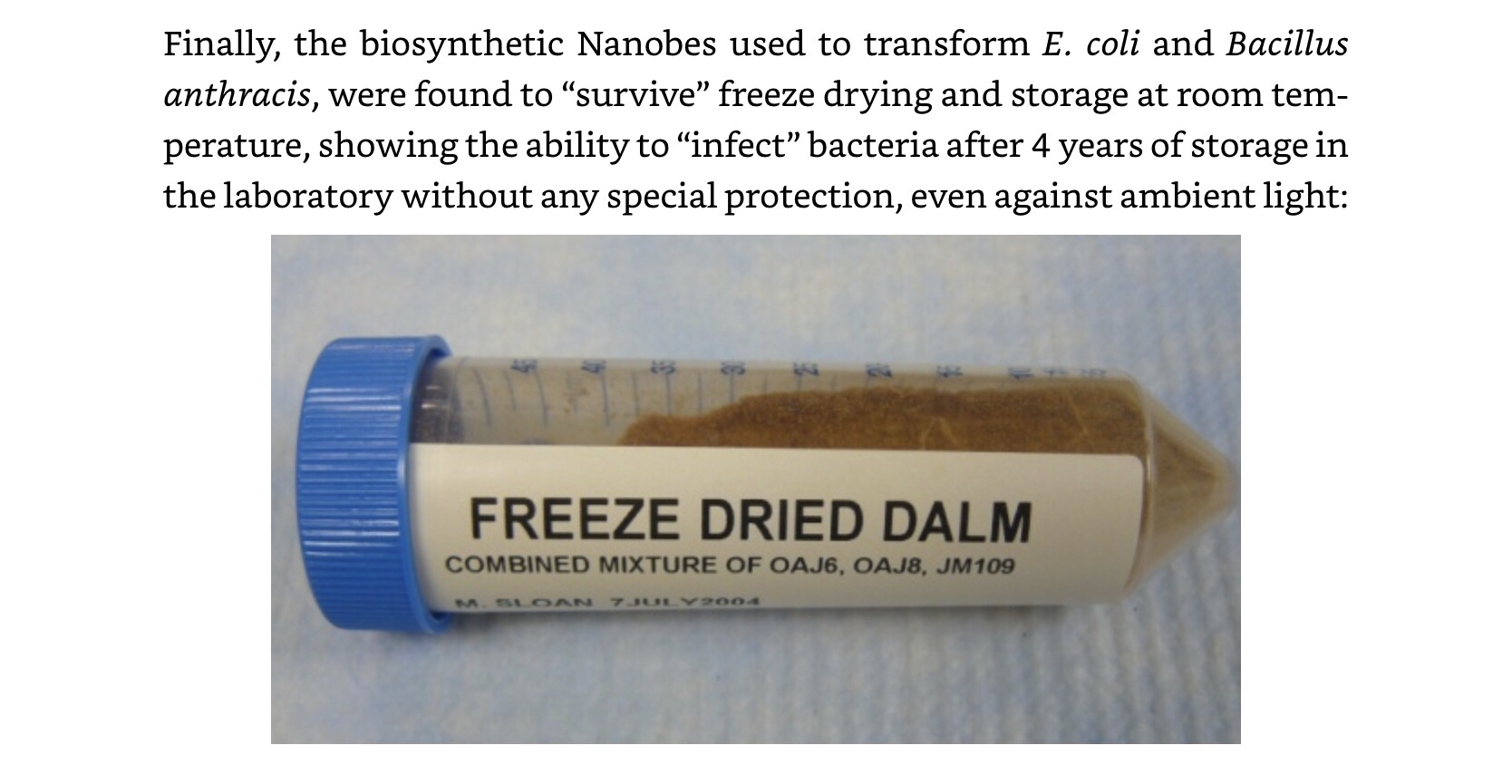
The developing world will need vaccine volume provided by 2 to 3 approved vaccines. They may even have to wait for a liquid vaccine, or at least a -20˚C vaccine that is widely available (still problematic in many countries and remote regions). The logistics of the frozen mRNA vaccines are nearly impossible for developing countries. The Associated Press estimates vaccine storage issues could leave 3 billion people in developing countries without access to a coronavirus vaccine. Are there other subunit nucleic acid vaccines that are more stable? Yes. DNA vaccines https://www.ncbi.nlm.nih.gov/pmc/articles/PMC1986720/.Messenger RNA (mRNA) molecules provide the templates in the cytoplasm of a cell for translation by the ribosome and tRNA (amino acid transfer RNA) into protein, making multiple copies of the protein from each mRNA template. This amplification provides a multiplication of the vaccine immunogen per molecule compared to providing individual protein molecules. However, offsetting that advantage, in addition to the instability of mRNA, only about one of 10,000 molecules of mRNA will escape into the cytoplasm after being taken up by a cell. Amplification by translation of mRNA into protein has to overcome the losses and the inefficiencies of degradation and the translation to protein. Unlike plasmid DNA, which must enter the nucleus of the cell, mRNA only needs to be present in the cytoplasm, which eliminates the additional barrier, the nuclear membrane, that plasmid DNA has to cross. However, plasmid DNA is more stable than mRNA, and each DNA molecule results in the production of multiple mRNA molecules, thus the theoretical advantages of one over the other is found in the net stability of plasmid DNA versus mRNA, as well as differences in efficiencies of targeting the proper cells, movement to the cytoplasm or nucleus followed by transcription of the plasmid DNA (transcription from DNA to mRNA), and the translation of mRNA, whether transcribed from DNA or translated from mRNA, to protein https://www.ncbi.nlm.nih.gov/pmc/articles/PMC6631684/. The Brooks Counterproliferation Team had to address these problems and others to achieve field durability for DNA aptamers, their vectors, and resistance to degradation in transit in the field and even methods to manufacture them in place in the field as necessary on demand.
In the military, we always considered durability and survivability of all technology used against biological agents so it could be used under adverse conditions with little or no logistical tail, minimal technical skill to operate or maintain safely under the most adverse conditions. Of particular concern was the area of NBC (Nuclear, Biological, Chemical) defense, aircraft and WMD (Weapons of Mass Destruction) neutralization (that is decontamination of aircraft and preventing the Special Forces aircraft from becoming contaminated in the first place by using appropriate NBC neutralization, and NBC sensor, monitoring, technologies). All these detection, isolation and identification technologies had to answer these questions: Is the agent present? What might it be? And is it safe to bring back a sample without contaminating the Special Forces aircraft so that it can’t land in permissive territory after exiting non-permissive territory with the agent in hand? Aptamers, used to isolate, identify and neutralize biological agents in place of antibodies and to turn infectious agents into autogenous vaccines by neutralizing their pathological mechanisms in an infected individual therapeutically, could be self-delivered by inhalation. This approach would have extreme operational utility when an attack occurred and could save many military by safe administration of the aptamers, quickly, that required no special handling or even cold storage. All the technologies were measured by their ease of use under adverse conditions, an approach which seems to be lost on SARS-CoV-2 vaccine developers, but which is absolutely necessary to distribute and effectively apply vaccines quickly worldwide to quell this pandemic.

A “system of systems”: The following are examples of military ruggidized technologies for use against pathogens under adverse, limited field conditions:

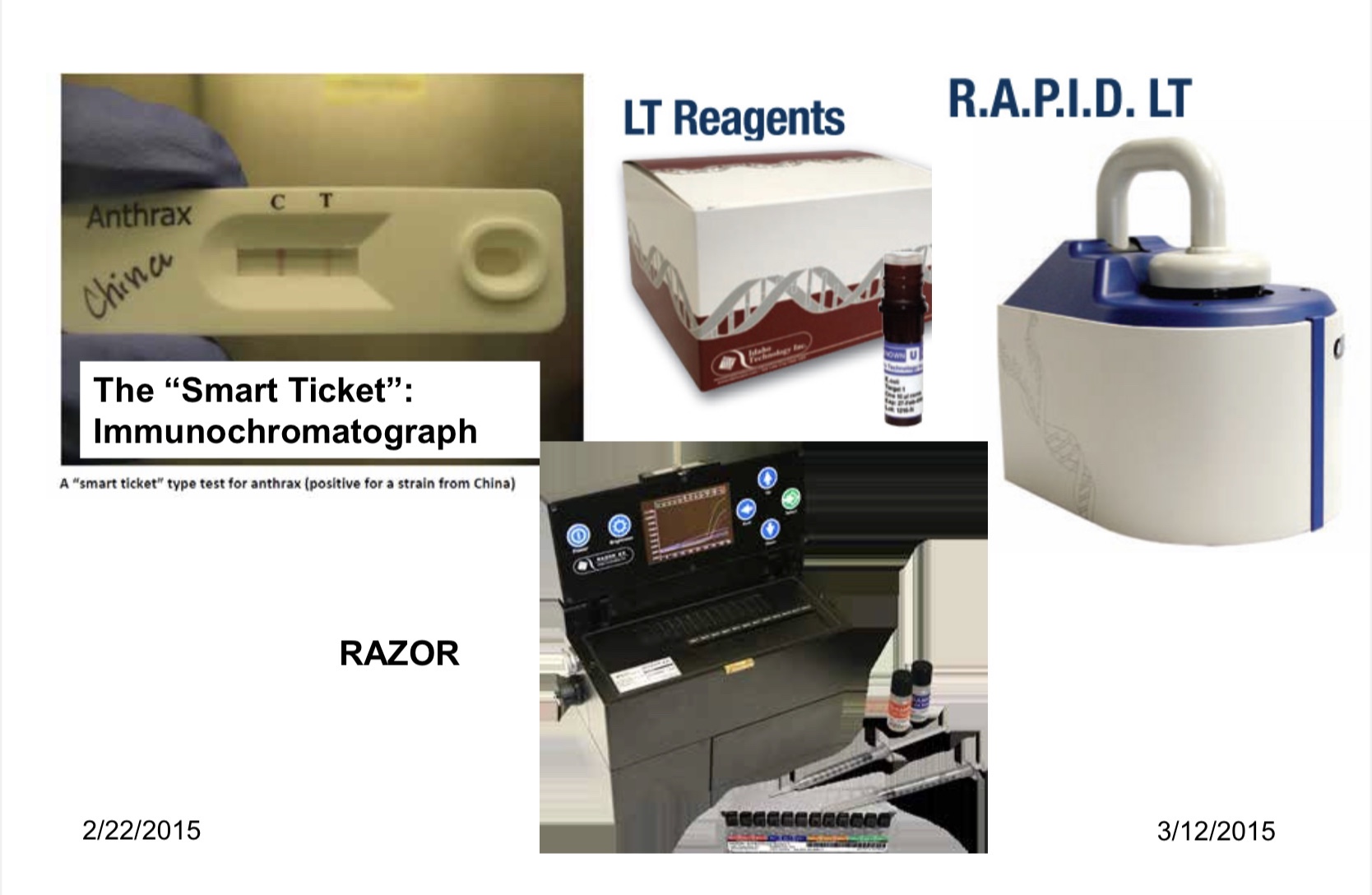
Rapid antigen test for anthrax spores and other biological agents and ruggedized PCR devices for especially dangerous pathogens
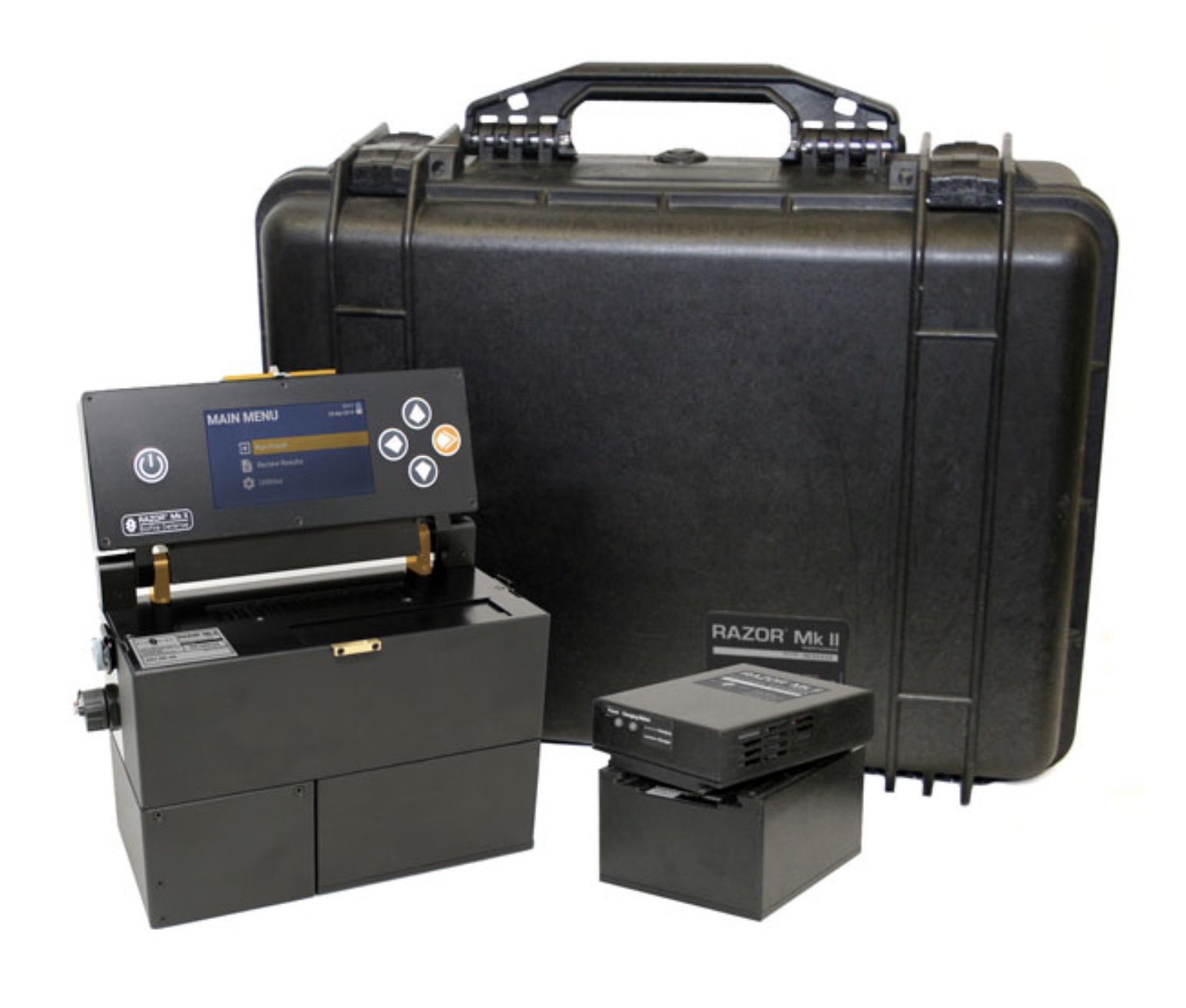
RAZOR PCR Device https://www.biofiredefense.com/
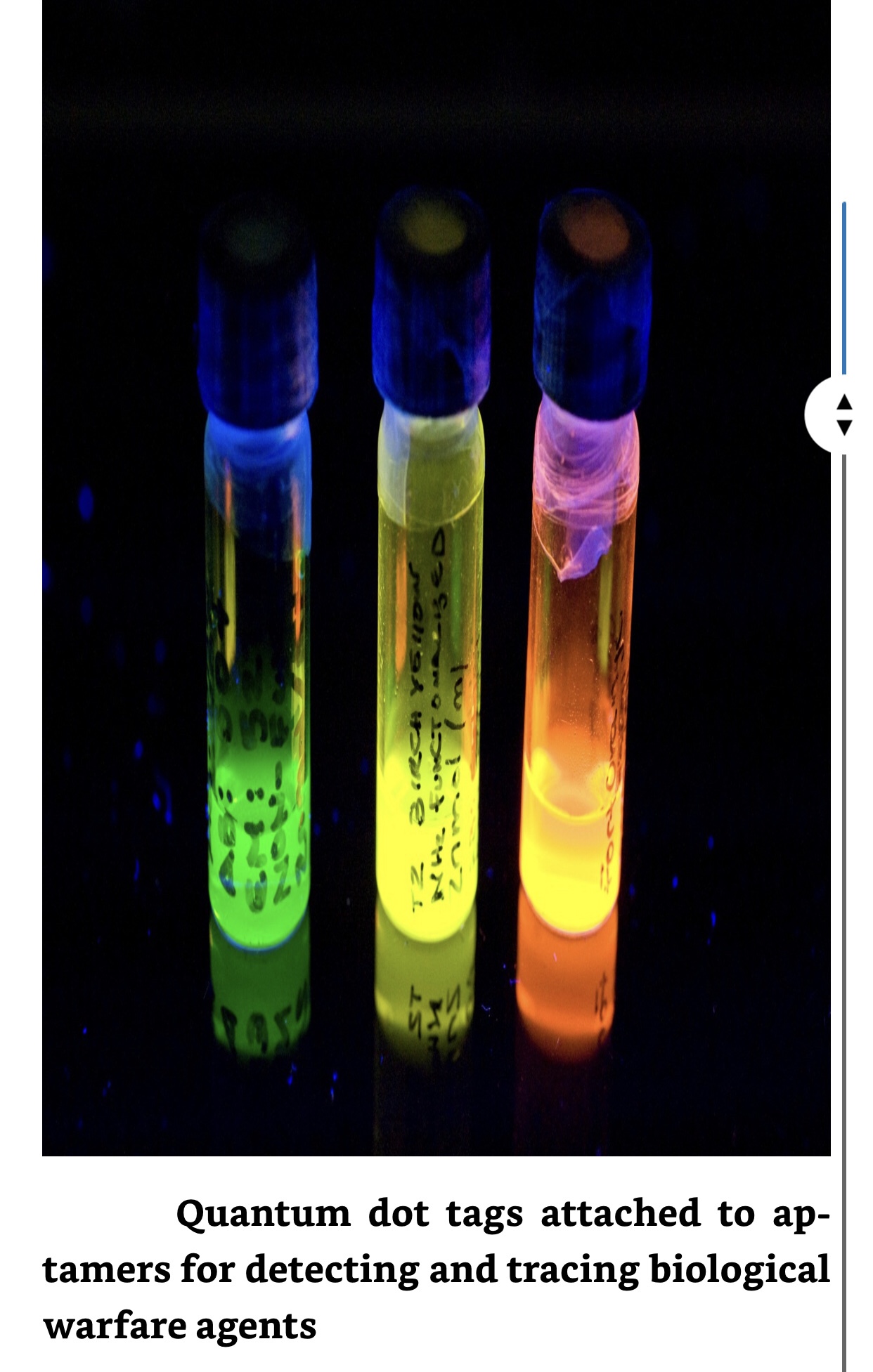
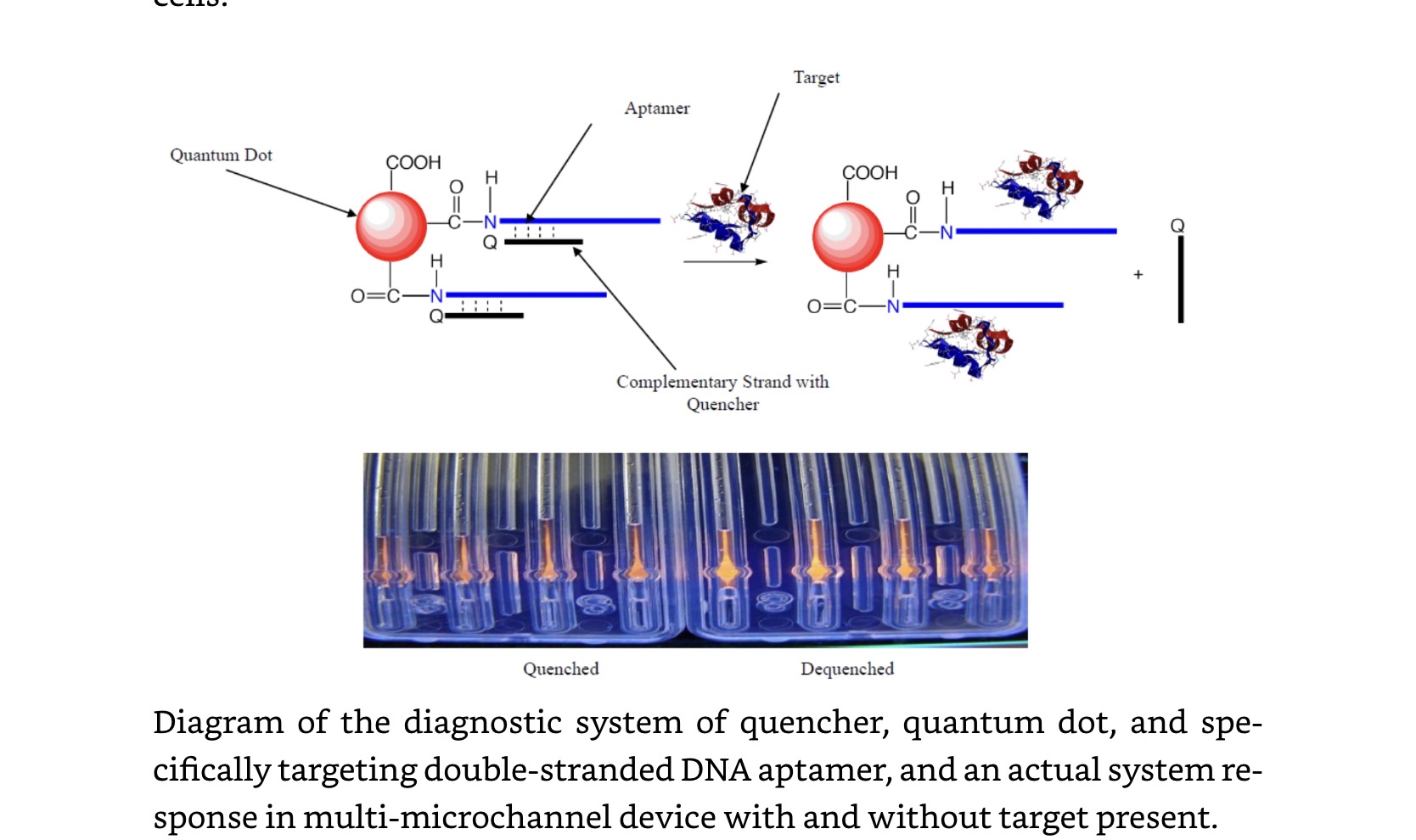
Scheme of surface sensing of biological agents with fluorescent quantum dots with aptamers which can also monitor destruction or decontamination of agents in realtime
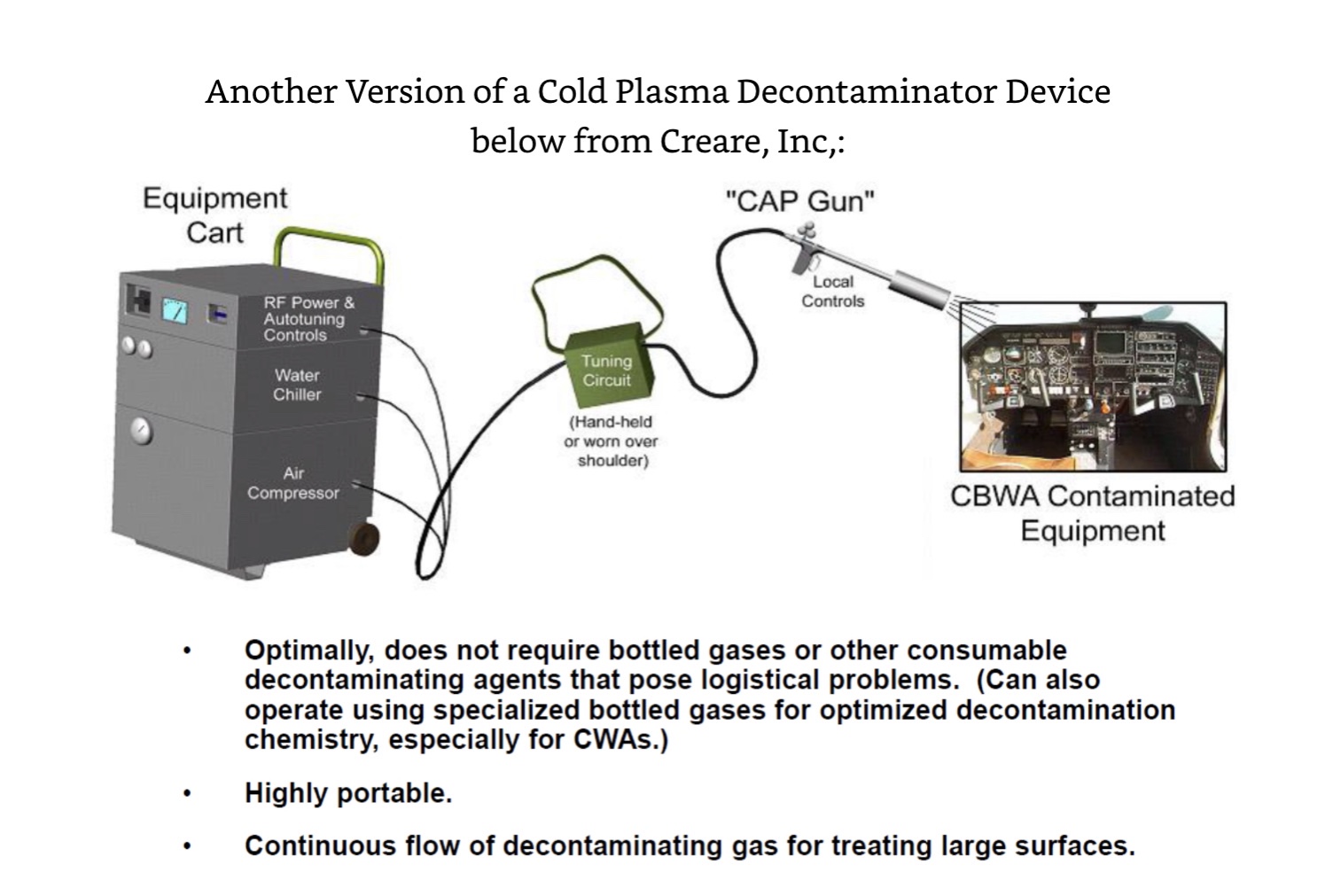
Portable sensitive equipment, airframe and weapon plasma decontaminator
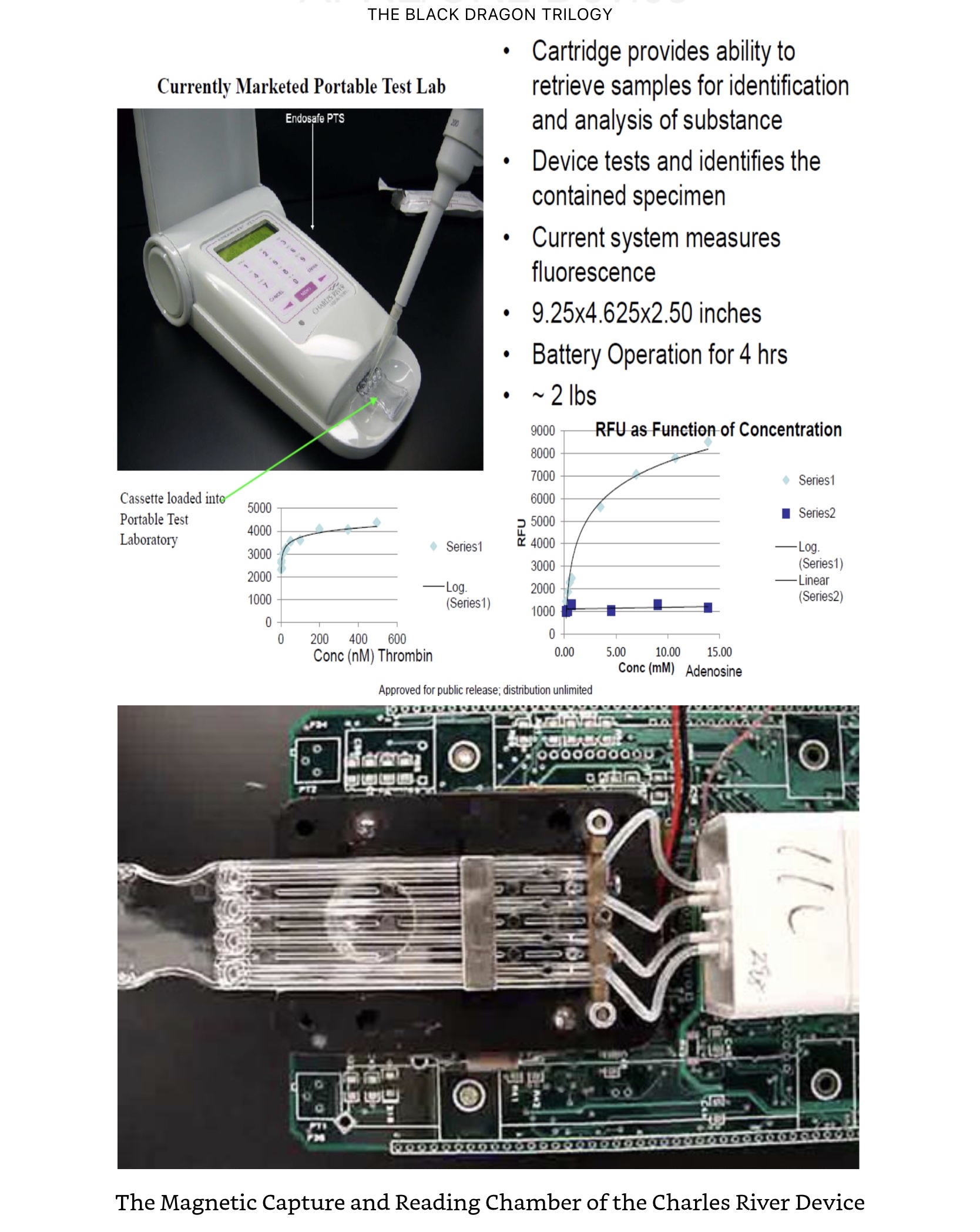
Aptamer fluorescent infectious agent indicators in sealed, disposable, sterilizable chambers; safely isolates agents for safe transport to a lab for further analysis and developing countermeasures
Device for holding agent collection and identification chambers and self-contained reagents and for field selection of therapeutic neutralizing aptamers
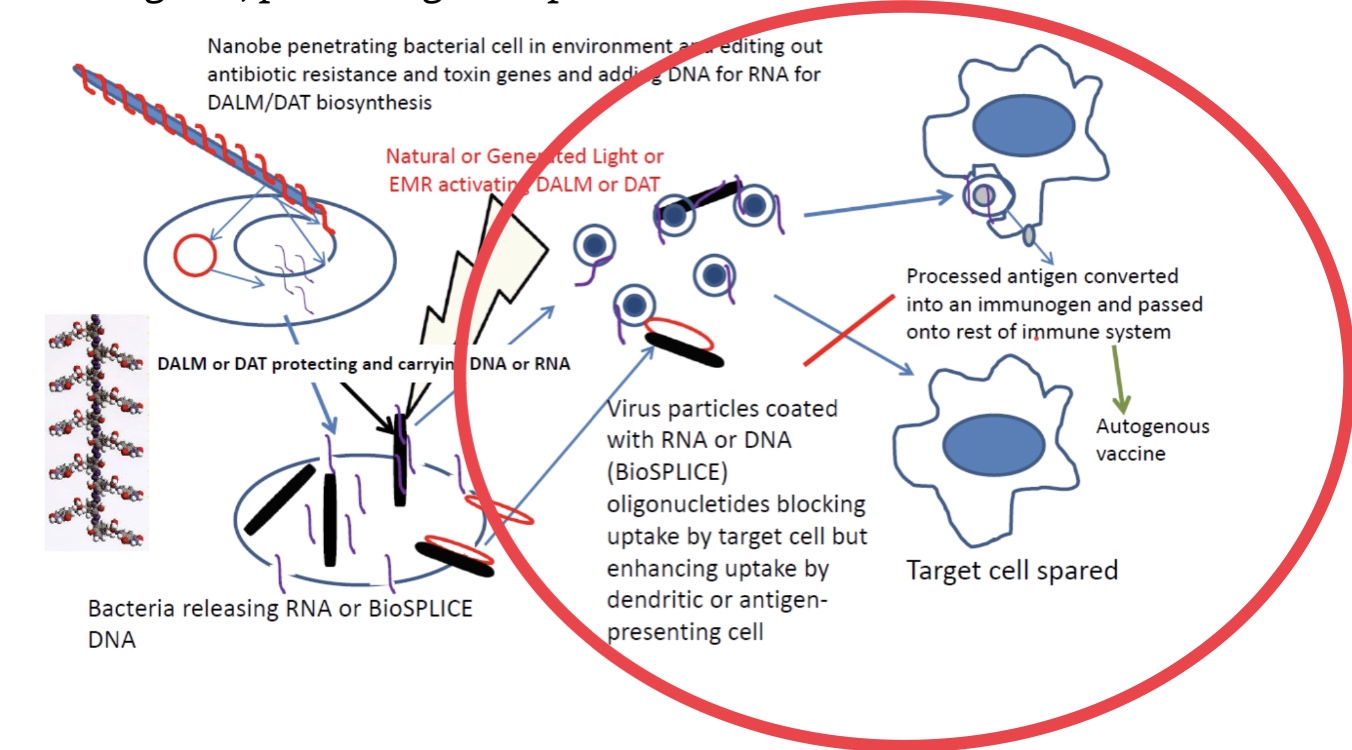
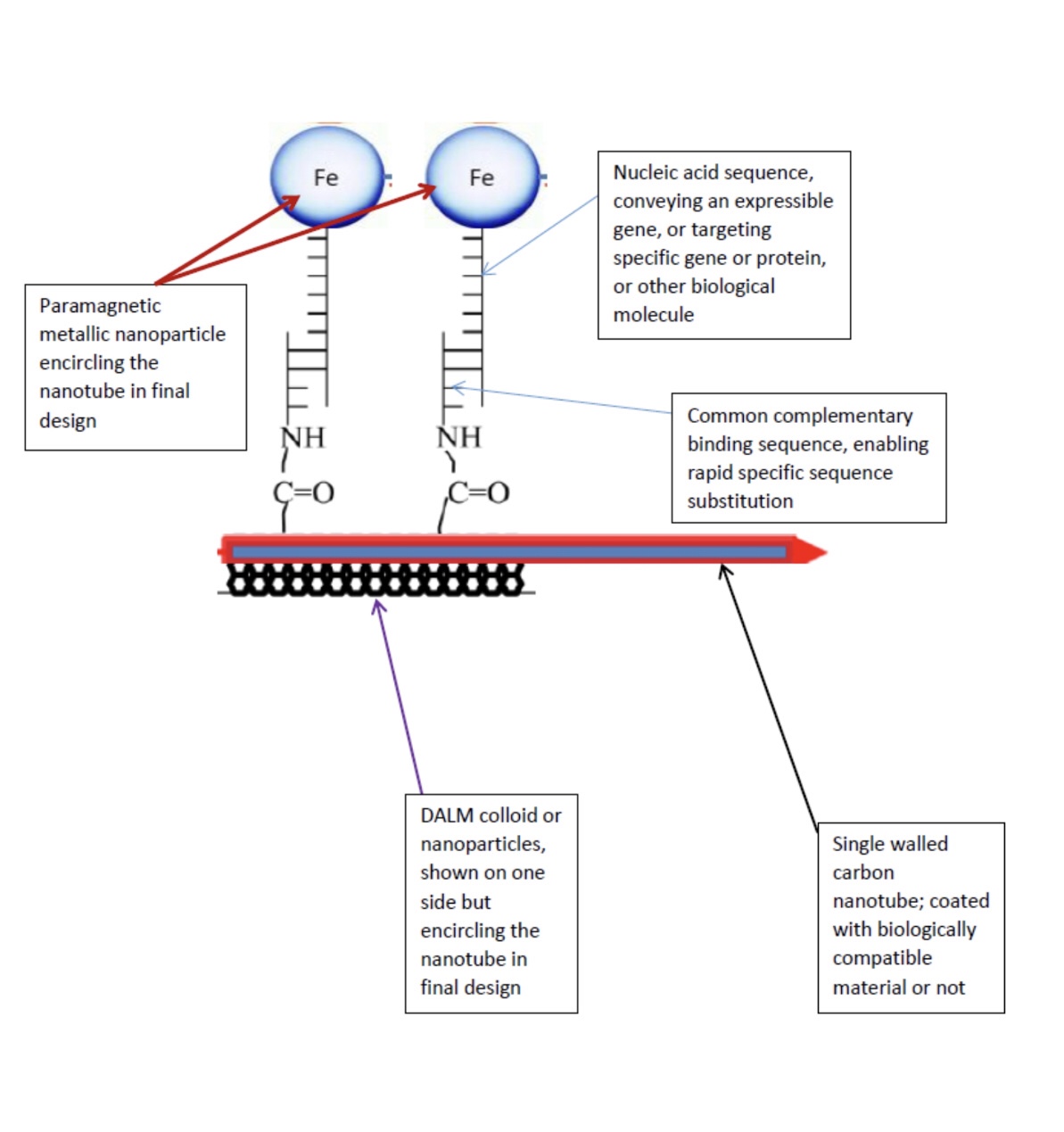
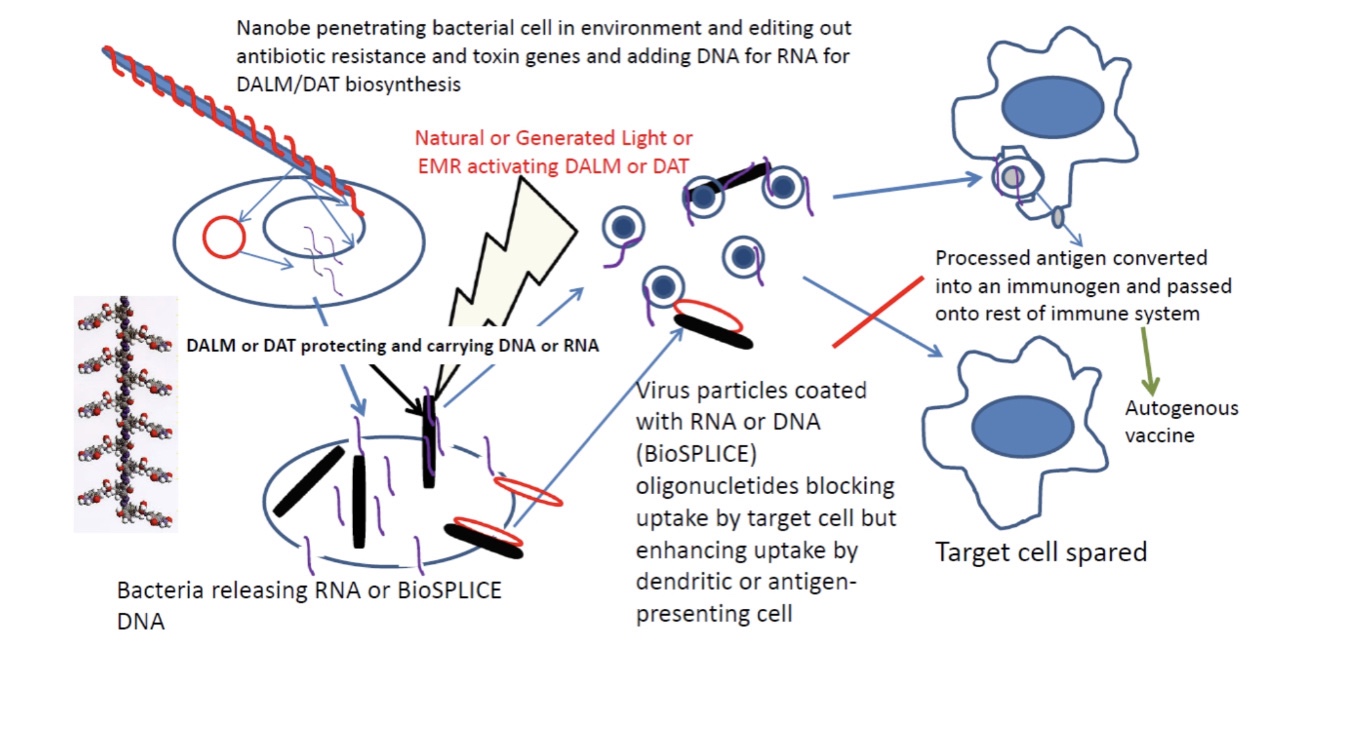
Converting aptamers selected against microbial pathogens into therapeutic aptamers (and autogenous vaccines) contained in Nanobes delivery platforms
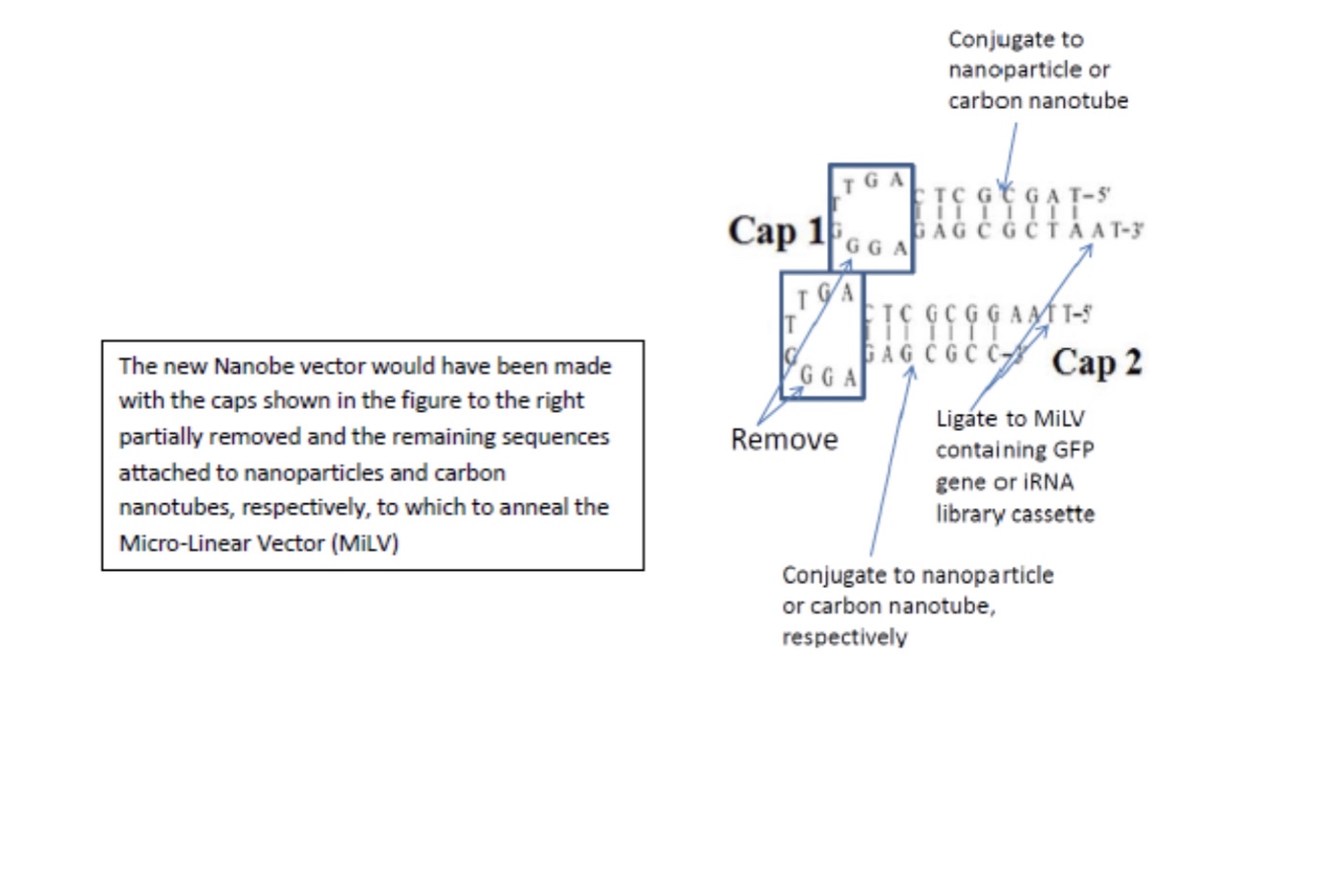
Techniques for transferring and transforming human cells and bacterial cells with aptamer and gene carrying Nanobes
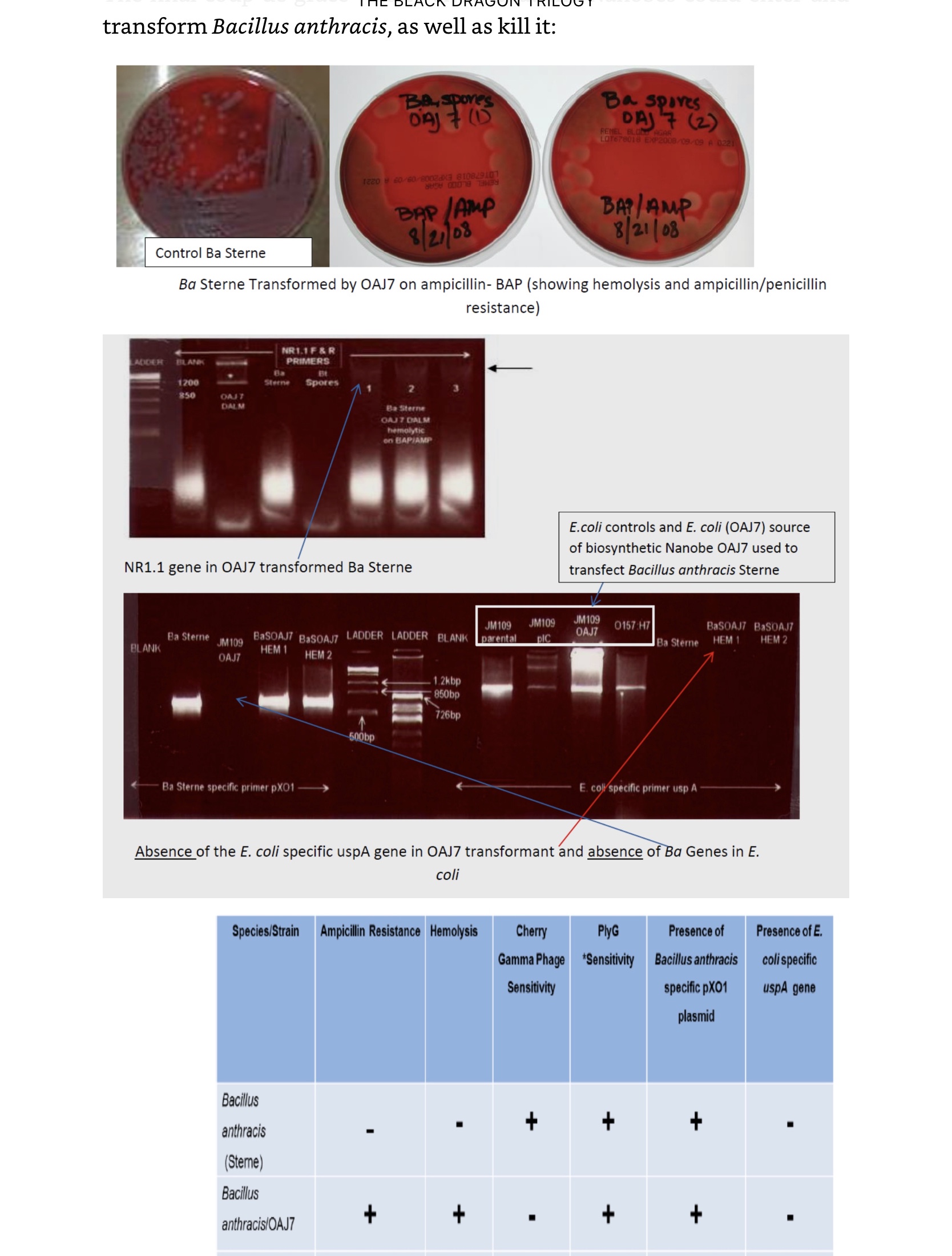
Nanobes genetically transforming an especially dangerous pathogen, anthrax bacteria; Nanobes biosynthesized in E. coli attack and transform Bacillus anthracis (changed B.a. designated OAJ7); perhaps with some unexpected, untoward effects.
“The origins of an enabling technology, which will bring solutions for infectious disease, including antibiotic resistance reversal, and genetic editing to correct pathological conditions, closer to the point of care more economically and effectively through global accessibility of design and manufacture without elaborate infrastructure.”….”produced in commercially available fully disposable plastic biological processing “plants” (plug and play) such as those produced by GE Healthcare Life Sciences. This approach would make the technology available globally and even within reach of poor developing countries. The tough military requirements for the Nanobe technology would have evolved into resilient personally obtainable technology for everyone across the World.”
— The Black Dragon Trilogy
https://a.co/eHXdcPA

Buildings Against SARS-CoV-2 —Engineering Controls to Prevent Buildings from Facilitating Viral Transmission

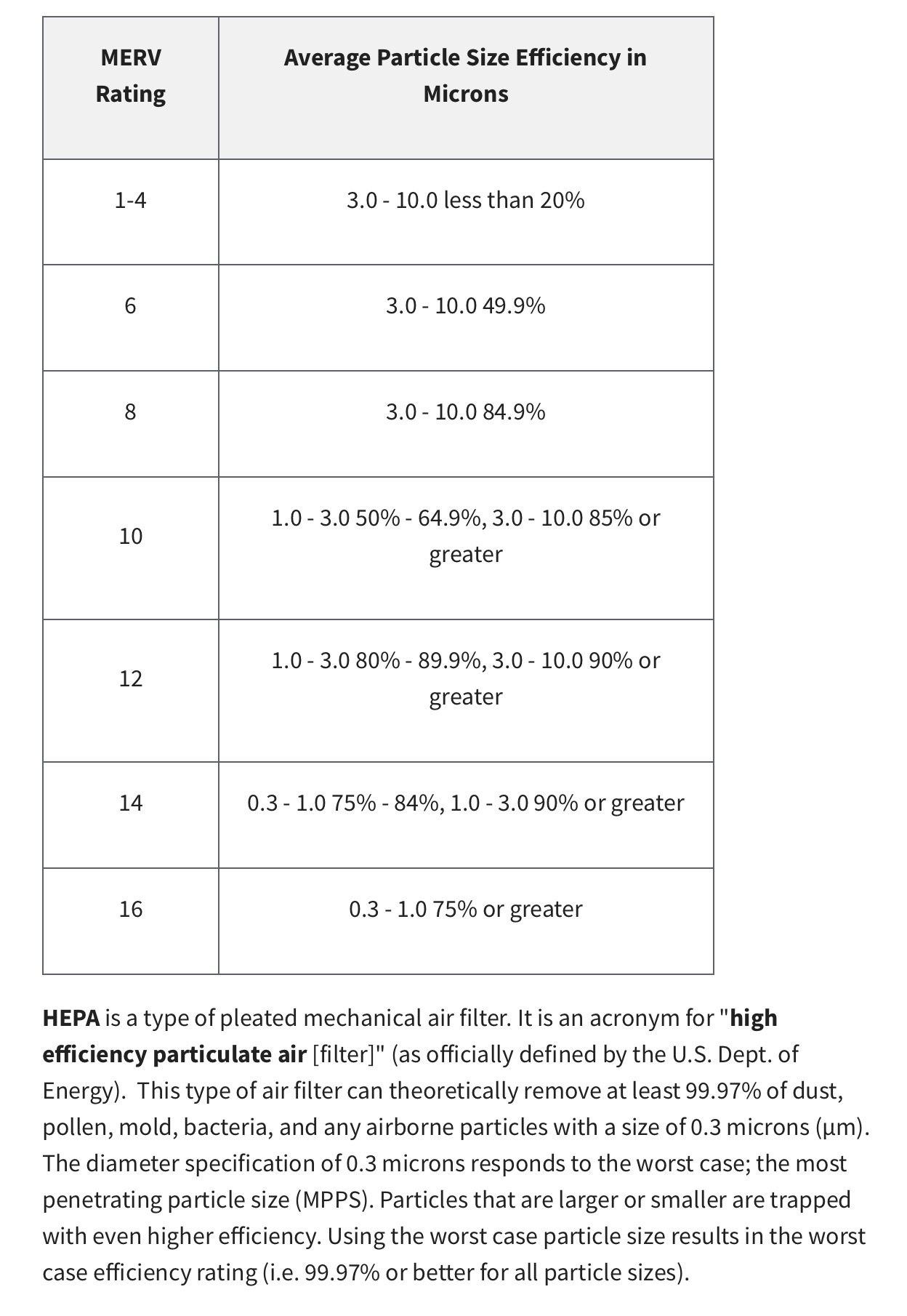
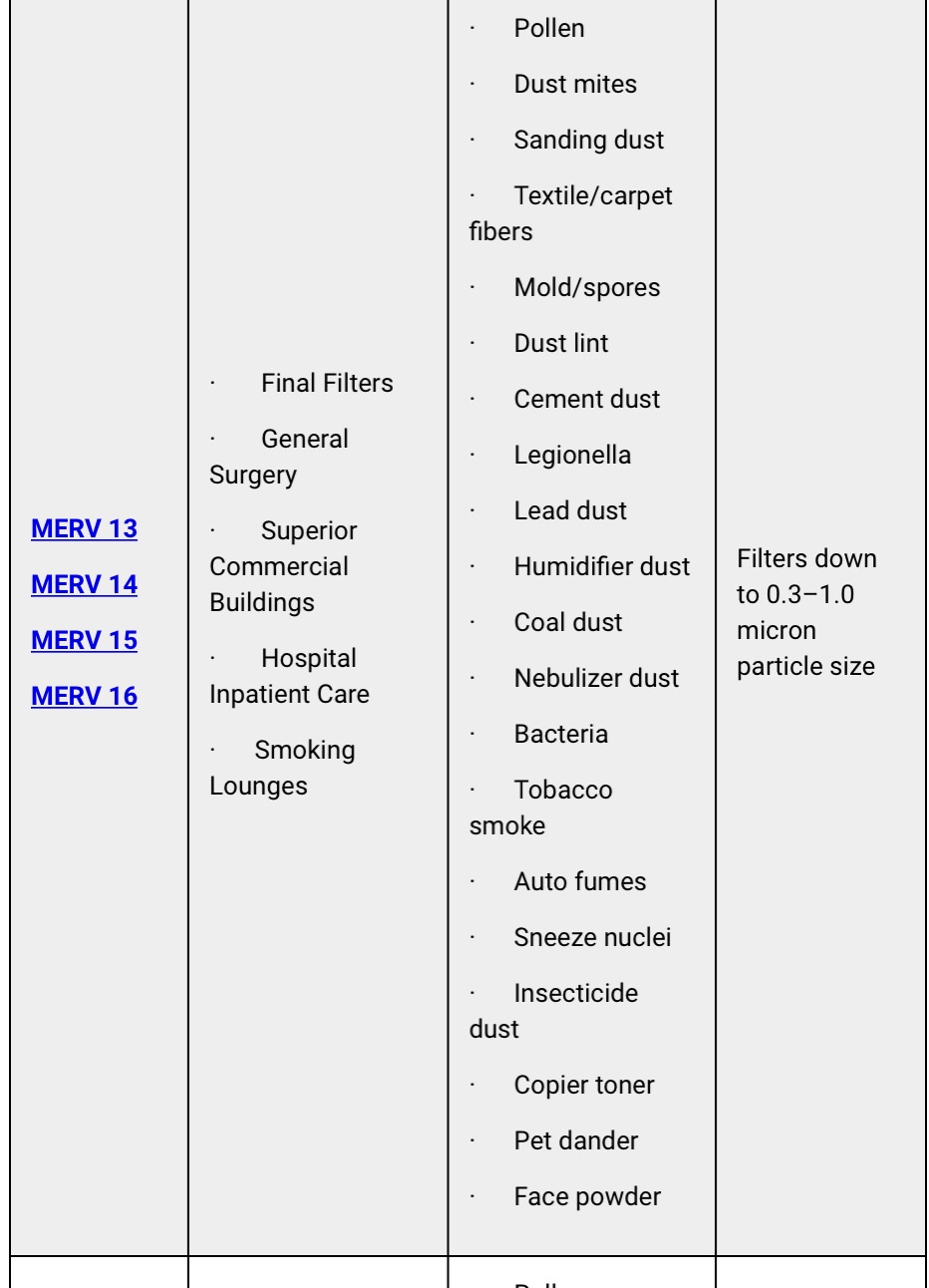
Controlling the spread of SARS-CoV-2 within buildings is tied to air quality, flow, dilution with outside air, filtration, and active decontamination. A recent webinar was held discussing how buildings can be made safer in the presence of SARS-CoV-2: Heating, Ventilation, and Air Conditioning Strategies for COVID-19 by Federal Facilities Council, Wed, October 28, 2020, 1:00-2:30 pm CST. The bottom line was that dilution of internal air with frequent external air intake exchanges is the “gold standard” to reduce levels of indoor infectious virus, but depending on outside air temperature and humidity characteristics, conditioning could prove expensive, especially for old systems in aging buildings. Measures which achieve comparable air quality to dilution were discussed. Filtration is the next best and cost effective, if the proper filter is chosen, installed in the right part of the HVAC system and installed properly so air doesn’t go around it. It effectively reduces numbers of airborne infectious particles which, in turn, reduces the exponential decay effect and increases the efficacy of active decontamination methods. The most cost effective filter is rated MERV 13, as long as it has not achieved this rating by being electrostaticly charged (when the charge is lost as with condensation, the filter rating drops to 6-8). Particles that were of most concern were around 500 nm because, as I discussed in the post on aerosol vs airborne, these are not subject to the described mechanisms of deposition and can enter deep into the respiratory system. The presentation stated these made up 90% of the air suspended particles for up to 41 hours, but did not indicate what portion of original expelled particles these represented (since the range in absolute numbers is indeterminate). Previously reported averages in that post were around 800 nm aerodynamic diameter.
According to the American Society of Heating, Refrigerating and Air-Conditioning Engineers (ASHRAE), this filtration helps provide healthier indoor air quality.

Minimum Efficiency Reporting Values, or MERVs (Minimum Efficiency Reporting Values)

https://www.epa.gov/indoor-air-quality-iaq/what-merv-rating-1
https://www.grainger.com/know-how/equipment-information/kh-what-is-merv-rating-air-filter-rating-chart

UVC (254 nm wavelength) was considered the most effective active decontamination technology. The presenters stated that UVC should be positioned downstream of the cooling coils, to kill 90 % of the virus and to keep clean condensation pans from Legionella bacteria. UV lamps were also recommended to be placed in ceilings out of eye and skin damage range (radiation drops off 1/re2 with distance from the source). My experience with such lamps is they continue to visibly shine even after they have lost much of their UVC output, and that output is drastically reduced by dust accumulated on the bulbs. Besides the hazard and that not enough UVC for the required dwell time may reach infectious particles to fully inactivate a dose in transit, in spite of controlled optimized laboratory experiments demonstrating high efficacy, they fall short in prolonged field use unless closely monitored and maintained.

Examining UV dose of disinfection in a precise way, the inactivation ratio is determined by the applied UV dose through the disinfecting unit. The UV dose (mJ cm−2) is calculated by the delivered irradiance or fluence rate to microbial cells (mW cm−2) multiplied by the exposure time (s). Therefore, for UV- induced reactions, the most accurate report of the kinetic data is related to UV dose rather than time. If there were no confounding factors, the disinfection of biological agent contaminated air and surfaces with UVC could be straightforward and predictable. The required UV dose for 90% viral inactivation is increased by 1.5−2 times for a surface compared with air due to microscopic aggregation on surfaces. Other surfaces have microscopic irregularities, crevices, and roughness which counter the line of sight killing of the virus or microbe on that surface. A similar shadowing effect in air treatment can be caused by the presence of larger particles and dust in the air stream. In addition, the microbial cells may be attached and agglomerated on dust, which require higher UV doses for inactivation. One study indicated 120 mJ cm−2 of UVC dose is required to reduce the tissue culture infective dose (TCID) from 3.8 × 10e7 to 180 TCID50/mL, which is a more than 99.999% reduction. Based on this observation, SARS-CoV-1 (and most likely SARS-CoV-2) is similar to influenza virus and hepatitis A virus in being eliminated by UV radiation https://pubs.acs.org/doi/pdf/10.1021/acsphotonics.0c01245.

Another active decontamination method discussed at the webinar was Photocatalytic Oxidation (PCO), commercially available hydroxy-free radical generating systems that are 95% effective and “smoke eaters” which destroy VOCs, volatile organic compounds. in general. At Brooks, we tested our own in-lab-manufactured device under field conditions to efficiently destroy biological warfare stimulants.

Since hydroxyls result from water vapor, hydroxyl generation requires significant relative humidity in the air. One such commercial system, HYDRA PRO XL solves the low-humidity problem by generating and transferring water vapor to a direct injection manifold inside the machine which evenly distributes the vapor over UV lamps to maximize hydroxyl production https://www.boie.us/hydra-pro-xl.php.

In addition to this PCO mode, the HYDRA PRO XL’s has three AOP modes which can double to triple hydroxyl free radical production. They are low concentration Hydrogen Peroxide Vapor (HPV), low concentration UV Ozone (O3/UV) and a combination process. In the PCO mode (Safe Mode), the HYDRA PRO XL uses water, UV light and a catalyst, titanium oxide, to safely generate hydroxyl free radicals which remove organics causing odors, kill bacterial spores and pathogens. PCO mode can be used with or without the included water vapor injection system, depending on site conditions. The resulting byproducts are harmless carbon dioxide and water.

PCO hydroxyl generation, originally developed by NASA, is ozone-free and safe to use indoors for continuous operation in unventilated spaces for as long as it takes to remove odors and break down contaminants.

Contaminated air is drawn through an odor-neutralizing pre-filter and a HEPA filter to trap most particulates. Then, the unit uses six germicidal (253-nm UVC) lamps in a 2-layer crosshatch pattern along with 3 layers of nano-catalyst to produce hydroxyl radicals which breakdown volatile organic compounds (VOCs) and other contaminants that pass through the unit’s air flow. The next mode, AOP Mode 1, uses vaporous hydrogen peroxide in a direct injection system instead of pure water. The resulting low-concentration hydrogen peroxide vapor (HPV) breaks down into hydroxyl free radicals when exposed to the unit’s germicidal UV light without requiring the catalyst. To initiate AOP Mode 1, one adds a commercially-available hydrogen peroxide solution to the unit’s direct injection reservoir and runs the Advance in PCO mode. PhotoCatalytic reactions will occur simultaneously. No ozone is generated in Safe Mode, however, HPV levels in the air must be monitored if workers are present. This AOP is the simplest method to generate hydroxyl radicals using UV light: Hydrogen Peroxide / UV Light:
H2O2 + UV —› 2 •OH

To maintain safe air quality they must be tested routinely for ozone production. Ionizing air systems from producing airborne ions to plasma-induced active (singlet) oxygen and monoatomic oxygen species are also effective but also must not produce ozone. Ozone is a poor decontamination component in the output of these systems when compared with hydroxyl radicals, singlet oxygen or monoatomic oxygen or thermal electrons generated at the plasma source.

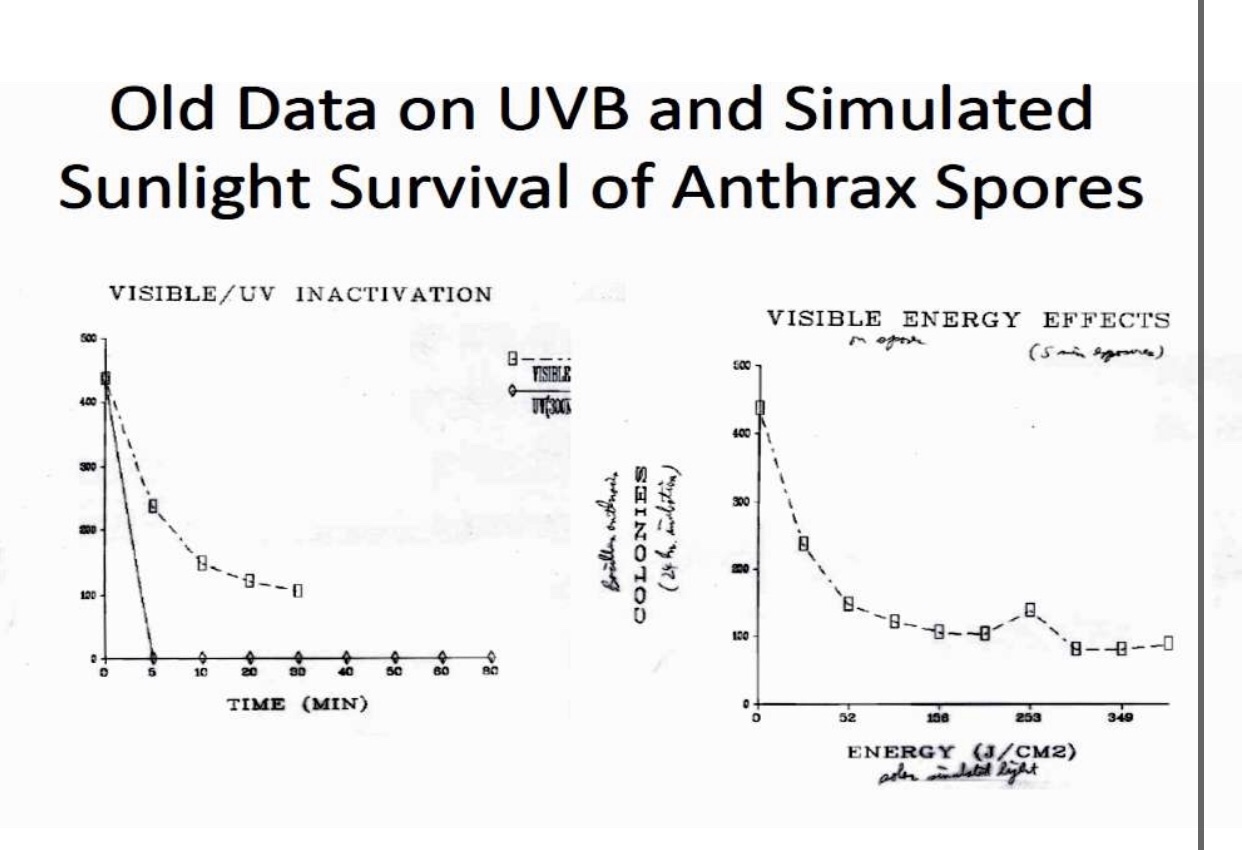
As noted in an earlier post, the initial amount of an infectious agent greatly influences significantly surviving amounts of the agent, regardless of method of active decontamination, based on the conversion of the deactivation of the agent from linear to exponential decay. The following graphs show such a conversion, not with amount of anthrax spores, although this has been seen with large amounts of anthrax spores exposed to ionizing radiation, but with the addition of other wavelengths of light (visible) to the UV exposure. This is not biological repair but chemical passive repair which could occur in viruses or by the viral genome being reassembled from damaged pieces into infectious virus once they enter host cells. The damage by UV or higher energy electromagnetic radiation, like X-rays and gamma radiation, is dependent on unobscured line of sight and intensity, partially dependent on the particulate nature of all electromagnetic radiation, photons. Also, target theory plays a role; the smaller the RNA or DNA genome the more photons, intensity, required to destroy or damage individual viral genomes, to inactivate potential infectious doses in the environment.

In our investigations at Brooks, we discovered some viruses’ ability to reconstruct themselves from broken pieces, albeit from high numbers of original virus, even following UV damage. “The small and simple VEEV (Venezuelan Equine Encephalitis Virus, a previous biological warfare agent) has one more trick which it shares with the plant Tobacco Mosaic Virus; it can resurrect itself from broken pieces. The nsP4 sequence in VEEV is very similar to the replicases of three plant viruses, including Tobacco Mosaic Virus. The Brooks Lab performed a critical experiment using the RetroXpress(TM) system of Clontech derived from a retrovirus which could transfer genes but could not infect and replicate, my group at Brooks constructed a new virus that contained the nsP4 sequence inserted into this platform and expected that the new virus could infect cells but not replicate. It not only infected (transfected) marker genes into the target mammalian cells but also formed plaques of transformed cells (those which resembled cancer cells and formed uninhibited growth mounds of cells). These grew and multiplied in the cell culture. A new complete infectious virus had formed. How? Tobacco Mosaic Virus has been shown to repair and reactivate after exposure to UV with the help of an unknown plant nucleic acid repair system. Since we inserted only the nsP4 protein into the host cells co-infected with the defective retrovirus, we proposed that the new virus used cellular RNA dependent RNA polymerase in conjunction with the expressed nsP4 to form a repair complex which constructed a chimera virus from the retroviral pieces and other unknown viral nucleic acid components inherently present. Perhaps, the infections by killed virus from killed vaccines previously reported were not just because of contamination with whole live virus but with components which survived the formalin damage and were reassembled into whole restored infectious virus, albeit at a less effective infectious dose of original broken pieces. Intact VEEV will produce a transmissible infection with as little as 12 PFU (plaque forming units equivalent to 10 virions for a multiplicity of infection of 1 but more likely 10X10 = 100 virions). I have speculated that these broken viruses, if reconstituted from broken virions or free RNA would require 10e6 units to make one intact virion.”

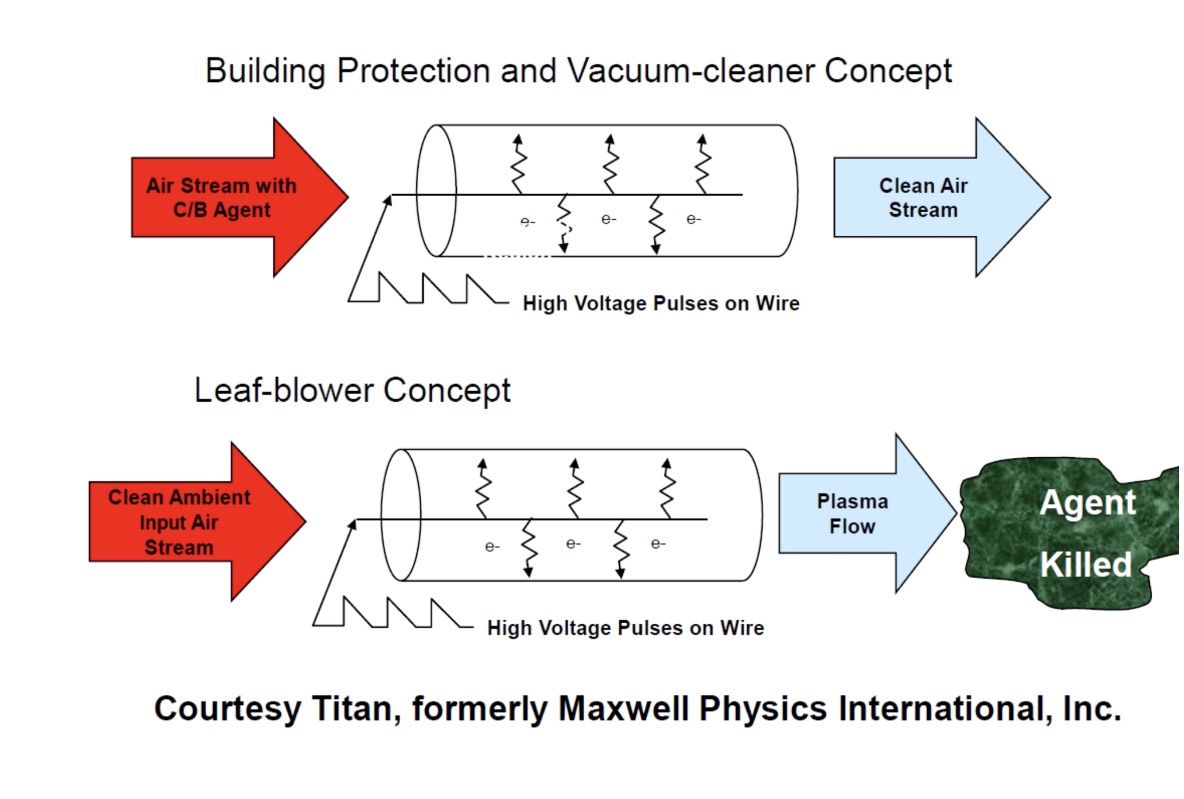
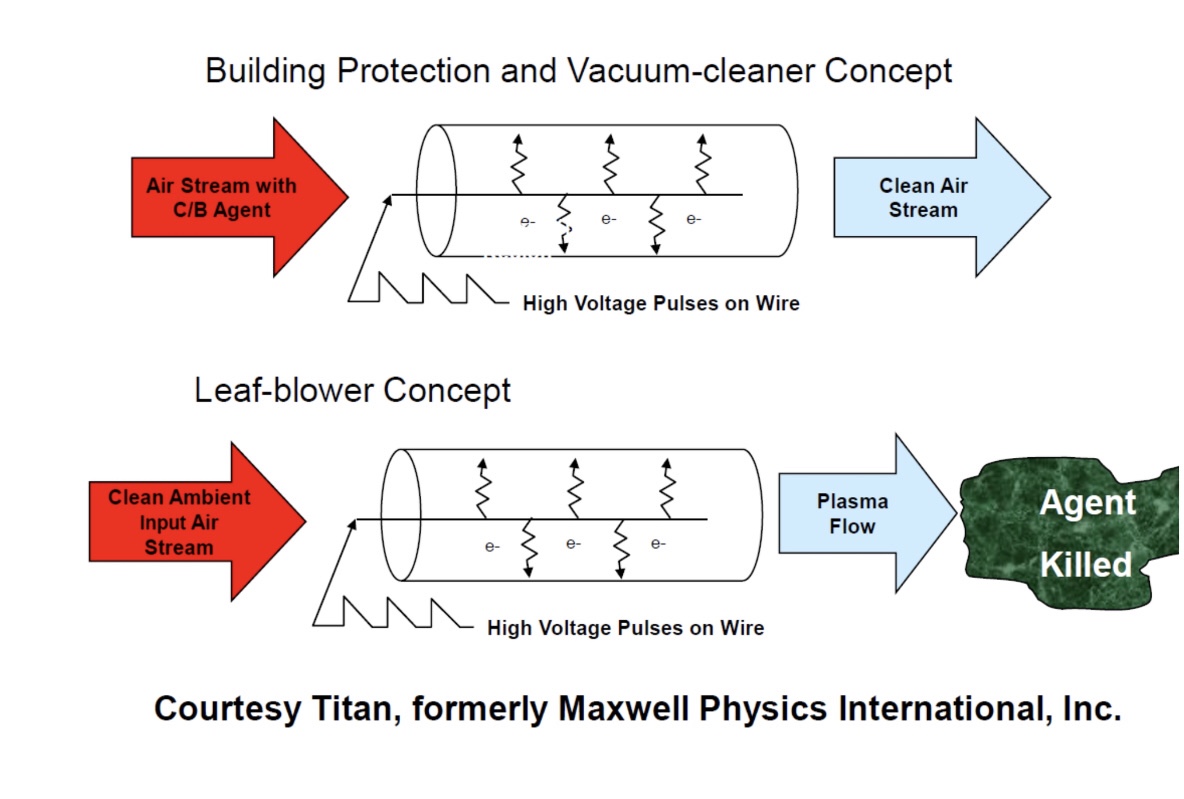
As discussed in an earlier post, cold plasma devices, which generate active oxygen species from air, require no additional chemicals only energy, but at present, are not as developed for commercial use (Sloan, M.A., Vivekananda, J., Holwitt, E.A., and Kiel J.L. U.S. Patent 7,892,484. Methods and Compositions for Neutralizing Anthrax and Other Bioagents, 22 Feb 2011).Water vapor or humidity does favor plasma gas production from the nanoparticle/pulsed microwave version. The humidity levels, which favor PCO and certain cold plasma generation, have also been shown to shorten the environmental life of SARS-CoV-2 , alone, (40-60% relative humidity), but humidifying a building holds its own unique set of problems—big challenges are the condensation problem, thermal breaks and vapor barrier.

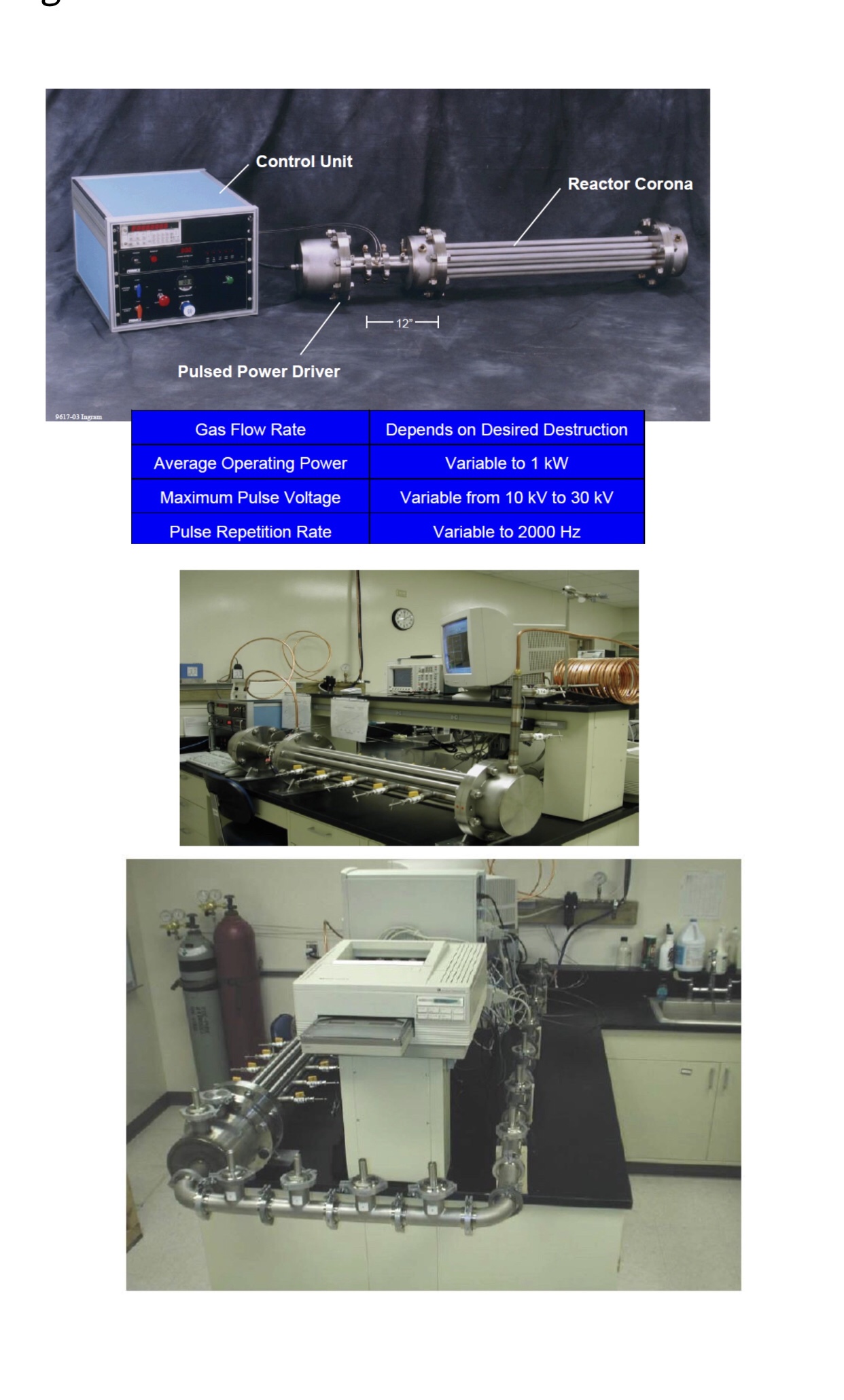
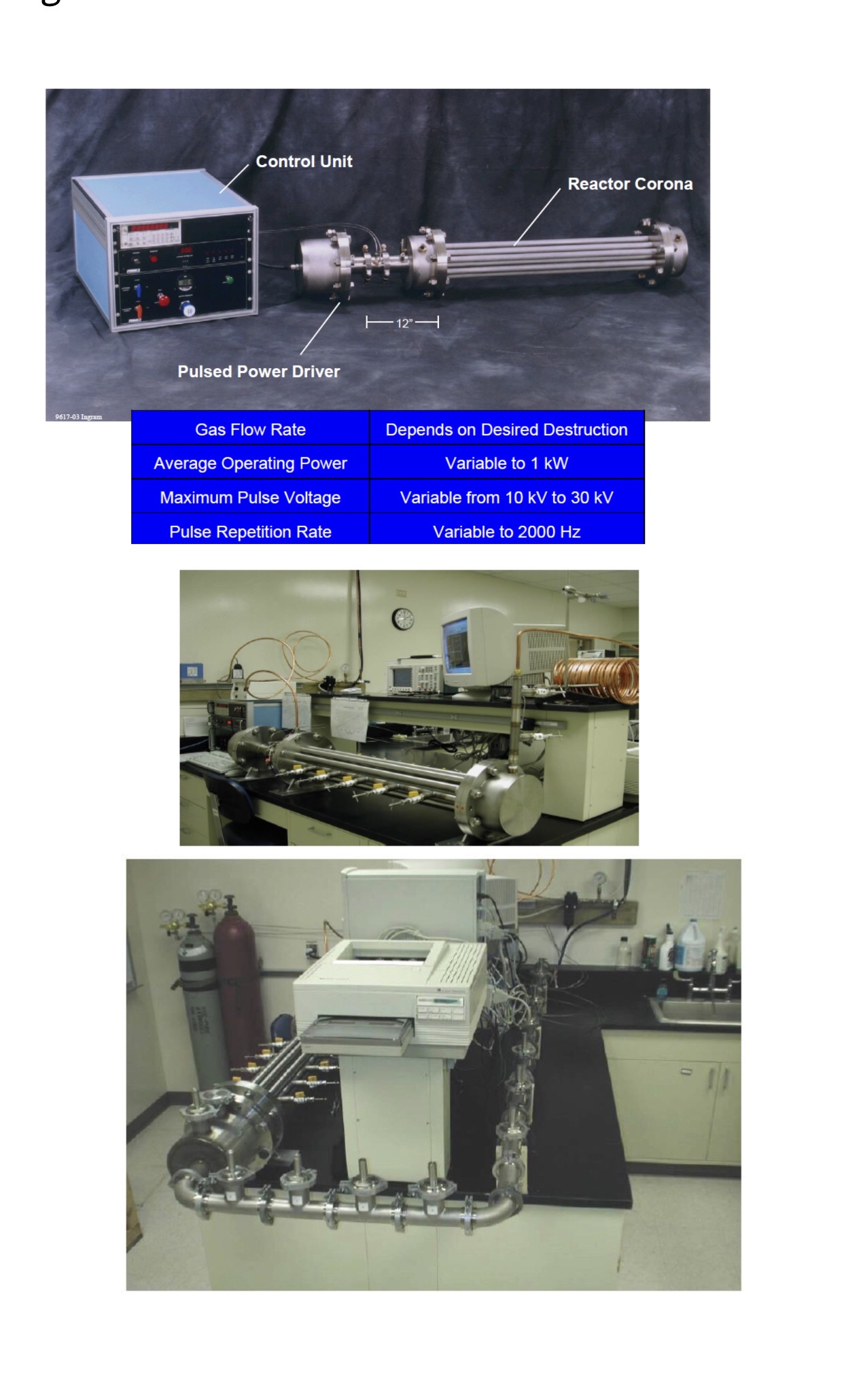
Laboratory test platforms of Titan Plasma Technology
Showing near field decontamination dynamics of cold plasma
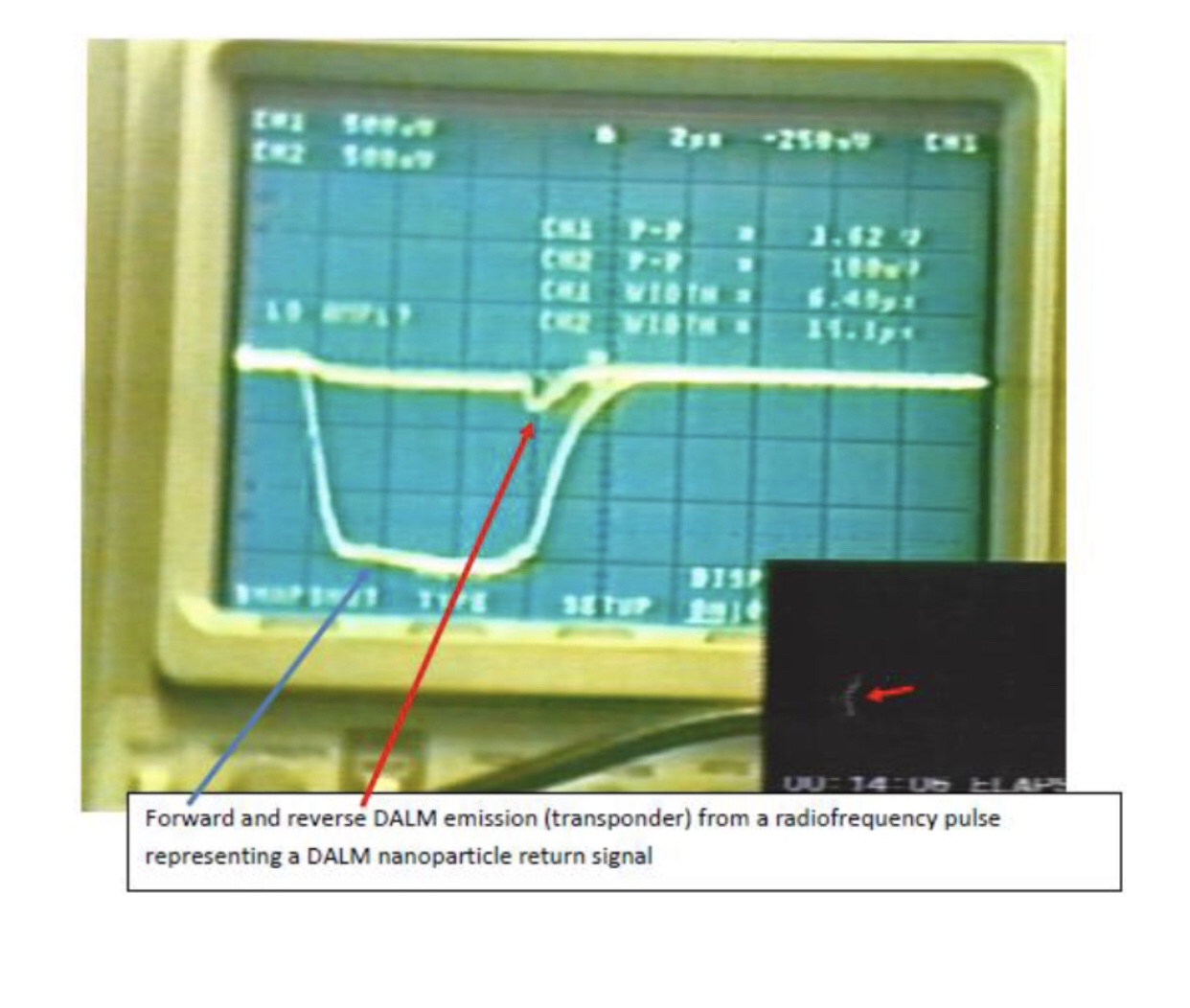
Using nanoparicles activated with pulsed microwaves to produce very localized nanoplasma decontamination but spread over a large surface area or volume based on the distribution of many such particles; although these are 1-min exposures, the high intensity plasma should kill instantaneously on close contact of activated nanoparticles to biological agent.

Test, Test, Test: What does it all mean? No they don’t increase SARS-CoV-2 Infections: The virtue of not hiding our heads in the sinking sand! This now applies to H5N1

Much confusion has arisen about when to test, what are the best tests, what do the results mean for SARS-CoV-2. The biggest lie is that they are the reason the numbers have risen so fast lately. If we don’t see it, we can’t report it, nor can we even begin to control it. The highest level of separation of what tests tell us is the distinction between incidence and prevalence of infection. The frequency (number of health events in a population and it’s relationship of that number to the size of the population is prevalence) and pattern (the occurrence of health-related events by time, place, and person is incidence) of health events in a population. COVID is a dynamic moving target for diagnostics and when target levels are measured in the course of the infection is critical. When the USAF Biological Counterproliferation Team at Brooks was still active, we told commanders and general officers that the only way to make an informed decision about a biological attack was to run three orthogonal tests (measuring different aspects of a biological agent by different methods). If only two were run, then they should have a coin to flip to make a decision. The third test was a tie breaker in case one of the other tests were positive and the other negative. The fundamental tests are (1) isolation, culture and identification, (2) PCR (polymerase chain reaction, for SARS-CoV-2, real time reverse transcriptase PCR, RNA to DNA to complete the reactions), (3) antigen testing (measuring parts of virus other than RNA with specific indicator labeled antibody), and finally, (4) measuring antibody levels in serum with a specific viral antigen, and sometimes, measuring type of antibodies with second labeled antibody https://www.nature.com/articles/d41586-020-02661-2. The last one is the least useful for early diagnosis, except if IgA or IgM antibody is measured. As noted in an earlier post, IgA, and/or IgM decline within 3 months. It is the IgG, particularly IgG3, that lasts longer: 7 months and the memory B cells even longer.

Culture is dependent on taking samples from actively shedding sites and blocking contamination, especially bacterial with antibiotics, and isolating specific plaques showing cytopathic effects (CPE) on at least partially selective host cells. However, such CPE may vary from very subtle host cellular changes to out right lysis, leaving holes in a single continuous mono layer of host cells in culture. The difficulties are obvious, and multiplying virus in the lab is hazardous https://www.ncbi.nlm.nih.gov/pmc/articles/PMC7036342/pdf/jkms-35-e84.pdf and https://www.protocols.io/view/culture-of-the-severe-acute-respiratory-syndrome-c-bcduis6w.

PCR is easier and only requires isolation of the RNA in this case, removing inhibitors or performing viral lysis and release of intact RNA in the process. However, it measures genomic equivalents of virus, if quantitative, but for most commercially available tests, only threshold of detection, but not necessarily infectious virus. Fortunately, most viral RNA is resistant to ubiquitous environmental RNA degrading enzymes. The threshold for a positive is the number of PCR replication cycles to produce detectable DNA copies, usually less than 35 to 30 cycles (Ct, cycle threshold) of the PCR machine. Cts < 29 are strong positive reactions indicative of abundant target nucleic acid in the sample. Cts of 30-37 are positive reactions indicative of moderate amounts of target nucleic acid. Cts of 38-40 are weak reactions indicative of minimal amounts of target nucleic acid which could represent an infection state or environmental contamination.

In a PCR study of 396 patients, time until negative conversion was significantly shorter in the asymptomatic group than in the symptomatic group: median 14.5 days (11.0–21.0 days) and 18.0 days (15.0– 22.0 days), respectively. Rebound of thermal cycle threshold of detection values (Ct) was seen in 78 patients (19.7%). Time until negative conversion is shorter in asymptomatic COVID-19 than in symptomatic COVID-19. Rebound of Ct values was common https://www.ijidonline.com/action/showPdf?pii=S1201-9712%2820%2930620-2.

The antigen tests measure the outer proteins of the virus and must be sampled, isolated from binding inhibitors, and detected in a tube or chromatographic surface, by trapping in a precipitate or along a diffusion path and labeling it specifically, usually with a second antibody in addition to the trapping one, with a colorimetric or fluorescent reagent. This test can be quantitative in a micro titer well plate (replacing tubes) by making dilutions to extinction, or below threshold of detection. The bed-side immunodiffusion rapid tests are only positive or negative tests. The course of an infection or the quality of the sample and its quantitative viral content control the outcomes https://www.ijidonline.com/action/showPdf?pii=S1201-9712%2820%2930658-5. One study showed a high sensitivity and specificity in samples mainly obtained during the first week of symptoms and with high viral loads. The rapid antigen assay has the potential to become important for early diagnosis of SARS-CoV-2, especially in situations with limited access to molecular methods. Sensitivity and specificity were 93.9% (86.5–97.4%) and 100% (92.1– 100%), respectively, with a diagnostic accuracy of 96.1%. Sensitivity was significantly higher in samples with high viral loads https://www.ijidonline.com/action/showPdf?pii=S1201-9712%2820%2930405-7.

Seroprevalence is most useful in determining the vulnerability of a population as opposed to the incidence, a rate, showing the most immediate infection progression.

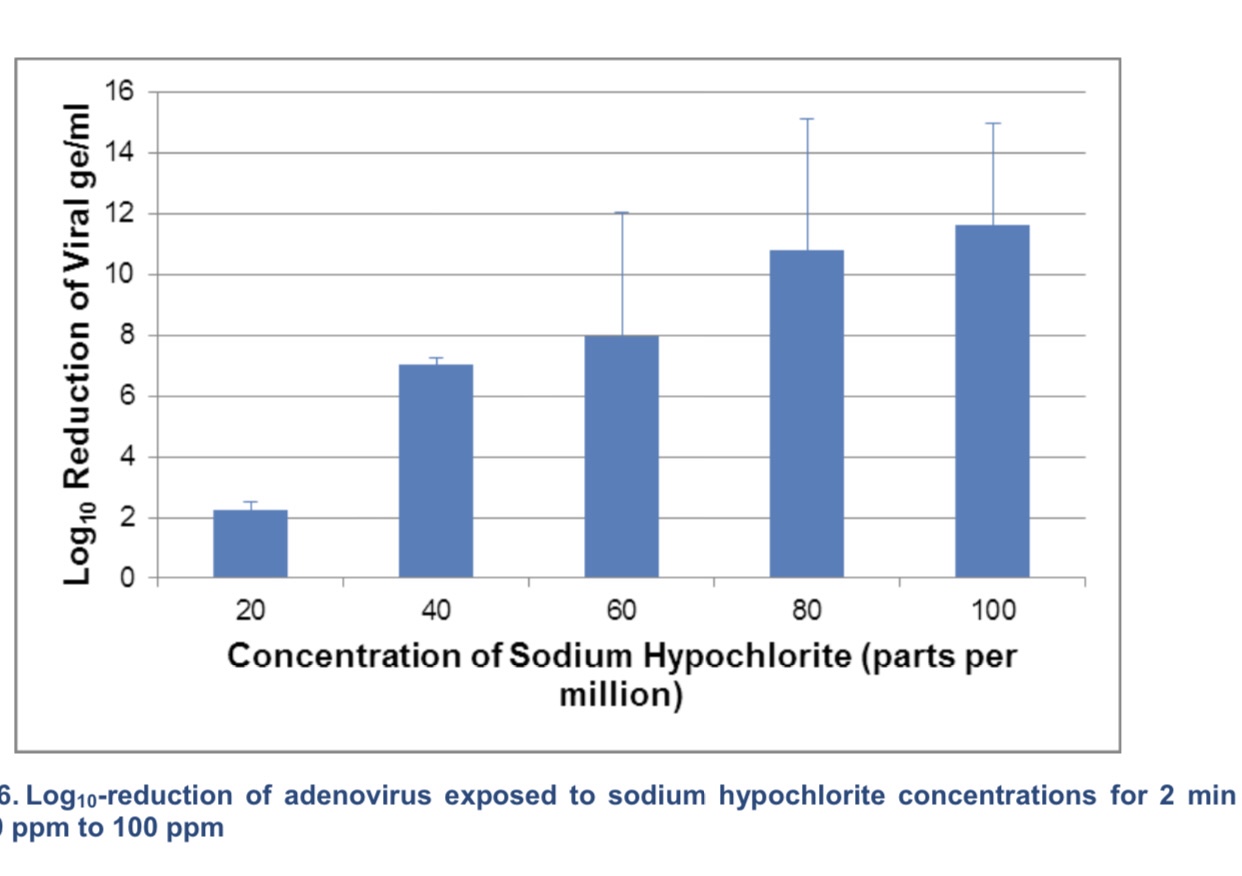
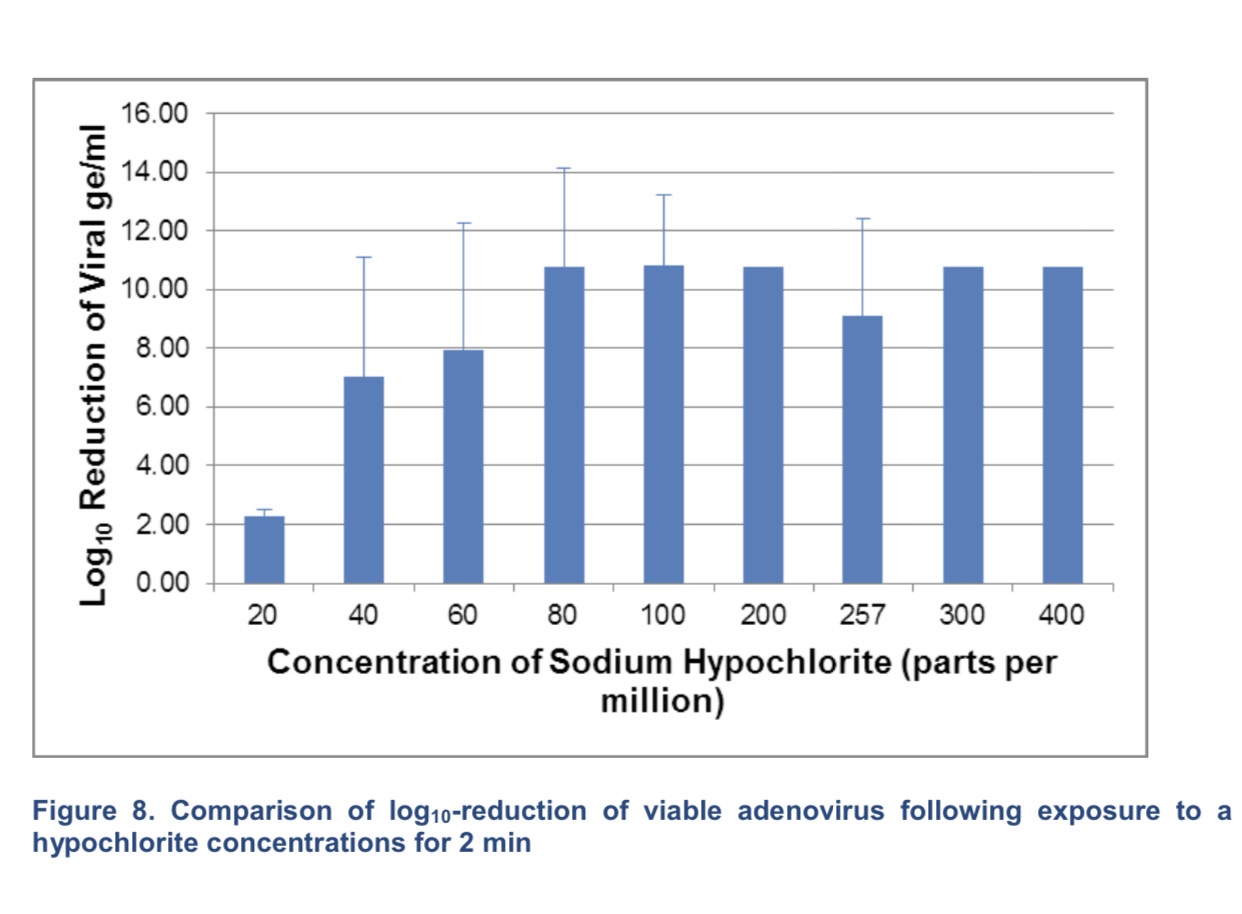
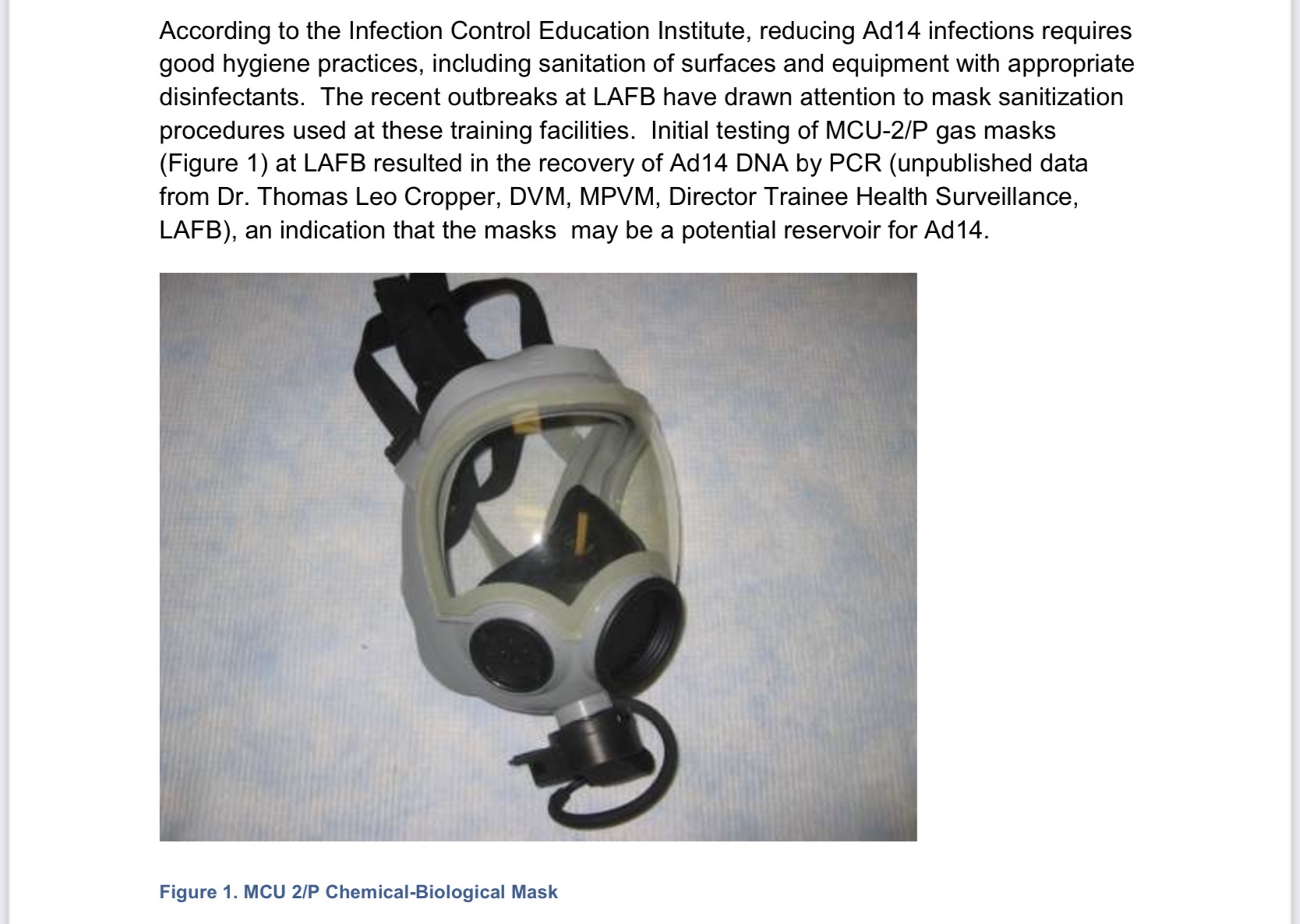
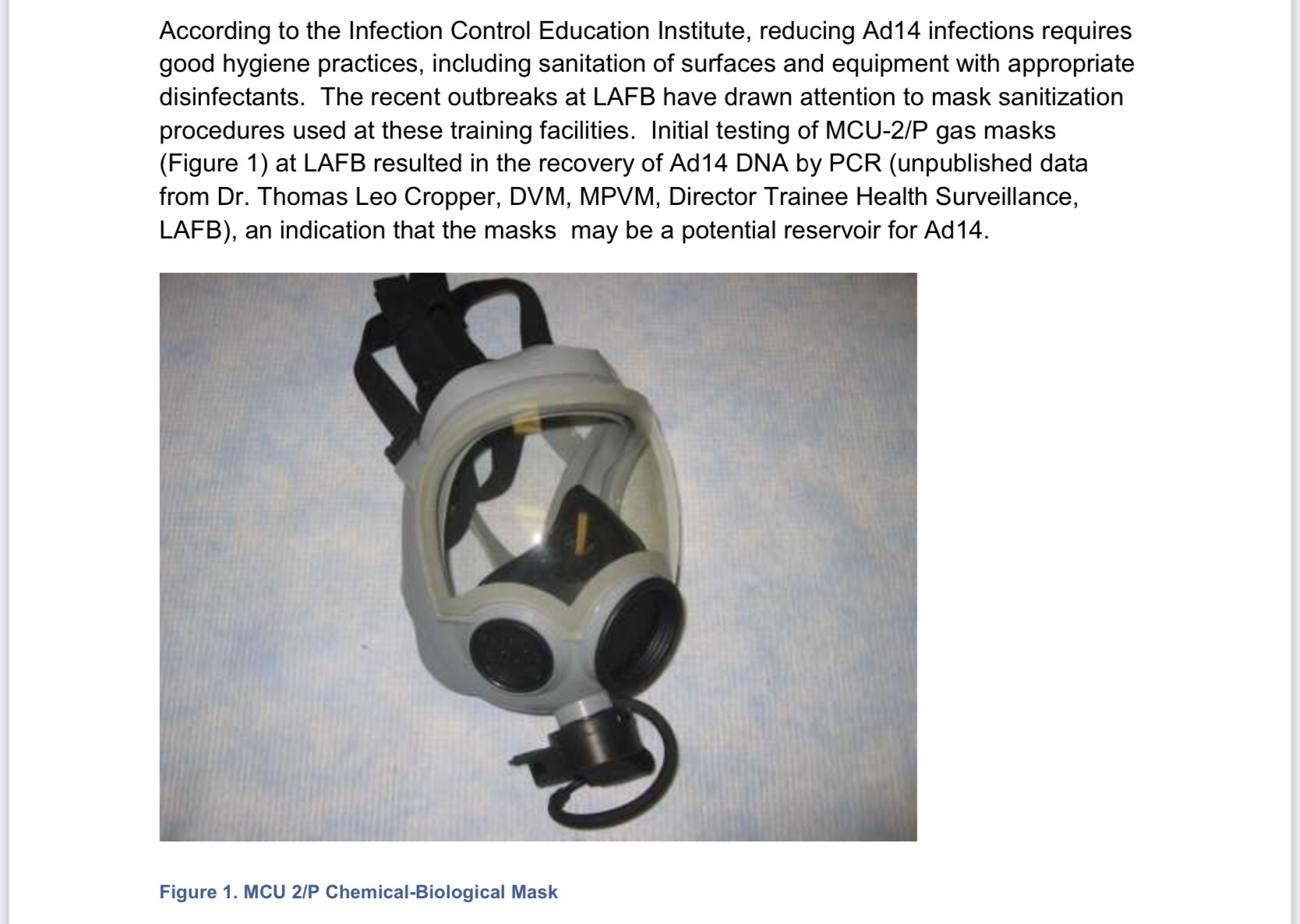
To show how difficult the gold standard for viruses, isolation and culture, and converting these numbers into quantitative PCR is, I give work we performed at Brooks on adenovirus, a human virus causing everything from mild, cold-like symptoms to death and with asymptomatic human carriers, depending on the strain, as an example. It is a much more durable virus than SARS-CoV-2 and can easily be spread by fomites and airborne secretions. We investigated its transmission by shared gas masks used for training and supposedly disinfected, because of some deaths from the virus amongst recruit trainees (Establishment of Optimal Parameters for United States Air Force MCU-2/P Mask Sanitization Procedures to Effectively Neutralize Adenovirus Serotype 14).

From the initial copy numbers generated during the RT-PCR reaction, the titer (ge/mL: genomic equivalents per milliliter) of each unknown sample was calculated as shown below:
Copy Number 1 X 10e3 μL Titer = 9 μL x 10 x Dilution Factor x mL
Titration methods fall into one of two categories: determination of either the infectious or the particle (infectious plus noninfectious) titer. To overcome this problem, the current RT-PCR assay was developed to detect only encapsidated viral genomes. Nonencapsidated and/or incomplete genomes were eliminated during the DNase treatment (to destroy free DNA not extracted from intact virus) step, more accurately reflecting the infectious titer.

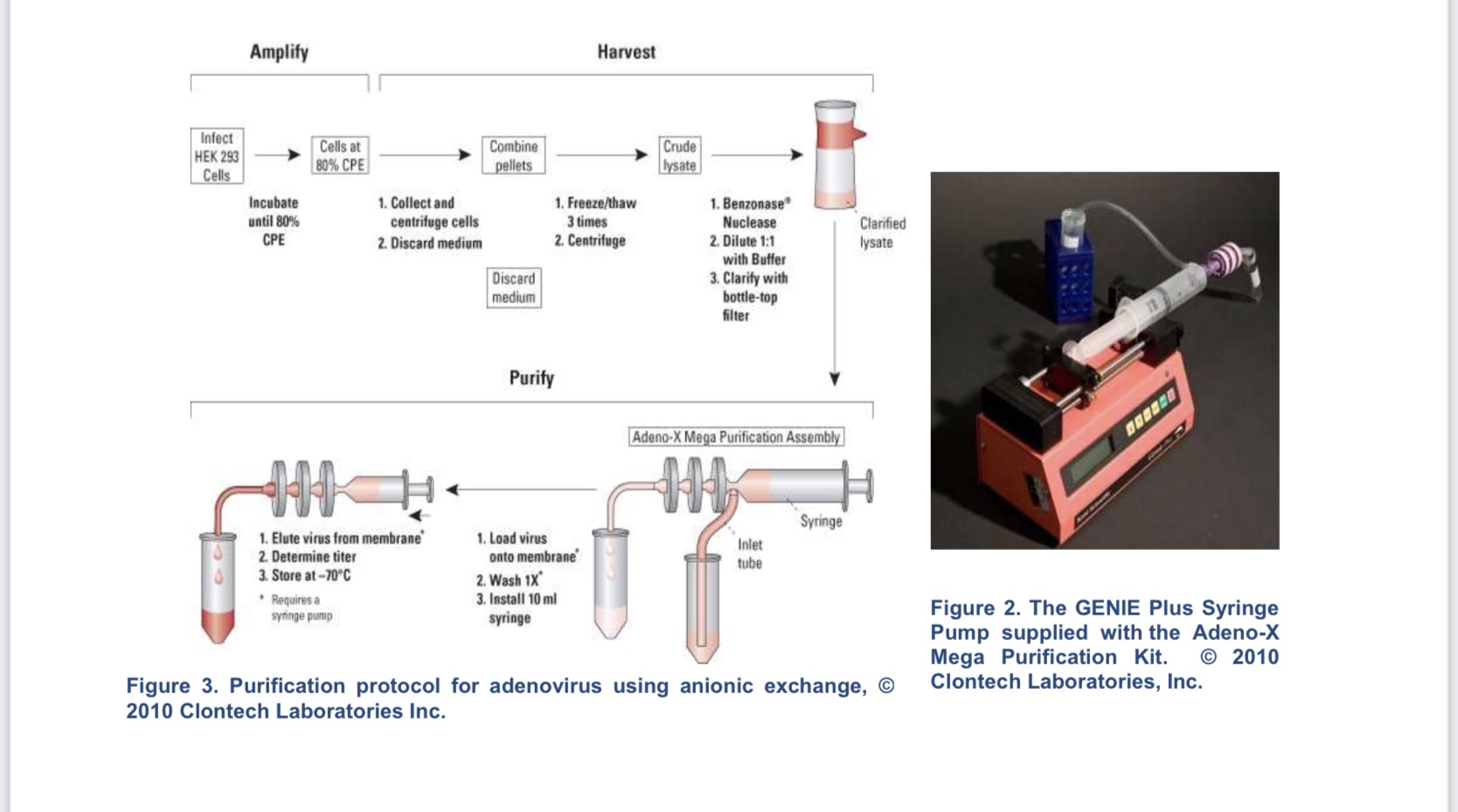
Method for growing and purifying adenovirus
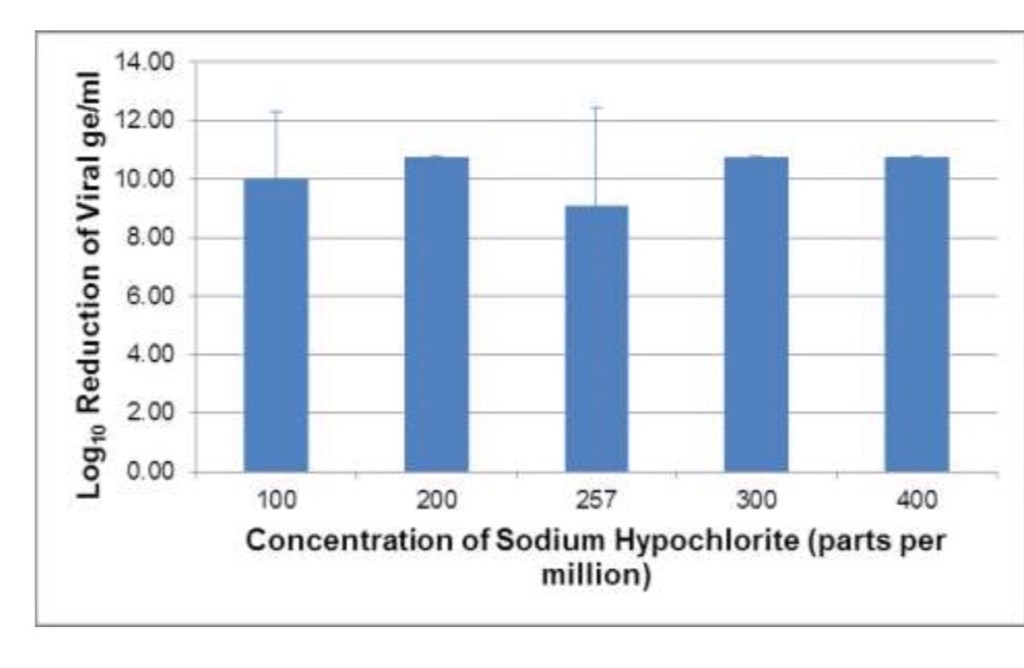
These graphs show the effects of exposure of adenovirus to various concentrations of sodium hypochlorite (bleach); SARS-CoV-2 is expected to be even more susceptible to this decontamination.
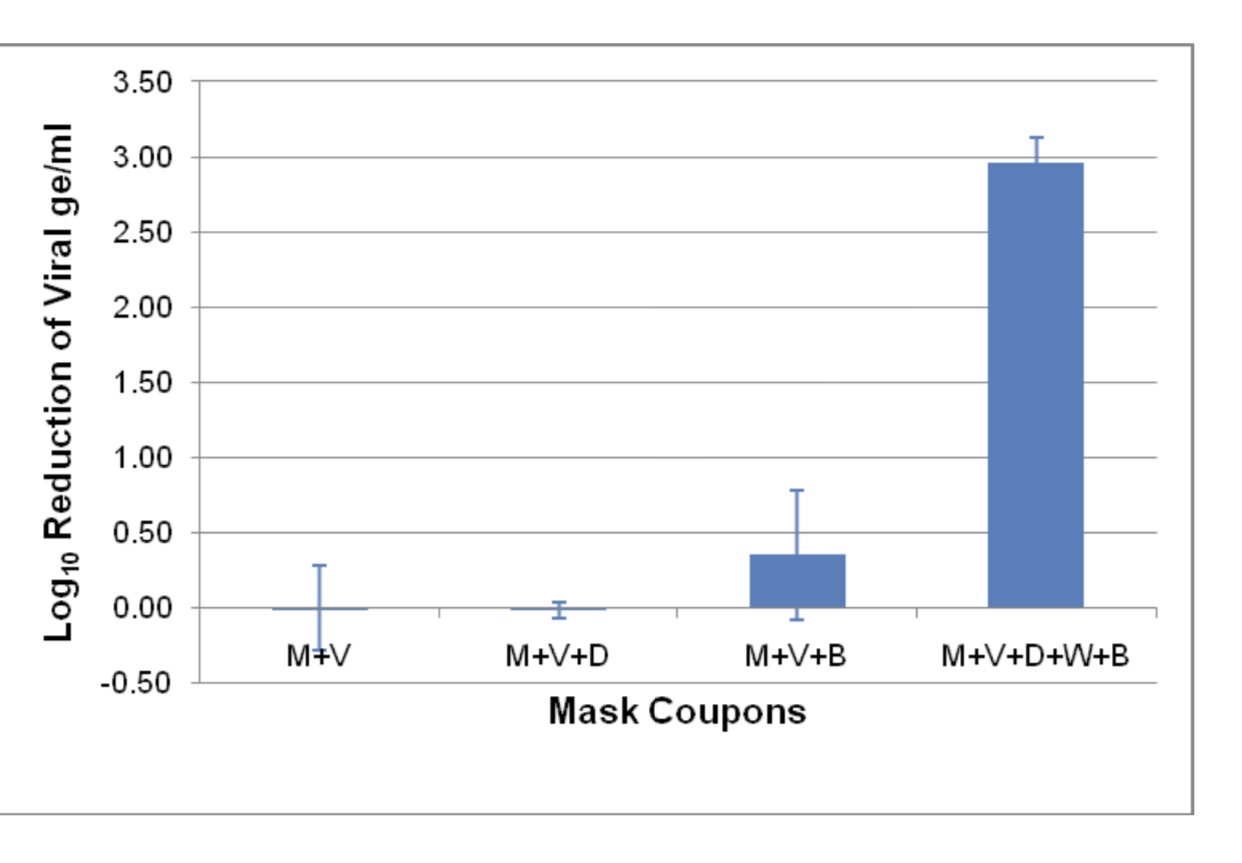
The mask contaminated with a known amount of adenovirus and tested for recovery of the virus, with and without prior decontamination procedures, by quantitative calibrated PCR for genomic equivalents
We can see that this very resistant adenovirus, unlike SARS-CoV-2, is not effectively eliminated by detergent (or soap or alcohol) , but a combination of detergent followed by rinsing and bleach was most effective in cleaning masks.

Adenoviral genome equivalents/mL following elution from mask pieces exposed to 181 ppm of bleach and/or detergent. M=mask, V=virus, D=detergent, B=bleach, W=water

How bad is prevalence of SARS-CoV-2, COVID, in highly vulnerable populations? The kidney hemodialysis population has a higher proportion of older people, men, and people living in majority Black and Hispanic neighbourhoods than in the US adult population. Seroprevalence of SARS-CoV-2 was 8.0% , 8.3% when standardized to the US dialysis population, and 9.3% (8.8–9.9) when standardized to the US adult population https://www.thelancet.com/action/showPdf?pii=S0140-6736%2820%2932009-2. Even for the most vulnerable, the highest prevalence argues against natural herd immunity and more for the typical “animal” coronavirus endemic sustainment strategies that these viruses have evolved with their hosts. For the least at risk populations, the samples examined in a recent study, showed 250 were positive of 33,041 children (age of 0-18 years) without symptoms who were tested at 28 hospitals for SARS-CoV-2 through May 29, 2020. Across the hospitals represented by these children, prevalence varied from 0% to 2.2%, with a pooled prevalence of 0.65% (0.47%-0.83%). Asymptomatic pediatric prevalence was associated with weekly incidence of COVID-19 in the general population during the 6-week period over which testing of asymptomatic children occurred. No other factor (population, number of tests performed, region, testing indication, or sample collection site) demonstrated a significant association with prevalence in asymptomatic infected children. Later data from 15,612 children were compared with prevalence in an asymptomatic pediatric population calculated from concurrent Johns Hopkins University weekly incidence data using a best-fit equation derived from this correlation, and the results showed the correlation persisted at this later time (coefficient, 0.86). Therefore, the incidence in the local general population and contacts should drive testing in children.https://jamanetwork.com/journals/jamapediatrics/fullarticle/2769878.

The general US population incidence has been determined by various methods. As of April 4, 2020, the estimated case count was 5 to 50 times higher than the official positive test counts across the different states. Nationally, the estimates of COVID-19 symptomatic cases as of April 4 were likely in the range of 2.2 to 4.9 million, with possibly as many as 8.1 million cases, up to 26 times greater than the cumulative confirmed cases of about 311,000. When these methods were extended to May 16, 2020, it was estimated that cumulative symptomatic incidence ranged from 6.0 to 10.3 million, as opposed to 1.5 million positive test counts https://www.ncbi.nlm.nih.gov/pmc/articles/PMC7310656/pdf/nihpp-2020.04.18.20070821.pdf. How tests are applied is critical to the value of the data to making true numbers and distribution of the virus and cases of COVID-19.

Making a Synthetic “Life Form” from the Ground Up: Biotechnology’s Potential Little Helper

“What would the simplest and purest form of a Nanobe which could take over another life form and make it a new, different one? The following is such a model of such a transforming synthetic life form which could be made from basic chemicals:”— The Black Dragon Trilogy by JOHNATHAN KIEL
https://a.co/136glXE

Multiple potential applications:

1) Simulants for microbial detection and neutralization, using the Nanobes’ “internal” diagnostics. (2) Test platform for nanotoxicological research. (3) Transfection vector for biomedical research and therapeutics (superior to just re-directing the immune response, as we had previously tried, because Nanobes can be turned “on” and “off” with nonionizing electromagnetic radiation (NEMR)). (4) Against antibiotic resistant bacteria, especially intracellular bacteria (in vivo and ex vivo, in self–sterilizing materials). (5) Against viruses and other parasites (in vivo and ex vivo, self-sterilizing materials). (6) Against cancer (7) RFR nano-directed ablation surgery (8) RFR controlled gene expression (9) Transformation vector for agriculture (10) RFR (and other NEMR) controlled pesticides (11) Transient persistent transformation of crops (For one season; self-limiting desirable trait transfer) (12) Transformation vector for bio energy (13) Enhancing cyanobacterial production of biofuels (14) Enhancing microbial production of materials and feedstocks.

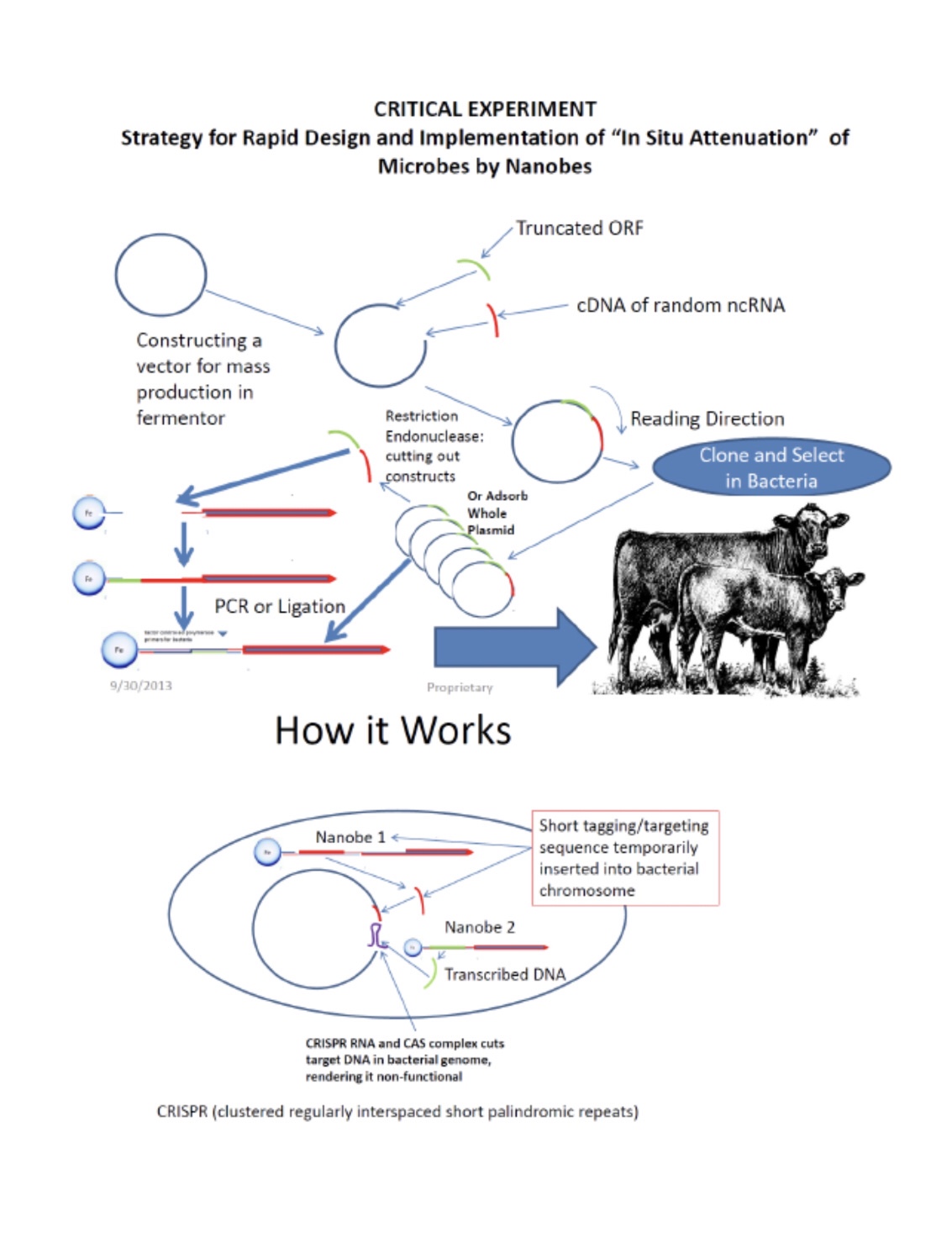
Although CRISPR (clustered regularly interspaced short palindromic repeats) gene editing technology has come like a storm with great promise for therapeutic gene editing ( 2020 Nobel Prize in Chemistry: Emmanuelle Charpentier, at the Max Planck Unit for the Science of Pathogens in Berlin, and Jennifer Doudna, at the University of California, Berkeley), it still has delivery, off- target effect, and control problems (can’t readily be turned “on and off”). Many researchers are vigorously pursuing solutions. Nanobes provide an alternative that is electromagnetically controlled with a fail-safe system. Nanobes could even provide a fail-safe delivery system for CRISPR.

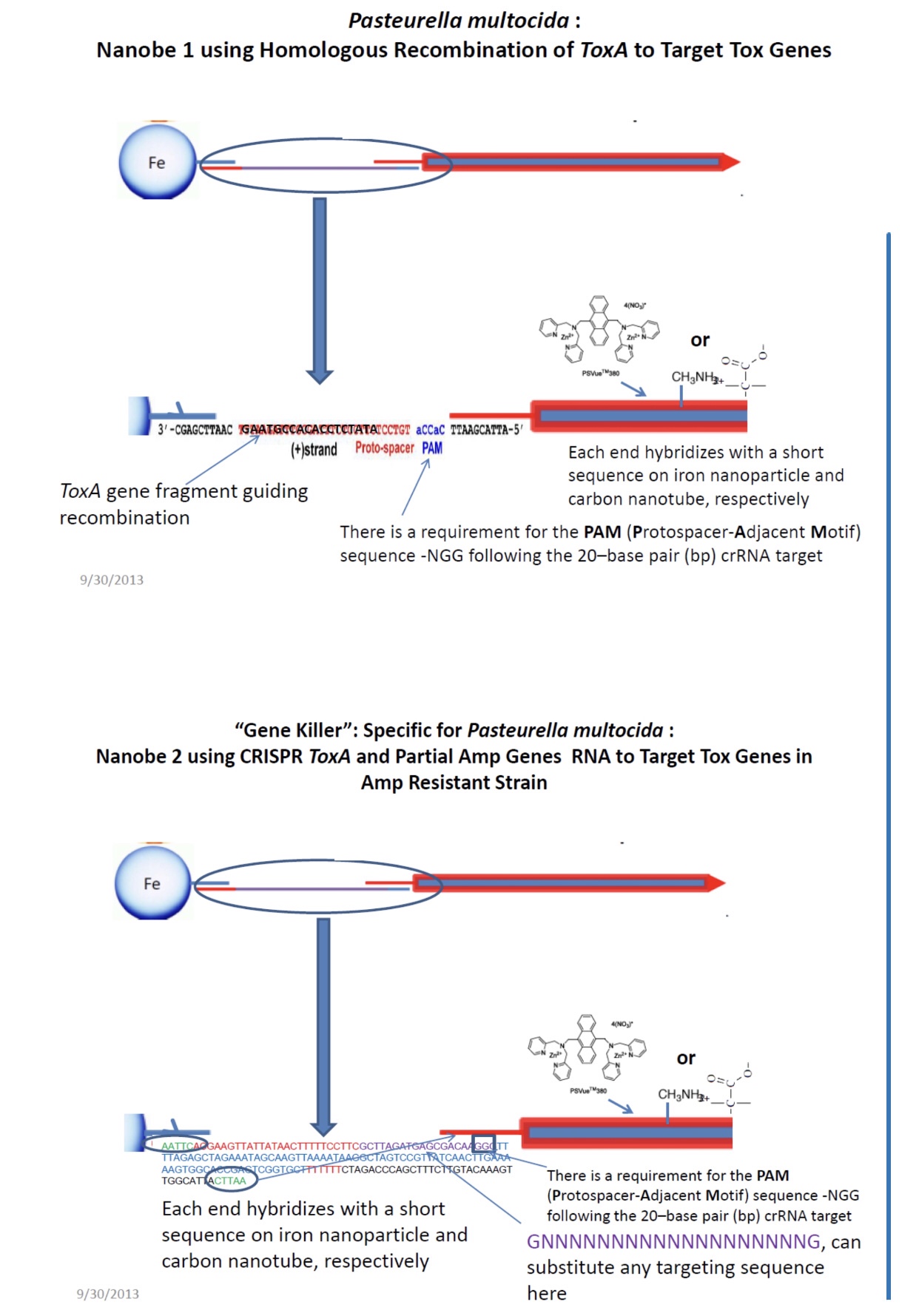
Possible Design to Implement CRISPR in Nanobe Vectors for attenuating a bovine pathogen
Nanobes 1 and 2 needed to implement the bovine anti-pathogen CRISPR

There are also plant agricultural applications

“We tried to address a major problem in agriculture, Greening Disease of Citrus Fruit caused by the bacterium Candidatus Liberibacter asiaticus transmitted by the insect vector the Asian Citrus Psyllid, which has invaded citrus farms of Florida and threatens those of Texas.”… “Aside from using Nanobes to deliver CRISPR in the field, which might be quite complicated, the alternative was to use the microwave and radio frequency absorbing properties of Nanobes with DALM to do the job, combining physics and engineering with biology. Heat treatment eliminates Candidatus Liberibacter asiaticus from infected citrus trees under controlled conditions. This approach would have provided wireless control (using light, microwaves, or magnetic induction to activate the Nanobe heating) which could have been turned on and off with an external switch controlling the energy source. Even if transformation was used as a method as well, if something went wrong, the transformed cells could be killed by raising the energy level to a lethal level, but not high enough to destroy surrounding non-transformed cells in the plant.”— The Black Dragon Trilogy by JOHNATHAN KIEL. https://a.co/0ApfKej

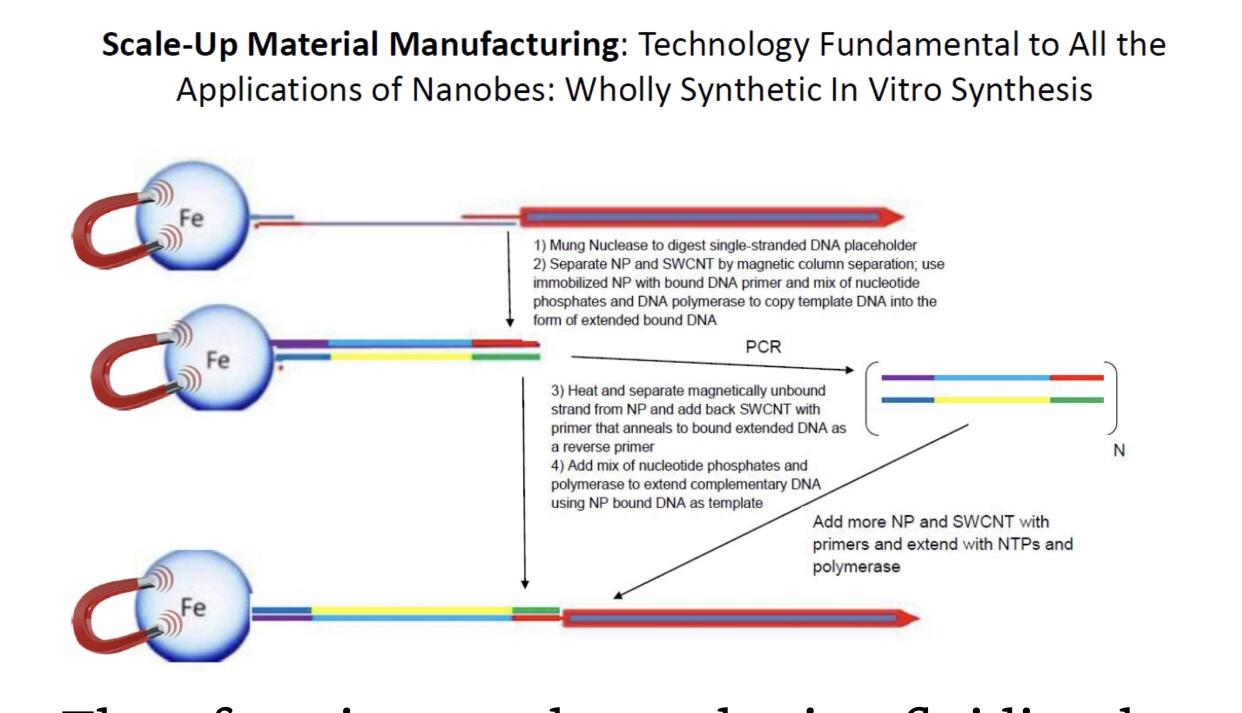
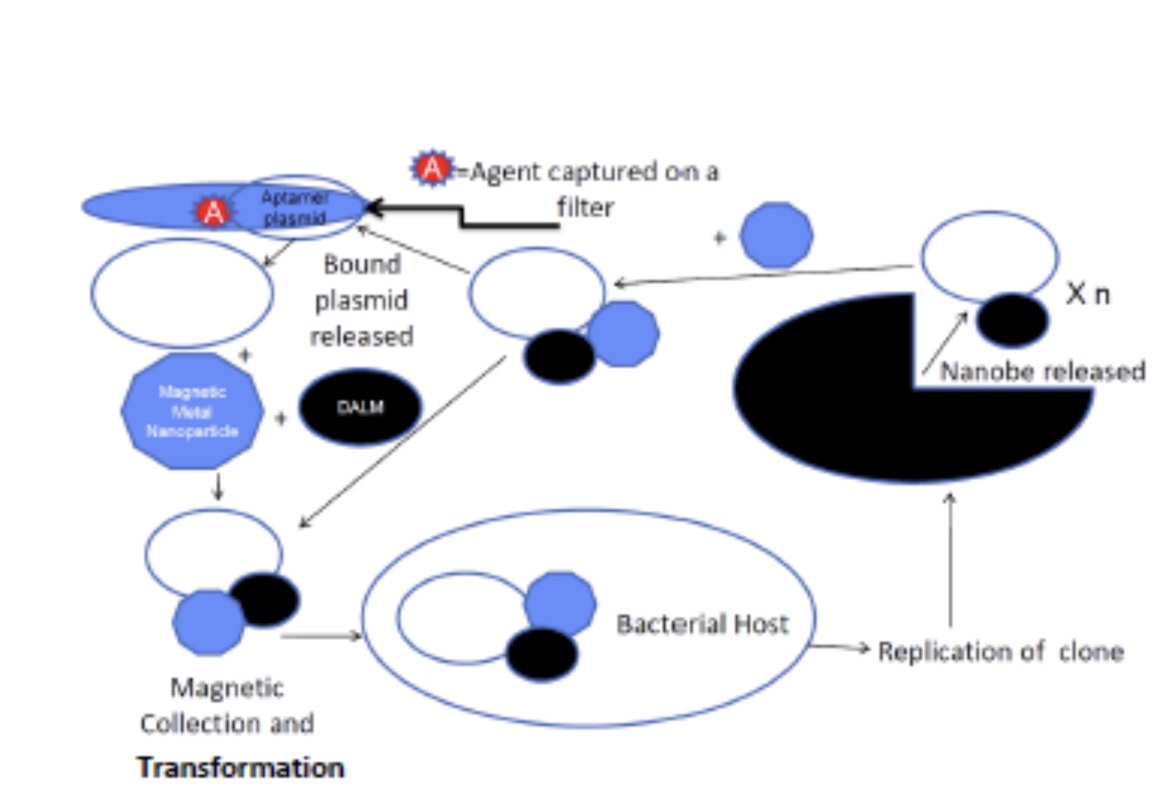
Total Biological Selection and Biosynthesis of Nanobes

Non-biological applications of Nanobes:

(1) Nano-plasma cleaning of surfaces by E field focusing (2) Nano-plasma etching of surfaces for device construction (3) Ultrawide-band-emitting nano-transmitters/ receivers for RFIDs (4) Nano-magnetically controlled switches and circuits (5) Taggants to track materials (in conjunction with people?)”

How etching and other electromagnetic functions are mediated
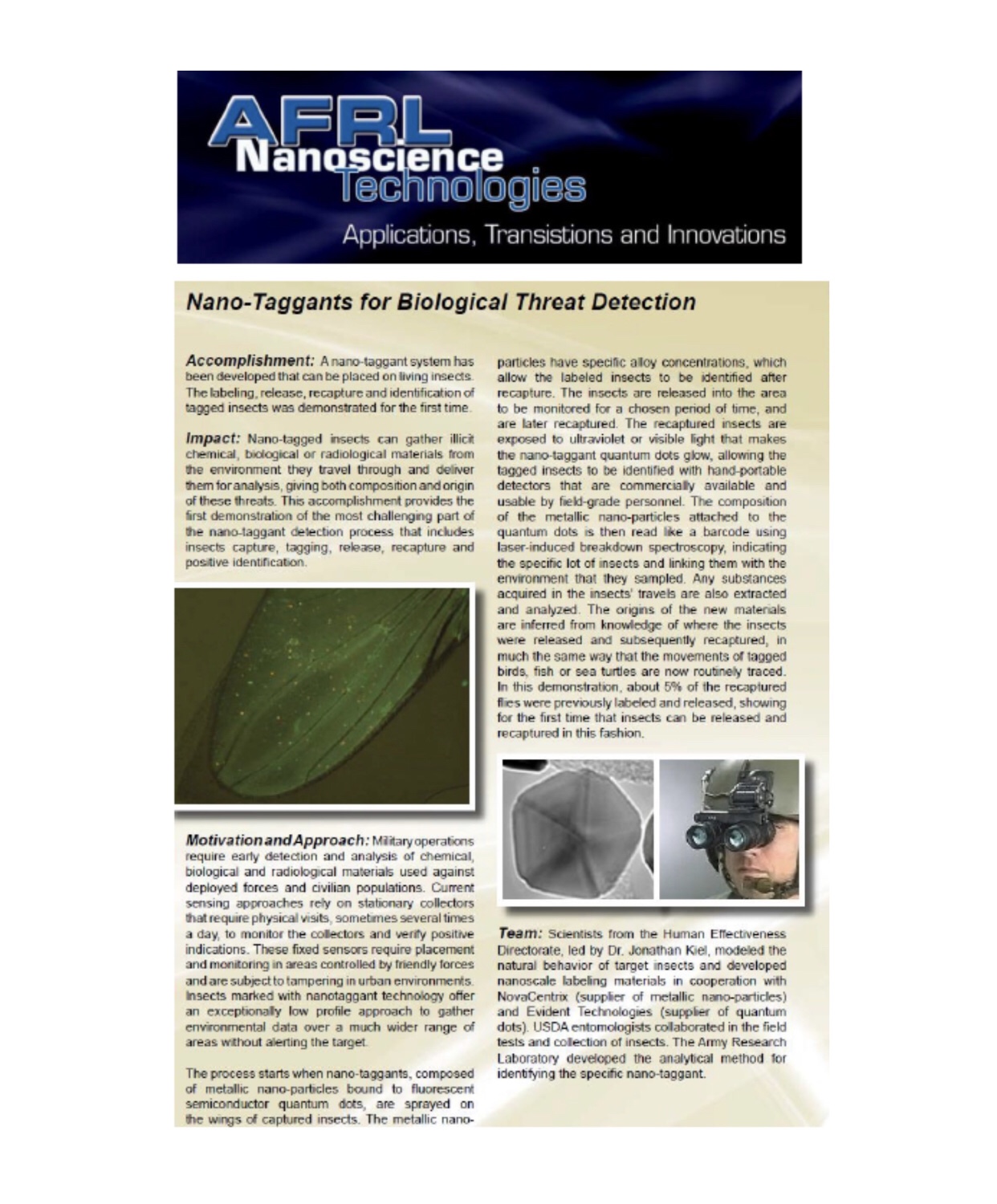
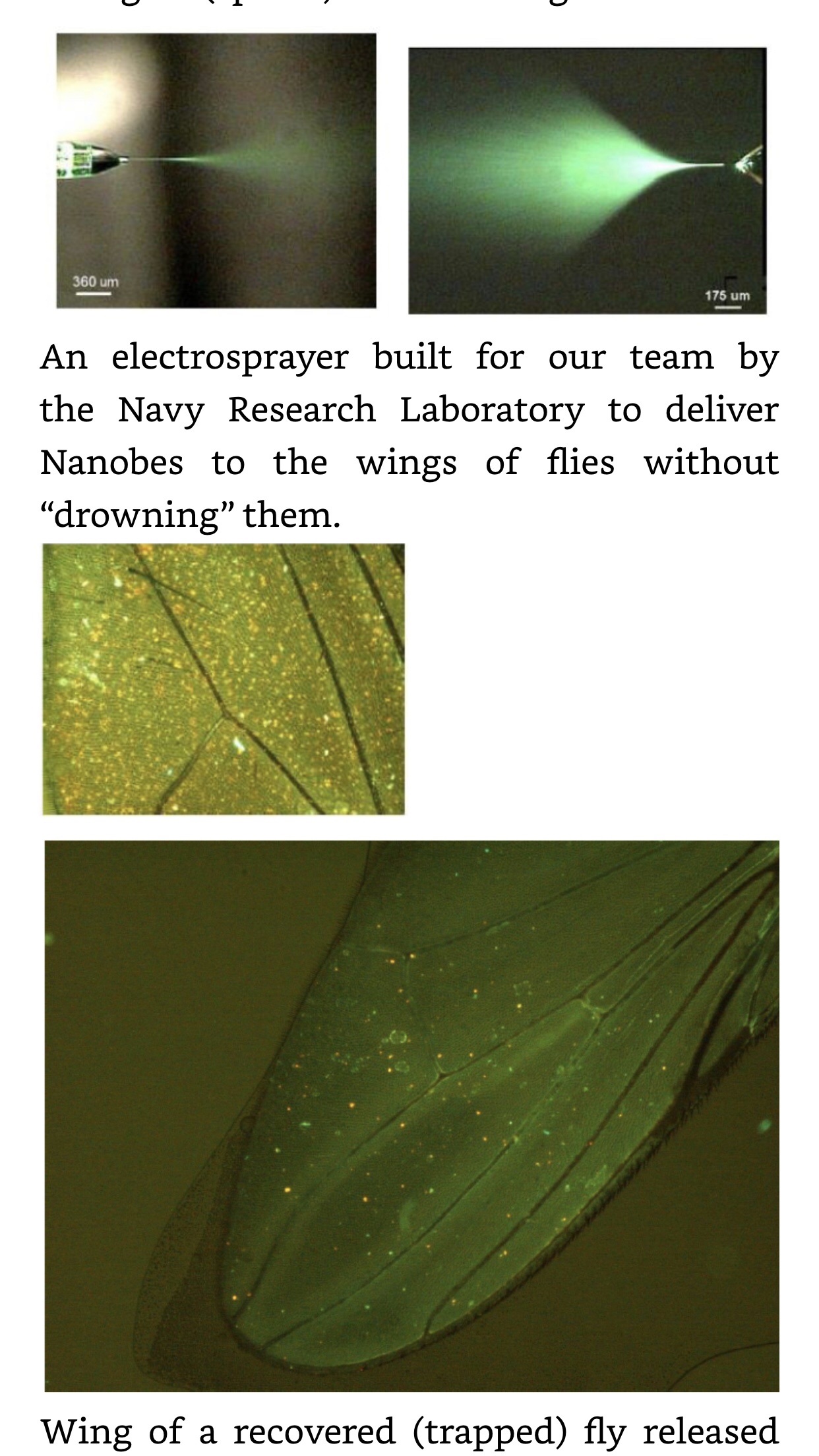
Tagging wings of flies with fluorescent Nanobes for collection of biological agents in the environment and for identification on recovery
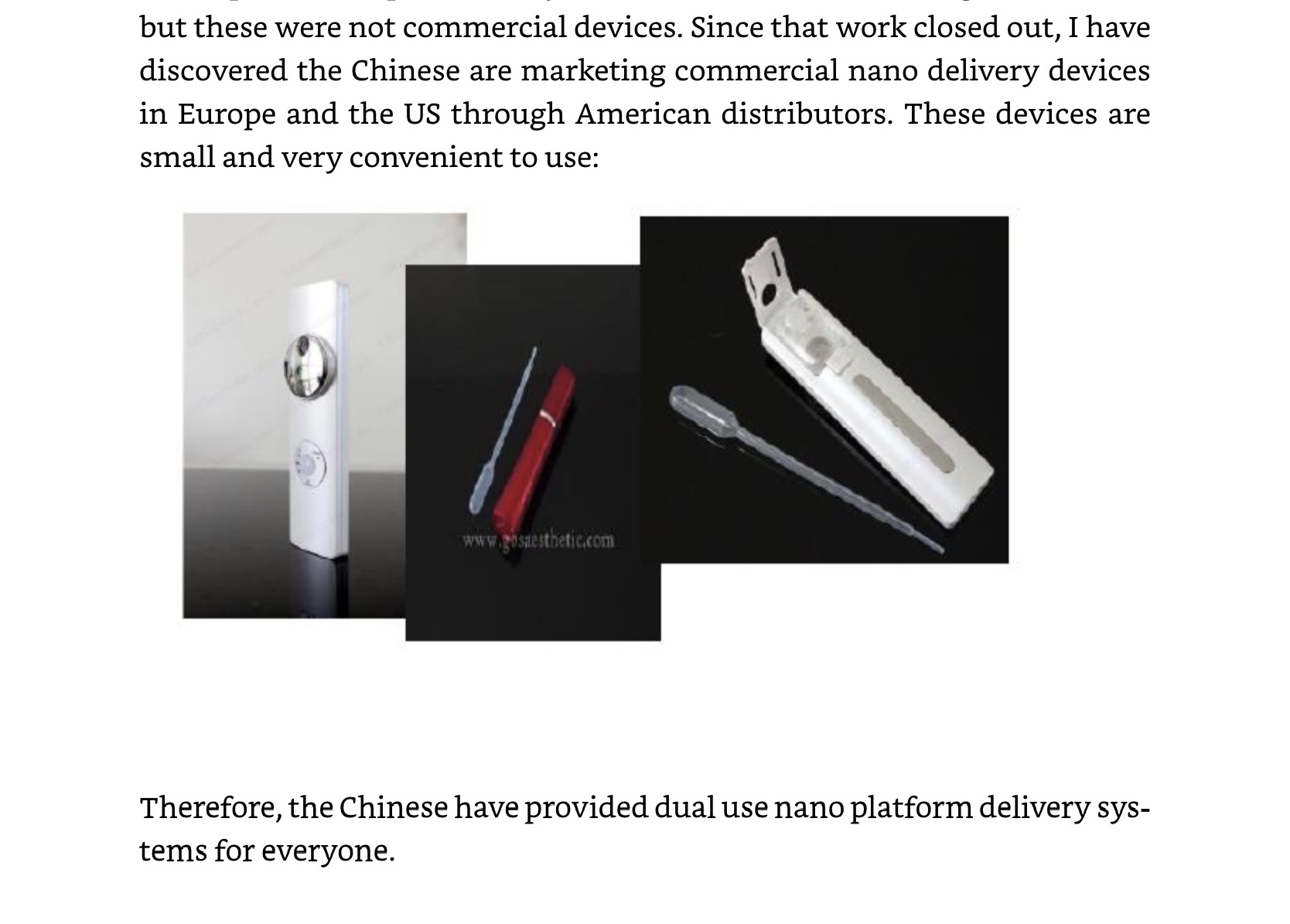
Pocket-sized nano sprayers made in China, supposedly for the application of cosmetics.
“In five cases, the plasmids, whether having functional RNAi or not, favored cell lysis by the virus. It must be noted that this did not mean the virus was successfully reproduced in these cells only that the viral effect of lysis was enhanced, which could have been the result, at least in part, to stimulating apoptosis of the cells, even without complete viral replication. Oddly enough, when the DALM producing pSV2neoNR1.1 plasmid (also produced nitrite and nitric oxide) was used, whether with scrambled RNAi or not, the viral plaque formation was significantly inhibited. This meant the NR1.1 probably had a non-specific viral inhibiting effect perhaps by delaying the cell cycle progression preventing viral replication. Unfortunately, the mechanism or its optimization was never pursued because the research ended with Brooks demise.”
— The Black Dragon Trilogy by JOHNATHAN KIEL
https://a.co/9kBhZV6

“Nanobes not only facilitate this biohacking but provide a convenient delivery system for the products. No longer will this type of biotechnology be confined to highly sophisticated and elite well-funded and institutionally supported labs of the Northeast or California coast of the USA, but they will also be available to all as the personal computer made computer technology and software development availabe to all. There is inherent freedom, progress and danger in such accessibility.”— The Black Dragon Trilogy by JOHNATHAN KIEL
https://a.co/fLu1BHE

Looking for an Industrial or Foundation Partner: Innovation to Defeat Emerging Infectious Disease in and out of the Body

  • Project summary. 1.Project Title
    Chemically Programmed Immunity and Adaptive Vaccinology


    This One Health proposal is based on an invention by the Nobel Laureate Dr Kary Mullis (December 28, 1944-August 7, 2019). The platform consists of nucleic acids (RNA, DNA, or single-stranded or double- stranded of either or both) chemically modified to provide a linker through a nanoparticle or nanofiber with nuclease resistance; the multivalent aptamers bind pre-existing immune cell receptors or natural or induced antibodies through the nanostructures to other aptamers pre-selected in vitro to bind to a moiety on the pathogen of interest. The pre-existing, anti-ligand activity is intended to re-direct an effective immediate immune response (including pre-existing successful vaccination technology) against the pathogen targeted by the in vitro selected nucleic acid binding sequence. This linker construct is in some instances intended to trigger further immune memory for future antibody, cell immune, toll-like receptor, or other adaptive and innate immune responses through a natural cascade, providing for autogenous vaccine development. The second part of this proposed platform consists of a vector delivery system consisting of the linker synthetic nanoparticles or nanofibers and the synthetic nucleic acid aptamers linked in such a way to retain the above activity upon release of the aptamer that will facilitate dermal, oral, nasal, respiratory, or parenteral delivery of the effective nucleic acid. In the best example of this complete platform, the composite will transform or transfect a target cell for the mass production of a biosynthetic counterpart of the fully synthetic composite, which performs the same anti-pathogen, anti-parasite function, allowing for scale-up by fermentation for manufacture or in vivo amplification. Parasite pathogens have been selected for the targets under this proposal because of the difficulty and underserved need for developing vaccines against them and because animal models, and in some cases side-by-side in field zoonotic disease, allow for animal field testing under conditions which are most appropriate for predicting a human response from animal data. This composite structure also allows for tracer technology to be incorporated while maintaining function in order to determine the biological fate of such composites in vivo and in situ.
    2. Platform Description and Rationale:
    The platform has been described in detail in enabling US and international patents and peer reviewed scientific papers. The platform and examples will be briefly described here. The details will be given by reference to save space in this expression of interest. The technology is presented in two complementary parts: (1) the nucleic acid aptamer with a chemically conjugated ligand to recruit an existing immune response to natural or vaccine-derived immunogen attached to an aptamer which links the sequences previously selected for DNA binding in vitro to the target pathogen or parasite; and (2) the synthetic nanoparticle/nanofiber vector to carry the aptamers into the host and target tissues by a convenient port of entry, releasing them at the nidus of infection or infestation. Also, a selection process and ruggedized prototype device for use under field conditions to collect target pathogens and isolate an appropriate binding aptamer for amplification and therapeutic use has been designed and undergone preliminary tests. A nanosprayer for topical and respiratory/mucous membrane delivery has also been developed; however, several types of nanospray delivery systems are now commercially available (for cosmetics). The same aptamers and vectors designed for therapeutics have been initially designed for diagnostics using fluorescence dequenching, thermochemiluminescence, magnetic capture, electron microscopy contrast media, and visible light microscopy staining and marking and diagnostically demonstrated against spotted fever type rickettsia, Bacillus anthracis, botulinum toxin, Francisella tularensis (in the field to confirm collection and isolation), and Shiga toxin. Furthermore, the synthetic vectors have been made which transfect and transform bacterial, animal and human cells, traceable by PCR, gene expression, fluorescence, and staining. The bacterial hosts have shown not only the physical and biological evidence of genetic transfer, but also subsequent production of transferable genetic material and vector biosynthetic polymer and transfer of the genetic material to naïve bacterial hosts and their transfer in the same way for three iterations. This biosynthetic form was also transferable to human and animal cells and detected by PCR. The transfer polymer made synthetically or biosynthetically was diazoluminomelanin, a poly (hydroxy) ortho phenylene, made from 3-amino-tyrosine or tyrosine by nitration, reduction and diazotization. This polymer when activated absorbs a wide range of electromagnetic radiation from UV to visible light to microwave and radiofrequency radiation. The polymer has a high affinity for DNA, protects it from nucleases and radiation damage until saturated (high energy pulsed radiation) then can cut or destructively damage DNA or RNA by free radical generation. The microwave killing mechanism has been demonstrated against anthrax and other bacilli spores. Biosynthetic polymer containing the transferable genetic material is readily transferred to bacteria, animal and human cells.

    Phenotypic consequences of nanoparticle composite transformation or transfection and fail-safe system for its destruction have been demonstrated.
    Data for treatment of anthrax in mice using Sterne and Ames strain Bacillus anthracis has been collected. The data for immediate recruitment of the immune system in mice were very robust because although survival of the more pathogenic strain was limited, one must keep in mind that the anthrax was delivered by inhalation at very high multiple lethal doses and the aptamer was delivered most effectively after a 3 hour delay by inhalation and was only against the protective antigen of the anthrax toxin and had to mobilize the immune system within 3 days with total lethality at 4 days. Alpha 1,3 galactose aptamer was the immune linker, but the mice do not make antibody against this epitope and human serum, containing natural anti-gal antibody had to be used to direct the mouse immune system after immunization of the mice with human serum. Independent experiments at the US Army Medical Institute of Infection Disease showed that lung clearance of spores was superior in the presence of aptamer: approximately 67 CFU (colony forming units) of bacilli per gram of lung of a treated mouse vs an estimated 44,600 CFU bacilli per gram of lung of an untreated mouse, a 665-benefit ratio.
    No human in vivo toxicity data are available, only in vitro data with human cells. However, experiments were also performed using the FETAX (Frog Embryo Teratogenesis Assay: Xenopus) procedure, which showed DALM to be non-toxic. Clinical trials with polymeric nanoparticles and DNA vaccines which are very similar to these agents have been performed with favourable results and some are still underway (see references). DNA vaccines have been shown to be well tolerated and safe.
    3. Research and Technical Objectives – Statement of work
    Objectives

    The objectives of this proposal are to demonstrate the effectiveness of the platform technology and delivery systems described in this proposal in appropriate in vitro and in vivo models, safety and efficacy of such a demonstrably effective form against a clinically significant parasitic disease with both natural animal and human correlates, first in clinical animal models then in human clinically derived samples, and finally in human subjects.
    4. Endpoints
    The endpoints are to produce a highly reproducible and clinically relevant, for safety and efficacy, composite nanoparticle aptamer platform which can be readily re-directed toward many infectious and parasitic targets by mere substitution of components without extensive re-testing and field trials.
    5. Target pathogens
    Pathogen 1: Malaria (Plasmodium falciparum and others):
    There is no current effective vaccine for this disease and resistance to the most effective treatment with artemisinin is spreading. However, natural resistance has been demonstrated in endemic areas in children, but the effective response requires IgM and not IgG and the target antigen galactose-alpha-1,3-galactose. Vaccines that lead to IgG response development will not be as effective as those that direct the immune system toward an IgM response to alpha gal.
    Pathogen 2: Heartworms (Dirofilaria immitis): this disease is not only pervasive in canines across the world, but the current treatment uses the same macrocyclic lactones, to which resistance is developing and spreading, used in human filariasis; macrocyclic lactones are the only class of drugs currently available to treat these filarial diseases, which means the development of resistance would eliminate any effective treatment, and they involve altering or blocking the release of an antigen which interferes with the immune response to these filaria and which is effectively activated upon treatment to eliminate microfilaria. There is a robust antibody response which is interfered with by soluble antigen/antibody complex formation which could be overcome by the appropriate redirection or facilitation of immune targeting.
    Pathogen 3: Dracunculus medinensis, Guinea worm; the hope to eradicate this parasite, now only in Africa, has recently shown signs of failure after finding that the once thought to be rare infection in dogs (over a thousand infected dogs discovered) is now commonly present in them in Chad. This infection of dogs in areas of re-emerging human infection allows for studies of the platform response in dogs under field conditions which would be most relevant to concurrent human disease.
    6. Pre-Clinical Approach:
    The worst case non-clinical/pre-clinical development approach has already been established by previous Department of Defence research on anthrax spore protection using a mouse/Sterne/Ames anthrax spore inhalation and immediate mobilization of the immune system by inhalation aptamer composites and looking for prolonged survival and clearing of inhaled anthrax spores. The dose ranges have been pre-determined by in vitro neutralization molar ratio data (for anthrax toxins but of course not the proposed targets). The general toxicity issues are the activation of toll-like receptor innate immunity and direction toward Th1 vs Th2 immune pathways (i.e., avoiding alpha gal meat allergy-like responses by appropriate cellular immune cell targeting along with parasite targeting) which can be adjusted by making alterations in the nucleic acid sequences of the aptamers. Since the immune response can be recruited during concomitant infections, the reduction in microfilaria or other circulating parasitic forms (i.e., in malaria), we can directly assess the response in an individual human or animal as its own control.
  • 7. Clinical development plan and regulatory strategy:
    The strategy for clinical development through Phase I of the proposed pathogens uses constructs which are essentially variations of the same form and these lead to certain derived, in-depth analyses of immunological mechanisms of action of the platform and toxicity. Each pathogen/parasite addressed will take a similar approach by substitution: the anti-malarial aptamer composite will contain a bifunctional nanoparticle coated with a nucleic acid with galactose-alpha-1,3-galactose moiety at the exposed end to engage natural human antibody against the alpha gal and an anti-B1 lymphocyte receptor(s) aptamer, and/or including anti-IgM aptamers, on the same nanoparticle surface to directly stimulate IgM production for the removal of the malarial parasites. These composites can be tested against peripheral human monocytic/lymphocytic cells first (binding and stimulation assays) and antibody in human serum for binding. The Phase I test would look at the toxicity of the alpha gal/anti-B1 lymphocyte aptamer nanoparticle composite. Initially, a model form will be tested (for toxicity and efficacy) in the avian model of malaria infection by using poultry immunized against alpha gal and a nanoparticle with an alpha gal nucleic acid moiety and an anti-avian IgY aptamer. The poultry will be infected with avian malaria and the various component controls and complete platform. The anti-heartworm platform, which can be extended to human filarial parasites by substitution of appropriate aptamer specific parasite or general cross-reacting filarial antigen moieties, will consist of a bifunctional nanoparticle coated with an aptamer selected against the endosymbiont Wolbachia and another aptamer against one or more excretory/secretory antigens (currently used as diagnostic antigens in dogs). Domestic (pet) dogs with and without concurrent heartworm infections from endemic heartworm areas will be recruited for treatment/vaccination with the preparation following in laboratory testing of efficacy and toxicity in dogs and monitored for microfilaria and immunological responses indicating adult female heartworm presence. The anti-dracunculid composite will be composed of the same nanoparticle types as tested above, species specific anti-excretory/secretory antigens aptamer(s) for the parasite (many have already been cloned) and an anti-measles/distemper virus or anti-measles/distemper antibody epitope aptamer. Cross reacting anti-measles/distemper aptamers will allow the same composite prep to be used in both dogs and humans, who have been immunized against these viruses and will either be challenged with the currently available vaccines at time of treatment or those demonstrating high antibody titers against these viruses at the time. The planned licensure pathway for approval of a phase 1 clinical trial will be through a San Antonio clinical trial firm to be hired.
  • 8. Mechanism of action:
    Because the mechanism involves re-directing an immune response from an ineffective but pre-existing abundant one, the reduction in numbers of immature circulating forms of the parasites or adult parasite fertility and viability will be used to assess the effectiveness of the mechanism of action. Furthermore, levels of isotypes and idiotypes of antibodies and specific committed cellular immunity will be assessed by quantity and specificity of response to the effective antigens/immunogens. The reappearance of disease in an endemic area in individuals (animals or humans) treated and cleared in this way, by adaptive vaccinology, will be assessed for reappearance of infection over time and the extent of signs and symptomology of apparent disease. The effectiveness of re-treatment will be evaluated and the necessity to further re-direct the response.
  • 9. Chemistry, Manufacturing & Control (CMC) Development
    The large-scale manufacture of the platform involves methods already being used in commercial production of aptamers (SELEX) and newer methods described in the publications and patents referenced, including an automated method, and a field diagnostic system for finding binding sequences and cloning them for fermentation production.
  • 10. Timeline and Key milestones:
    Timeline – Decision/key milestones
    From initiation of project: 3-6 months to select aptamers for potential molecular targets; starting after selection/conjugation of aptamers to nanoparticles and testing of binding activity, determining quality and quantity reliability (first milestone that must be passed): 6 months; testing in in vitro cellular models, animal and human, and laboratory models if necessary (mice and chickens or other poultry for malarial responses; dogs for microfilaria and adult heartworm responses; dracunculid responses will have to be done in the field in Chad in dogs); at least one, and preferably, the first two laboratory animal models must be passed without overt toxicity to proceed. By 2.5 years from the initiation, at least phase 1 trials should begin for one of the specific anti-parasite composites. Phase 2 and 3 will most likely exceed the 3-year limit of this funding proposal.
  • 11. Vaccine Development Timeline: Because changing the target for vaccination only requires a substitution into the platform, human trials could occur within 3 months of identifying a target. The approval of prior tests of the DNA/nucleic acid and nanoparticle platforms for use in humans as safe and the concurrent use of similar preparations in domestic animals (under USDA/APHIS biologicals rules) or in-country animals would greatly accelerate the process.
    The aptamer platform composite approach does not require the prior development of immunity against the target organism but employs pre-existing or concomitant immunity to provide protection. In anthrax trials with naïve mice at multiple lethal doses of anthrax spores, immune protection against lethal anthrax toxin was initiated as early as 2 hours after exposure and maintained in an advancing infection at periods of 24 hours until 14 days when primary immunity took over. This worst case would not be expected with the parasites described since they are not uniformly fatal at 4 days as the overwhelming anthrax spore challenge would be. Also, the parasites themselves, when present as initial larval forms or subsequent adults maintain an active but ineffectual immune response, which the aptamer composite platform would re-direct for the elimination of the parasites. The presence of the nanoparticle-based aptamer composite platform is anticipated to continue for at least a year and it remains to be seen if the re-directed immune pathway will persist after the composite platform has broken down, but this is possible if not probable and will be explored as part of the experimental phase with subsequent re-challenges with parasites. Potentially no boosting will be required.
  • 12. Scale up to target doses
    The estimated time of release, if anti-ligand targets are already available for aptamer binding selection, and if no clinical trials are required before such an emergency response (except for safety), then the best time would be 3 months and worst 6 months, starting from the beginning of the process. If the aptamer sequence is already known, production and delivery could occur in 2-4 weeks. The platform is designed for single dose use at best, but can be used, as it was with anthrax, in multiple serial doses for severe overwhelming potential lethal disease. The questions about manufacture process have been addressed elsewhere in this pre-proposal.
  • 13. Budget
    Total budget estimate

    The initial pre-clinical development approximate cost will be at least $1.8M per year, which includes all the manufacturing technology development for scale, initial in vitro cell culture and animal testing. It will also include testing for toxicity of the nanoparticle and nucleic acid constructs unless data can be accepted on similar DNA and nanoparticle constructs already being used in human and animal clinical trials corresponding to this purpose (if not this may raise the cost to $3M yearly). The production of the scaled-up end-product for each parasite for use in testing, clinical trials and/or emergency response would be at least $550,000 for the custom made (not final manufacturing cost) for 100,000 doses. The cost objective for the final product for distribution for medical and veterinary use is 16 to 25 cents a dose at today’s costs of intermediate scale up manufacturing of nucleic acids (of bifunctional target length aptamers) and nanoparticles, or as close to this cost as possible. The major pass through costs would be for clinical trials, if they are to be funded all or in part, about $55M. Otherwise work up to that time (over a minimum of 3 years) would be $5.9M to $6.55M.
    Additional funding not applicable.
  • 14. Application organization/consortium
    Experience and track record of applicant organization and cooperating partner(s)

    John G. Bruno: B.S., Microbiology with Chemistry Minor, Univ. of Arizona (1985) , Ph.D., Microbiology with emphasis on Immunology, Univ. of Arizona, Tucson (1991), Jan 2003-August 2018 Senior Scientist, Vice President and Chief Science Officer- Operational Technologies Corporation (OpTech), OTC Biotechnologies, LLC, and Pronucleotein Biotechnologies, Inc., San Antonio, TX., September 2018 – Present, Principal Scientist and Director of Biotechnology – Nanohmics, Inc., Austin, TX., 68 Grants/Contracts; Funding > $16M; 104 Peer-Reviewed Journal Articles; 16 Total U.S. and WIPO/PCT/EU Patents .
    Ronald M. Cook: UC Berkeley College of Chemistry (BS 1969); University of Washington, Seattle, Department of Chemistry, Ph.D. 1974; postdoctoral, University of California, San Francisco, (Dept of Microbiology and Immunology), 1974-76; founded Biosearch, Inc in 1977 to supply synthetic peptides (enkephalins) and protein bioconjugates for research; 1980, synthesis of nucleic acids, Biosearch became leading innovator in synthetic DNA oligonucleotide chemistry; 1982, the company developed first commercially viable Oligo synthesizer (SAM I); one of the first SAM units was placed with Kary Mullis, at Cetus, enabling the invention of PCR in 1983; 1990-1993, Principal Consultant to Beckman Instruments; 1993- 2015, Biosearch Technologies, Inc.: President/CEO, Chief Technical Officer; Chairman, Light Speed Genomics, a Santa Clara company; Chairman, DNA Technology, a Danish oligo-manufacturing company; Chairman, Vitra Bio, a German manufacturer of specialty glass for solid phase chemistry; consultant and/or served on Scientific Advisory Boards of Beckman Instruments, Solexa (Cambridge, England, RMC was a co-founder), developing next generation DNA sequencing technology; and Mosaic (Cambridge, Ma), developing solid phase PCR and contingent diagnostic applications; 2015-2019. LGC-Genomics, Chief Scientific Officer, Chairman, Co-Founder Optical Biosystems.
    George W. Irving III; DVM (1965), MS (1970), Diplomate American College of Laboratory Animal Medicine (1972), and American College of Veterinary Preventive Medicine (1977); served 30 years as USAF Military Officer, and 23 Years as VP at Conceptual MindWorks, Inc., directing research in Chemical & Bio Warfare Agent defense, Non-Lethal Weapons Bio Effects, and Pharmaceutical/Vaccine Development.
    Johnathan L. Kiel: DVM (1974, Texas A&M); PhD (Microbiology and Biochemistry, 1981, Texas Tech); Diplomate American College of Veterinary Microbiologists (1984), Charter Diplomate in Veterinary Parasitology (2011); served 38 years total, as a military officer, as a Civil Servant (GS14-15) research veterinarian, and Senior Scientist (Brigadier General Equivalent) in the Senior Executive Service in electromagnetic bioeffects and biosurveillance and counterproliferation of biological warfare and other infectious agents; 106 peer-reviewed articles; 30 patents. The fundamental form of this technology was invented by Dr Kary Mullis (deceased 7 August 2019), the recipient of the Nobel Prize, for inventing, PCR in 1993; with his collaboration, the platform was extended to other applications and delivery systems by the researchers of the United States Air Force at the Air Force Research Laboratory.
  • 15. Dissemination plan of study results and data sharing:
    Peer-reviewed journal papers will be used when applicable to share data. Clinical trial registration and studies will be managed by a San Antonio clinical trials firm (such as Clinical Trials of Texas, Inc.). Because the targets for this project involve tropical diseases as well, we will reach out to public health and medical authorities of potential target countries such as Chad and other African countries through the World Health Organization and the OIE, World Organisation for Animal Health. All patient data will be protected in accord with US and international laws. Patent applications, both US and international, will be used to disclose the processes, but non-exclusive licensing will be used as much as possible to make the technology globally available. Procedures in accord with the USDA/APHIS will be followed to license the resulting animal biologicals produced from the project platform.
  • 16. References.
  • 1. Mullis, K.B., Vivekananda. J., Kiel, J.L., Cook, R.M. Chemically Programmable Immunity, US Patent 8,604,184 B2, December 10, 2013.
  • 2. Kiel, J.L., Tijerina, A., Holwitt, E.A., Sloan, M.A., Woitaske, M., and Fan, M. Compositions, Methods and Uses for Biosynthetic Plasmid Integrated Capture Elements, US Patent 8,628,955 B2, Jan. 14, 2014.
  • 3. Kiel, Johnathan L., Holwitt, Eric A., Fan, Michael (Maomian), Roper, Shelly D., Methods and Compositions for Rapid Selection and Production of Nucleic Acid Aptamers, US Patent 9,273,345 B2, March 1, 2016.
  • 4.Vivekananda, J., and Kiel, J. L. Anti-Francisella tularensis DNA aptamers detect tularemia antigen from different subspecies by Aptamer-Linked Immobilized Sorbent Assay, Laboratory Investigation 86: 610-618, 2006.
  • 5. Fan, M., McBurnett, S. R., Andrews, C. J., Allman, A. M., Bruno, J. G., and Kiel, J. L. Aptamer Selection Express: A Novel Method for Rapid Single-Step Selection and Sensing of Aptamers. J Biomol Tech 19(5), 311–319 (December 2008).
  • 6. Bruno, J G. Aptamer–biotin–streptavidin–C1q complexes can trigger the classical complement pathway to kill cancer cells In Vitro Cell.Dev.Biol.—Animal (2010) 46:107–113.
  • 7. Mutapi, F., Billingsley, P.F., and Secor, W.E. Infection and treatment immunizations for successful parasite vaccines. Trends in Parasitology March 2013, Vol. 29, No. 3, 135-141.
  • 8. Bruno, J.B., Richarte, A.M., Savage, A.A., and Sivils, J.C. Development and Characterization of DNA Aptamers Which Bind Kinesins from Leishmania Promastigotes. J. Bionanosci. 8, 1–12, 2014.
  • 9. Aguilar, R., et al. Antibody responses to α-Gal in African children vary with age and site and are associated with malaria protection. Scientific Reports. 3 July 2018, DOI:10.1038/s41598-018-28325-w.
  • 10. Kristian, S.A., Hwang, J.H., Hall, B., Leire, E., Iacomini, J., Old, R., Galili, U., Roberts, C., Mullis, K.B., Westby, M., and Nizet, V. Retargeting pre-existing human antibodies to a bacterial pathogen with an alpha-Gal conjugated aptamer. J Mol Med (Berl). 2015 June; 93(6): 619–631.
  • 11.Slatko, B.E.,Taylor, M.J., and Foster, J.M. The Wolbachia endosymbiont as an anti-filarial nematode target. Symbiosis (2010) 51:55–65.
  • 12. Pati, R., Shevtsov, M., and Sonawane, A. Nanoparticle Vaccines Against Infectious Diseases. Frontiers in Immunology (9), October 2018, Article 2224.
  • Don’t lose sight of the versatility of this approach (just because the original proposal involves its use against parasites),especially for COVID-19, where the path the immune response takes is the difference between recovery or death or long term chronic disease.