COVID Vaccines: The Danger of Over Interpreting In Vitro Studies: We are more than the Sum of Our Parts

Concerns over the safety of vaccines and effectiveness of non-pharmaceutical control measures have led to and will lead to worse outcomes for COVID, especially in the US, where such resistance has led to tragic devastation. Therefore, any over interpretation of worst case scenarios will lead to self-fulfilling apocalyptic outcomes. This can only be prevented by open and honest assessment of risk/cost/benefits of any such approaches https://www.medrxiv.org/content/10.1101/2021.01.29.21250653v1.full.pdf. The latest most concerning challenges to vaccines are their potential to instigate autoimmunity, allergic reactivity, their ability to enhance infectivity, and their loss of effectiveness because of the appearance and rapid spread of mutant strains of SARS-CoV-2. Another more common place and older concern for attenuated vaccines is their possible reversion to pathogenic forms. I will start with this last concern first because it has some well-documented clinical examples. The earliest was with the first vaccine, smallpox vaccine, cowpox or now vaccinia (DNA from an early 1902 sample of smallpox vaccine showed that it was 99.7% similar to horsepox virus, now extinct). This vaccine is a close attenuated relative of smallpox virus, usually only causing localized lesions, skin vesicles, followed by erosions and ulceration, at most resulting in a single scar. However, it can cause generalized vaccinia, with widespread reddening, inflammation and pealing of the skin and on very rare occasion heart damage and even death (eczema vaccinatum, accidental inoculation, and progressive vaccinia). The spread of the virus from inoculation sites during active infections to others, especially amongst children, was common in the past. But we must never forget that without this vaccine, smallpox could have never been eradicated. We would still be living with its up to 30% mortality and life-long disfigurement.

A lesser known reversion was seen with Venezuelan Equine Encephalitis modified live virus vaccine, TC-83 virus, was developed as an anti-biological warfare vaccine in the early 1960’s at USAMRIID (US Army Medical Research Institute of Infectious Diseases) and transitioned to a commercial horse vaccine in the 1970’s and eventually was replaced with a killed vaccine. VEEV was attenuated into TC-83 by 83 serial passages in guinea pig heart cells. It was first tested extensively in horses during the 1971 Texas VEE epizootic. Although the vaccine produces viremia, fever and leucopenia in horses, neutralizing antibodies are generated with protection from VEEV challenge. TC-83 produces seroconversion in about 80% of humans (neutralizing antibody titers ≥20) but mild to moderate flu-like symptoms. TC-83 is the result of only 2 attenuating mutations among the 12 mutations that accompanied in vitro passage of the Trinidad donkey strain. These mutations could revert in vaccinees, which also presented a risk of epizootic amplification. To produce a more stably attenuated VEEV vaccine candidate, the virulent Trinidad donkey genome was cloned in cDNA and attenuated by inserting either point mutations or a PE2 cleavage-signal mutation combined with an E1 gene resuscitating mutation. The latter strain, called V3526, is safe and immunogenic for mice and nonhuman primates, and appears superior to TC-83 in rodents. V3526 has a lower risk for environmental transmission and distribution. TC-83 was transmitted by mosquito vectors and was isolated in mosquitoes collected in Louisiana during the 1971 VEE epizootic/epidemic. Efforts were made to improve its safety by genetic modification to prevent its ability to infect insects. This recombinant virus further attenuated TC-83, but was completely unable to infect mosquito cells or mosquitoes in vivo. Currently, commercial equine vaccines marketed in the U.S. consist of inactivated TC-83, often combined with inactivated eastern and western equine encephalitis viruses.

“The small and simple VEEV has one more trick which it shares with the plant Tobacco Mosaic Virus; it can resurrect itself from broken pieces. The nsP4 sequence in VEEV is very similar to the replicases of three plant viruses, including Tobacco Mosaic Virus. The Brooks Lab performed a critical experiment using the RetroXpress (TM) system of Clontech derived from a retrovirus which could transfer genes but could not infect and replicate, my group at Brooks constructed a new virus that contained the nsP4 sequence inserted into this platform and expected that the new virus could infect cells but not replicate. It not only infected (transfected) marker genes into the target mammalian cells but also formed plaques of transformed cells (those which resembled cancer cells and formed uninhibited growth mounds of cells). These grew and multiplied in the cell culture. A new complete infectious virus had formed. How? Tobacco Mosaic Virus has been shown to repair and reactivate after exposure to UV with the help of an unknown plant nucleic acid repair system (Multiplicity Reactivation: Recombination). Since we inserted only the nsP4 protein into the host cells co-infected with the defective retrovirus, we proposed that the new virus used cellular RNA dependent RNA polymerase in conjunction with the expressed nsP4 to form a repair complex which constructed a chimera virus from the retroviral pieces and other unknown viral nucleic acid components inherently present. Perhaps, the infections by killed virus from killed vaccines previously reported were not just because of contamination with whole live virus but with components which survived the formalin damage and were reassembled into whole restored infectious virus, albeit at a less effective infectious dose of original broken pieces. Intact VEEV will produce a transmissible infection with as little as 12 PFU (plaque forming units equivalent to 10 virions for a multiplicity of infection of 1 but more likely 10X10 = 100 virions). I have speculated that these broken viruses, if reconstituted from broken virions or free RNA would require 10e6 units to make one intact virion.” — The Black Dragon Trilogy by JOHNATHAN KIEL. https://a.co/gtIO9aR

The third example of a problematic attenuated live vaccine still causing trouble is Sabin modified live polio vaccine. The first, vaccine-associated paralytic poliomyelitis (VAPP) was recognized in the early 1960s. VAPP is a very rare and occurs sporadically when a dose of oral live polio vaccine reverts to neurovirulence and causes paralysis in the vaccine recipient or a nonimmune contact. VAPP can be in immunologically normal vaccine recipients and their contacts as well as among persons with immunodeficiencies, defects in antibody production. There were live vaccine-associated outbreaks in Madagascar and South Sudan in 2014. Eight newly identified persons in six countries were found to excrete vaccine virus, and a patient in the United Kingdom was still excreting the virus in 2014 after more than 28 years. Reported by ProMed on 15 Dec 2020 were three new polio cases in Sierra Leone for the first time in 10 years. The cases were recorded in Kambia, Tonkolili, and Western Area Rural District. The cases were not from the wild poliovirus strain, but were vaccine derived. Only 2 countries worldwide continue to have wild poliovirus transmission: Pakistan and Afghanistan; thanks to worldwide polio vaccination. Because of violent resistance to polio vaccination in these two countries, polio persists and cannot be eradicated. Killed Salk polio vaccination is now once again being used with no chance of reversion because it is a killed vaccine, as the risk of live Sabin vaccine now out weighs its benefits.

The severe reactions to vaccines (anaphylaxis) are extremely rare for humans and animals and are expected to be no worse for COVID vaccines. They are often, when they do occur associated with adjuvants and additives, rather than the primary immunogen, except for perhaps some vaccines in animals, like that for leptospirosis (actually a bacterin).

Autoimmunity is related to allergic reaction but distinct, especially in regards to SARS-CoV-2 pathology. I have discussed the immune response to the virus in detail in previous posts. As a reminder, the virus has the unusual association of autoantibody against interferons as a marker of severe disease. Also, unlike other animal coronaviruses, SARS-CoV-2 is more severe in adults than children, in general. The animal ones are more severe in the young than old. What is a plausible explanation, or hypothesis? Children have a more robust innate immune response, including interferon, than an adaptive immune (antibody) response than adults, but they have higher amounts of circulating soluble interleukin 17 receptors which help reduce the cellular innate pro-inflammatory response mediated in immune cells through membrane-bound IL-17 receptors. I have pointed out, in an earlier post, that the uncontrollable innate immune response yields reactive oxygen species that cause considerable local collateral host cell damage and death. Therefore, taking out interferon, and the subsequent wide distribution of infectious virus, then leads to antibody against virally infected cells which directs antibody-dependent cell cytotoxicity, causing a whole host inflammatory response, and collateral cellular, tissue to whole organ damage and failure. The pro-inflammatory activity of whole virus leads to a by-stander adjuvant effect which can activate forbidden B cells to produce the self antibody, i.e. anti-interferon. In adult immune systems, having seen more related viruses than the naive immune systems of children, this is more likely to happen. A good humoral and cellular immune response, triggered by a vaccine directed against specific antigens that direct neutralizing antibody response avoids this outcome because it takes out virus before it can spread widely in the body.

This line of thinking leads to a more recent disconcerting response to the virus that involves a minor antibody directed to a critical part of the binding portion of the viral spike protein (S1) https://www.biorxiv.org/content/10.1101/2020.12.18.423358v1?fbclid=IwAR3D1MJ-SyW9wLeqrRV6pdSP6ToUwpaLjbB5LK2oA4B0b9iYjJ4RTvYs_PQ. The paper provides evidence that minor antibodies from COVID patients’ serum bind to part of the S1 spike protein that enhances the binding to ACE2 viral receptors and uptake of infectious virus in cell culture in established cell lines. They further raise issue that a vaccine could enhance viral uptake and disease by extension of this observation to the whole human. Unfortunately, such a stretch will provide support to those who oppose vaccination. This leap may be moot from the get go because patients have circulating soluble ACE2, derived from proteolytically cleaved membrane bound ACE2. First, there is no evidence that any vaccine enhances viral infectivity in vivo. Second, these soluble receptors would first see and soak up systemic virus, especially if its binding were enhanced by the antibody. Then, immune cells would take up these immune complexes and dispose of the virus. In addition, the antigens selected for the vaccines are specifically selected to optimize induction of neutralizing antibody.

The vaccines released for use so far have had exceptional efficacy in generating neutralizing antibody. The fear of a mutation in SARS-CoV-2 has come to fruition but those so far such as in mink, have increased efficacy of transmission and infection but not pathogenicity. Coronaviruses have a large RNA genome and can therefore undergo more mutations without significant functional change than smaller genome RNA viruses. They also have a proof reading polymerase to reduce replication mistakes (mutations) unlike other error prone RNA viruses like HIV. However, they can undergo selection pressure for advantageous mutants, when necessary, generated by mutations mediated by Nsp14 exonuclease in independent coronaviruses, resulting in a 15–21-fold decrease in replication fidelity. Therefore, the presence of this exonuclease can clearly influence viral RNA mutation rates and the generation of quasi species when needed. Therefore, there is a continuous tension balance between the polymerase and the exonuclease to only produce mutations that are favored by environmental selection pressure. The latest of greatest concern, VOC 202012/01 variant, occurred in the UK. This variant has a mutation in the receptor binding domain (RBD) of the spike protein at position 501, where the amino acid asparagine (N) has been replaced with tyrosine (Y). The shorthand of the mutation is N501Y, also designated as S:N501Y, because it is in the spike protein. This variant carries many other mutations, 14 amino acid (AA) mutations, 6 non-AA altering mutations, and 3 deletions, notably including 69/70 deletion: this double deletion has occurred spontaneously many times, and likely leads to a change in the shape of the spike protein; P681H: near the S1/S2 furin cleavage site, a site with high variability in coronaviruses, which has also emerged spontaneously multiple times; ORF8 stop codon (Q27stop), a mutation not in the spike protein but in a different gene (in open reading frame 8), the function of which is unknown. Similar mutations have occurred in the past such as in Singapore, in which one strain with this type of mutation emerged and disappeared. Preliminary analysis in the UK indicates this variant is significantly more transmissible than previously circulating variants, with an estimated potential to increase the reproductive number (R) by 0.4 or greater with an estimated increased transmissibility of up to 70%. There is no indication, at this point, of increased disease severity associated with the new variant. A few cases of this new variant have to date been reported in Denmark and the Netherlands. Another similar mutant has arisen in South Africa, with structural changes in the spike protein, which is still being evaluated for impact. However, in a recently released study, pending peer review, the Pfizer vaccine has been shown to still induce neutralizing protection to the mutants https://www.biorxiv.org/content/10.1101/2021.01.07.425740v1.full.pdf. One must remember that mutations in the spike protein are not limitless. They must conserve essential structure that allows binding and entry of the virus https://science.sciencemag.org/content/sci/371/6526/284.full.pdf. The ACE2 viral receptors do not mutate as fast as the virus so they limit what variations in the virus are still tolerable for infection. If coronavirus behavior is to hold true, the most efficiently transmitted virus with the lowest mortality necessary to eliminate less than ideal virus replicating hosts, and that which does not preferentially infect much more than 10% of the susceptible population, especially when simple non-pharmaceutical methods as distancing, good ventilation and wearing of masks, are so effective, will prevail to maintain itself in the general population indefinitely. This persistence at a low percentage of the susceptible population is the nature of coronaviruses in animals.

One last note, the Brooks USAF AFRL CPT groups’ seeking of aptamer-based anti-pathogens to bind toxic components, inhibit target cell binding and uptake, and re-direct existing immunity, natural or vaccine induced, rapidly toward new, emerging and re-emerging pathogens, including viruses, was designed to address outbreaks like COVID without always having to resort to the Herculean efforts that have been necessary to develop COVID vaccines. The failure or inability to apply the same efforts, as we have had to to rapidly develop COVID vaccines, to the insidious smoldering problem of antimicrobial (antibiotic) resistance was also the motivation for developing this new technology, as well as to relieve the costs and socioeconomic impacts of addressing these problems by conventional, albeit modern technological, versions of biomedical approaches.

Going into a Hiatus: Maybe See You on the Other Side: But First Before I Go….

We are experiencing a rough start to a new Executive Federal Administration. They are left with a legacy mess to cleanup. The roll out of the vaccines for COVID is much less and slower than expected—-unless things change, for many if not most US residents, it will be too little and too late. Even small countries are rolling out new vaccines. If the ruinous beginning of COVID that the previous WH Administration brought us is any measure and is not corrected, the US will follow the same disastrous path for a while at least, and be behind even countries like Vietnam in vaccination, as it was in non-medical, physical controls, with inequitable progress. My attempts to provide current, correct, and relevant information on SARS-CoV-2 and COVID, and previously possible innovative solutions, and lessons about preventing such zoonotic disease incursions, spillovers, in the future, have been largely ignored or marginalized. Therefore, I am taking a break and allowing it to take the “natural” course people in charge have chosen. Goodbye for now.

A Brilliant Idea by a Nobel Laureate for Rapidly Responding to Infectious Disease and Especially COVID-19

My colleagues and I answered a call for innovative ideas to fund rapidly responding to emerging infectious disease in a timely and effective way, before COVID-19 was a thought, from The Coalition for Epidemic Preparedness Innovations (CEPI), a global partnership launched in 2017 to develop vaccines to stop future epidemics. We were flatly turned down. CARB-X was launched July 28, 2016, by two divisions of the US Department of Health and Human Services (HHS): the Biomedical Advanced Research and Development Authority (BARDA), which is part of the Office of the Assistant Secretary for Preparedness and Response (ASPR) and the National Institute of Allergy and Infectious Diseases. We had sent in a proposal with a well-known institute to CARB-X in 2017, which was not funded. On 7 January 2020, CARB-X released a press release that CARB-X backs Centauri (a UK biotech company) to advance a new platform that combines antibiotic power with the ability to boost the immune system to fight infections caused by drug-resistant bacteria (this was invented by Dr Kary Mullis, Nobel Laureate and further improved by support from the USAF AFRL Brooks Counterproliferation Team) Centauri therapeutics.https://carb-x.org/carb-x-news/carb-x-backs-centauri-to-advance-a-new-platform-that-combines-antibiotic-power-with-the-ability-to-boost-the-immune-system-to-fight-infections-caused-by-drug-resistant-bacteria/ Combating Antibiotic-Resistant Bacteria Biopharmaceutical Accelerator (CARB-X) is a global non-profit partnership for accelerating antibacterial research to address global rising threat of drug-resistant bacteria. It controls up to US$480 million to invest, 2016-22; CARB-X funds the best science from around the world. The CARB-X portfolio is the world’s largest early development pipeline of new antibiotics, vaccines, rapid diagnostics and other products to prevent, diagnose and treat life-threatening bacterial infections. CARB-X is led by Boston University and funded by US Department of Health and Human Services Biomedical Advanced Research and Development Authority (BARDA), part of the Office of the Assistant Secretary for Preparedness and Response (ASPR), the Wellcome Trust, a global charity based in the UK working to improve health globally, Germany’s Federal Ministry of Education and Research (BMBF), the UK Government’s Global Antimicrobial Resistance Innovation Fund (UK GAMRIF), the Bill & Melinda Gates Foundation, the world’s largest foundation dedicated to improving the quality of life for individuals around the world, and receives in-kind support from National Institute of Allergy and Infectious Diseases (NIAID), part of the US National Institutes of Health (NIH). CARB-X headquarters are at Boston University School of Law. BARDA and the Gates Foundation were appealed to in 2013 and 2012, respectively, for support of the US (our proposal, submitted again to CEPI in October 2019, with Dr Mullis’s collaboration just prior to his passing on August 7, 2019) improvements in chemically programmable immunity using the Nanobe platform, but we were totally ignored by these two. How many times can a good idea be turned down? Until it becomes someone else’s.

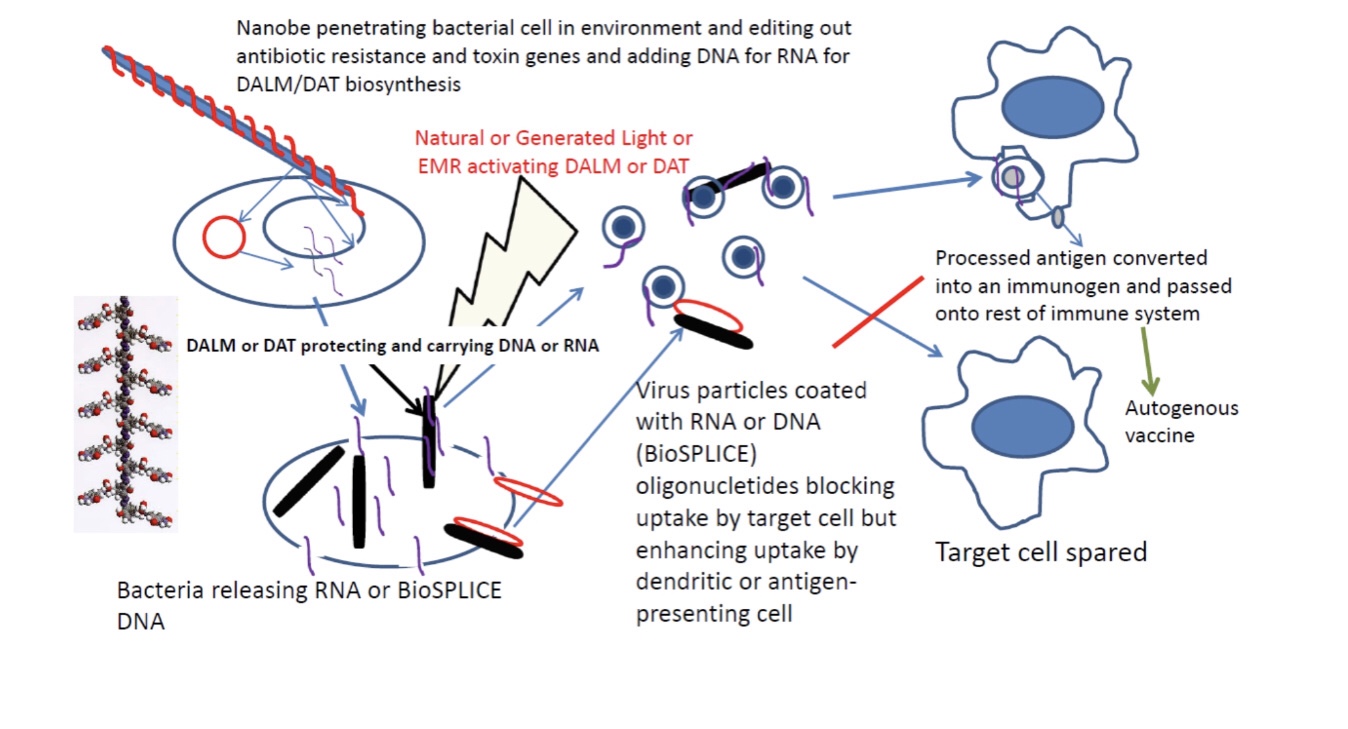
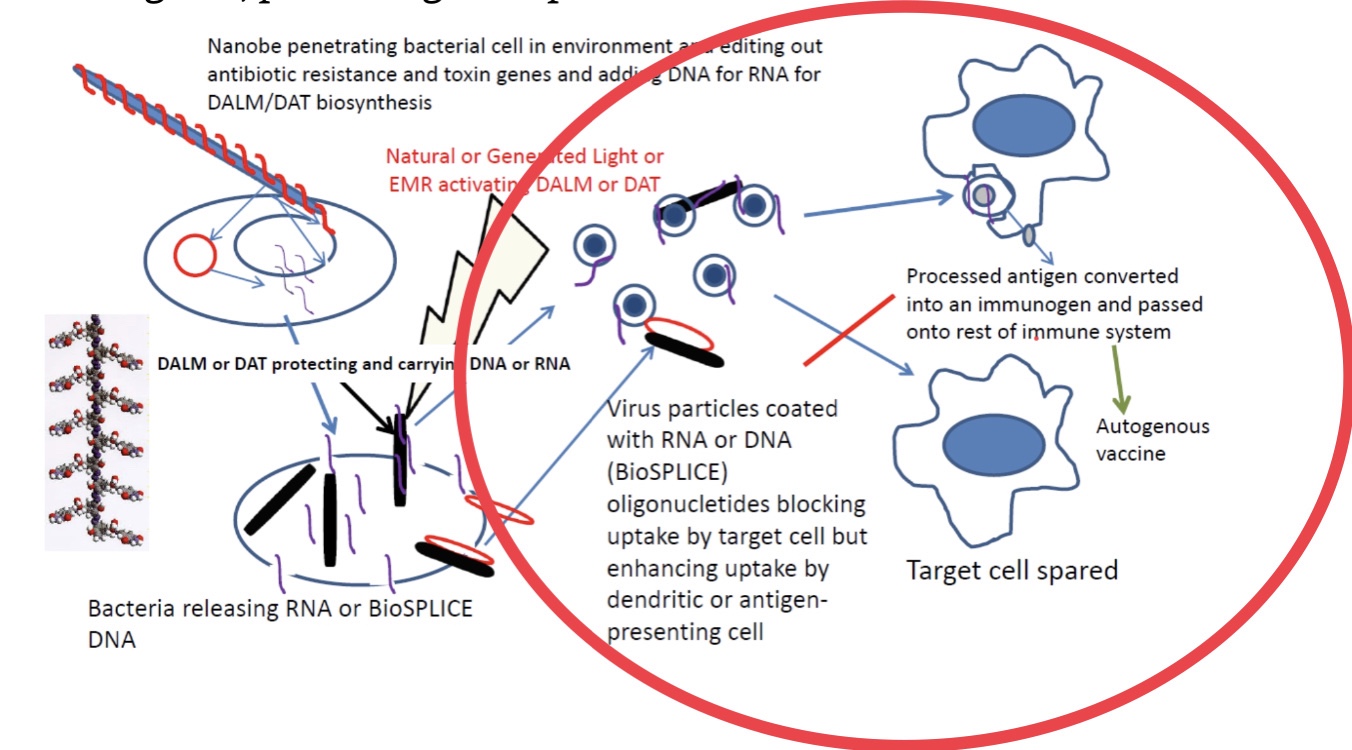
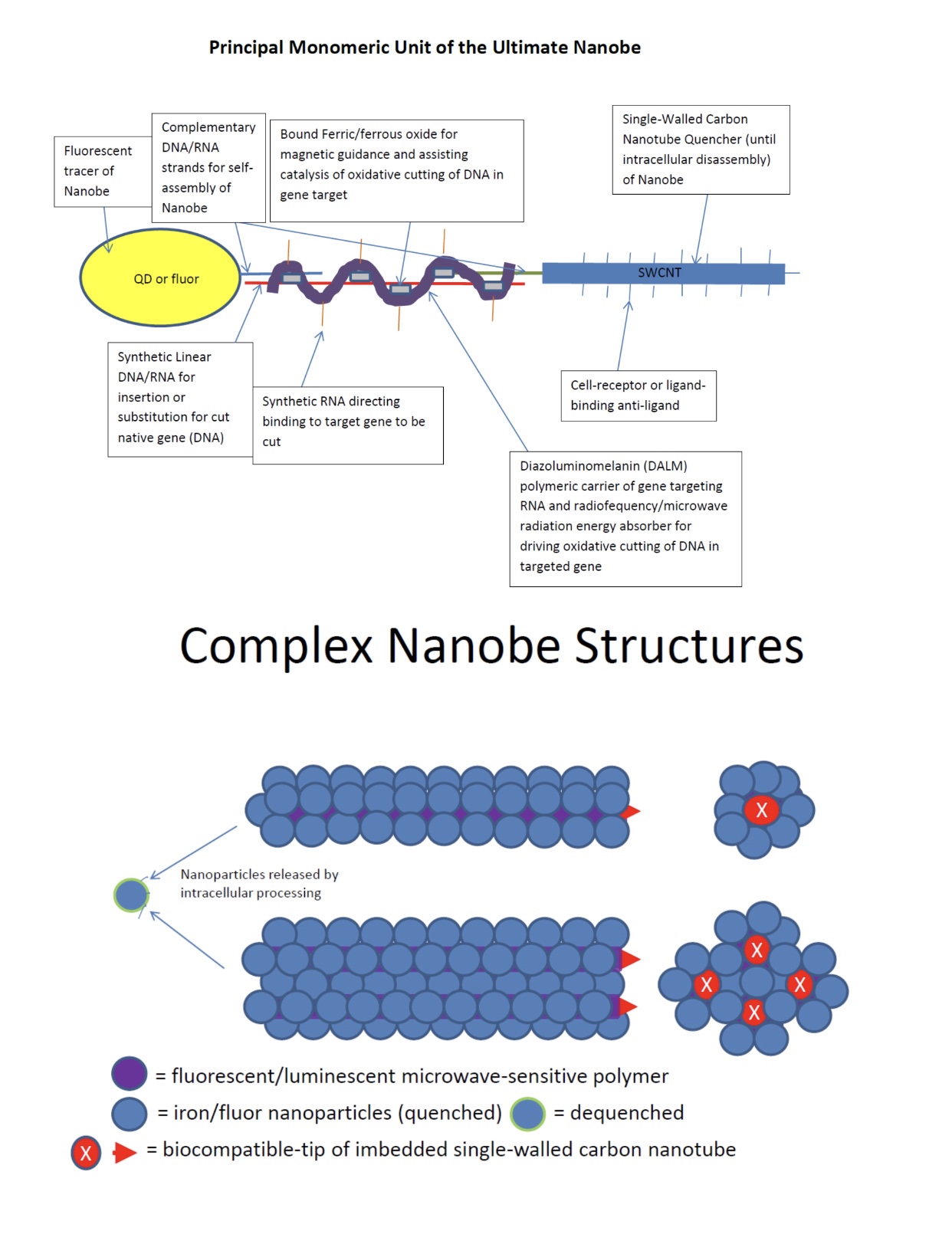
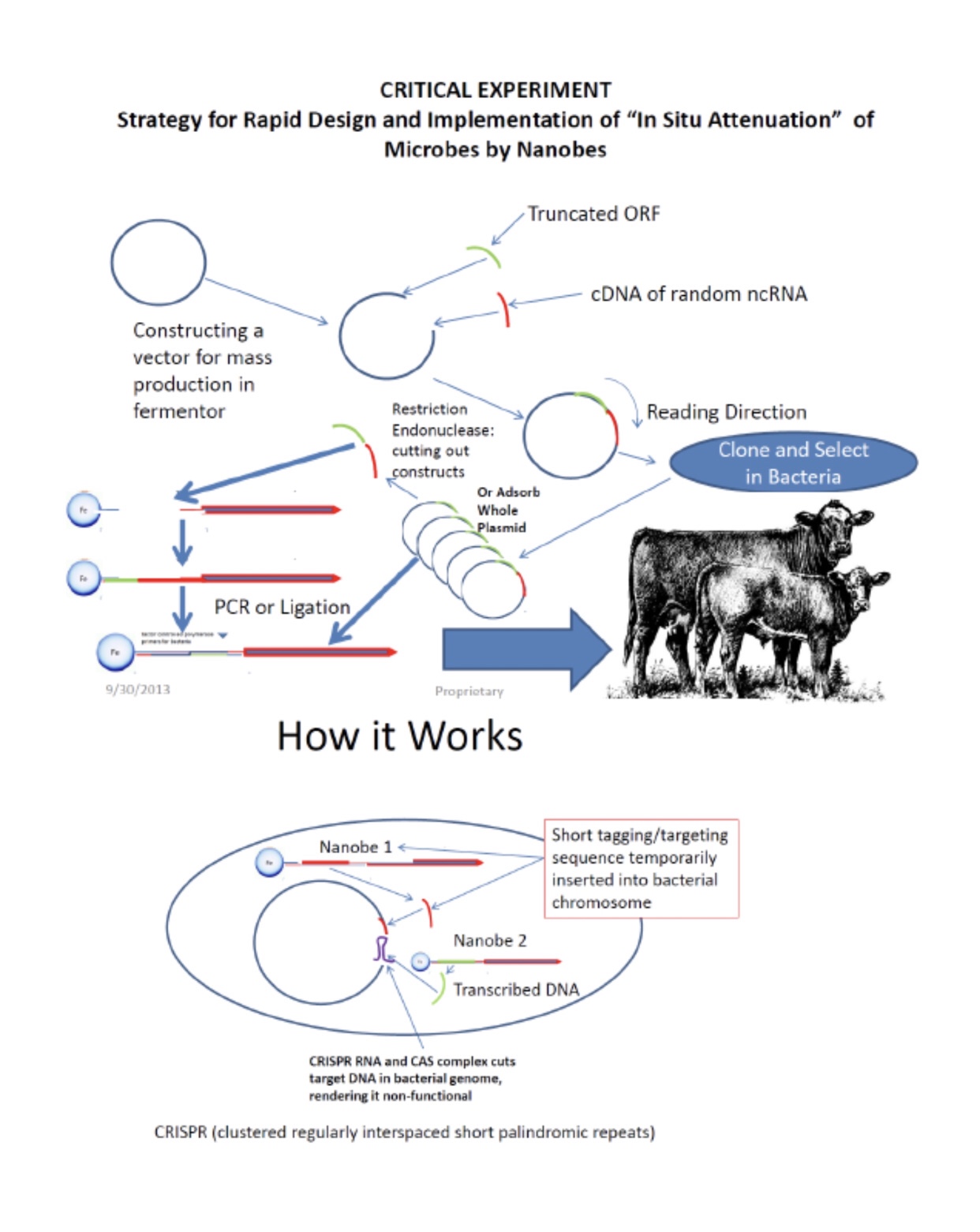
One application: Nanobe technology integrated with CRISPR to genetically neutralize bacterial or viral pathogenic genetic elements, latter if bacterial cell replaced with viral host cell
A composite diagram of antibacterial, antiviral, and vaccine-enhancing activity of the biotechnology

Why Antimicrobial Resistance, Vaccination, and COVID-19 are Linked: Motivation for Not Abandoning Brooks Counterproliferation Team Technologies

Ok I keep tying COVID-19 to the research and development done by the USAF AFRL Counterproliferation Team (CPT), described in my books, not for self aggrandizement, but to show how the problems we face now are not much different than those faced then. The solutions approached and then abandoned after the end of the CPT, still have applicability to the current and future like problems. Science does not address “why”, only “how”. The “why” determines motivation, political, monetary, national defense, security, ethical, moral, altruistic or even religious for pursuing the development of a technology. Limited resources leading to shifting priorities led to the demise of the Brooks CPT in 2011. But this blog is here to not only share relevant, timely scientific information on COVID-19 and counter misinformation, but also to revive the potential solutions that evolved over 30 years at Brooks, especially in the last 22 years, and thereafter, which should not be abandoned because they can potentially provide relief for COVID-19 and other infectious diseases to follow.

This post will discuss these relationships without going into great detail, but will allude to previous posts and use excerpts from my books, on relevant material, to lead you to those detailed sources. The prime question is how does an organism resist any injurious, and especially lethal, insult that it has never seen before, whether physical, chemical or biological. This resistance is essential if the organism is to survive long enough in sufficient numbers to genetically select for more permanent and specific resistance. This trait is essential to all organisms, whether hosts, parasites, or pathogens, for survival and to avoid extinction. In my first book Type B Cytochromes: Sensors and Switches, I proffered the idea that this resistance first arose along with the origin of metabolism in prebiotic and primitive life forms. It was linked to surviving the early environment of adverse heat, light and more energetic radiation, and the competition of life forms for energy sources or of mutual predation. The latter probably used chemical mechanisms which mimicked the reducing, oxidizing, and energetic radiation insults of the early environment. Therefore, the prey and predators (at the one cell level) were already prepared for these non-specific insults. The oxidative, reductive, and digestive enzymes (hydrolases) had already developed to support metabolism of environmental energy sources. They could easily do double duty in fighting off competitors and appropriating nutrients from prey. The next step would be to resist or kill parasites and pathogens. First, this was done non-specifically eventually forming the innate immune system; then, adding receptors for recognizing general molecular patterns of prey, parasites and/or pathogens to give these insults direction; next, forming specific immunity to bind and direct some of these destructive metabolic functions specifically to parasites and pathogens, and finally, developing cellular mediated suppression balanced with specific adaptive humoral and cellular immunity to reduce collateral damage and resolve the attack. The susceptibility to these redox enzymes and their use for cellular defense reflects the different niches and locations of the pathogens and parasites in respect to the level of the corresponding environmental radiation and inorganic chemicals that they were historically exposed to. Also, the reactions used in defense were confined to protected compartments in the defending host cells. This notional scenario has a modern example in HIV.

OXIDATIVE STRESS AND THE HUMAN IMMUNODEFICIENCY VIRUS: Another direct effect of activation of an extranuclear receptor or sensor in the plasma membranes of cells is seen in the growth of mammalian cells and expression of retrovirus. The upregulation of human immunodeficiency virus has been reported to be effected by UVC (200 to 280 nm wavelength radiation). The level of upregulation was 50-to 150-fold baseline. Direct sunlight activated this expression 12-fold. UVB (280–315 nm) also upregulated HIV. Transgenic mice carrying HIV with a beta-galactosidase or firefly luciferase reporter gene showed upregulation of HIV after exposure to either UVB or UVA (315–400 nm) light combined with the photosensitizer psoralen. Sunlight, which contains both UVA and UVB, worked without photosensitization but required 7 hours as opposed to 2 hours with psoralen added. The Langerhans cells of the skin, which mature into antigen-presenting dendritic cells, which can efficiently infect CD4 + T lymphocytes with HIV, could potentially harbor virus that would be activated by UV light. Again, the conditions for HIV activation by UV radiation strongly resemble those necessary for the induction of heme oxygenase. Either this is a happenstance of multiple irrelevant gene activation or a link to a particular sensor (redox or heme related). Evidence for the existence of a plasma membrane extranuclear sensor has been provided by data on the UV activation of the broadly acting transcription factor, NF-kappaB. The UV activation of binding of this factor to DNA has been shown without nuclear material being present. Furthermore, the same factor is upregulated by exposure of cells to nitric oxide and other oxidants. Its activation is inhibited in part by antioxidants at the level of the GTP-binding protein Ha-Ras. NF-kappaB is the endogenous transcription factor responsible for activating HIV expression. Therefore, oxidants like NO or UV radiation, which activate NF-kappaB, could activate HIV expression in vivo. Ionizing radiation (60Co gamma irradiation for 10 min) activates NO synthase. Therefore, oxidations initiated by ionizing irradiation are expected to upregulate HIV expression. Gamma-interferon, which activates oxidative activity of macrophages, should also upregulate HIV expression. Oxidative processes and UV radiation can also act indirectly on the upregulation of cell growth and latent retrovirus expression. Exposure to 60 min of 20 J/ m2 of 254-nm UV enhanced NF-kappaB binding activity fivefold by 60 min, with the activity continuing to rise to tenfold by 8 hours. Phorbol ester-treated cells had the same NF-kappaB activity response. Conditioned medium from irradiated cells also transferred this stimulatory activity. These effects were not associated with cell proliferation. CD + 4 T cells also responded to these conditions by upregulating HIV-1. The UV-induced or activated factor has been detected in several other cell types, including normal human primary skin fibroblasts, skin fibroblasts from xeroderma pigmentosum patients, and the human hepatoma cell line HepG2. Interleukin-2 (IL-2) production by CD + 4 T lymphocytes is also controlled by NF-kappaB. Therefore, agents that stimulate NF-kappaB activation can act as adjuvants to immune stimulants.—-Type-B Cytochromes: Sensors and Switches by J.L. Kiel
https://a.co/bKOgtos.

The latter is a link between these non-specific redox effects and the adaptive immune system. HIV has adapted to replicate after the oxidative innate response triggers the adaptive response and feedback down regulation of the oxidative activities. This leads to death of CD4 lymphocytes with each round of immune response to a wide variety of infectious agents. The collateral damage to other normal cells causes even more pathology, including carcinogenesis. This relentless destructive process also prevents the development of a vaccine by standard approaches.

The mutations that result from the oxidative sublethal damage to DNA might be assumed to lead to evolving more repair processes or programmed cell death to self-eliminate irreparable pathologically damaged cells. However, higher immune systems developed to mimic such expected hypervariability in certain genes which produce proteins that bind to the target biological material which triggered the oxidative response in the first place. This binding increases the effective directed killing of oxidatively active cells or those that kill by other means and disposal of the inciting agents leading to the quelling of the non-specific oxidative killing. Therefore, these responding cells are selected to produce more of the specific binding molecules—-immunoglobulins. These are diversified into classes or isotypes – IgA, IgD, IgE, IgG and IgM. These are further diversified by recombining hypervariably mutated regions with more constant regions both for antibody and receptors on T and B cells. The latter produce antibody. The germline theory holds that there is a separate gene for each different immunoglobulin chain and that the antibody repertoire is largely inherited. The alternate theory is the somatic diversification theory that purports that the observed repertoire is generated from a limited number of inherited V-region sequences that undergo mutation within B cells during the host’s development. Cloning of the immunoglobulin genes has yielded data that indicate the antibody diversity is generated by DNA rearrangements during B-cell development. DNA sequences encoding a variable (V) region in each immunoglobulin gene locus are selected from a relatively small group of inherited gene sequences. Diversity is further enhanced by somatic hypermutation in mature activated B cells. Both germline inheritance and individual host somatic mutation lead to the diversity of immunoglobulin and T and B cell receptors. Therefore, the diversity is generated in anticipation of encountering various targets but not after the encounter; except that those clones that are selected by binding are expanded, replicated, after the encounter with the pathogen or parasite. Again, the highly developed mammalian and human immune systems re-create the highly energetic, oxidative primitive environment of that early environment and then quench it with the adaptive immune system. Is this process restricted to higher organisms and manipulated in defense by viruses and certain other highly pathogenic microbes ? Is there evidence, that resistance to antibiotics already existed prior to their use in animals and humans and were only selected for and amplified by the pressure of antibiotic use? Much has been said and many accusations made about the source of the antibiotic resistance in microbes in the environment, in addition to those which develop because viral infections and non-microbial conditions are treated in the clinic with antibiotics which have no effect except on resident bacteria which are encouraged to develop resistance and pass it on. Growth stimulating use of antibiotics in agriculture, and herd treatment of infectious disease in livestock have been cited as the principal source of antibiotic resistant bacteria. However, there is strong data which support that such resistance in bacteria infected humans and animals develops independently in most cases and is not transferred between them (Mather et al., Science 341, 1514; 2013). In addition to these sources of resistance, the fact that most of the antibiotics we have today come from fungi or fungi-like bacteria which reside in soil and natural water sources should make us expect the development of resistant microbes in those environments too, even before antibiotics were introduced in the 1940’ s by human intervention (Allen et al. , Nature Reviews Microbiology, published online 1 March 2010; doi: 10.1038/ nrmicro2312) . We shouldn’t be surprised that some of these types of organisms are the most resistant, such as Pseudomonas aeruginosa, Aeromonas hydrophila, Salmonella typhimurium and other Salmonella species, Klebsiella pneumoniae, Bacillus species other than Bacillus anthracis, Enterococci and E. coli, released into the environment and maintained in water sources from all sorts of wild and domestic animals through their feces and re-entering them by being in such environments, and Mycobacterium avium and other mycobacteria which are primarily soil organisms. Many of these, including Staph aureus and other Staph species, are opportunistic pathogens, not totally dependent on a diseased host to propagate, but quite capable of reproducing in the environment without any host at all.
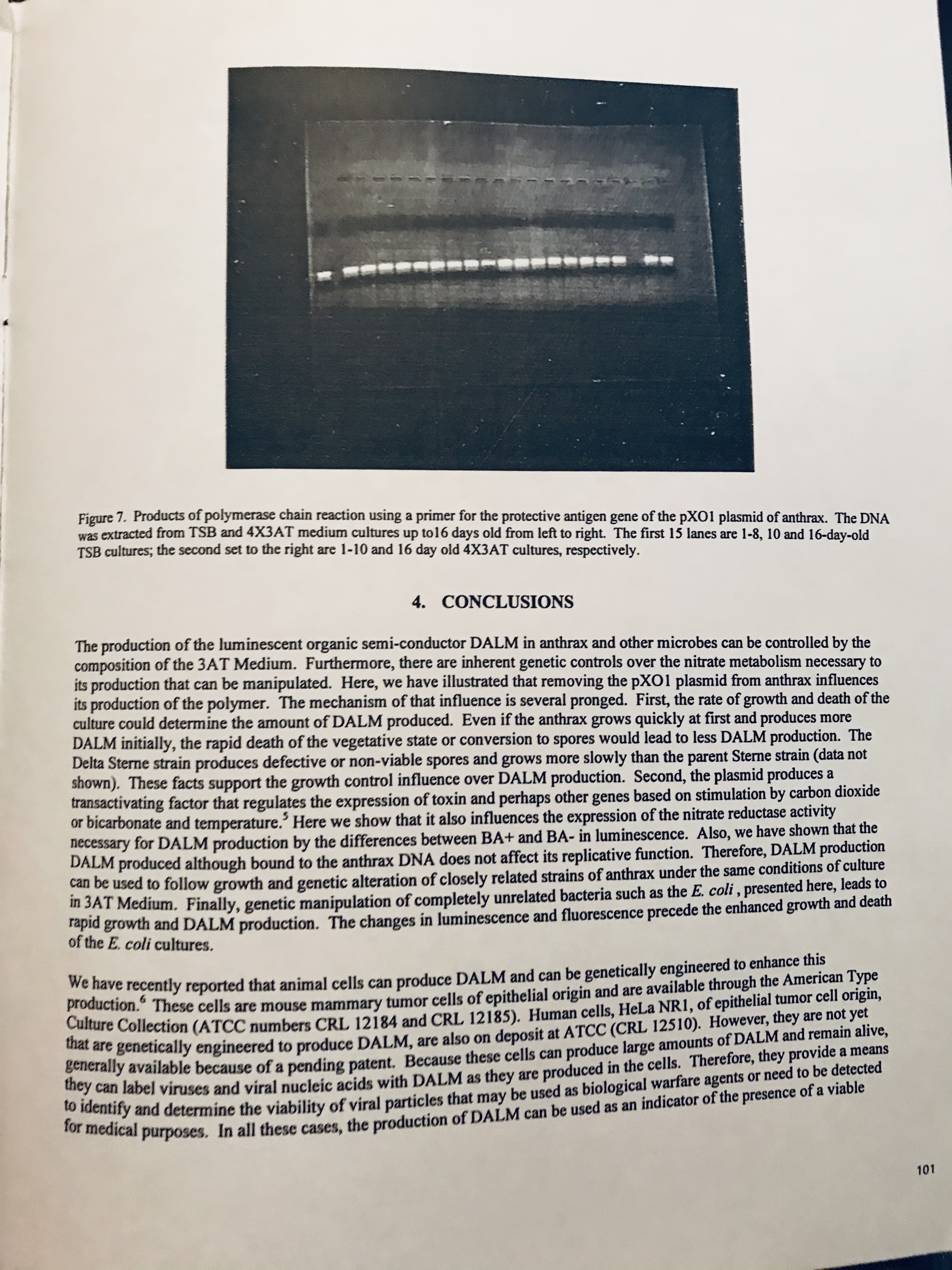
How do other pathogens combat these immune responses in the arms race with host cells and tissues? How do bacteria also anticipate antibiotics and secure the time to mutate to become permanently resistant? Processes in these lower organisms, like more complex higher organisms, had to anticipate injurious insults and prepare broad countermeasures to allow time to select more specific, effective countermeasures by mutation and natural selection. As discussed in an earlier post, this was first seen with large populations of bacteria exposed to physical insults like ionizing radiation at levels known to kill the microbes. If the numbers were high enough, a tail of survival even as the dose was increased still survived and approached zero survival asymptotically. When the survivors in the surviving tail of the population were re-cultured and exposed to the same range of insult, resistant microbes in the population were not increased, selected for except after many passages. How was this possible ? How did this phenomenon allow for eventual selection of resistant mutants ? Likewise for bacteria, viruses or other microbes, how do the microbes gain the opportunity and enough time for the transfer of antibiotic resistance or mutation for antiviral or other chemotherapy to occur in the midst of antimicrobial treatment, when, perhaps, only a small percentage of the population being treated is, in fact, resistant and contains the transferable elements? Does the mechanism for development of resistance to an antimicrobial already exist before the microbe sees the antimicrobials? There must be enough time and contact opportunity for this to occur before the susceptible microbes are killed. The answer resides in persisters. Persisters are environmentally induced phenocopies of phenotypes determined by genetic changes. In this case, specifically, I am referring to one which mimics an antibiotic or antimicrobial resistant mutant. They are particularly effective against antibiotics or antimicrobials which require replication or a metabolic activity like the formation of cell wall material (such as penicillin and cephalosporins do) to be effective. They are generally slow growing microbes which maintain a minimal metabolic rate to survive, or in the case of viruses latent non -replicating, hidden forms in sequestered, privileged immune sites. When these are present, they survive in the antibiotic environment, especially if a low dose or one which is insufficiently toxic for the microbe is maintained. With the mutant or one bearing an extrachromosomal element such as a plasmid which conveys antibiotic resistance is in the same environment and has the machinery to share this genetic material, the antibiotic resistance will spread quickly. The exponential decay curve plot shows how this persistence time can be very long and most effective for providing opportunities for genetic transfer. If the microbial population is very large, then the tail on the graph toward the right, where the decay rate, or in this case the rate of kill of the microbes with the antibiotic approaches zero, large enough numbers are maintained “under the curve” for such a transfer to be inevitable. In antibiotic treatments in an infected host, the numbers are dropped to zero because the immune system kicks in and finishes off the remaining microbes. Some bacteria like anthrax bacteria can remain dormant as spores in macrophages and emerge later after antibiotic levels have declined and even produce inflammatory mediators like nitric oxide which feedback on the immune system to shutdown oxidative inflammation and encourage adaptive immunosuppression.

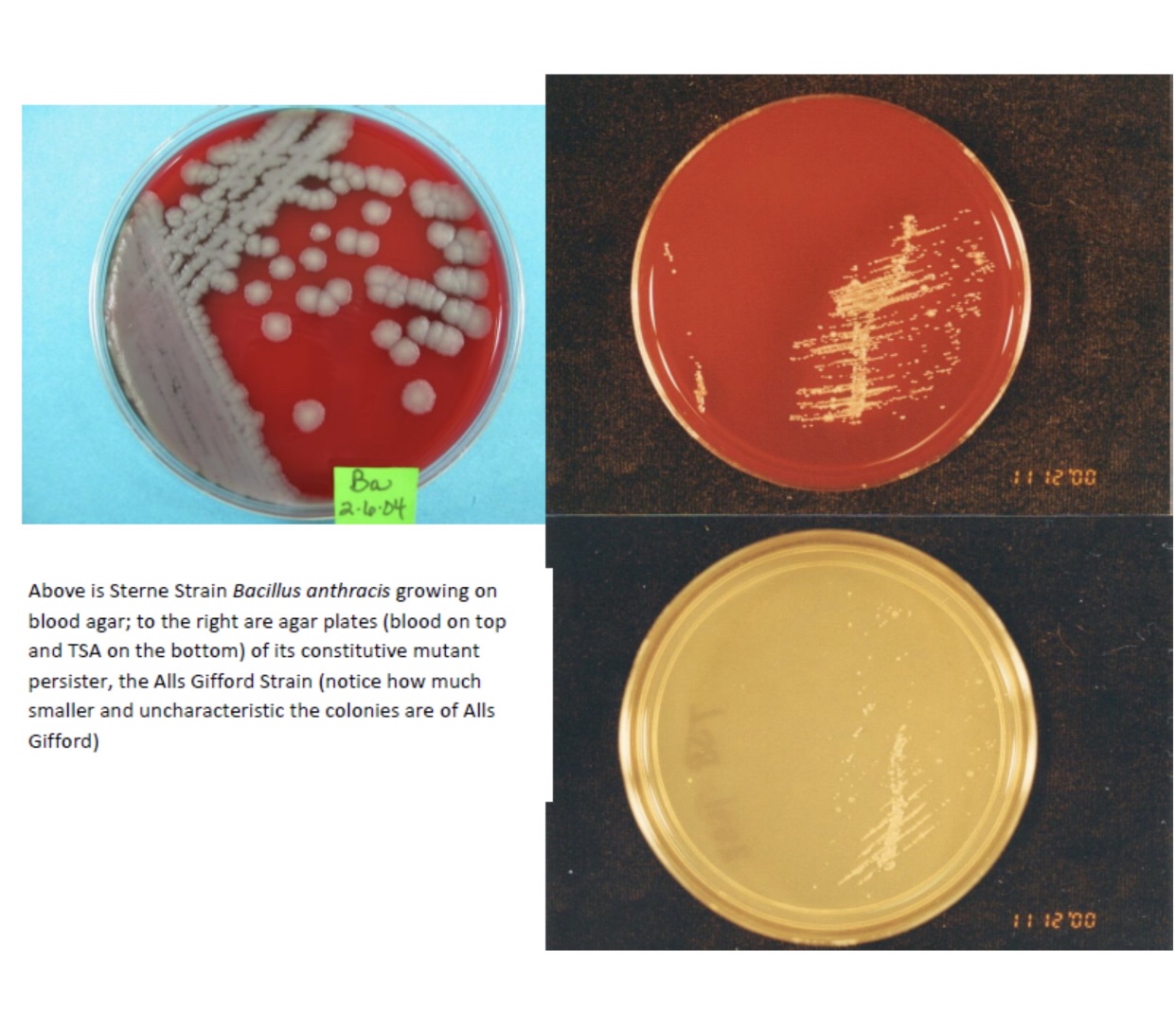
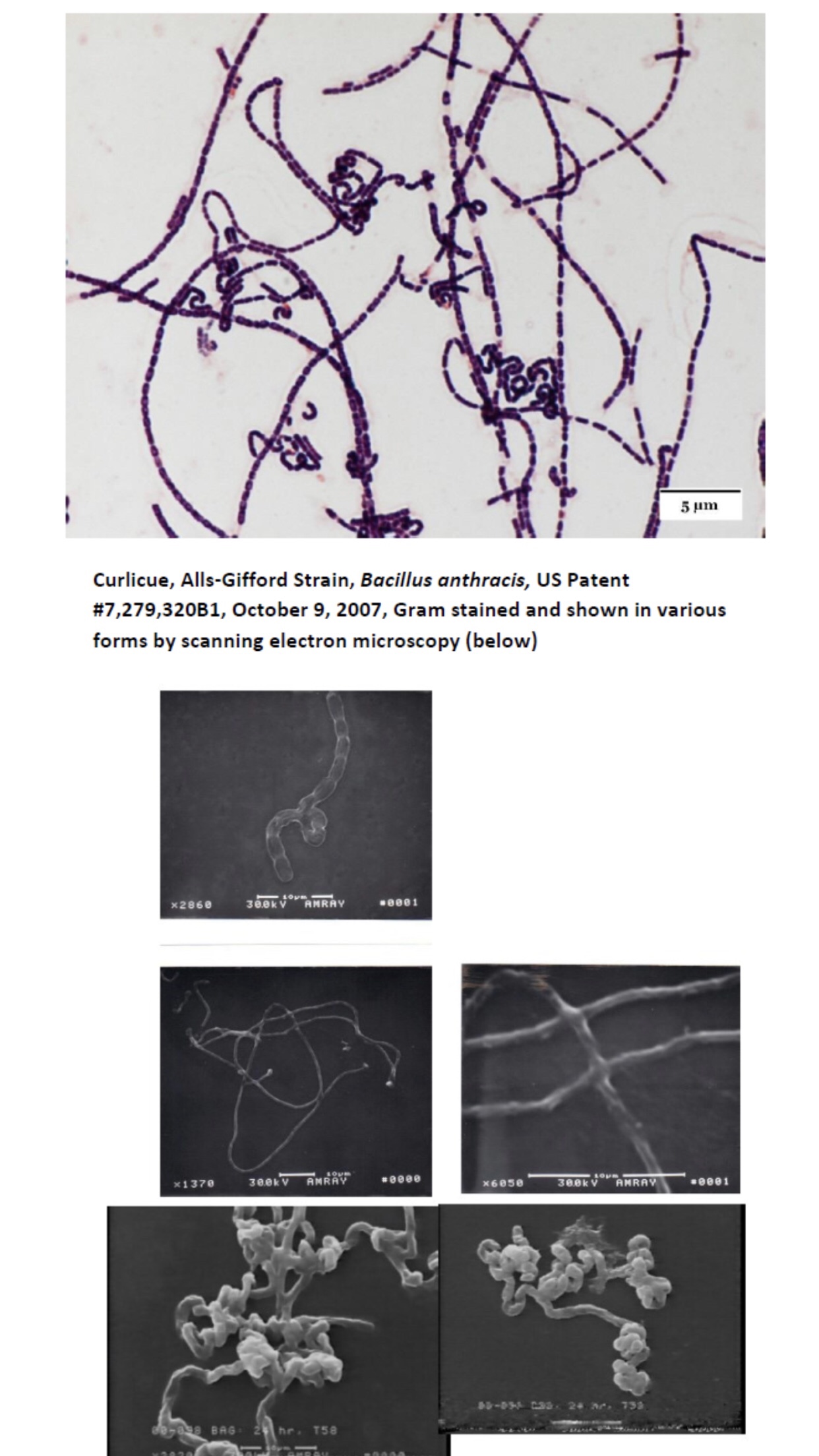
An anthrax bacteria persister
Persister genotype (mutant) phenotype

SARS-CoV-2, as discussed in earlier posts, suppresses interferon production and early innate immunity, resulting in widespread tissue and organ infection then triggering massive adaptive immunity directed inflammation resulting in septic shock, multiple organ failure. Therefore, severe COVID-19 and possibly death, results from a widely distributed “local” non-specific oxidative response to a silent wide distribution of a great deal of virus in many cells, in many tissues and organs at once. Antiviral treatment must be applied early to prevent this widespread silent distribution of virus, and any vaccine must not enhance this type of innate immune response, but encourage the development of adaptive cellular and humoral immunity which prevents it.

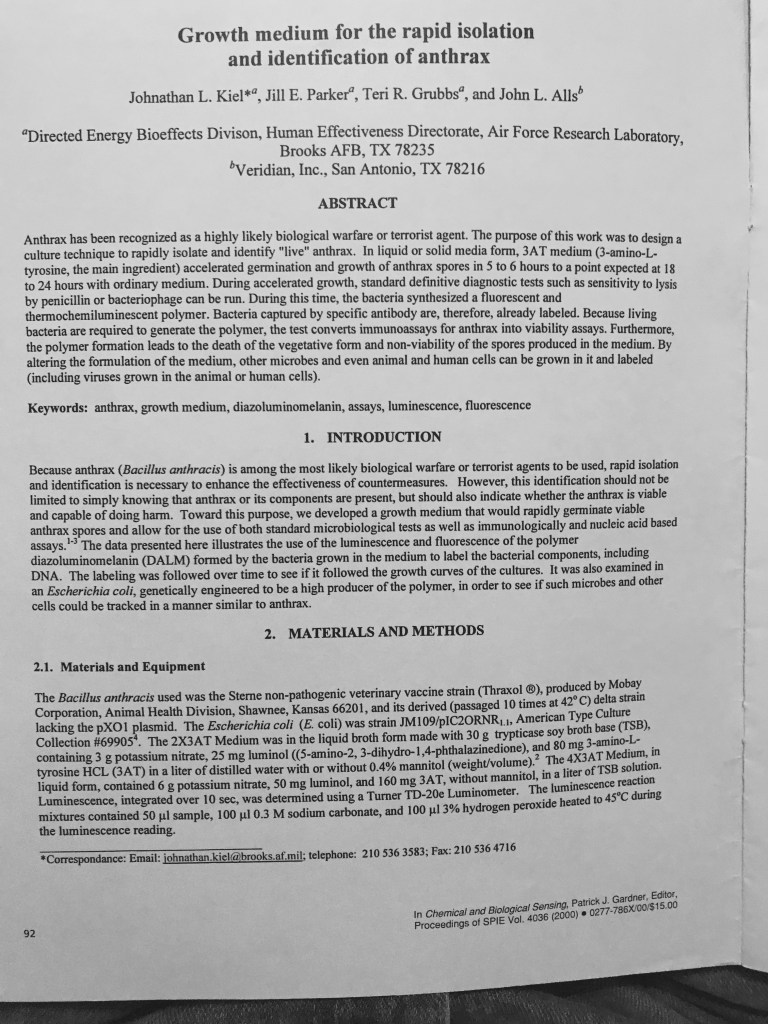
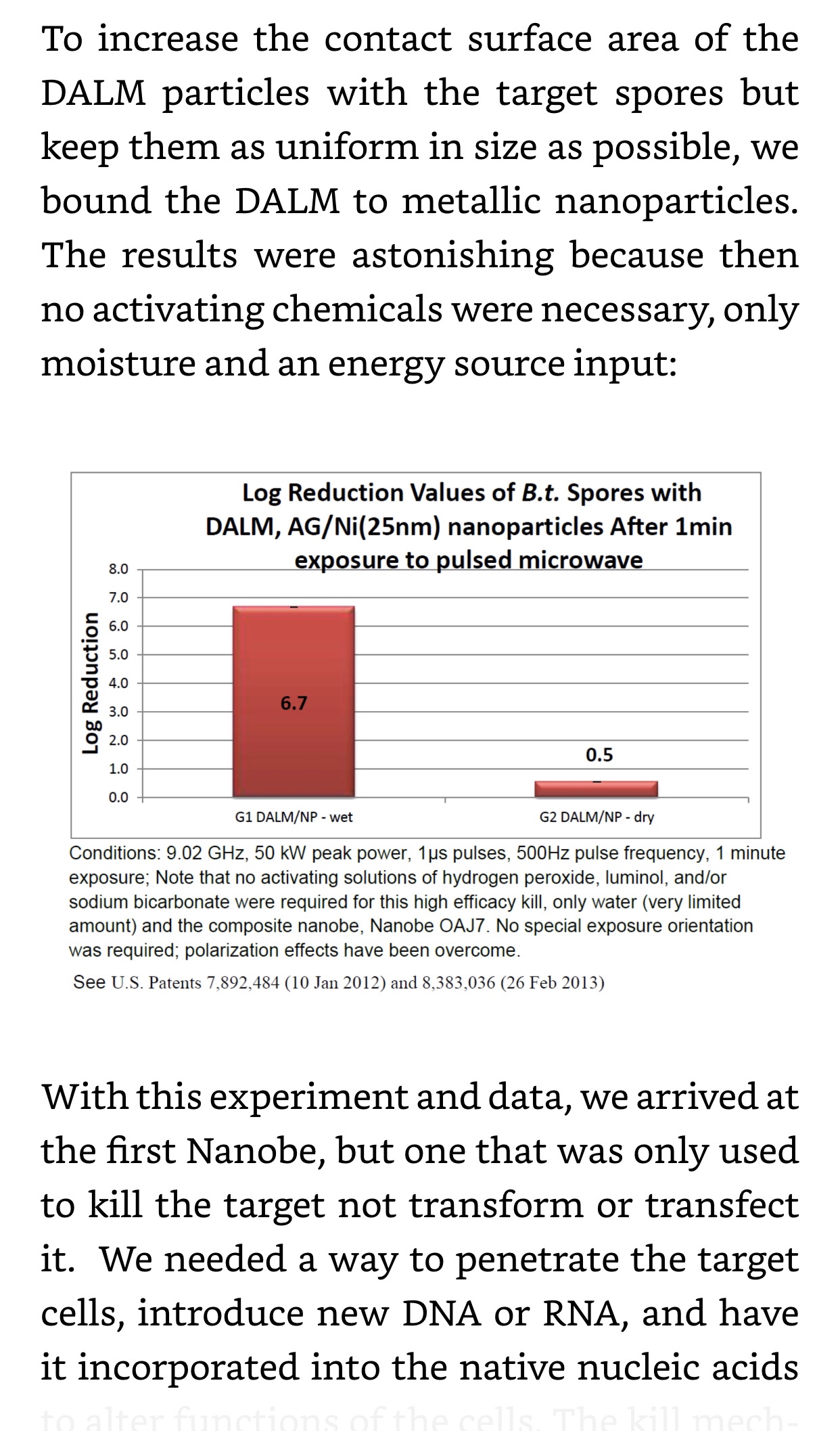
How did Brooks CPT technology evolve to address these problems? Actually I have already told you in my books and previous posts. The above meandering was to explain how when all the responses to a pathogen are brought together in a balanced way, damage, both direct and collateral, is avoided, but when one dominates the other, morbidity and mortality predominate. Now, in brief, I will tell you why and how we proceeded to address the inadequacy of each apparent solution, step, toward this balance. For 7 years, we searched for a synthetic biomolecular polymer which could specifically absorb a wide range of microwave to radio frequencies and report the results as visible light. This was achieved, and we found out that the activated states formed could form free radicals which caused material damage and even could kill very resistant anthrax spores rapidly. We then found that the anthrax bacteria could biosynthesize the polymer and, if not activated with electromagnetic radiation, it could accelerate bacterial growth before damaging the bacteria. This proved most useful for rapidly identifying anthrax in the field then killing it. Whether the polymer was made endogenously or applied externally, when primed with sublethal concentrations of hydrogen peroxide and sodium carbonate and activated with otherwise sublethal microwaves, the anthrax, vegetative and spores, were effectively killed. This was mimicked by the application of very high temperatures or by cold plasma gas with very high electron temperatures. This mechanism cannot be overcome by bacterial resistance because the localized temperatures exceed the covalent binding energies of all biological molecules by orders of magnitude; they are literally burned up by the ionization. However, because the effect is so localized and so brief, it yields very little collateral damage. That was both a curse and a blessing because it decreased unwanted material damage and biological injury but limited the environmental decontamination potential. This problem was overcome by coating metallic nanoparticles with the polymer. The transition metallic nanoparticles provided spontaneous surface redox reactions that primed the polymer for microwave interactions without the need for hydrogen peroxide and sodium carbonate, but only a nano coating of water. These particles at a very small total mass could be spread over large environmental volumes or surface areas. This property not only greatly enhanced decontamination of surfaces but also provided the potential of air decontamination. The formation of nano plasma confined to the surface of the particles continued to reduce collateral damage. Although previous experiments had shown the fibrous form of the polymer was unable to penetrate cell membranes (unless microwave-activated to burn through), this all changed when it was placed on spherical metallic nanoparticles or biosynthesized into a similar, but non-metallic, physical form. Because it had been known that the polymer co-purified with DNA when biosynthesized in bacteria, it was expected to carry cellular DNA with it. When we started selecting nucleic acid aptamers against potential biological warfare agents for collection and identification, we decided to incorporate them into plasmids for mass biosynthesis. When the plasmids also carried the nitrate reductase gene, the bacteria could make the aptamers and the polymer simultaneously. Because we selected for double-stranded DNA aptamers to incorporate into the plasmids, we reasoned that the polymer nanoparticles, containing aptamers that directed specific pathogen binding, could achieve detection, identification, and killing, all this capability made in a one pot batch. This was demonstrably true for targeting anthrax spores. But much to our surprise, this led to the next step discovery. These particles could transfer the complete particle synthesizing capability to naive bacteria, even to different species, including anthrax. It could even transfer traceable DNA to animal and human cells. The eukaryotic cells did not make DNA polymer nanoparticles but they could make ones containing RNA (even perhaps mRNA). Attempts to make therapeutic particles went as far as making anti-anthrax aptamers modified to protect them from nucleases in vivo that could neutralize the pathogenicity of the anthrax toxin in vitro and in vivo (in mice), the latter by inhalation to treat anthrax generated by spore inhalation. The system was also tested against virus in vitro, vaccinia virus, with DNA in plasmids that transcribed into iRNA (interference) to block its replication. When the nitrate reductase gene was incorporated in the plasmids in addition to the iRNA generating DNA, it inhibited the virus more than the iRNA. At this point, our work ended and we never completed the in vivo antimicrobial polymer nucleic acid nanoparticles, unfinished business, so frustrating.

Another Option for a Nucleic Acid COVID-19 Vaccine: DNA Vaccines: Hidden and Forgotten Methods for Delivery: Lost in the Mix

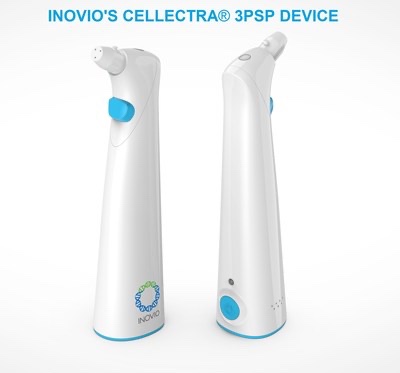
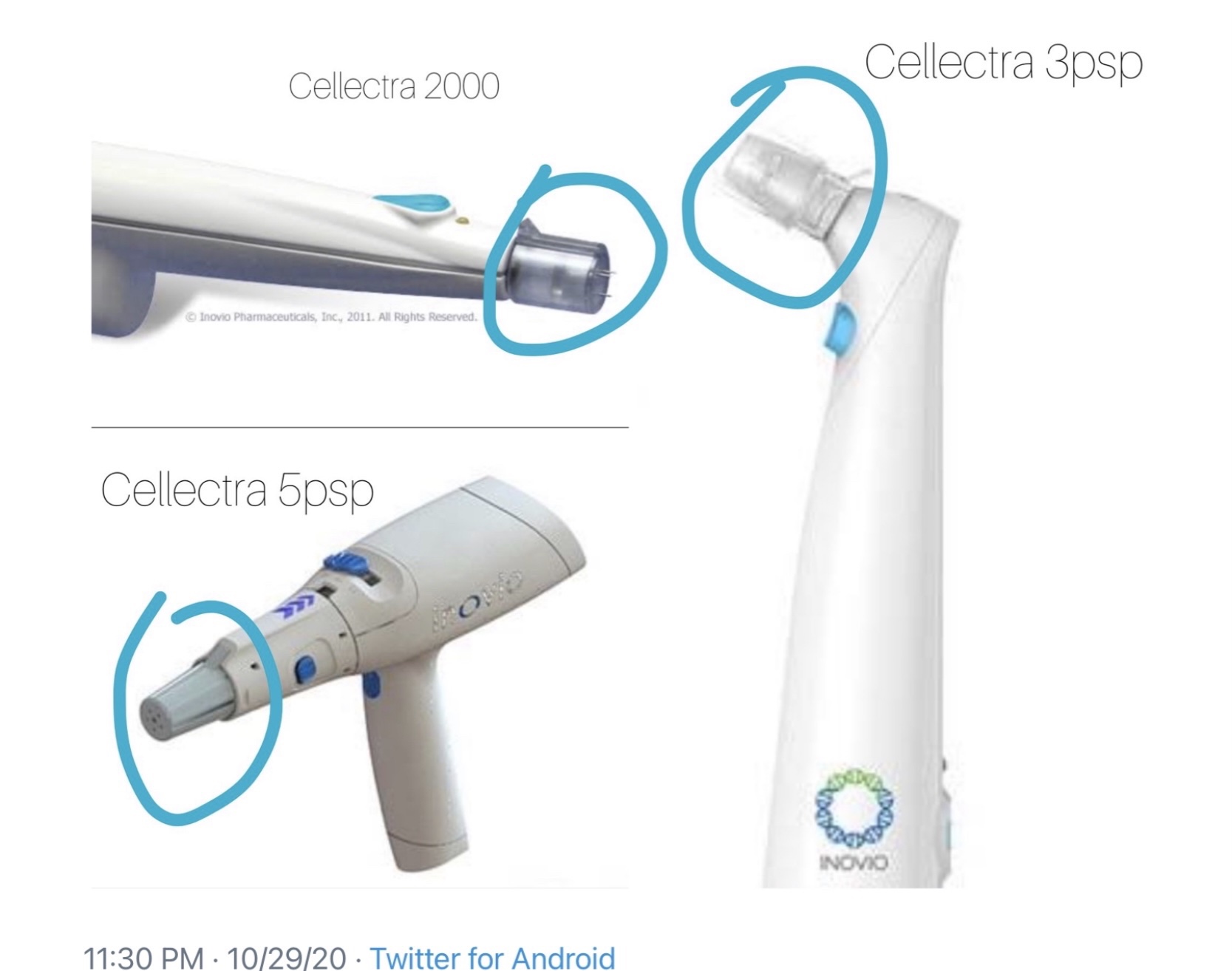
Nov 16, 2020, 07:00 ET, it was announced that INOVIO received approval from the U.S. Food & Drug Administration (FDA) to proceed with Phase 2 of its Phase 2/3 clinical trial for INO-4800, its COVID-19 vaccine candidate. INO-4800 is the only nucleic-acid based vaccine that is stable at room temperature for more than a year and does not need to be frozen in transport, an important factor for implementing mass immunizations. INOVIO’s DNA vaccine plasmid is delivered directly into cells intramuscularly or intradermally using INOVIO’s proprietary hand-held device called CELLECTRA®. The CELLECTRA device uses a brief electrical pulse to reversibly open small pores in cells to allow the plasmids to enter, overcoming a key limitation of other DNA vaccines and mRNA vaccines. Once inside cells, the DNA plasmids enable the cell to produce the targeted antigen. The antigen triggers the normal T cell and antibody-mediated immune responses. The CELLECTRA device ensures that the DNA plasmids are efficiently delivered directly into the body’s cells to drive the immune response. INOVIO’s DNA vaccine does not interfere with or change in any way an individual’s own DNA. The advantages of INOVIO’s DNA vaccine platform are how fast it was designed and manufactured; its stability, not requiring freezing for storage and transport; and the robust immune response, safety profile, and tolerability evident in clinical trials. The CELLECTRA® electroporation device developed by Inovio Pharmaceuticals, Inc., is currently being assessed in clinical studies for both prophylactic and therapeutic applications.

This device delivers square-wave electric pulses by applying an adaptive electric field based on constant current, rather than constant voltage. This system measures electrical parameters and adjusts appropriately for changes in tissue resistance in realtime to avoid tissue damage and diminished DNA cell entry. The device has been evaluated in animal models, including mice, pigs, and rhesus macaques, and demonstrated acceptable immune responses.

DNA vaccines have been criticized in the past because of the possible off-target effects in expression of protein, integration of foreign DNA into the host genome and difficulties in delivery to the right target cells. As noted above INOVIO has provided evidence that they have overcome these limitations by plasmid design and a proprietary electroporation device. The concern about plasmid in comparison to mRNA vaccines is that they must enter the nucleus to be converted into mRNA before being translated into protein in the ribosomes of the cytoplasm. mRNA vaccines do not require entry into the nucleus before this last step. I have spent a lot of time providing accounts and data of the Brooks Counterproliferation Team’s work on these problems for different military applications in previous posts. It is ironic that INOVIO has received a significant level of funding from the Department of Defense independent of our work: On June 23, 2020, INOVIO received a $71 million contract from the U.S. Department of Defense to scale up its manufacture of its CELLECTRA® 3PSP Smart Device and procurement of CELLECTRA® 2000 for COVID-19 DNA Vaccine delivery https://www.ncbi.nlm.nih.gov/pmc/articles/PMC3906411/pdf/hvi-9-2246.pdf.

Alex Careaga @alexcareaga
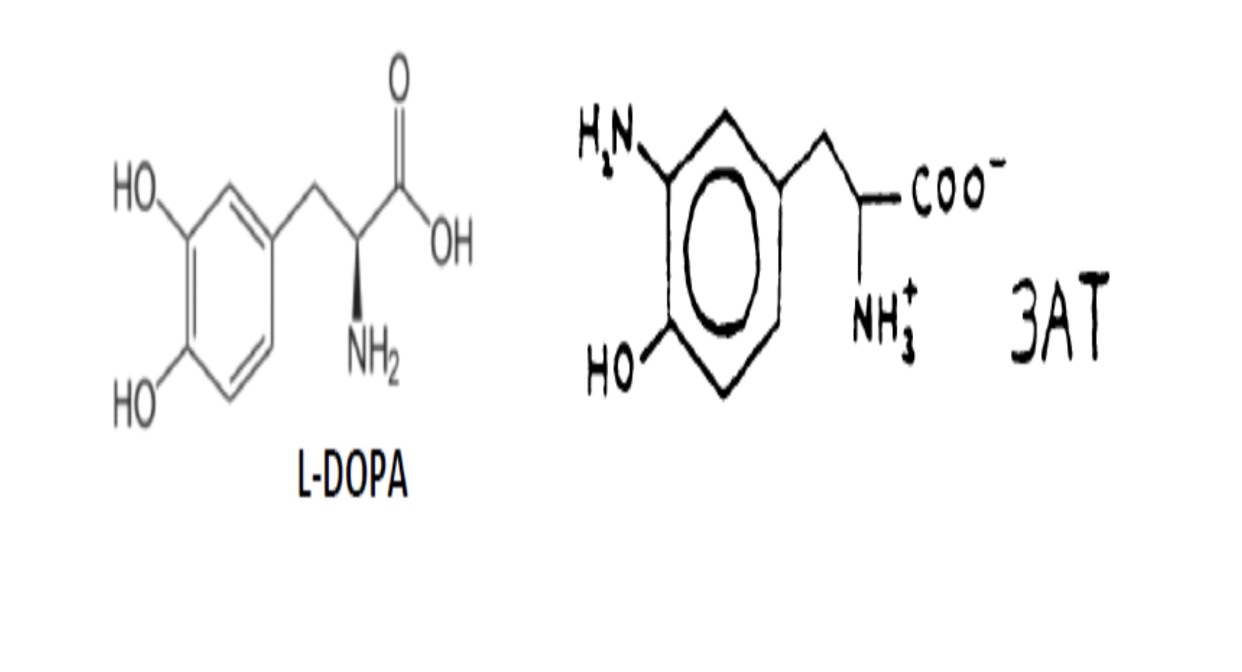
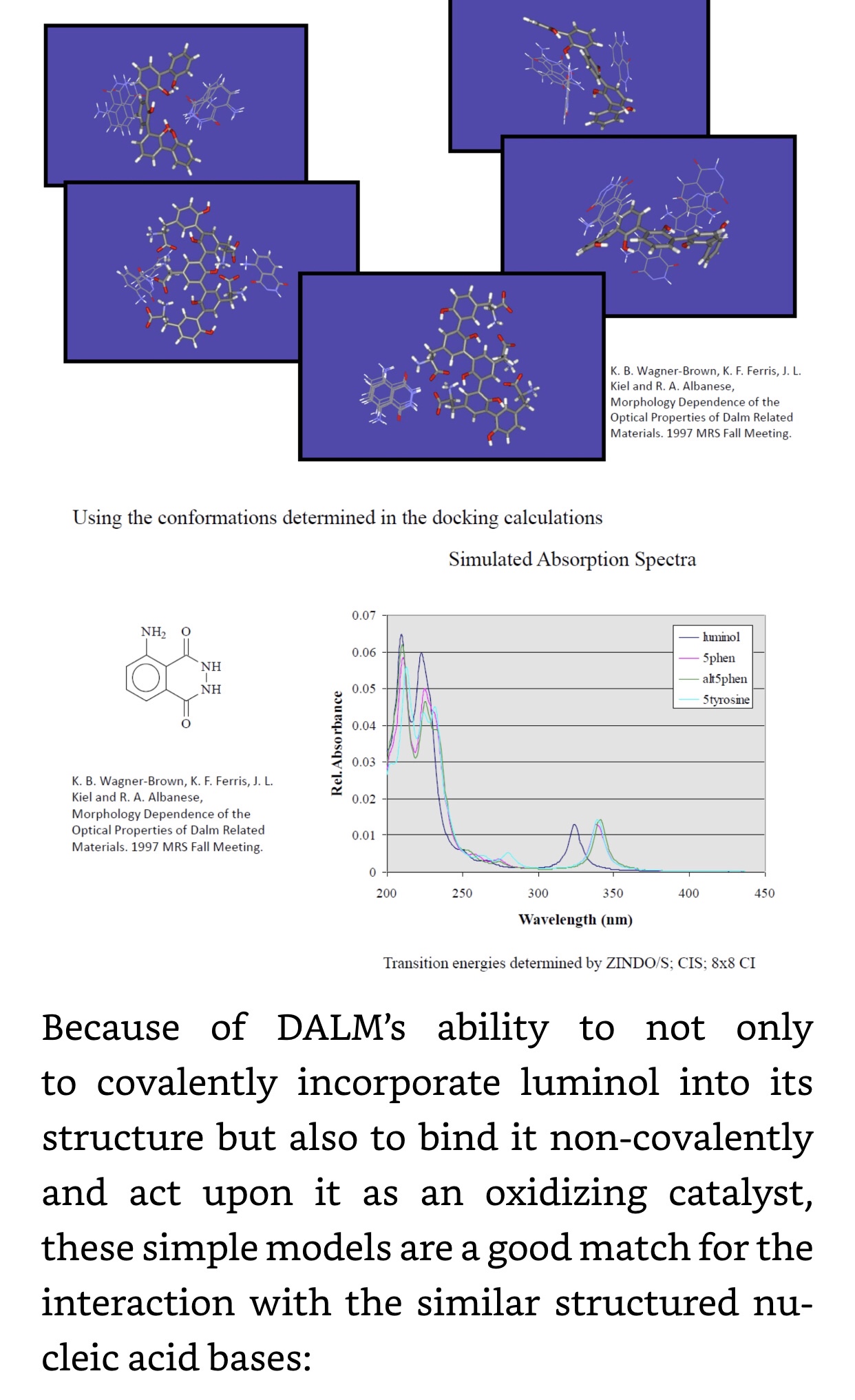
The starting material, 3-amino-L-tyrosine (3AT) is an amino acid analogue of L-DOPA, the latter which can be converted into melanin. The 3AT, through substitution and elimination, yields the following
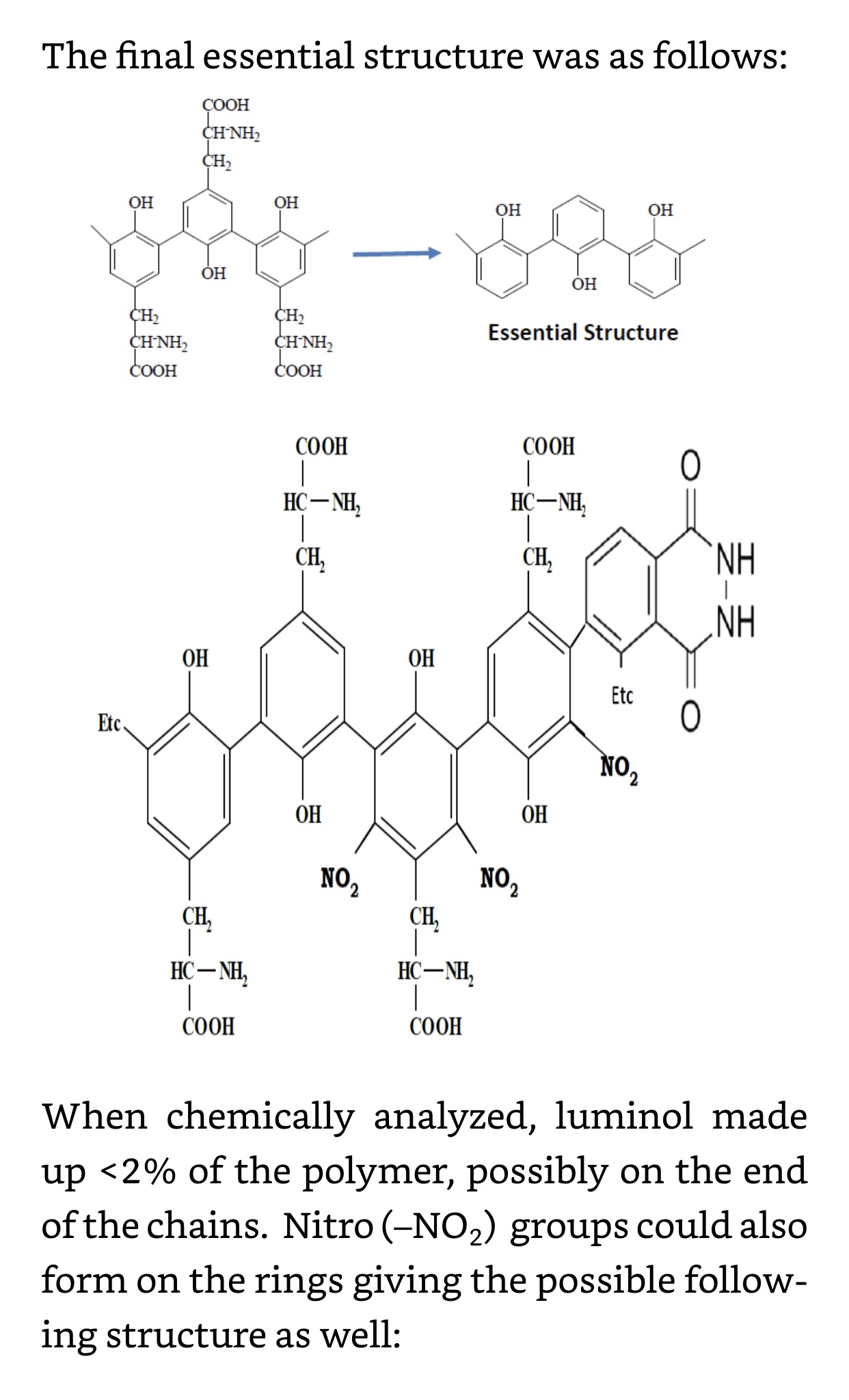
polymer (trivial name: diazoluminomelanin: DALM).

Our work began with efforts to synthesize a microwave and radio frequency electromagnetic radiation interacting polymer starting in 1981. We succeeded (1 March 1988) in making one from the amino acid 3-amino-L-tyrosine which through diazotization ended up with the following structure:

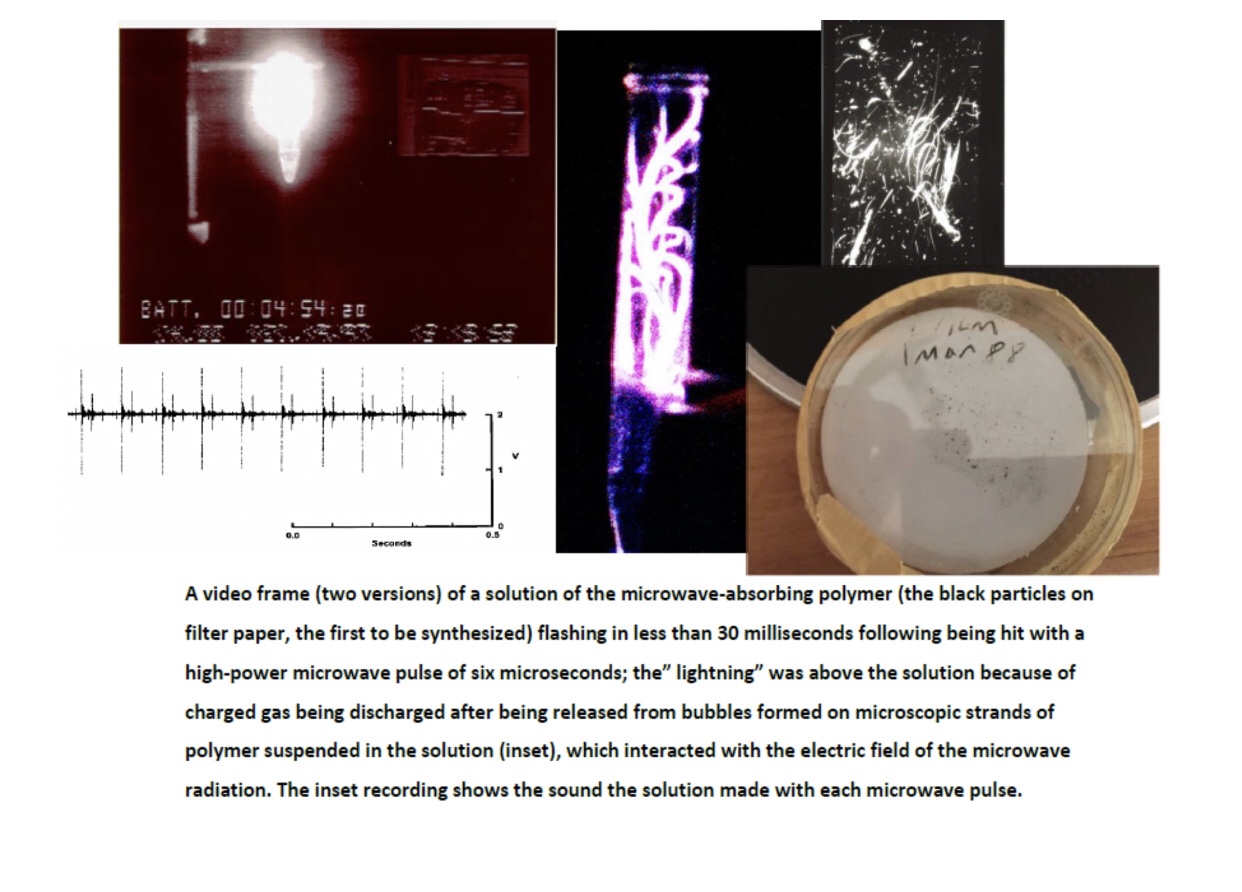
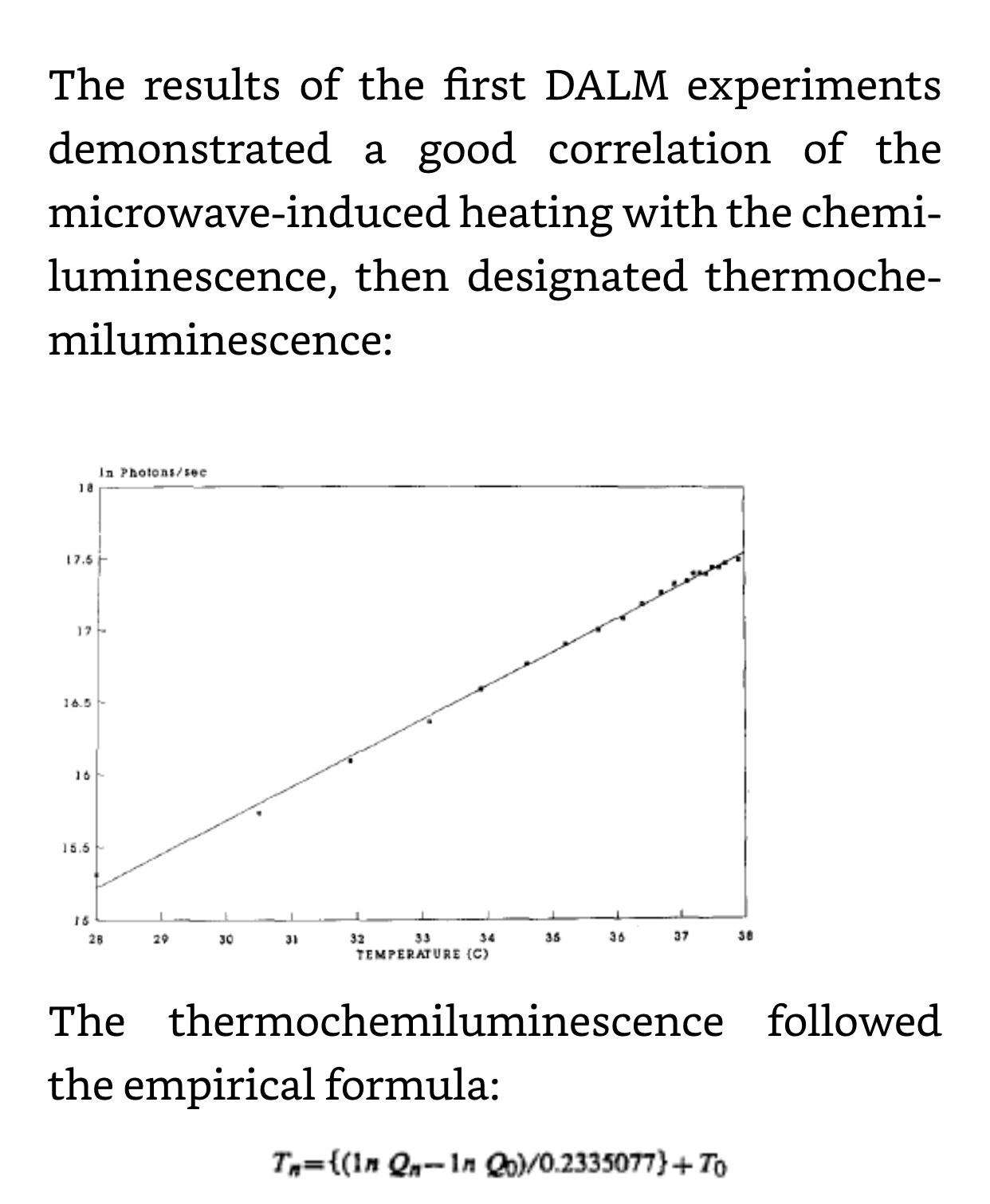
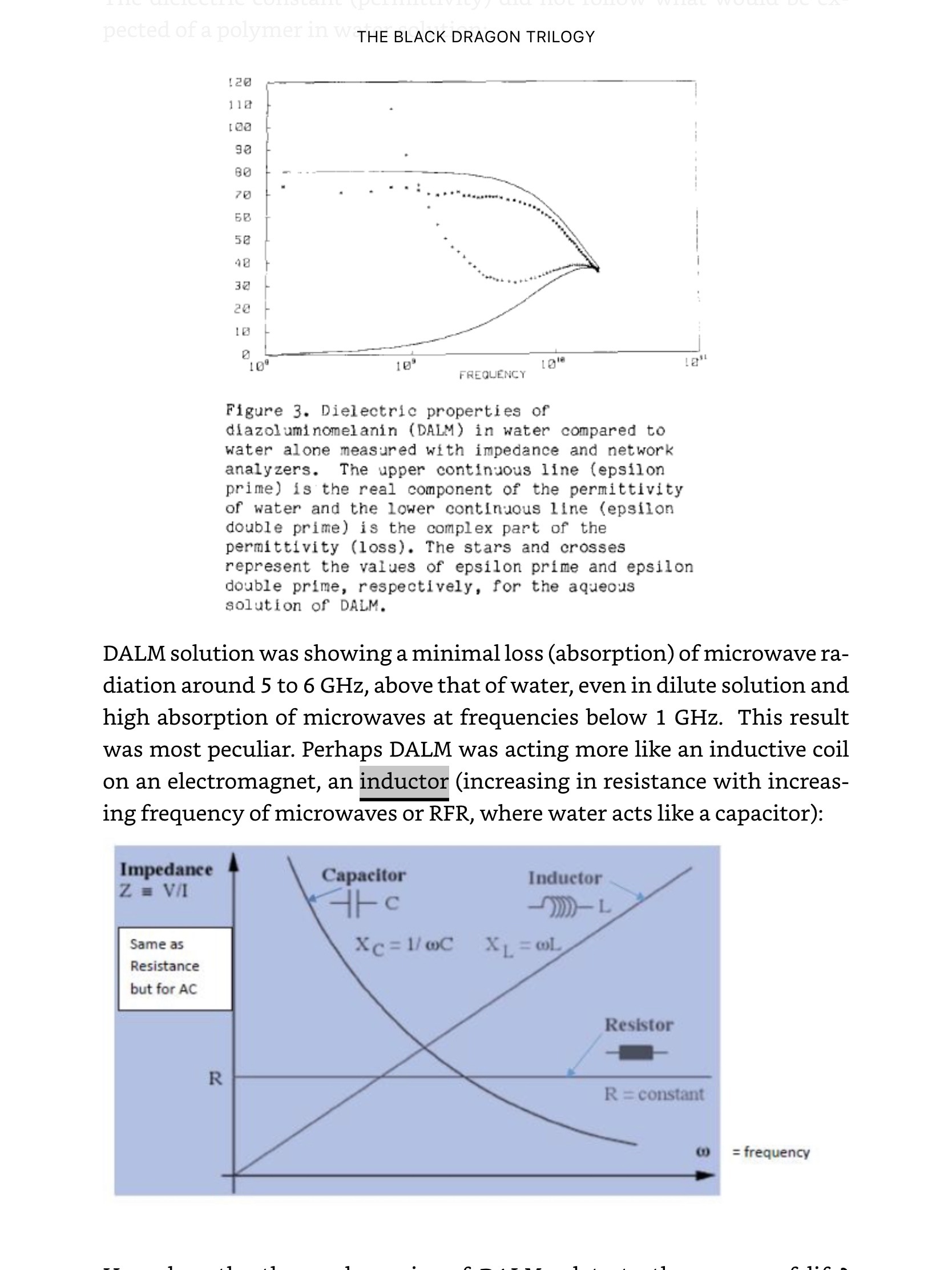
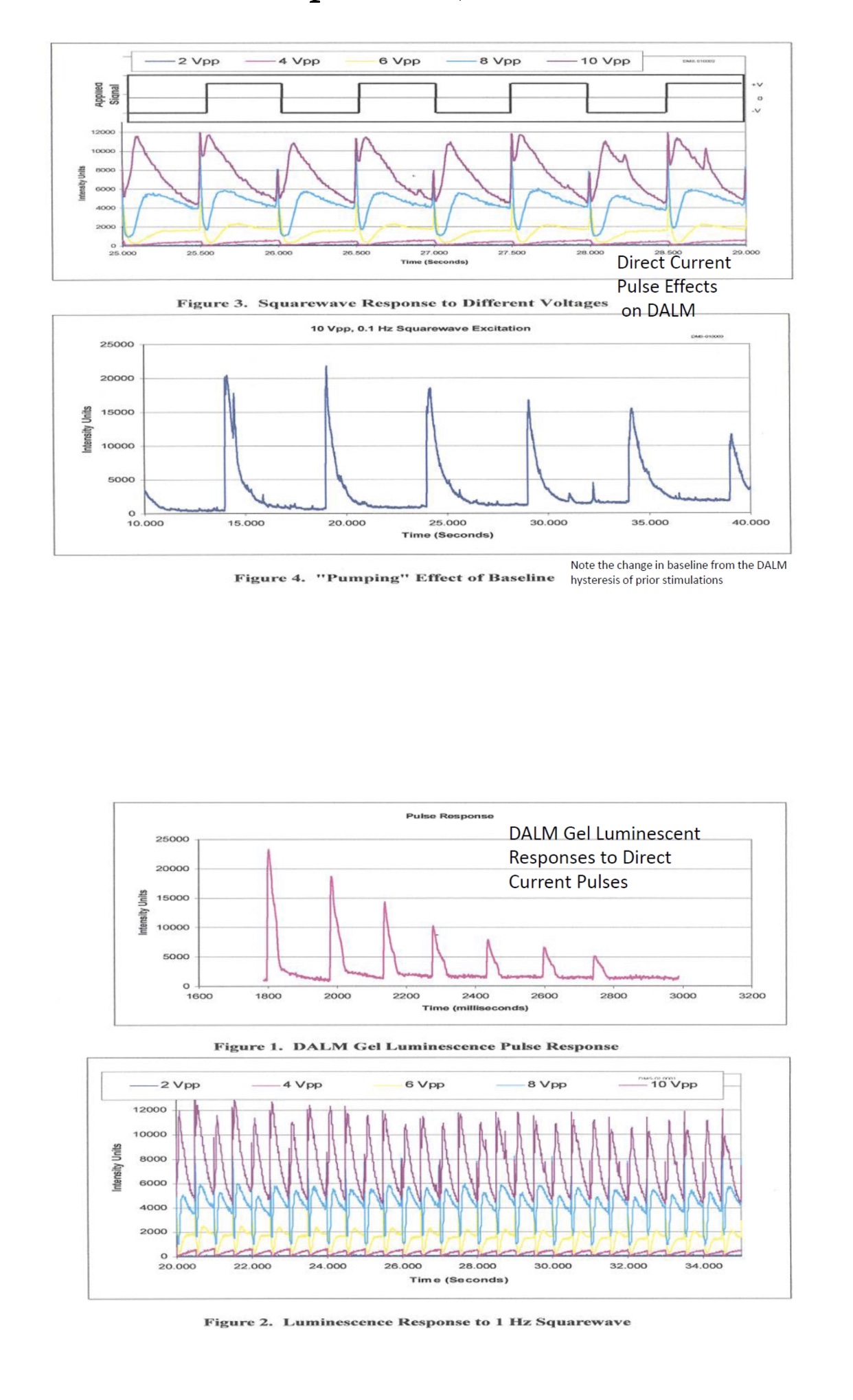
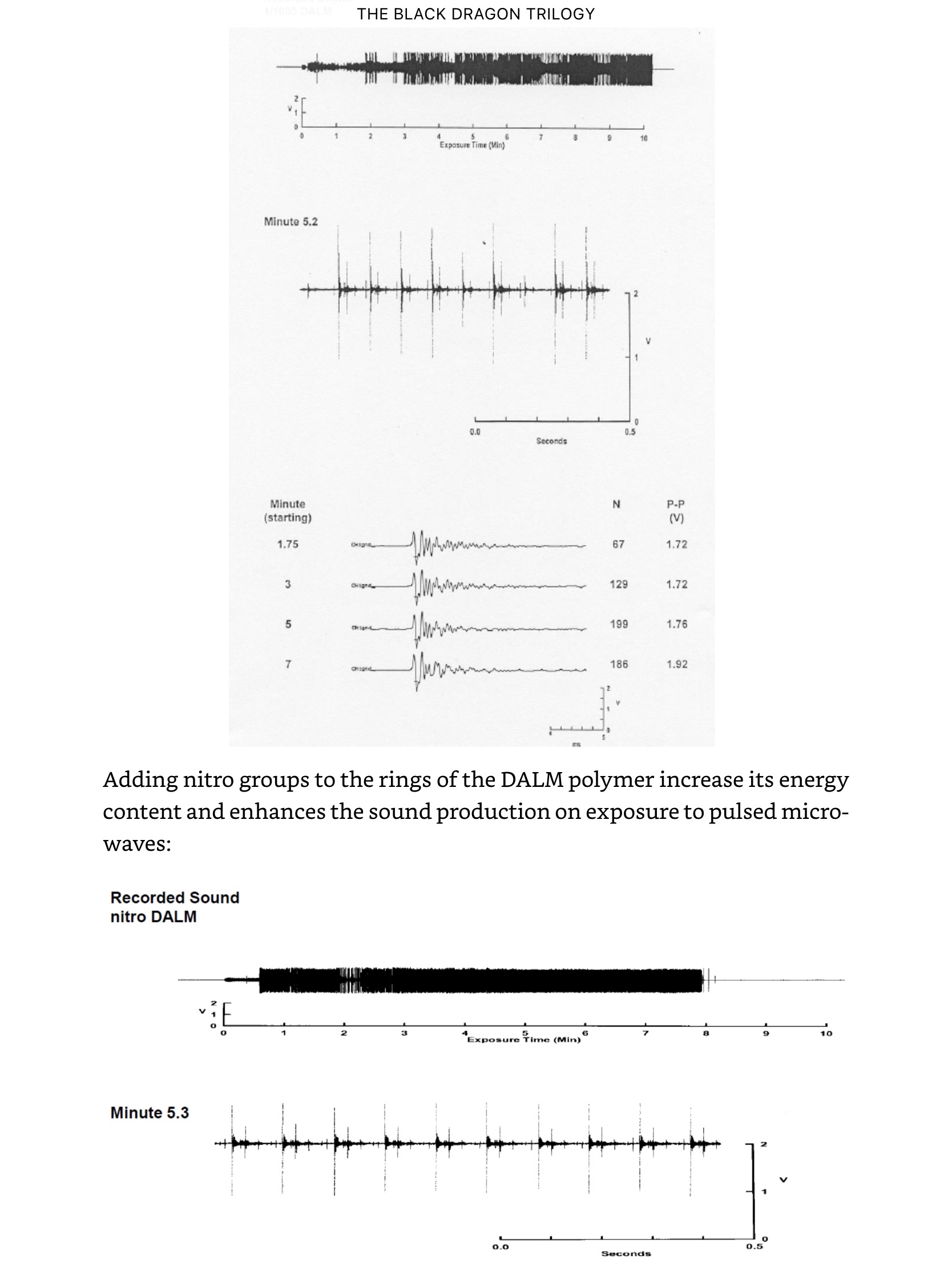
This polymer demonstrates a number of interesting and very applicable physical and chemical properties. It is thermochemiluminescent while oxidizing, binds to DNA without damaging it functionally, and further interacts instantly with pulsed direct current electric fields, and those of pulsed radio frequency and microwave radiation. The classical explanation of its behavior is as an inductor, that it is a passive two-terminal electrical component that stores energy in a magnetic field when electric current flows through it. An inductor consists of an insulated wire wound into a coil around a core. When the current flowing through an inductor changes, the time-varying magnetic field induces an electromotive force (e.m.f.) (voltage) in the conductor, described by Faraday’s law of induction. According to Lenz’s law, the induced voltage has a polarity (direction) which opposes the change in current that created it. As a result, inductors oppose any changes in current through them. The coiled ground state structure of DALM may be responsible for its behaving as a molecular inductor. The discharge of luminescence and/or thermalization are related to the release and conversion of this stored energy.

The build up of energy into dark states leading to high E fields may facilitate electroporation. During electroporation, the lipid molecules simply shift position, opening up a pore which acts as a water- filled conduction pathway through the bilayer. Electroporation is a dynamic phenomenon which depends on the local transmembrane voltage at each point on the cell membrane. For a given pulse duration and shape, a specific transmembrane voltage threshold exists for the electroporation phenomenon (from 0.5 V to 1 V) to occur, an electric field magnitude threshold for electroporation.
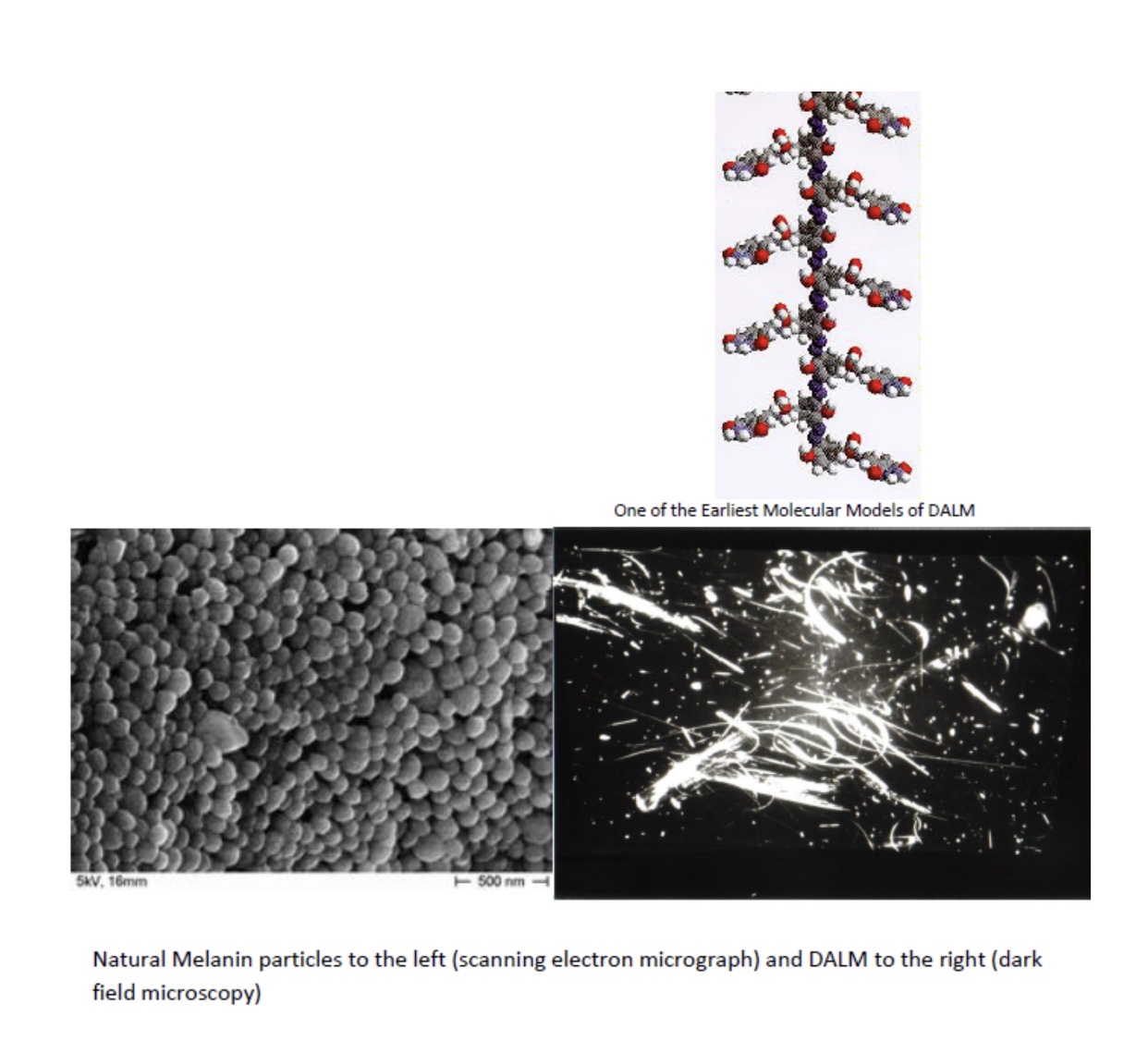
Ribbon-like structure of DALM with sharp edges and angular high aspect ratio ends unlike amorphous globular natural melanin
The conversion to sound allows for the possibility of transporting DNA into cells by sonoporation. Sonoporation has already demonstrated potential utility in gene transfer https://www.nature.com/articles/s41598-018-22056-8.pdf.

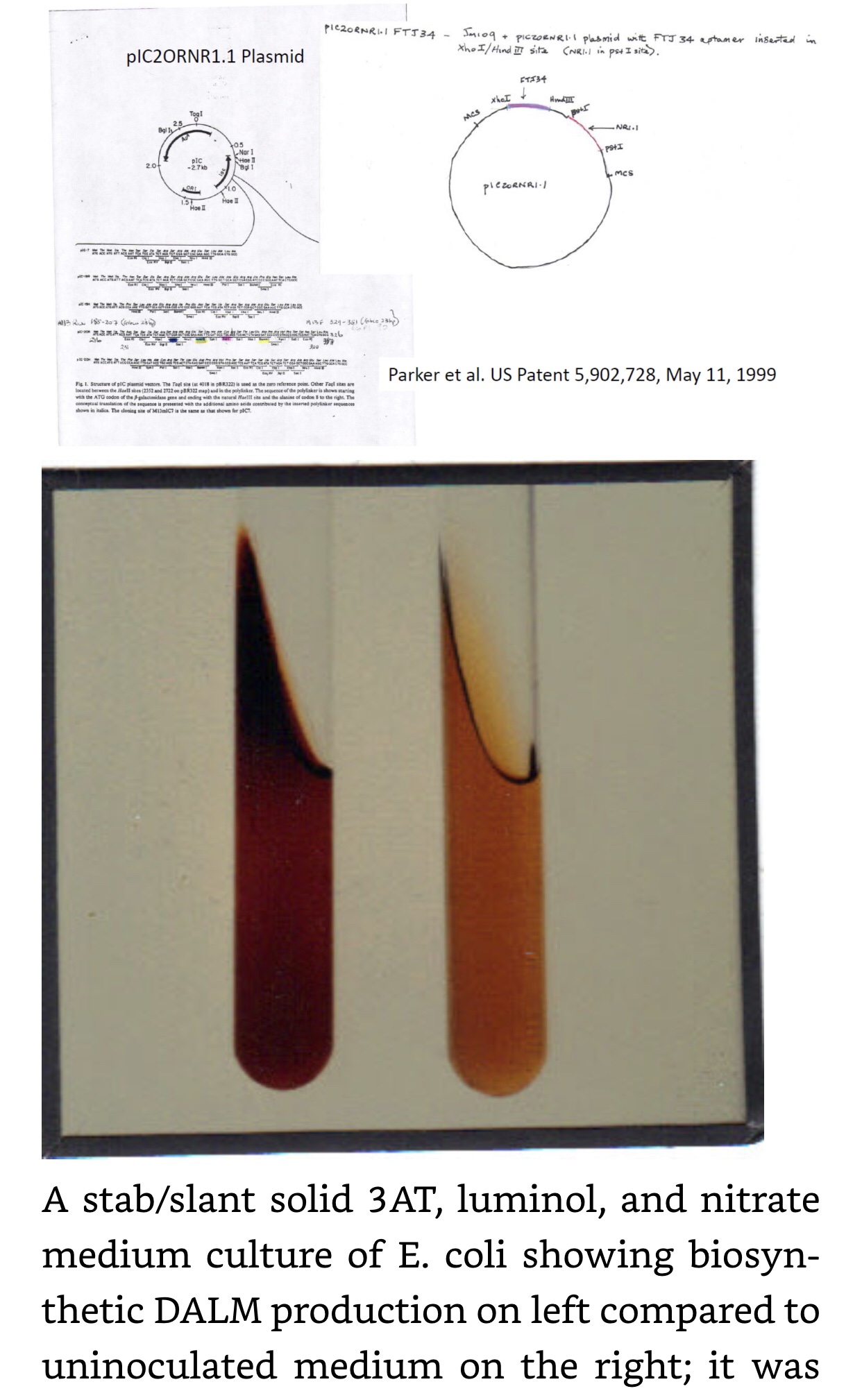
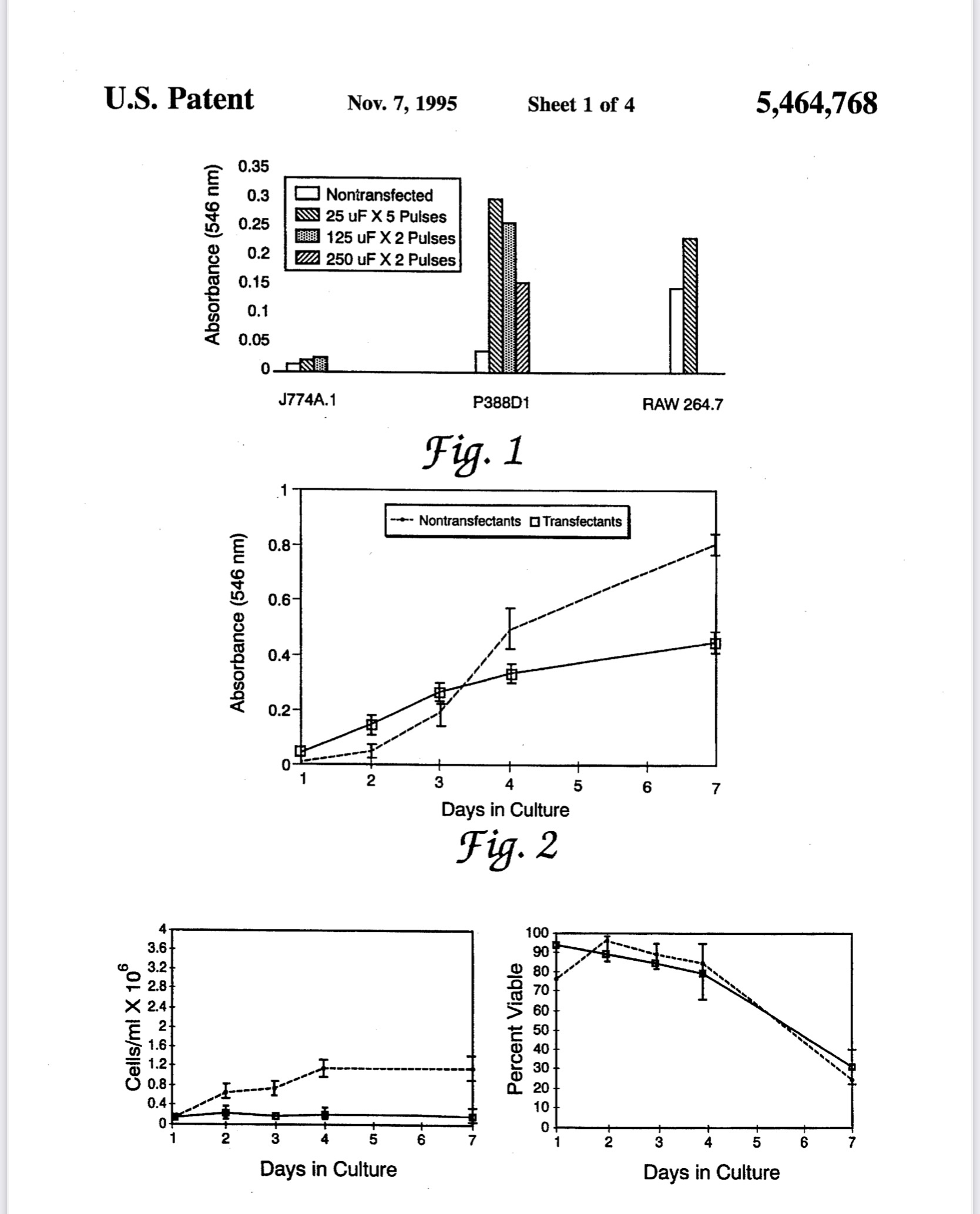
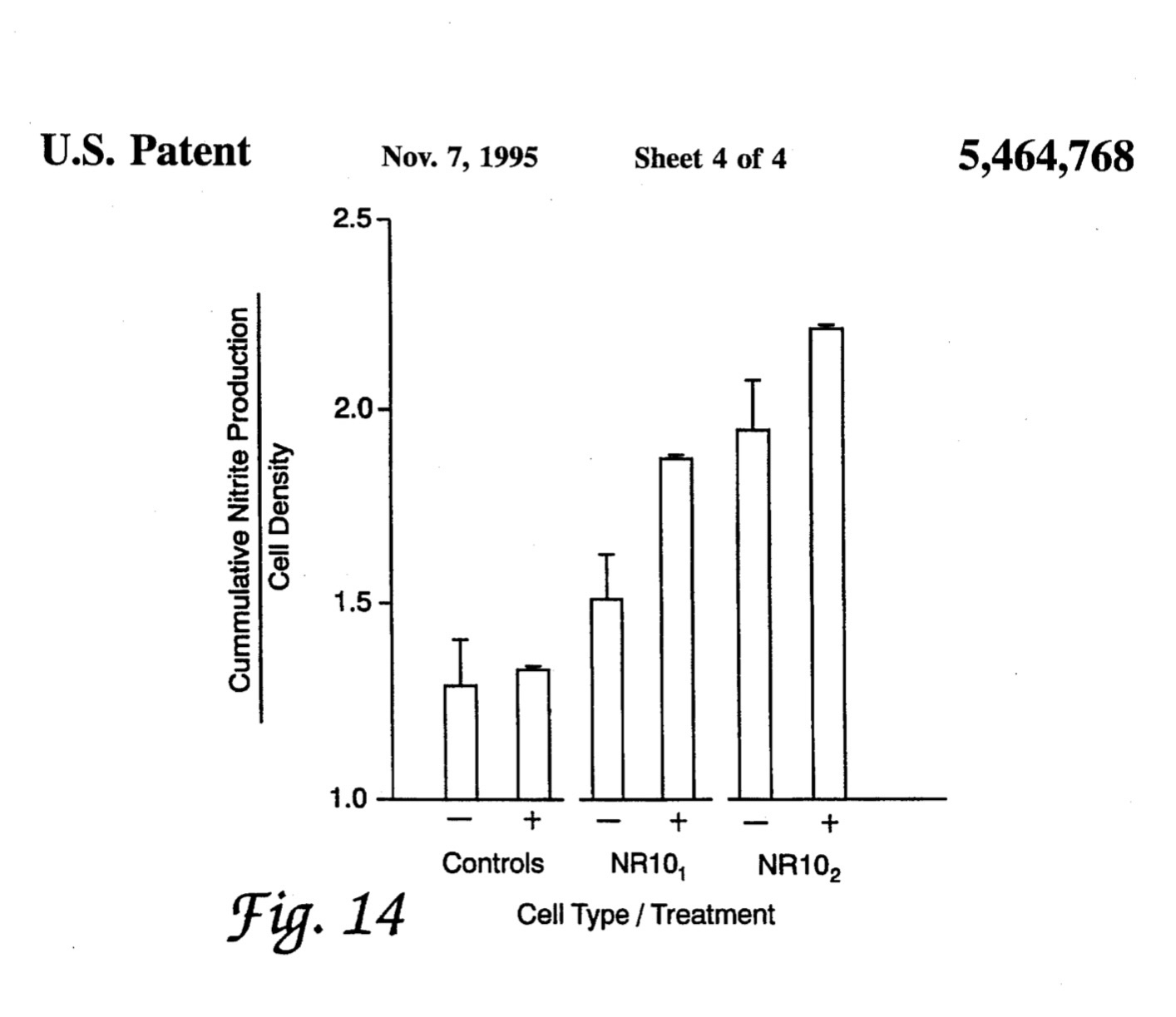
The next step was to try to make DALM from feedstock chemicals fed to bacteria that have inducible nitrate reductase. When this process was not totally satisfactory, genetic modification with plasmids delivered by electroporation or calcium phosphate was tried and succeeded in enhancing the production of DALM. This even worked with mammalian and human cells harboring nitric oxide producing enzymes (nitric oxide synthase, NOS) which could integrate with a component of the barley plant nitrate reductase to enhance both their activities simultaneously.

Nitrite production by electroporatically transfected cells measured by Griess Reagent absorption of 546 nm visible light.
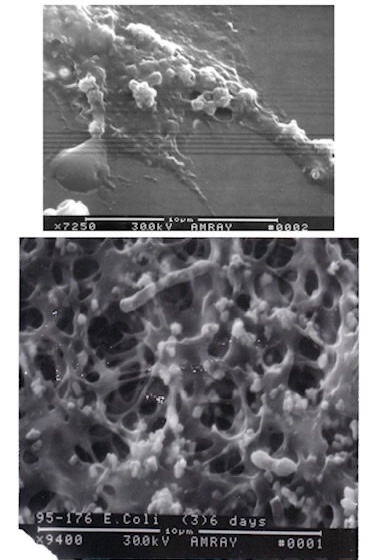
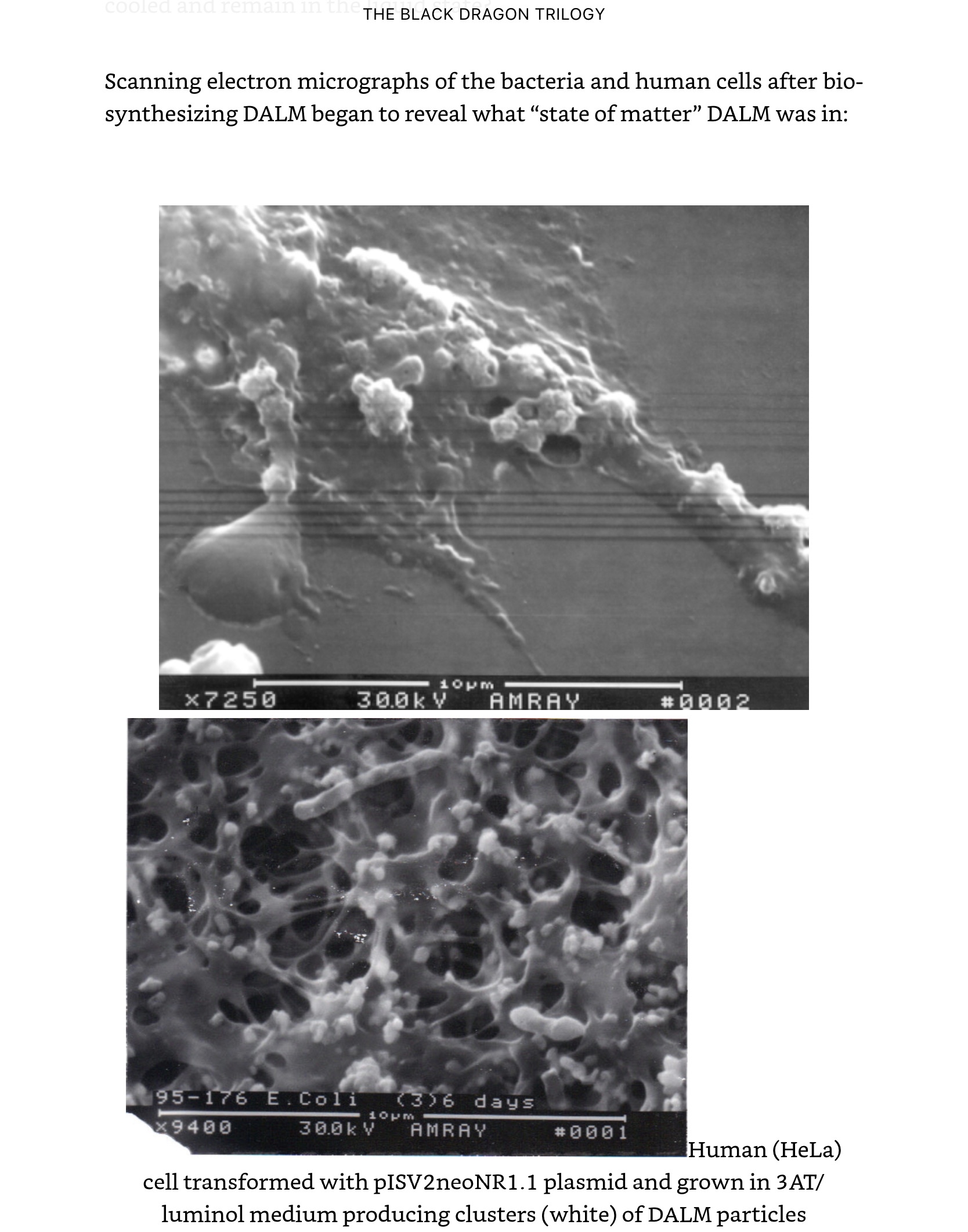
Human HeLa (top) cells (HeLa NR1 ATCC ® CRL-13011™ Homo sapiens cervix adenocarcino: https://www.atcc.org/Products/All/CRL-13011.aspx) and E. coli bacteria producing nanoparticles (white particles) after transfection and transformation, respectively, with the appropriate plasmid vectors of barley nitrate reductase components and fed feedstock for DALM biosynthesis.
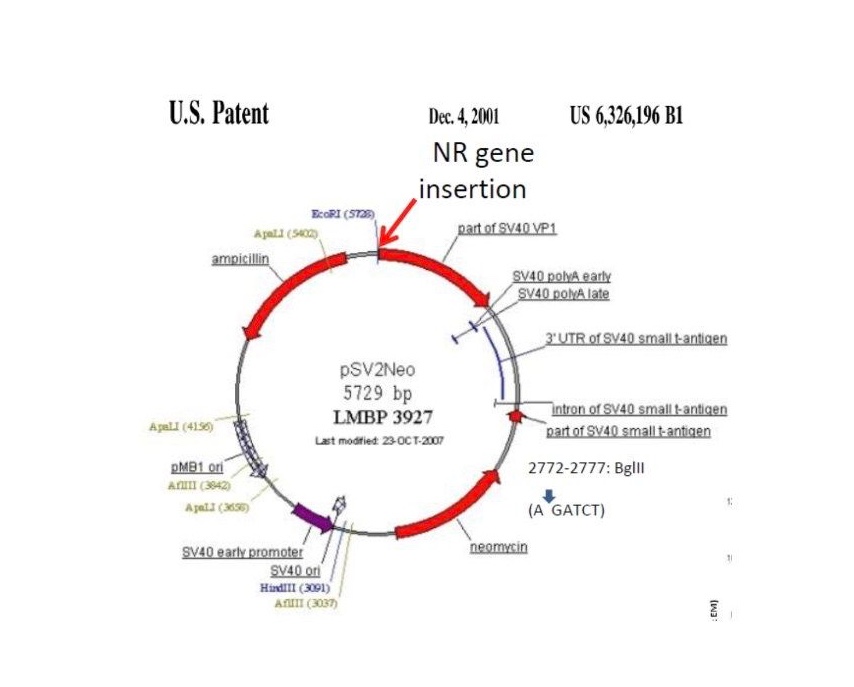
Plasmid used in HeLa cells (HeLaNR1) to make them biosynthsize DALM and DALM nanoparticles. The presence of SV40 genes allows for integration into the host genome and what has made ATCC concerned about licensing the cell line’s use and that it be handled in a BSL-2—because of the potential of transfer of “infectious” viral oncogenic material.

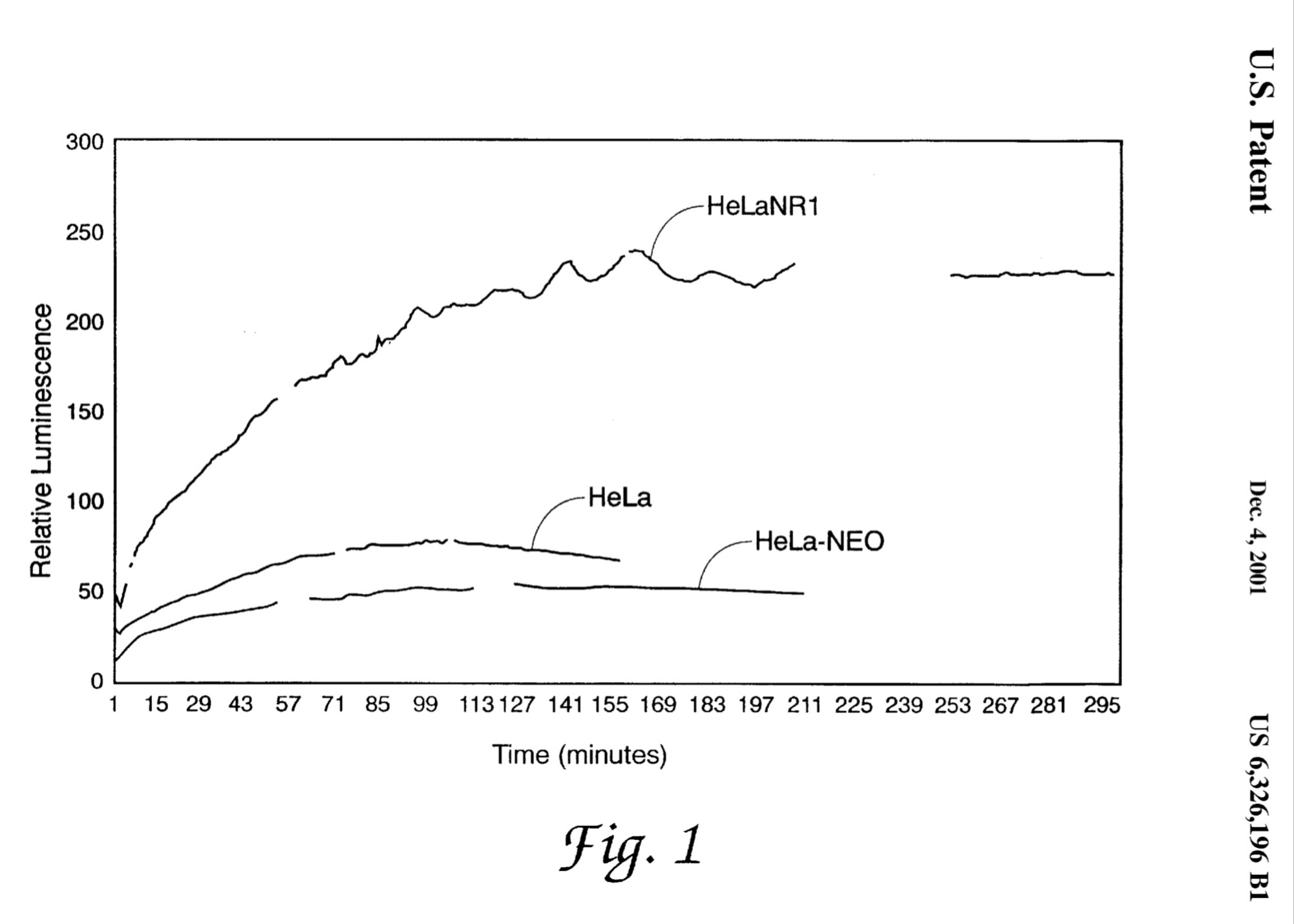
Thermochemiluminescence of oxidizing biosynthetic DALM made by transfected HeLaNR1 cells compared to controls.
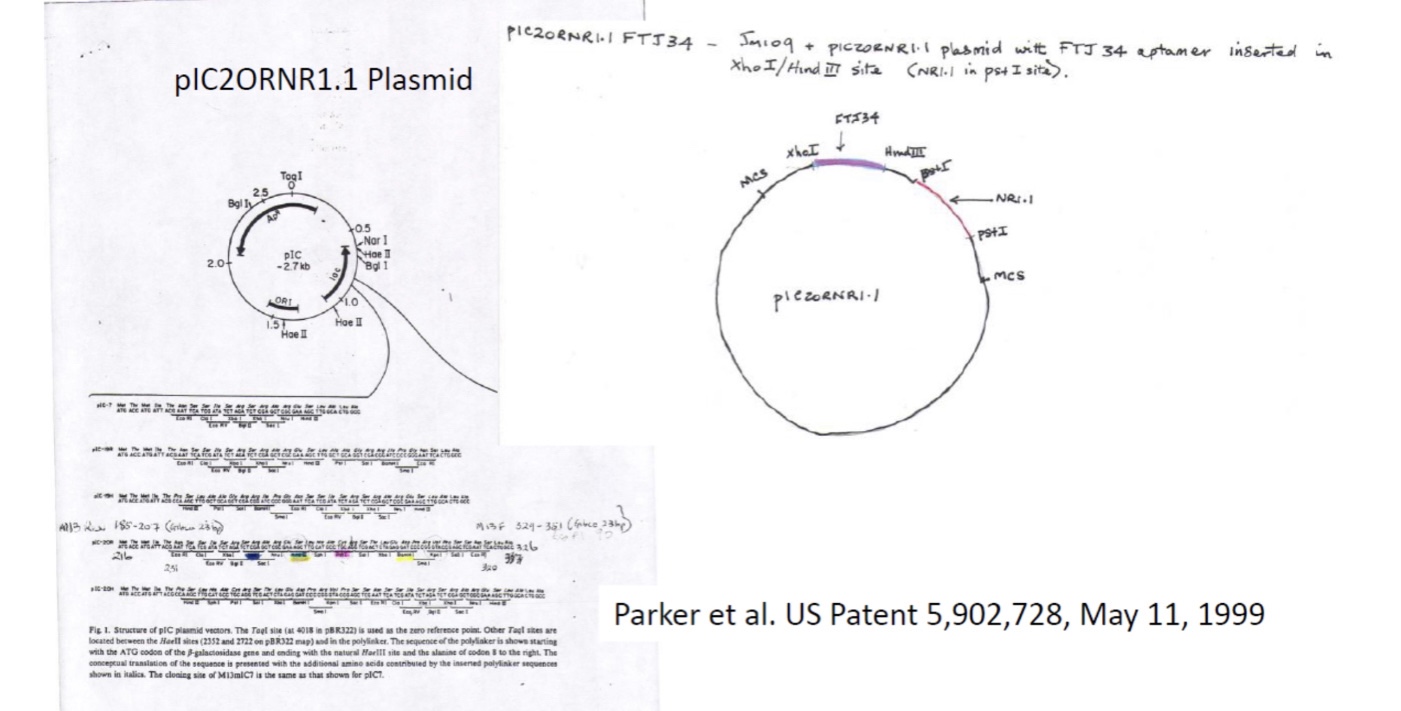
The plasmid used in E. Coli to produce DALM nanoparticle DNA transformation vectors.
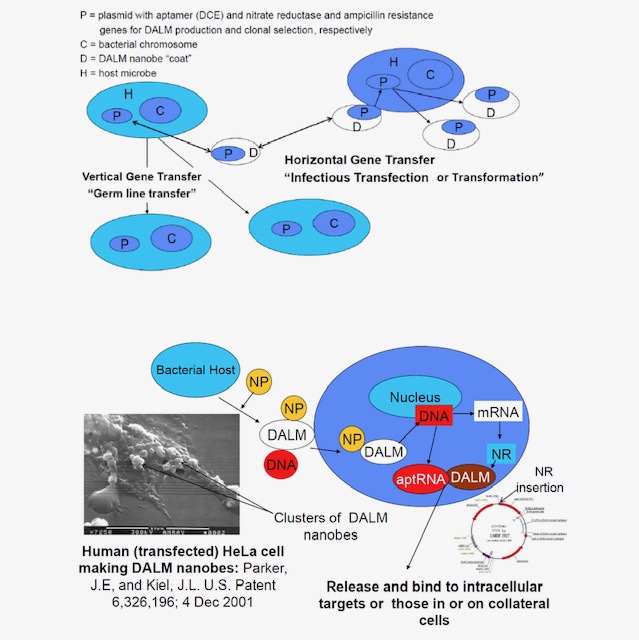
Schematics of nucleic acid (plasmids and mRNA) coating and transfer by biosynthetic DALM.
Overall design of scheme of making and delivering DALM nanoparticle vectors of expressible DNA as for vaccines.
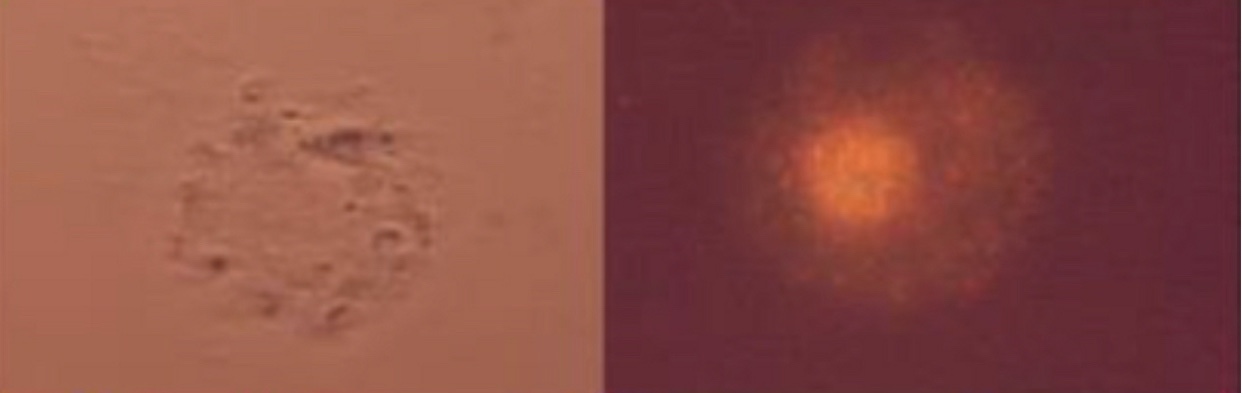
HeLa P6 cells showing fluorescence tracking of transfecting nanoparticles to nucleus
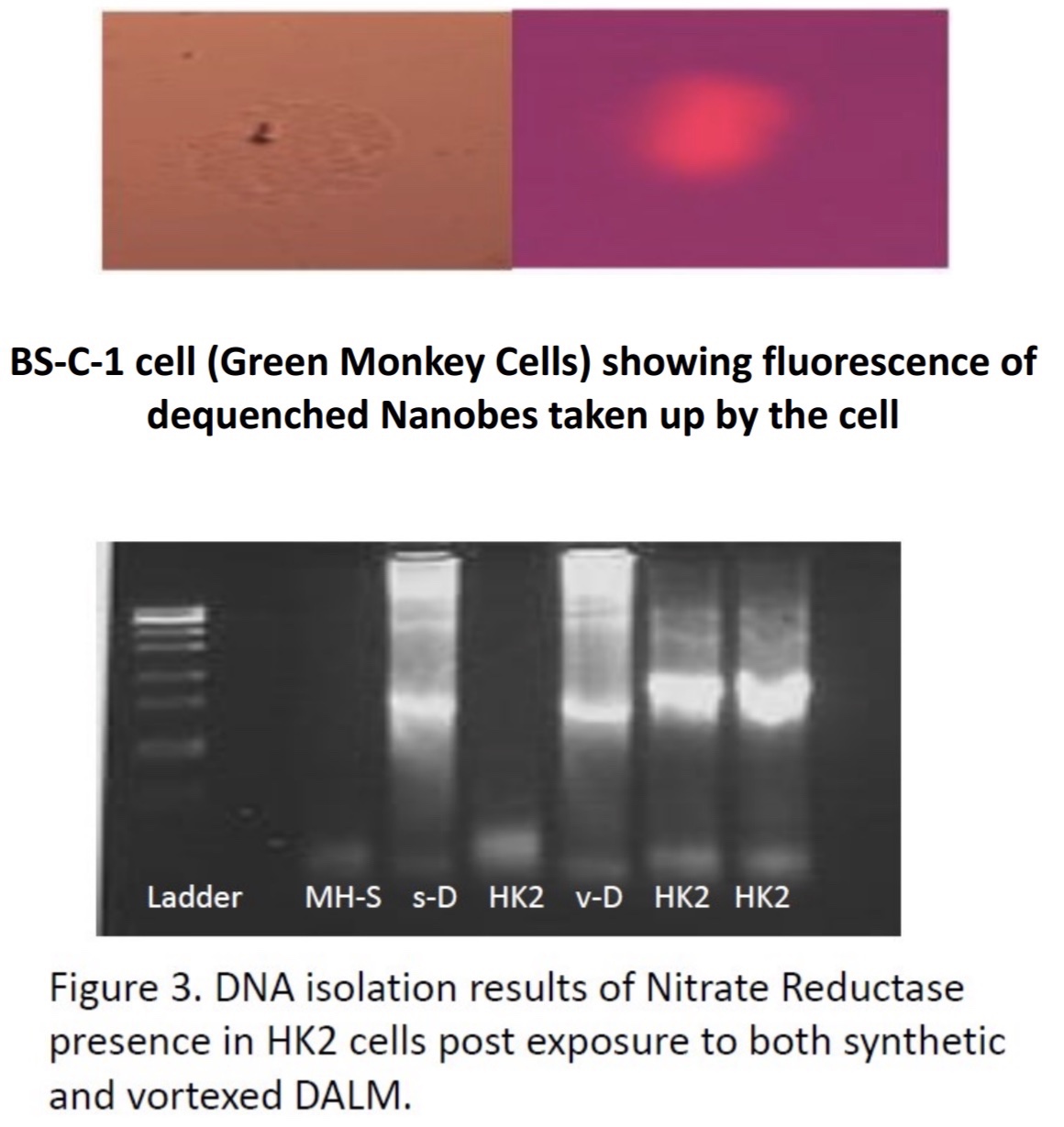
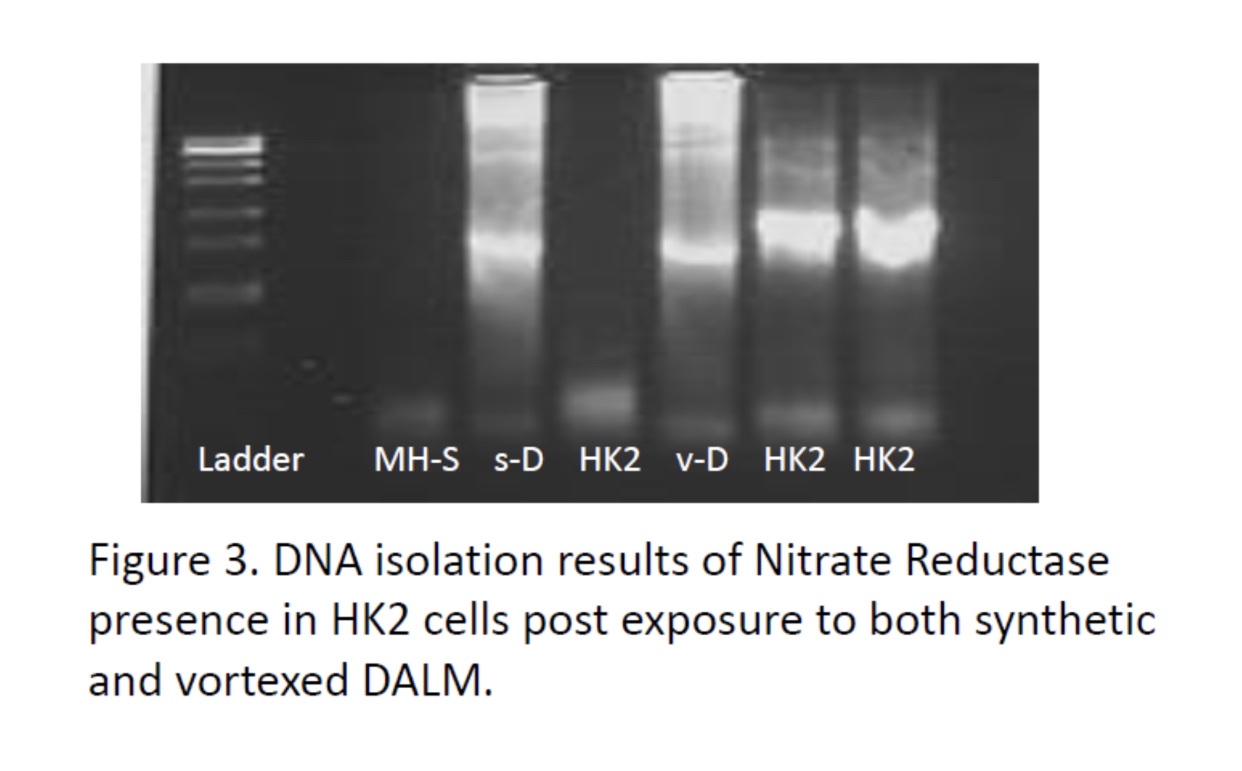
Showing tracing fluorescent Nanobes (DALM nanoparticles) carrying transfecting DNA and resulting PCR demonstrating presence of vectored DNA in human kidney cells (HK2). These results show that DALM vectors do not require an electric field to be taken up into human cells.
Freeze-dried DALM nanoparticle vectors which were still functional after 4+ years storage at room temperature and ambient light in the lab.
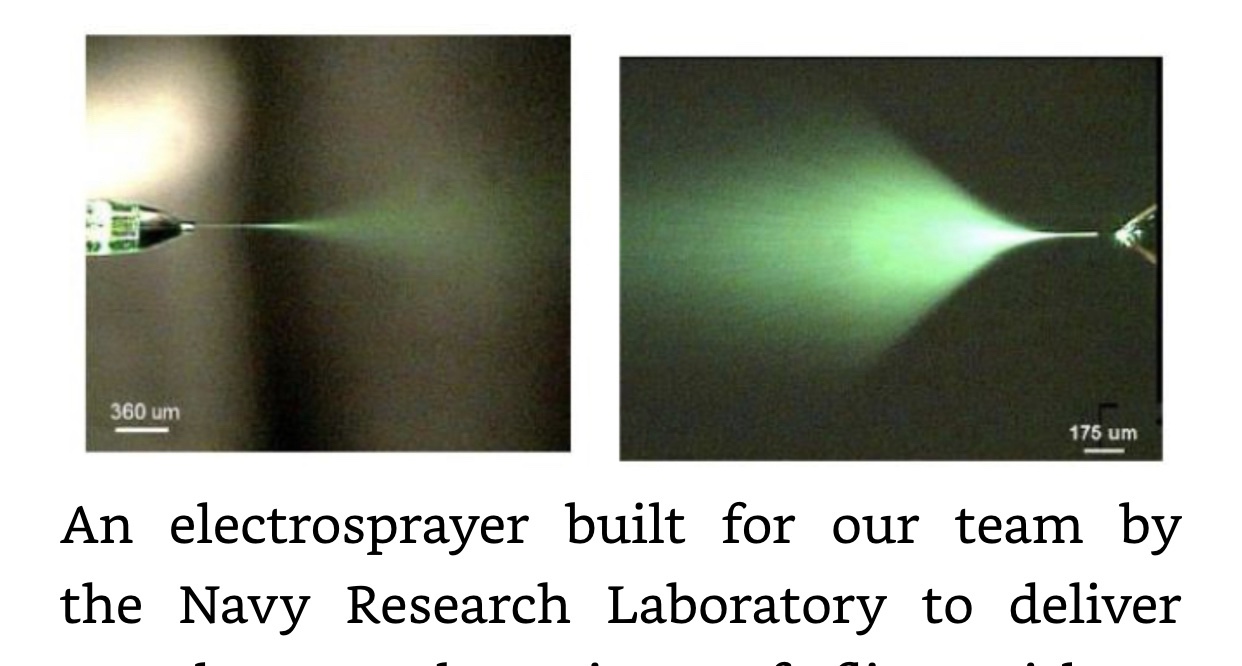
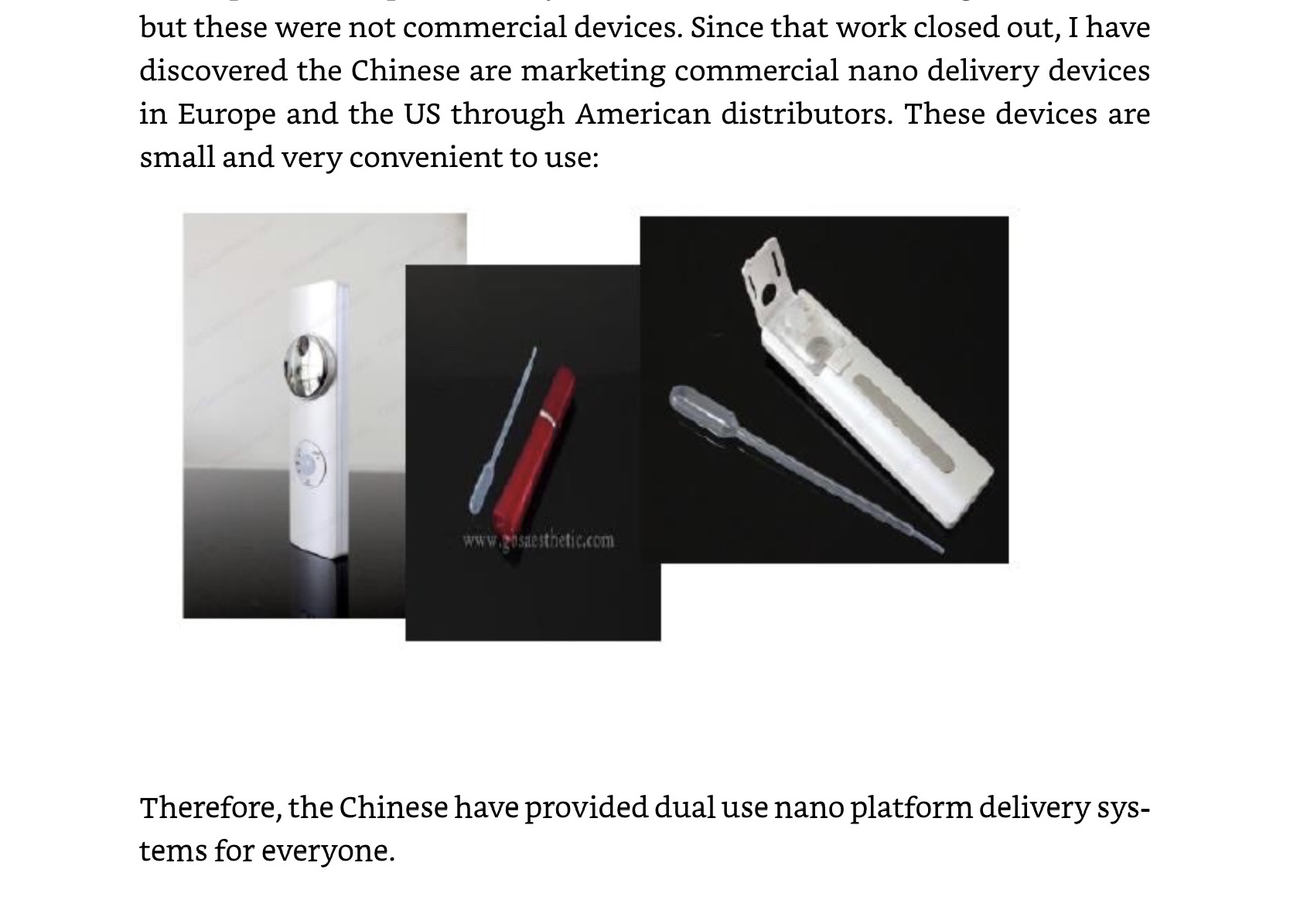
These commercially available nanosprayers could facilitate the transdermal transfer of DALM nanoparticle vectors for clinical use as for DNA plasmid vaccination; similar devices could be used for inoculation by inhalation.

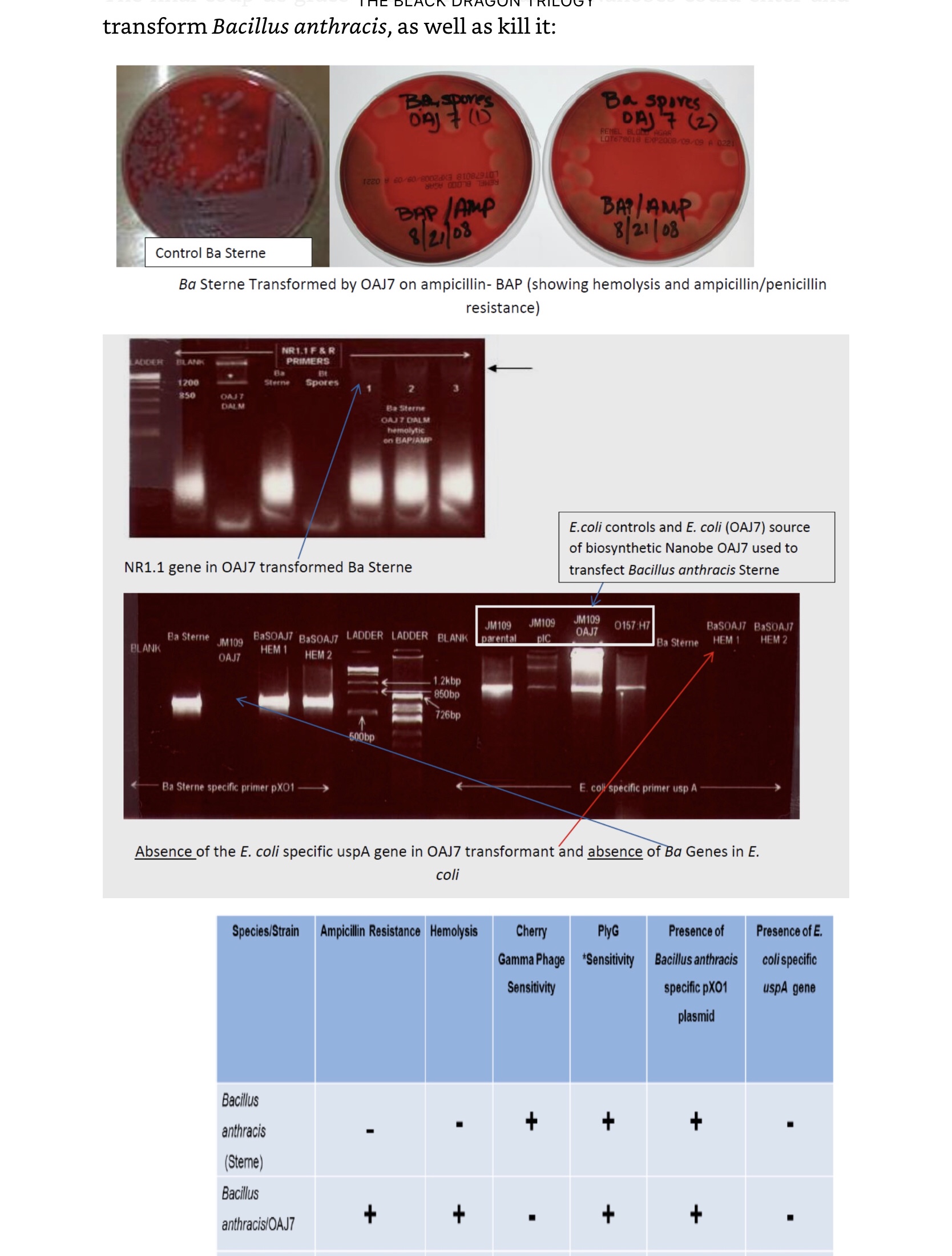
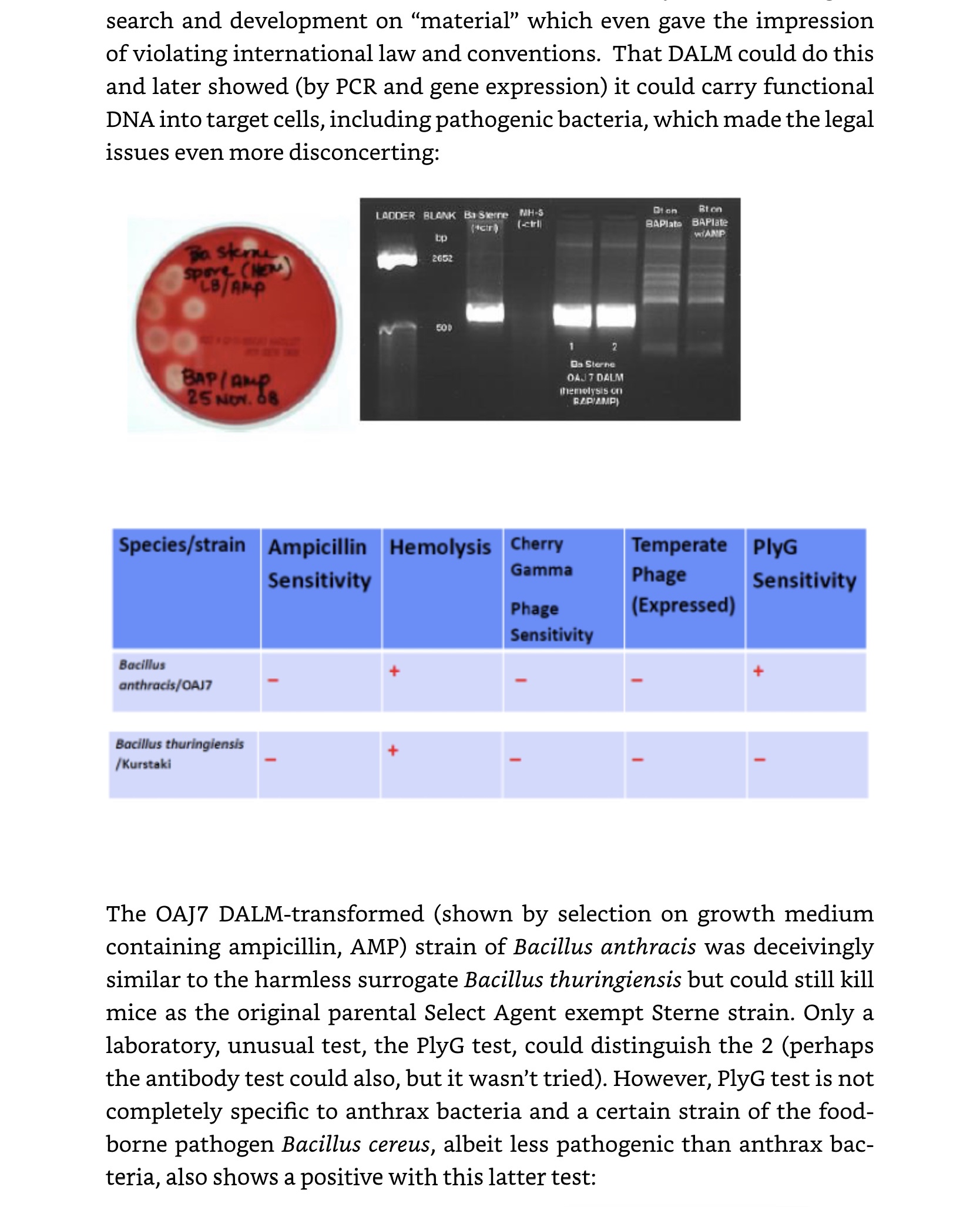
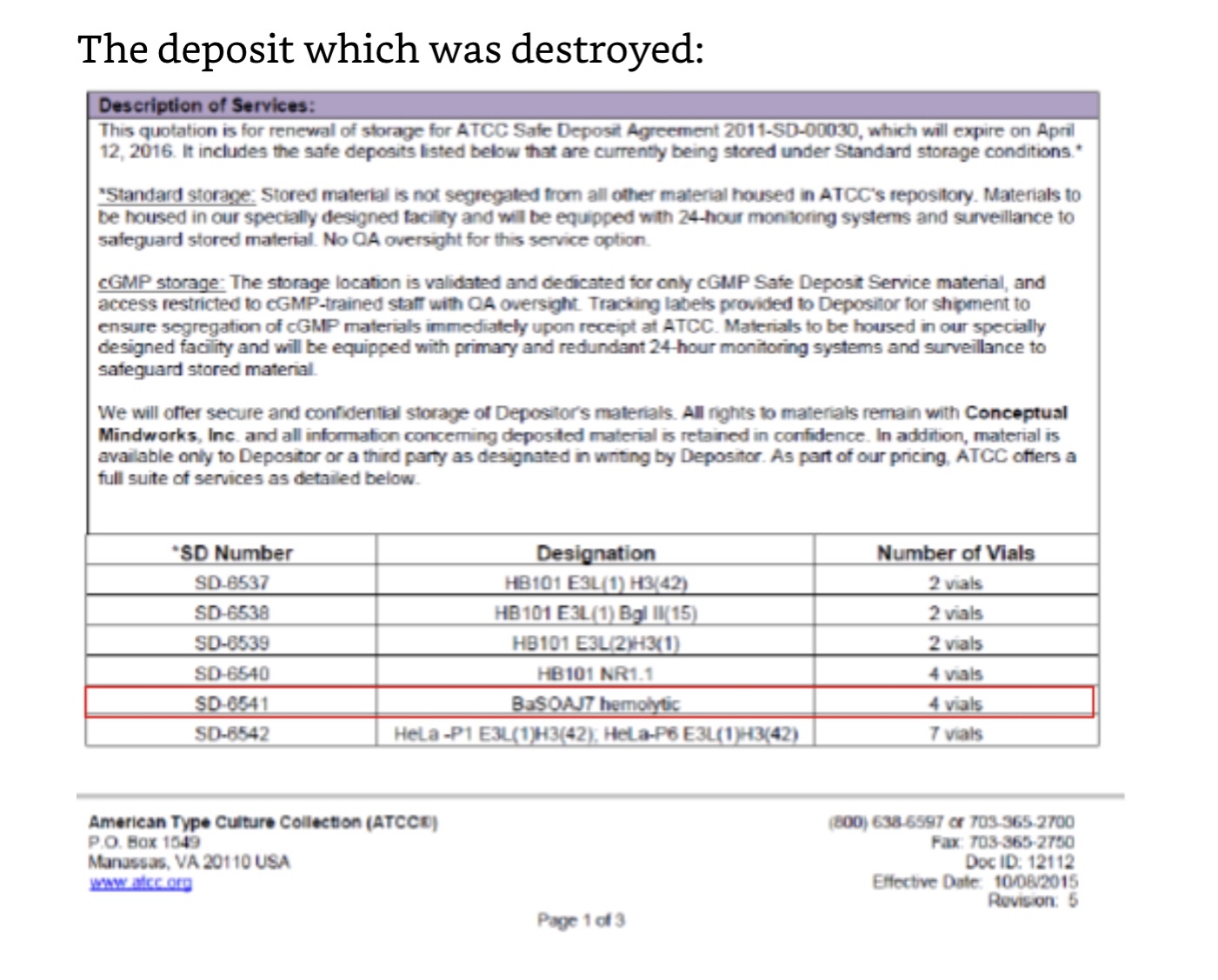
Plasmids transferred to target cells with DALM nanoparticle vectors have demonstrated desired functional transfer such as antibiotic resistance for clonal selection, antimicrobial activity, and DALM nanoparticle biosynthetic capability, but also the less desirable transfer and off target effects of genome integration in mammalian and human cells (expected based on plasmid constructs used), and in bacteria, not only the clonal selection antibiotic resistance, but also the off target effects of bacteriophage resistance and hemolytic activity in a pathogen (Bacillus anthracis, anthrax). The DALM nanoparticle vector has demonstrated its broad utility as a potential plasmid DNA vaccine vector and also its ability to be manufactured by microbes’ making biosynthetic complete DALM, nanoparticle, plasmid DNA vectors for genetic transfer.

Realizing COVID Testing is Almost Valueless After Three Days: The Damage Already Done: Lesson Already Learned in Biodefense by the Military

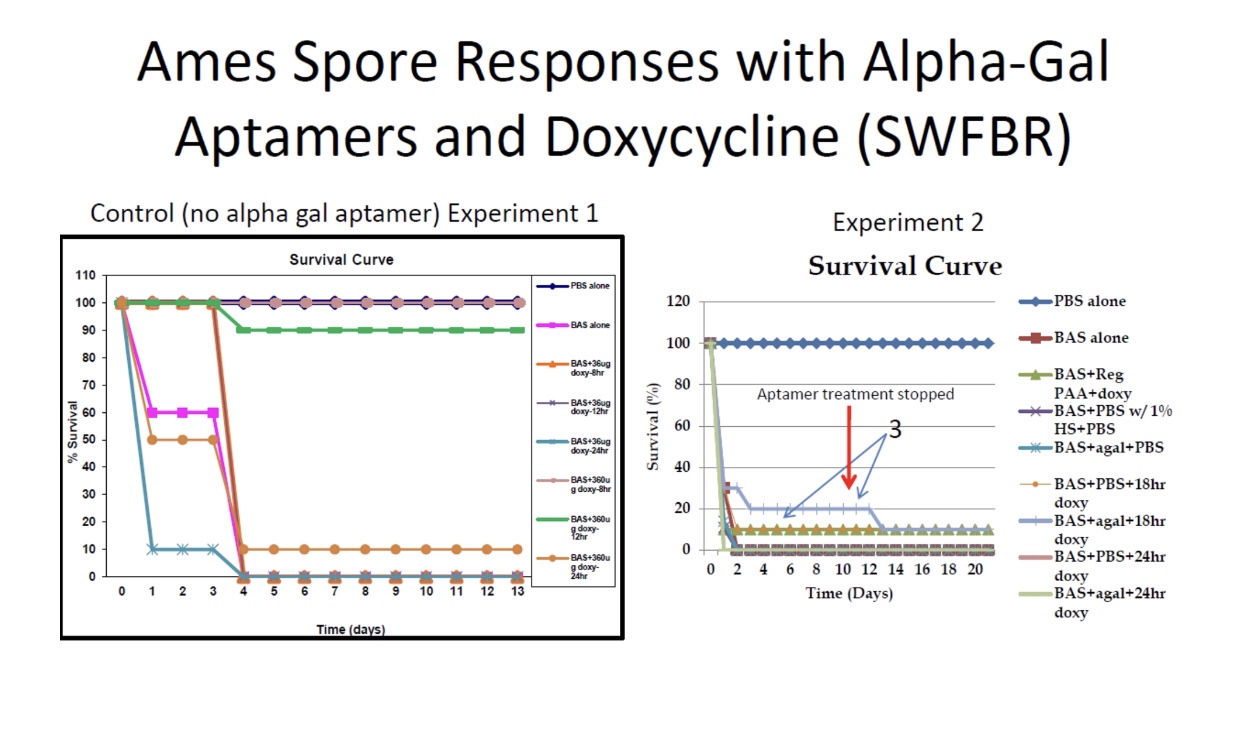
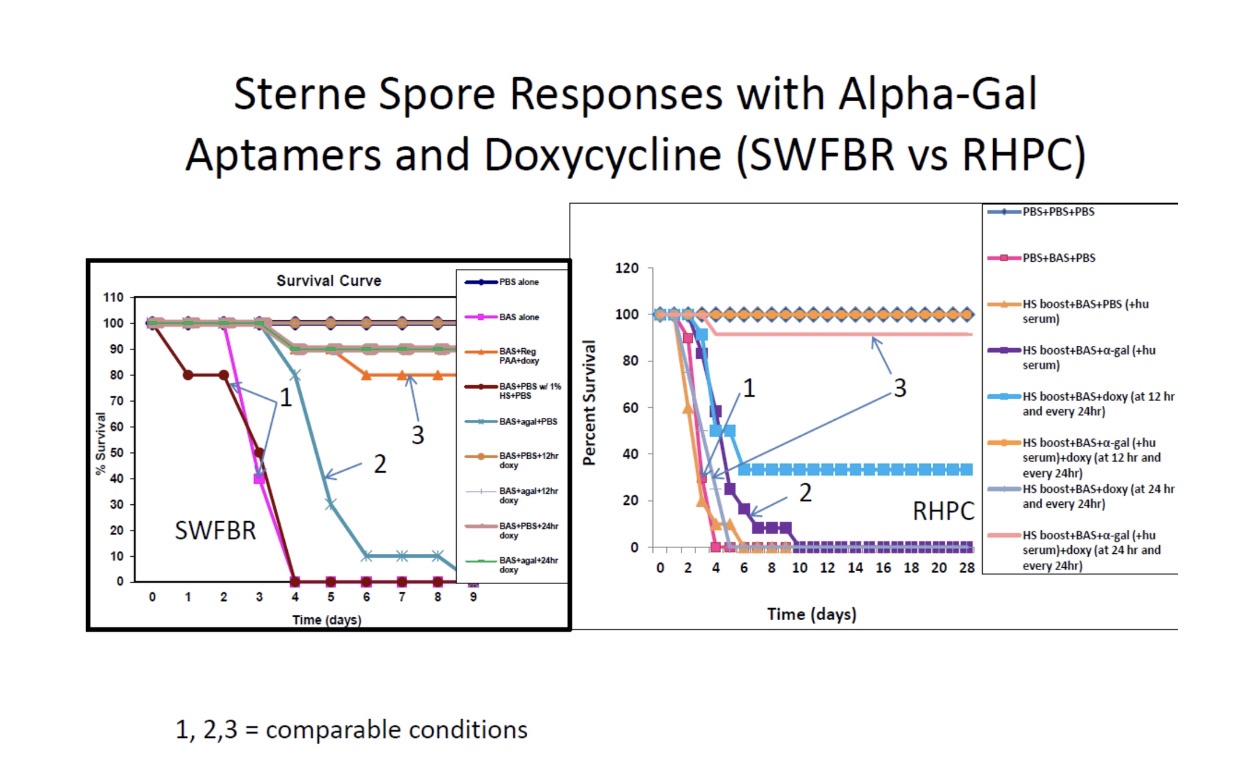
It has become abundantly clear that testing for SARS-CoV-2, especially in the United States, is inadequate in amount and in timing. The military struggled with this problem years ago in the dilemma of “test to treat” versus “test to warn” in designing its detectors and diagnostics for biological warfare agents. The first was attainable but many times was too late: the phenomenon of “dead man walking”, the casualty alive but nearly 100% likely to die. The second was nearly impossible to achieve, with its instant diagnostics full of false negatives, and with no adequate immediate life-saving treatments to make it of value. This was the landscape we entered in 1989. We spent the next 22 years approaching the solutions asymptotically but our efforts were ended before completion because of change in priorities. Now we face the same problem under the COVID-19 crisis. To illustrate the severity of the challenge, we need to look no further than the number one biologic warfare/bioterrorism agent, anthrax. The following data illustrating this point and many of my previous posts, references and books have continuously emphasized these often ignored and postponed problems.

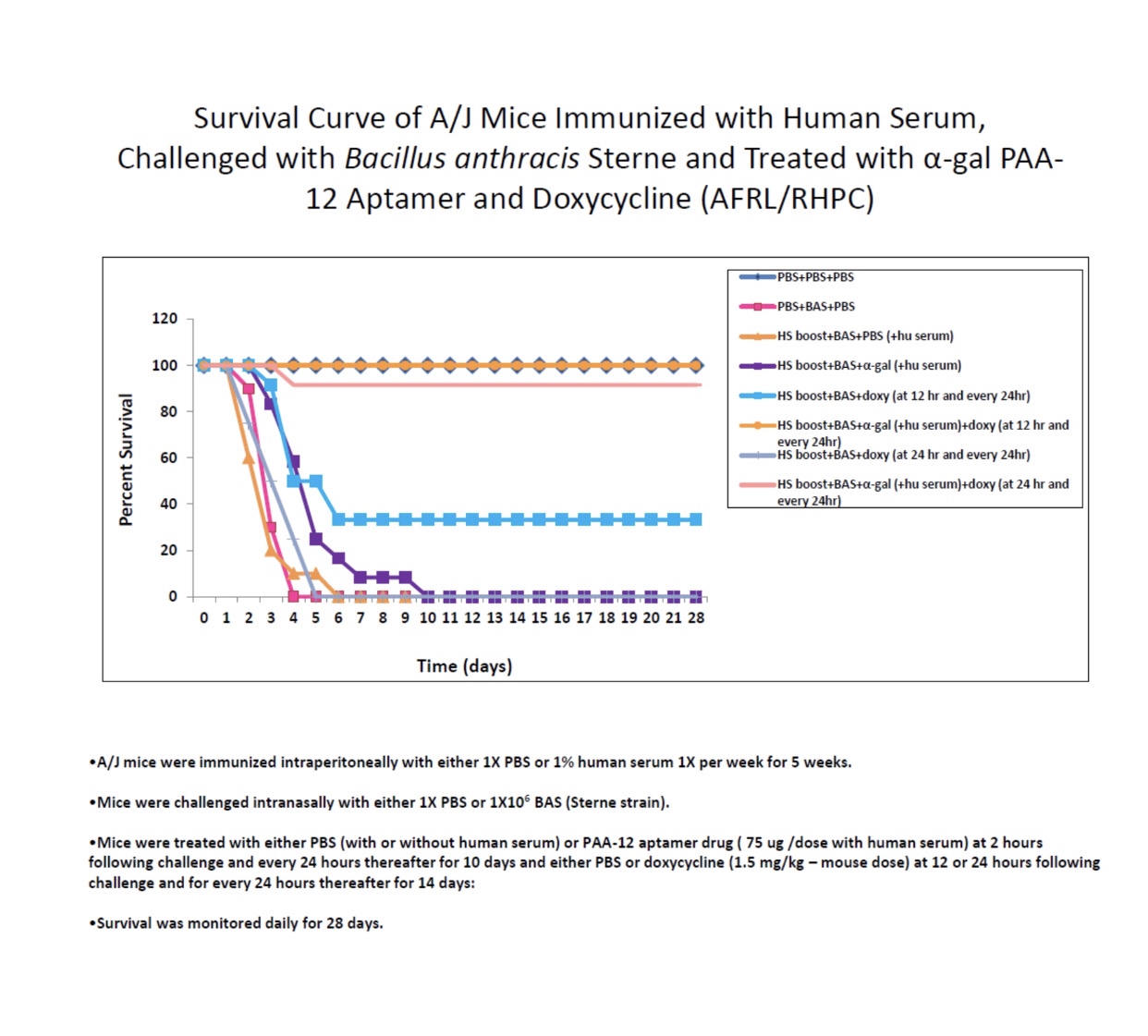
These graphs illustrate that antibiotics and other antimicrobial treatments must be applied early, at the appropriate doses, and for extended periods in the face of a highly lethal infection if they are going to have a significant effect or do more than delay morbidity and mortality.
Another set of graphs that show inhalation or a lethal dose of anthrax spores has a critical period (2-4 days) in which treatment must be applied or it will lose all effectiveness; even with much less lethal COVID, the same principle of critical time window for treatment must be accomplished in order to avoid severe morbidity and mortality in individuals destined for those outcomes.
These plots show how extreme the outcomes can be for a highly lethal infection like anthrax even for essentially the same treatments based on different protocols of dose and timing as well as combinations of treatment; even in a much less lethal infection as COVID, these types of responses become evident in the history of more severe infections, making prognosis very difficult for the apparently same treatments in different patients.
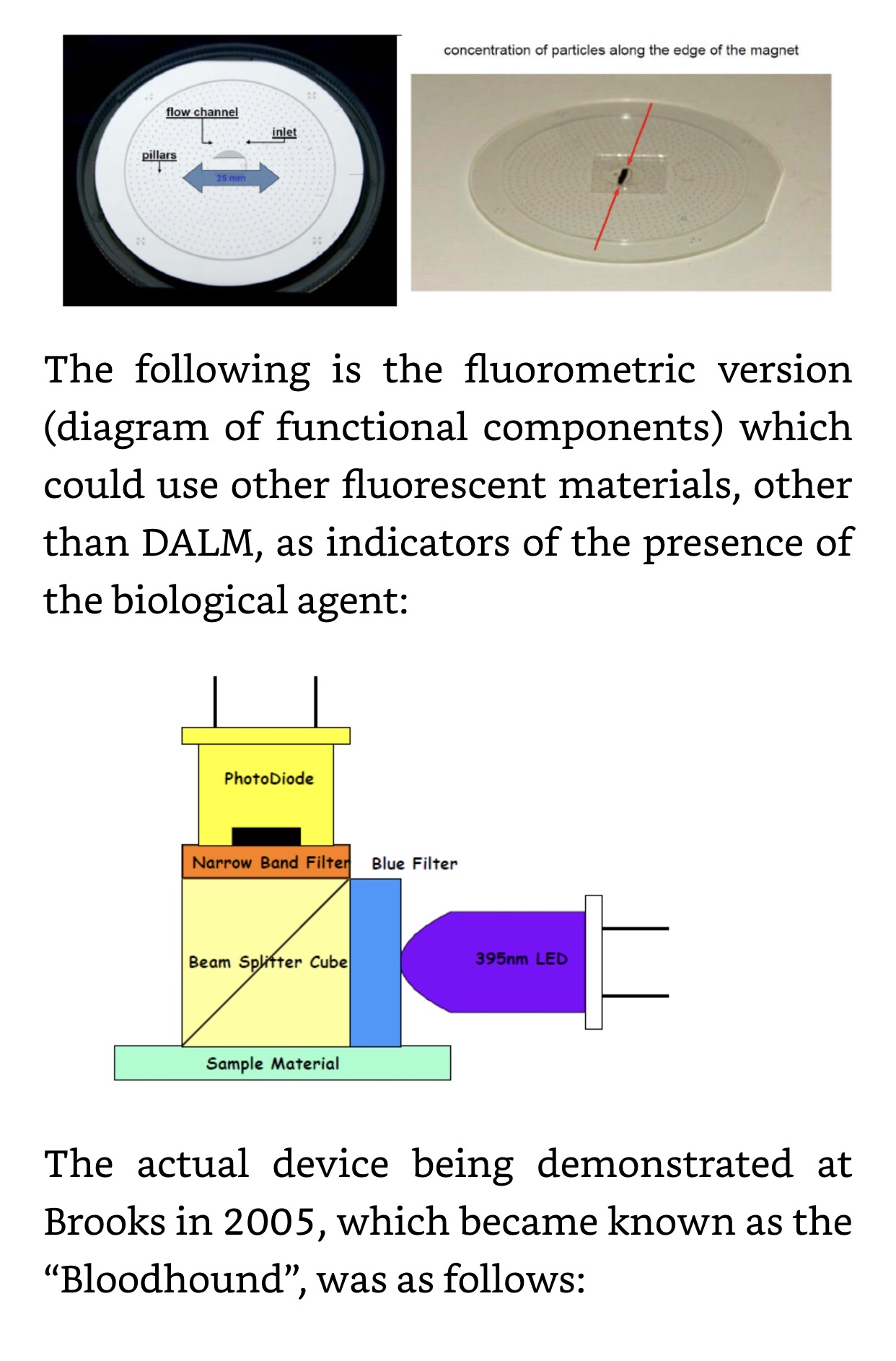
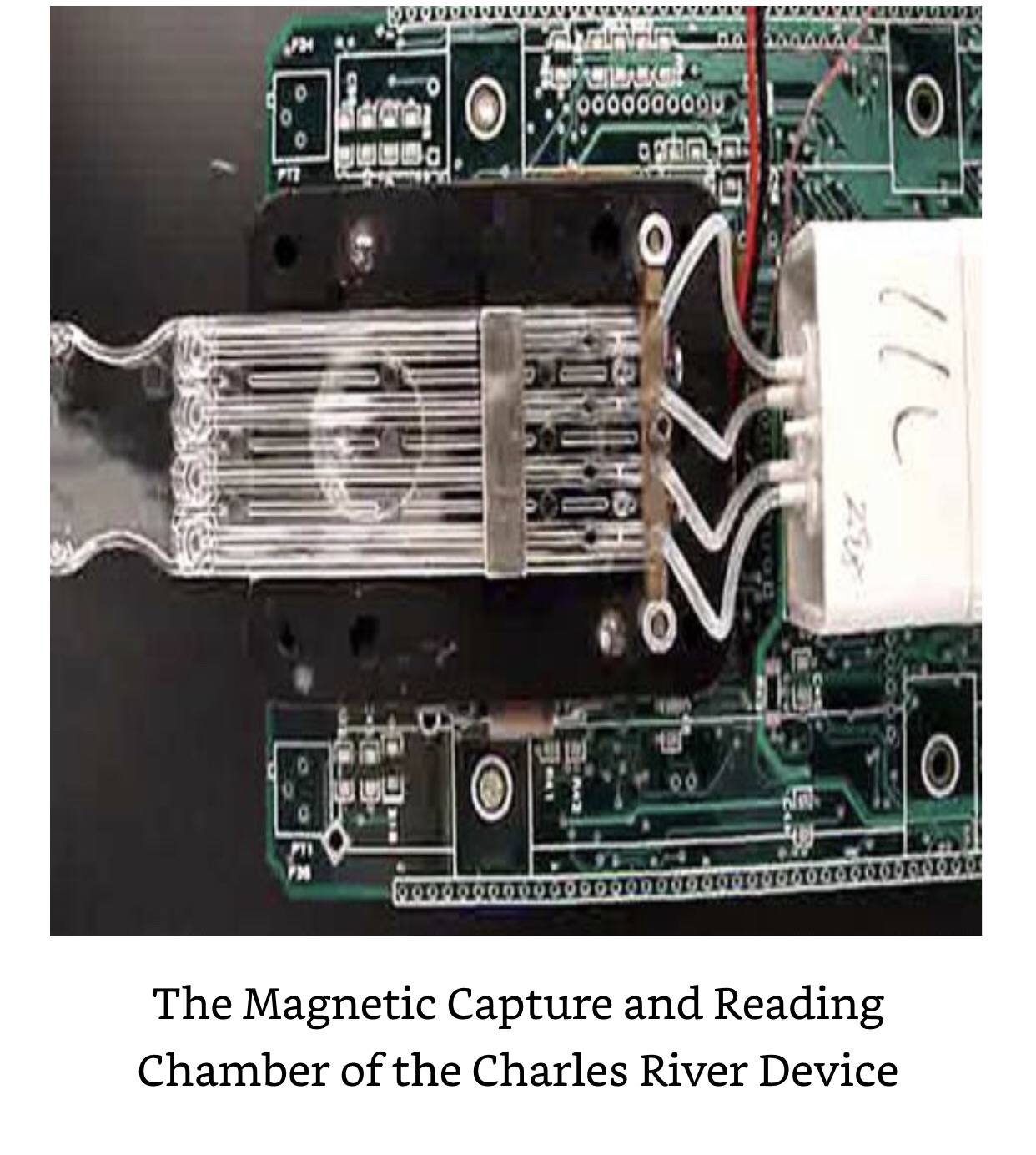
The above circular chamber was the experimental test device to demonstrate the magnetic capture of biological agents on paramagnetic nanoparticles. The illustration below the chamber is of the fluorescent detector for the microfluidic chamber.
This prototype proof-of-concept device was replaced by the following commercial device with modifications.
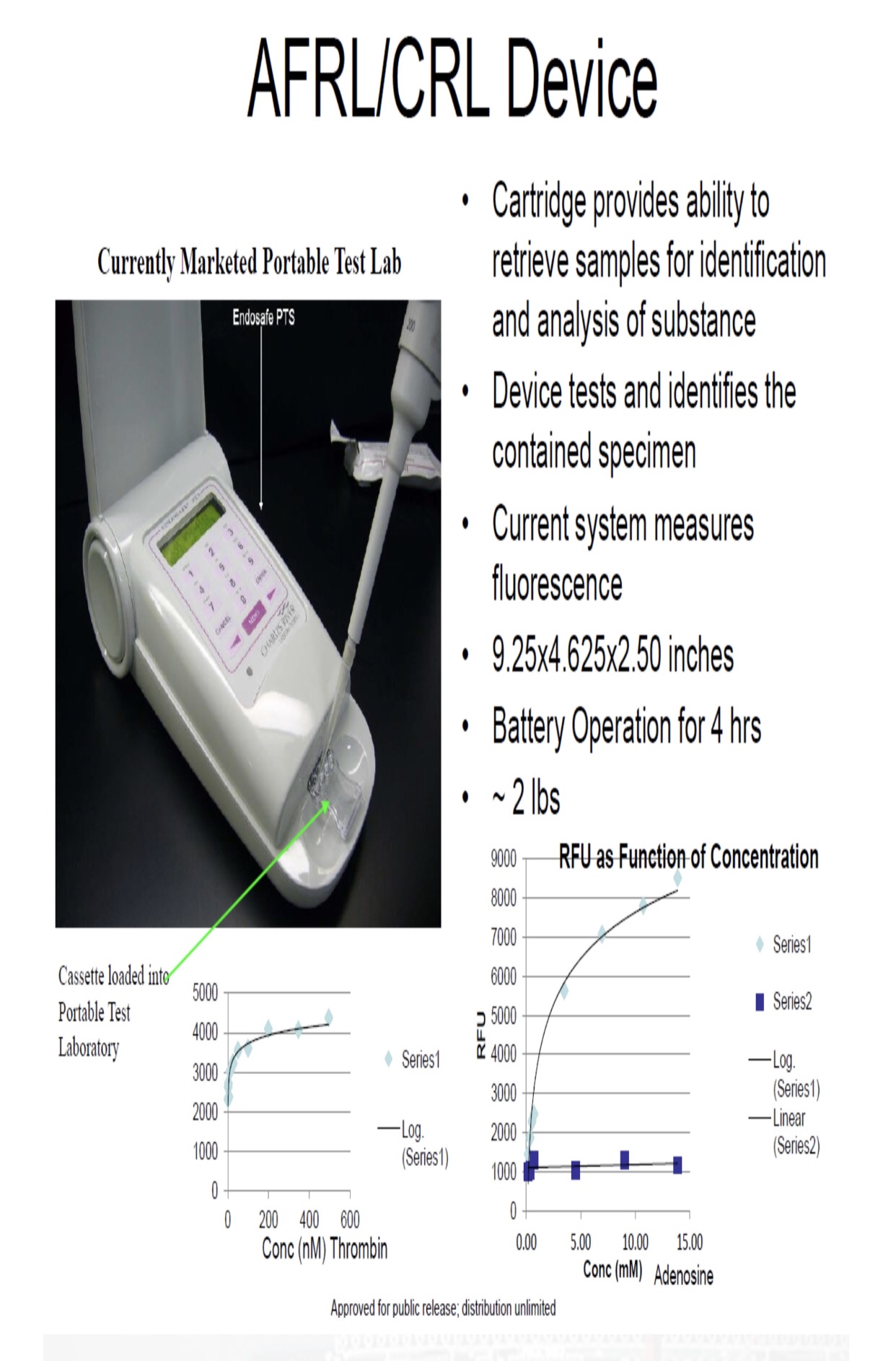
The portable field device, built by Charles River Labs, flown and tested by NASA aboard the International Space Station, that was modified for biodefense. The graphs show the fluorescence detection by the device using a protein, thrombin, and a small molecule (nucleic acid base, nucleoside, adenosine) as targets representing pathogens and toxins.
The multichannel microfluidics chamber and electronics of the CRL device. It was totally self-contained so that once the sample was injected into the channels, the biological agent(s) could be captured on the paramagnetic nanoparticles, detected by turned-on fluorescence, and kept isolated, alive and safe in the chambers to bring back to the lab for further analysis and even culture. The released artificial DNA or the agent’s released DNA or RNA (destructive analysis) could be amplified in a downstream chamber by isothermal amplification or PCR for more specific orthogonal identification. This process could even be used with random double-stranded DNA aptamers with primers to select and amplify selected aptamers to unknown agents to take back to the lab for further characterization and scale-up manufacture.
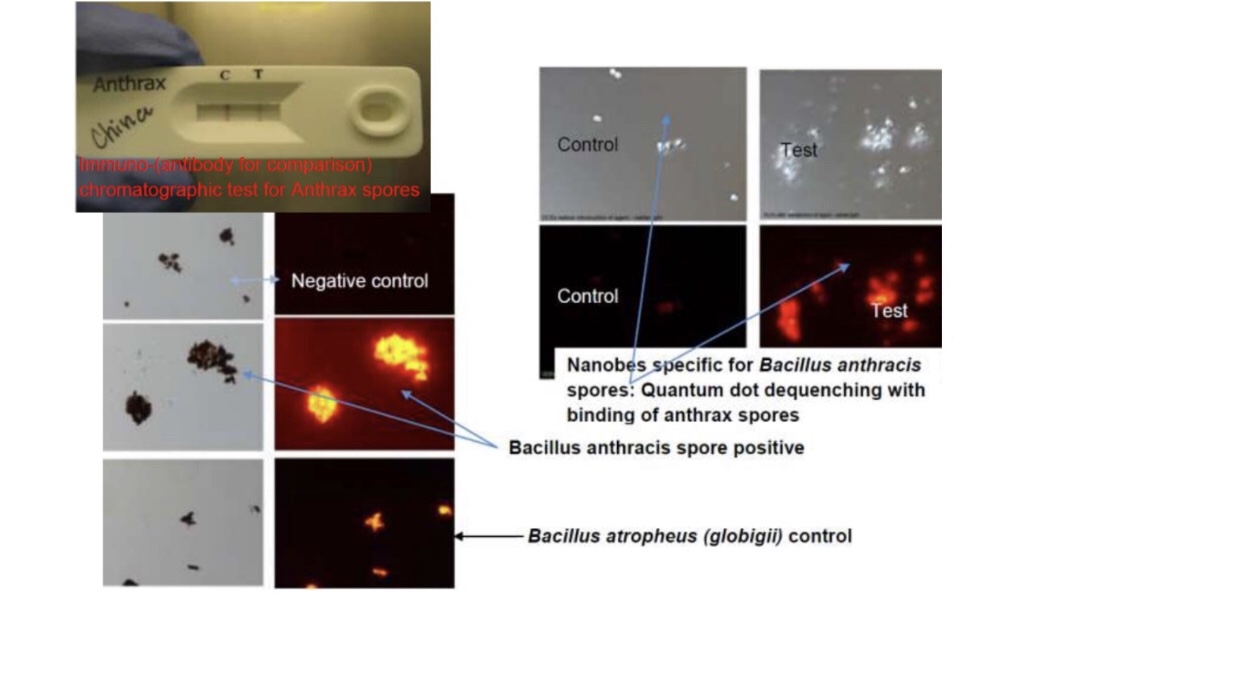
These pictures show the near instantaneous fluorescent detection of anthrax spores by nanoparticle-aptamer-fluorescent dequenching compared to a field immunochromatographic lateral flow “home test”.
As illustrated above, the detecting and identifying nanoparticles can be translated into biological agent killing particles for the environment: in the air or on surfaces, or if bound to biocompatible, non-toxic particles such as biosynthetic DALM or polymer made from the amino acid aminotyrosine, can be used inside the infected host, even self-administered by inhalation. They could even be used to genetically transform the biological pathogens into agents more vulnerable to other antibiotics and antimicrobials.

In conclusion, we now face a global pandemic and an assault on the USA, which if it were a strategic intentional biological warfare attack would have achieved its military objectives of mass casualties, overwhelming the medical and public health systems, economic damage (industrial capacity to wage war), causing panic, chaos, and internal strife, and compromised military readiness. For the sake of other priorities, we neglected our preparedness and abandoned our technological edge and advantage. The result 13,383,370 cases and 276,235 deaths in US of COVID as of this posting.

Why a Viral Protein is Critical to Human Fetal Development: Syncytin I is Not a Cause of Concern for Autoimmunity or Sterility from a SARS-CoV-2 Vaccine: Twisting the Truth: Still Raising its Ugly Head

I have found it necessary to re-post this post. The only way vaccines have affected reproduction is when live attenuated vaccines are given to pregnant hosts, infect the fetus and cause defects or abortion—the mRNA vaccines in particular are not of this class and even the aforementioned effects do not result in sterility and should not be confused with it.

A recent popular article has suggested, that because the SARS-CoV-2 spike (fusion) protein has a homologous polypeptide to Syncytin 1, a protein that forms the syncytium of cells by fusion binding the fetus to the uterus through the placenta, the vaccines against the spike protein would develop antibodies against the placenta and cause sterility, but the data does not support this https://edwardnirenberg.medium.com/are-covid-19-vaccines-going-to-cause-infertility-939bbdb62b64. The fusogen proteins that allow enveloped viruses to fuse with their target host cells are related but not necessarily identical to the placenta protein. In fact, Syncytin 1 and 2 were originally viral proteins and are necessary to the development of placentas in mammals. This was accomplished by infection with a Type D retrovirus which became integrated into the mammalian and human genomes. HERVW genome integrated into its host’s germ-line around 63 million years ago, spread into Old and New World monkeys and then evolved independently. The viral genes were incorporated into the germ cells and, therefore, for all subsequent generations. This endogenous retrovirus, HERV-W, is the source of Syncytin I. The env gene from HERV-W produced a functional class I fusion protein capable of merging cells into a syncytium. Such syncytia are at the placental interface between the embryo and mother; preferential expression of HERV-W occurs in embryo cells that become part of the placental interface. This virally derived fusion protein is syncytin, later called syncytin-1; a second such protein from HERV-FRD, is called syncytin-2.

“These ubiquitous endogenous retroviruses are permanently transmitted in germ cell genomes and almost all have lost their ability to replicate outside of their genome-integrated DNA and to infect other cells horizontally as complete infectious virions. They are associated with resistance to other exogenous retroviruses, the process of xenotropism, and with placental development in mammals. Endogenous beta retroviruses (enJSRVs) are present in the genomes of sheep and goats. The enJSRVs are highly related to Jaagsiekte Sheep Retrovirus (JSRV) and the Enzootic Nasal Tumor Virus (ENTV), which cause naturally occurring carcinomas of the respiratory tract of sheep. The enJSRV blocks exogenous JSRV replication by a novel two-step interference mechanism acting both early and late during the virus replication cycle. The only retrovirus sequences that have been added to the human genome since humans became a separate species from their common primate ancestor are members of the Human Mouse Mammary Tumor Virus-like 2 (HML-2) group of the beta retrovirus-like viruses. This human endogenous retrovirus is HERV-K whose elements are integrated in all extant human genomes”— The Black Dragon Trilogy by JOHNATHAN KIEL
https://a.co/8OGjRRc

Mammals and humans have become immunotolerant to these viral placental proteins. Although it is possible for there to be cross reactivity between microbial antigens and self, the evolutionary adaptation to this essential viral appropriated protein has minimized the likelihood of this type of autoimmunity. Fusogenic proteins are so pervasive in enveloped viruses, that if this kind of autoimmunity were likely, we would see sterility with many types of viral infection and their developed vaccines. Normal births have occurred and been reported from SARS-CoV-2 infected mothers. Example viruses producing fusogens, including viral class I fusogens, are major human pathogens, including influenza A, Lassa virus, SARS-CoV, Ebola, human parainfluenza virus-3, HIV-1, and human T-lymphotropic virus-1. Class II fusogens come from Dengue fever virus, West Nile virus, Zika virus, and tick-borne encephalitis virus https://www.cell.com/current-biology/pdf/S0960-9822(20)30668-0.pdf. When viruses such as rubella and Zika cause birth defects it is because of the wild viral infection not autoimmunity to a host antigen https://www.ncbi.nlm.nih.gov/books/NBK507879/ and https://www.ncbi.nlm.nih.gov/pmc/articles/PMC6140214/. Therefore, this extrapolation and extension of a evolutionary relationship between host and ancient viruses have not led to sterility but rather advanced fetal development.

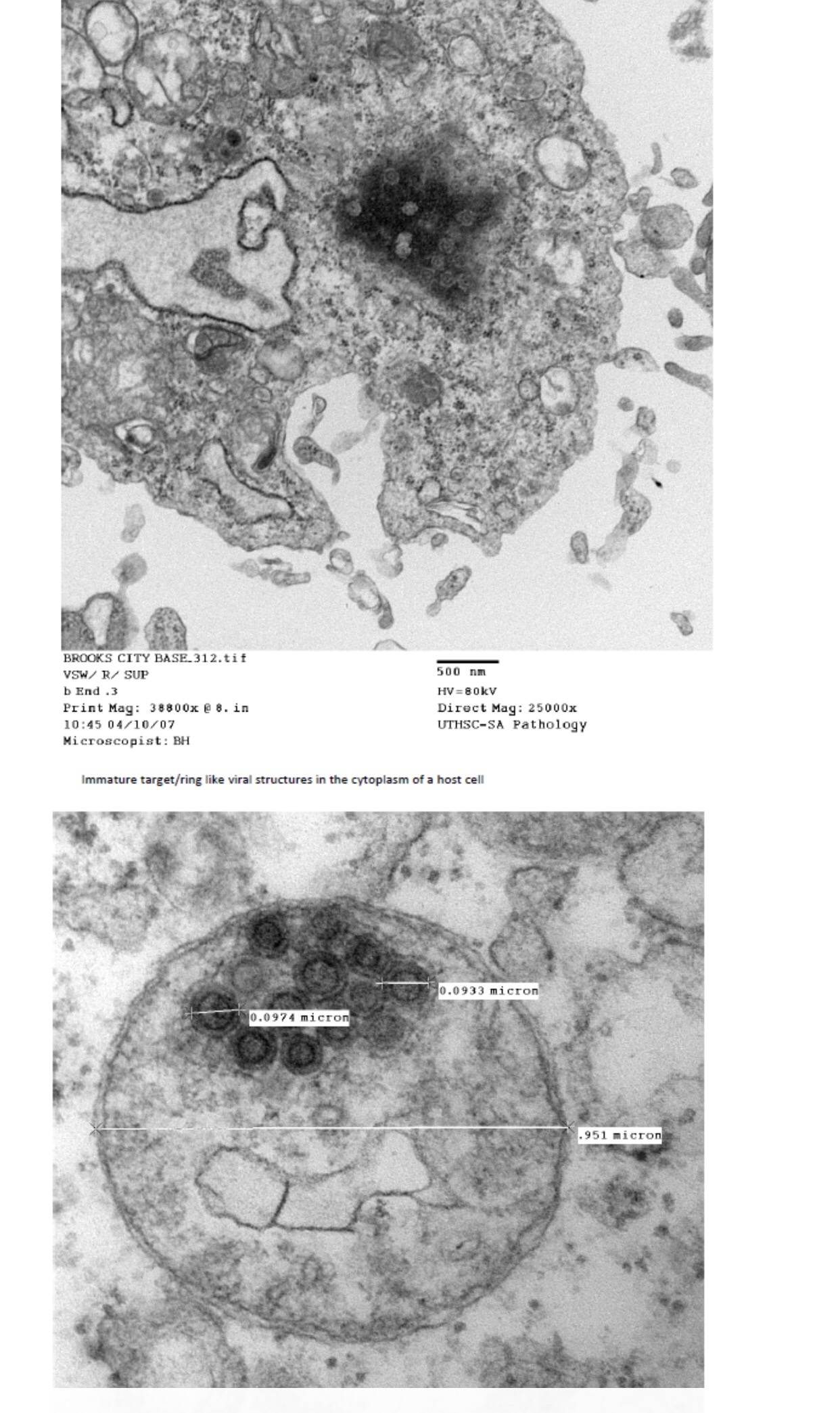
The electron micrographs that show stunted viral development of the Viper Plague Virus, a Type D retrovirus from West Africa, which is blocked by endogenous retroviruses (HERV-K and human mouse mammary tumor virus-like 2 (HML-2) group) in mice and humans—some good viruses

Perhaps the most remarkable interaction of endogenous retrovirus is with HIV (Human Immunodeficiency Virus):

“Recently, it has been shown that the expression of HERV-K proteins suppresses HIV replication, perhaps through tuftsin, an inflammatory macrophage cytokine. Decline in tuftsin and increased expression of HERV-K is associated with advancing AIDS. Activation of HERV-K expression has correlated with the level of HIV-1 production. Studies of autoimmune neurological demyelinating disease (experimental autoimmune encephalomyelitis (EAE)) in rodents indicates that tuftsin administration upregulates immunosuppressive Helper-2 T cell (Th2) cytokine transcription factor and that tuftsin-mediated microglial cell activation results in shifting microglia to an anti-inflammatory phenotype. In return, the T cell phenotype is shifted towards immunoprotection after exposure to tuftsin-treated activated microglia, that is, downregulation of pro-inflammatory Th1 responses triggered in conjunction with upregulation of Th2-specific responses and expansion of immunosuppressive regulatory T cell clones. Macrophages with activated HERV-K expression were more resistant to HIV infection, perhaps in part by its Gag protein being expressed and interfering with the assembly of the HIV virions, and cells expressing HERV-K and infected with HIV were more susceptible to destruction by cellular immunity. Infection of CD4 + T cells with HIV-1 was shown to result in transcription of the HML-2 lineage of HERV-K [HERV-K( HML-2)] and to express the Gag and Env proteins of this virus. HERV-K( HML-2)–specific CD8 + T cells obtained from HIV-1–infected human subjects responded to HIV-1–infected cells in a Viral infectivity factor (Vif)-dependent manner in vitro. HERV-K( HML-2)–specific CD8 + T cells (cytotoxic T cells) eliminated cells infected with globally diverse HIV-1, HIV-2, and SIV isolates in vitro. A second T cell response that exhibited cross-reactivity between homologous HIV-1-Pol and HERV-K( HML-2)-Pol has raised the possibility that similarities between HIV-1 and HERV-K play a role in forming, triggering, and perhaps enhancing, the T cell response to HIV-1. There is even some suspicion, because of the association with HERV-K expression with certain tumor cell lines, that its expression can lead to cancer triggered by HIV infection as was perhaps my brother’s brain lymphosarcoma. HERV-K is both protective, initially through triggering the innate immune system and later specific T cell cytotoxicity, and detrimental by perhaps triggering the formation of cancer. The dilemma with HERV-K and the human immune system is that the initial innate response producing reactive oxygen species could protect against both HERV-K and HIV, simultaneously, but the switch to the inadequate nitric oxide response in human macrophages encourages the replication and release of HIV to infect other recruited and susceptibly activated macrophages to carry the HIV to lymphoid tissue. Evolutionarily, HERV-K’s advantages have outweighed its disadvantages and has led to resistance to such coming plagues as that could result from Viper Plague Virus, at least for now.”— The Black Dragon Trilogy by JOHNATHAN KIEL
https://a.co/57tGvuL

Last Two Most Important Achievements of the Brooks Counterproliferation Team and BioAnalysis Consulting LLC

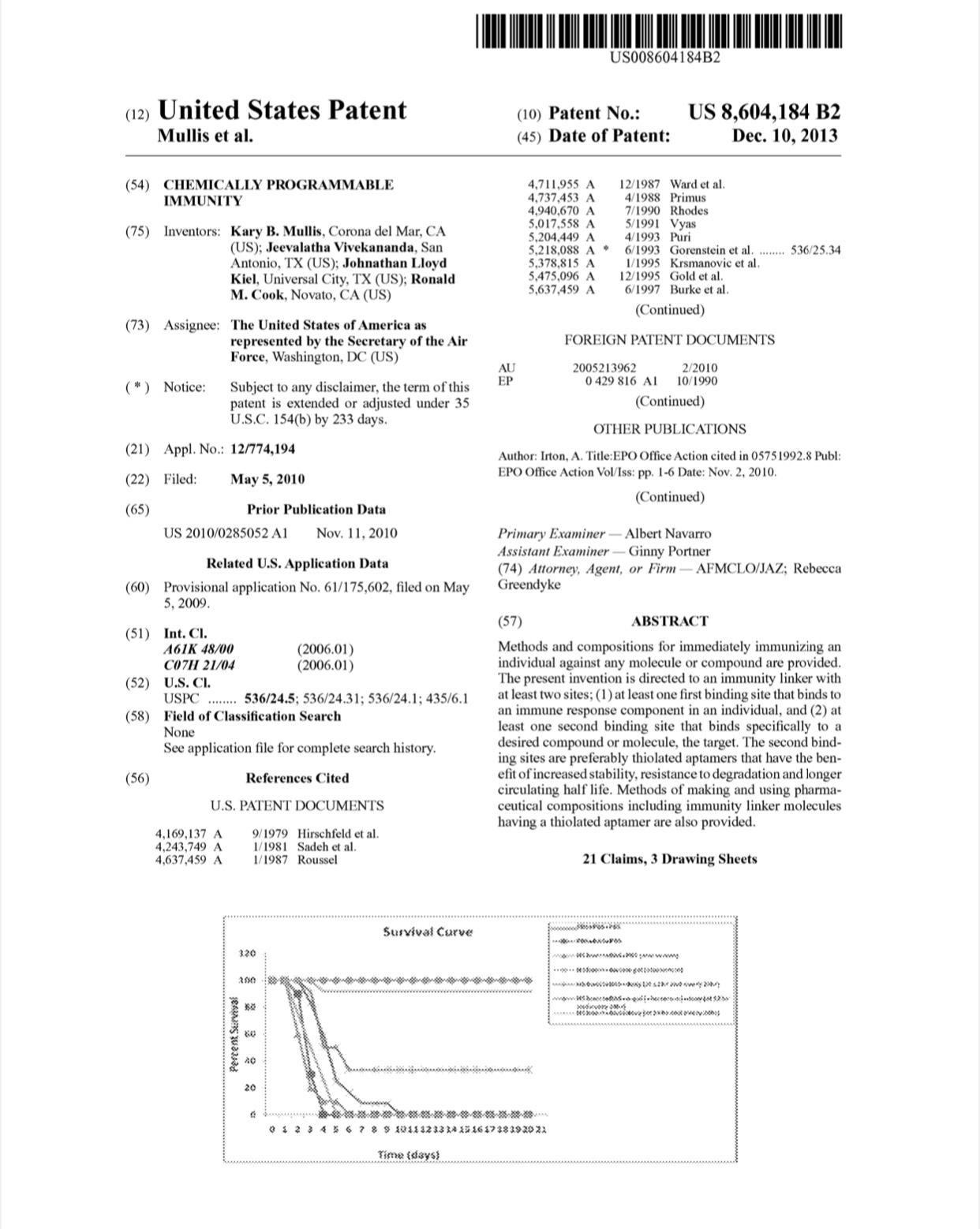
Chemically Programmable Immunity using prior vaccine immunization against new pathogens
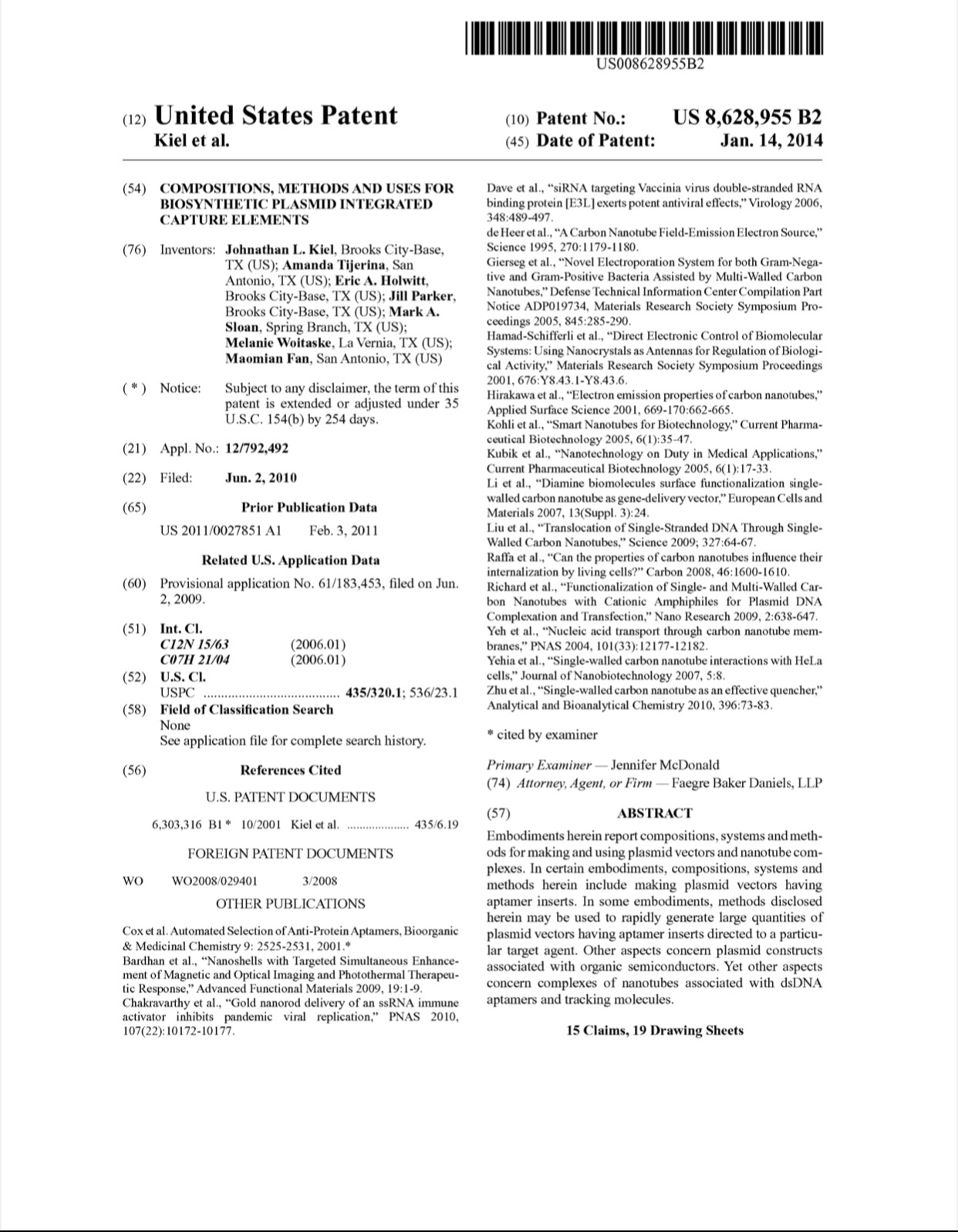
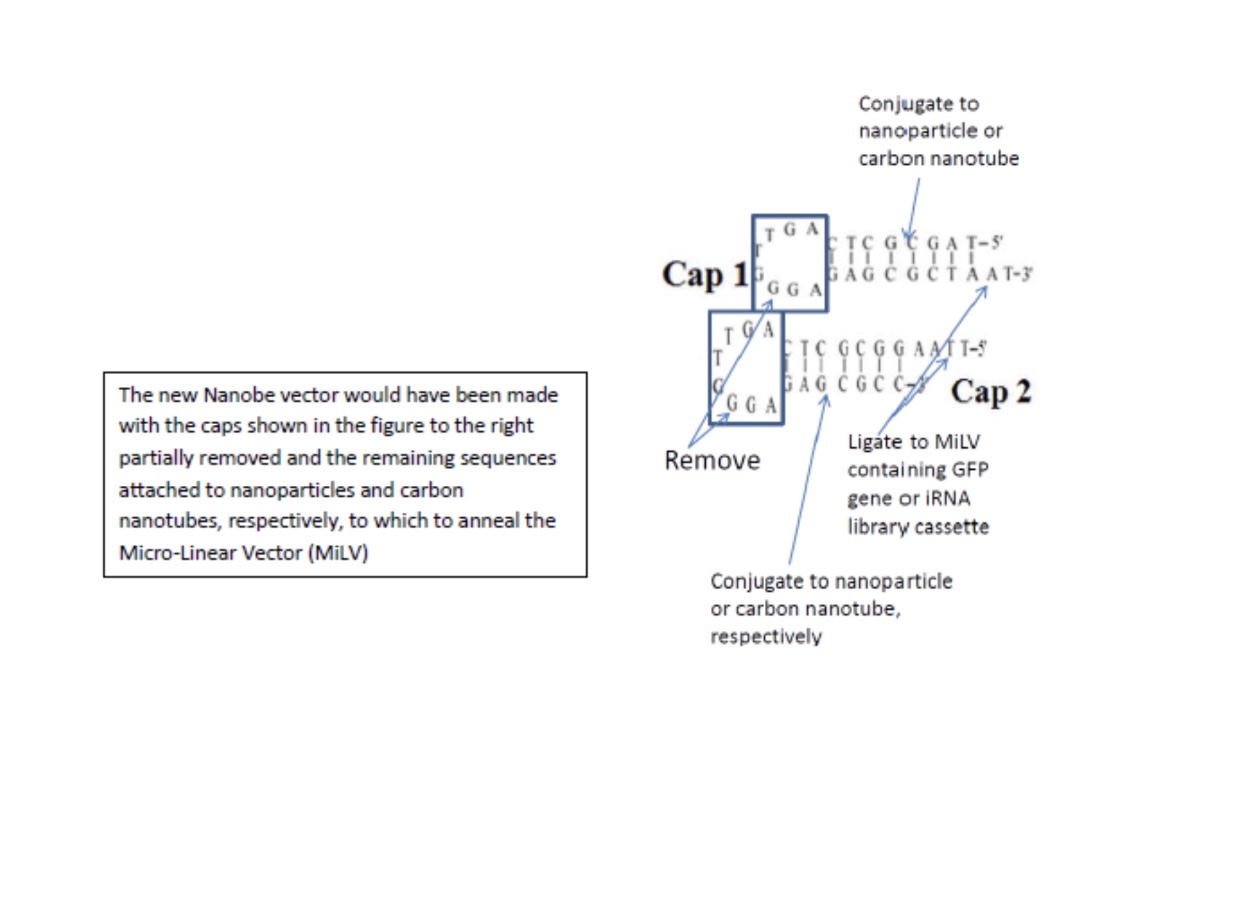
Using synthetic nanostructure vectors to replace viruses for delivering plasmids, genes and nucleic acid vaccines
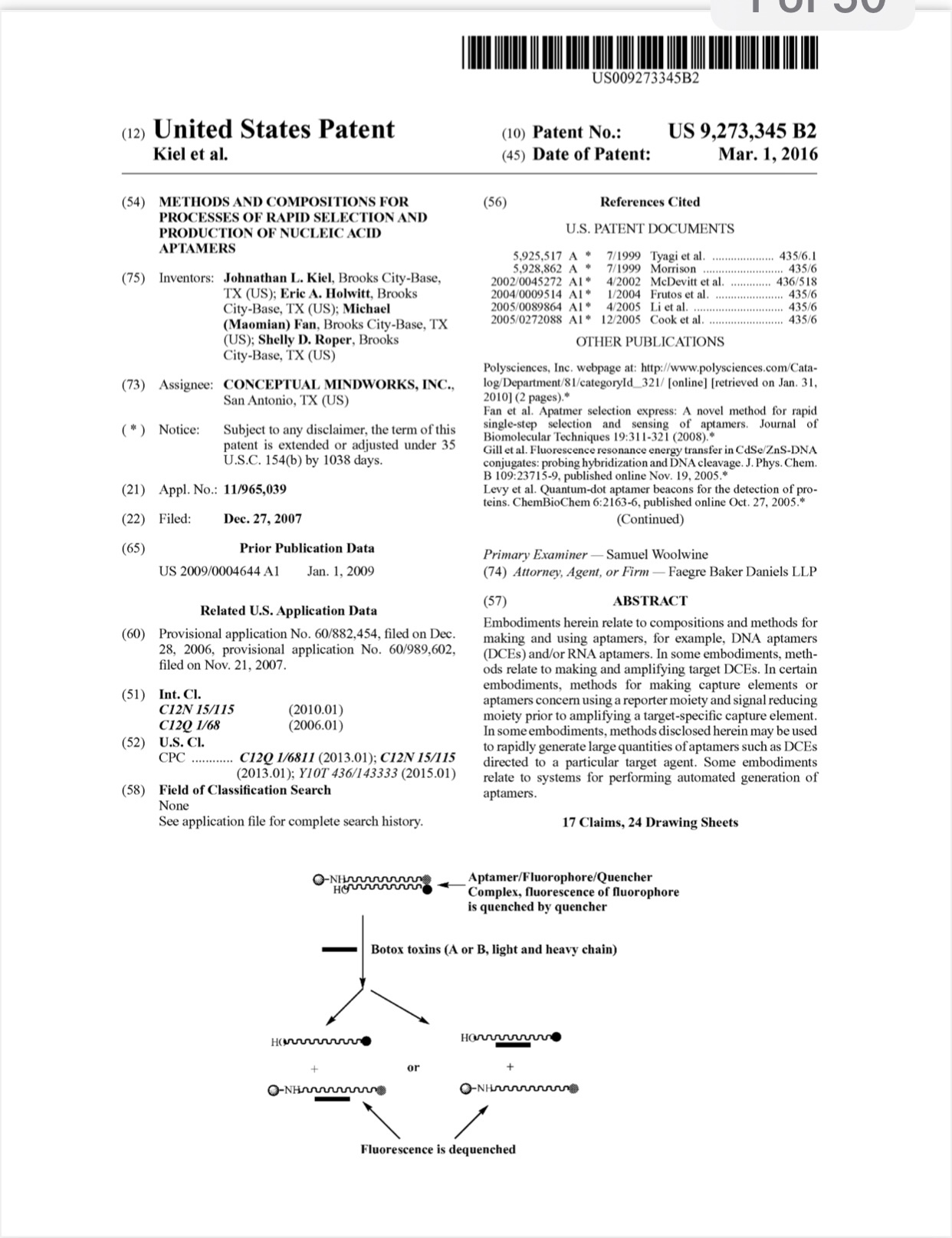
Last patent of last method to facilitate selection of synthetic nucleic acids for the vector system described in the previous patent

What Happens when Professional Independence is Ended in the Federal Civil Service and Senior Executive Service (Senior Scientists): Political Interference Destroys Effectiveness of National Defense: “Remembering the Titans”

Further damage to global biosurveillance participation of US agencies and other essential Federal government services is likely to occur if Schedule F, created by an executive order last month, an administrative overhaul of the competitive Civil Service, is allowed to proceed. It makes senior agency positions, policymaking positions, scientific and evidence-gathering personnel and other key professional positions subject to new hiring and termination rules which eliminate Civil Service rules that protect these jobs from political influence, opening them up to performing contrary to facts, or professional or scientific principles. The order instructs agencies to submit a preliminary review of positions to the Office of Personnel Management and petition for reclassification on or before Jan. 19, 2021, one day before the presidential inauguration. https://1105direct.com/portal/wts/ucmcmQego0%7Cbb-yQbEmT%5Ec8vrO2-a.

However, this is not the first time political influence and unwarranted fear of professionals, based on politics, in the Federal Civil Service and Senior Executive Service, have led to damage to their effectiveness to defend this Nation. First, let us see what independence has yielded on behalf of National Defense and Security, within the laws and regulations of these United States, before we started to suspect those very people who lay down and risk their lives, without acknowledgement, for this country.

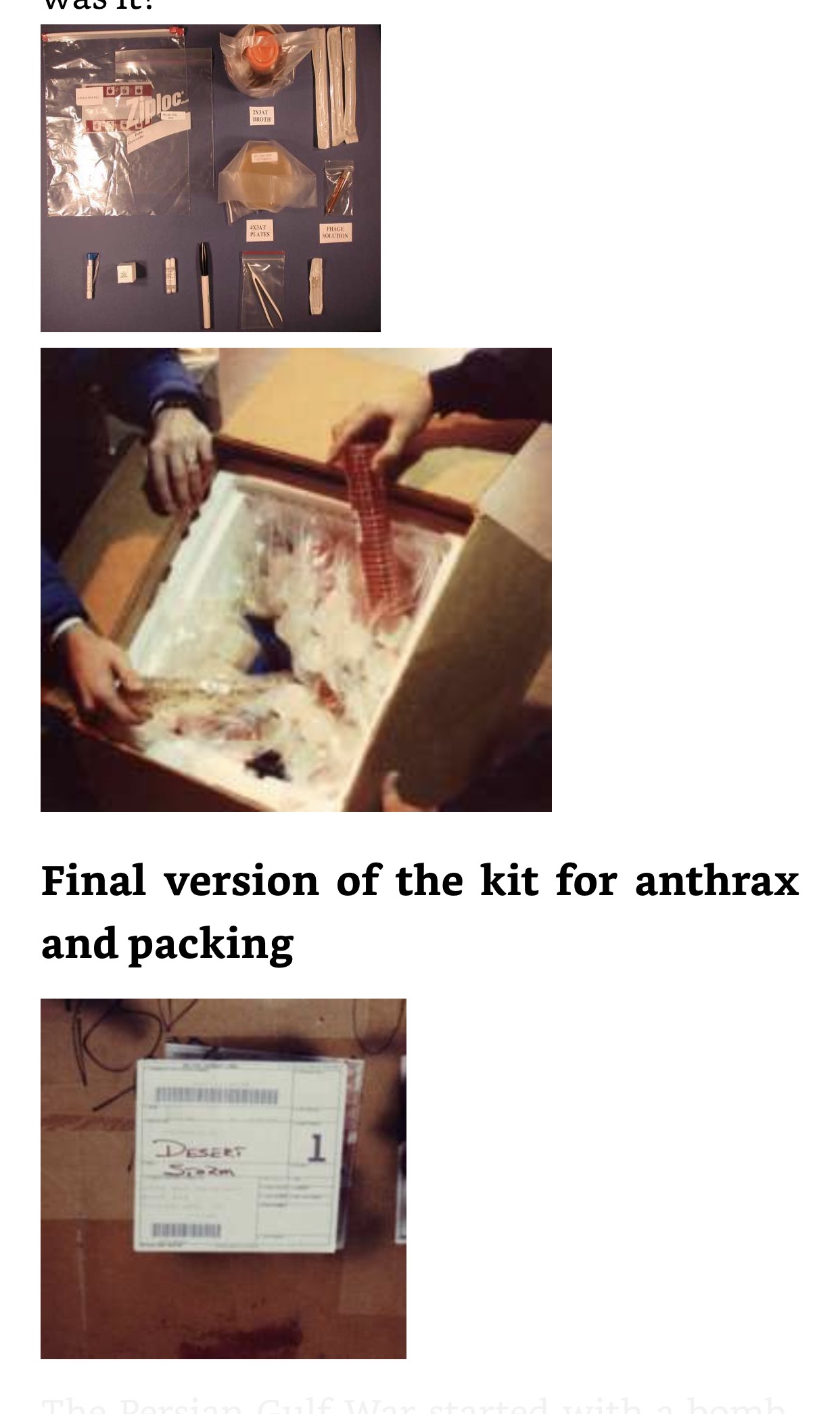
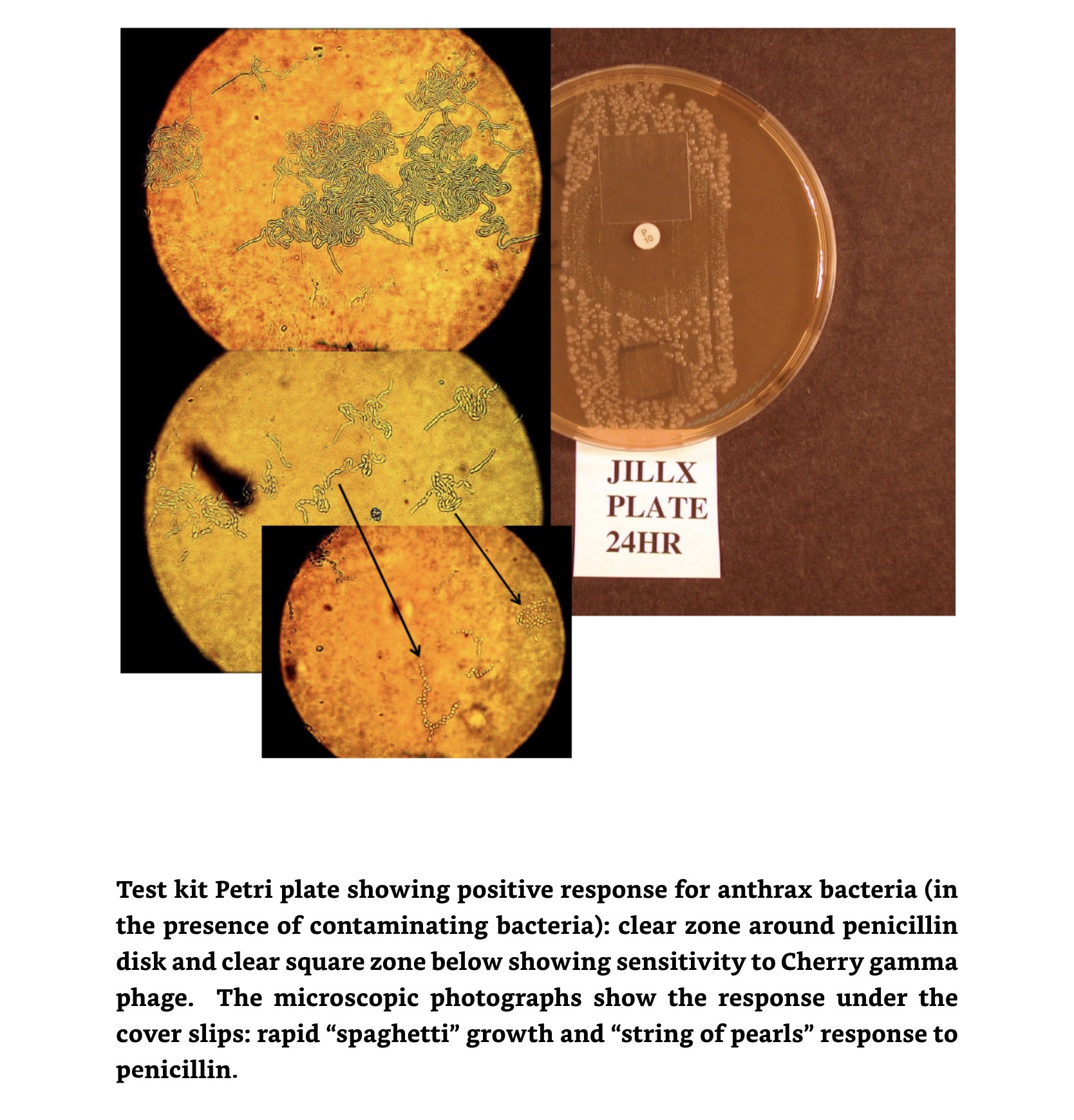
Showing how the anthrax spore viability kit tests worked
Entering Baghdad after first Iraqi War
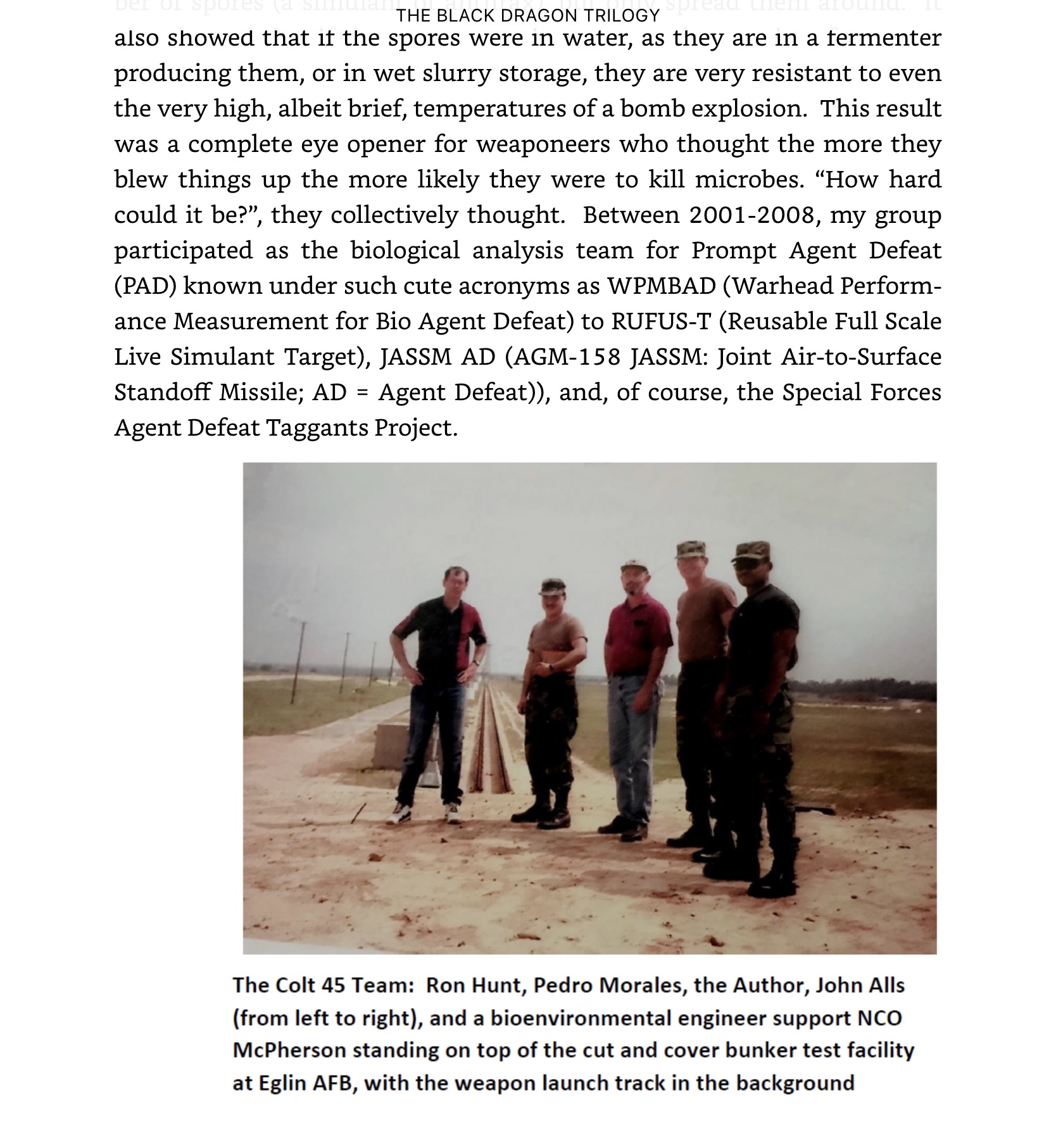
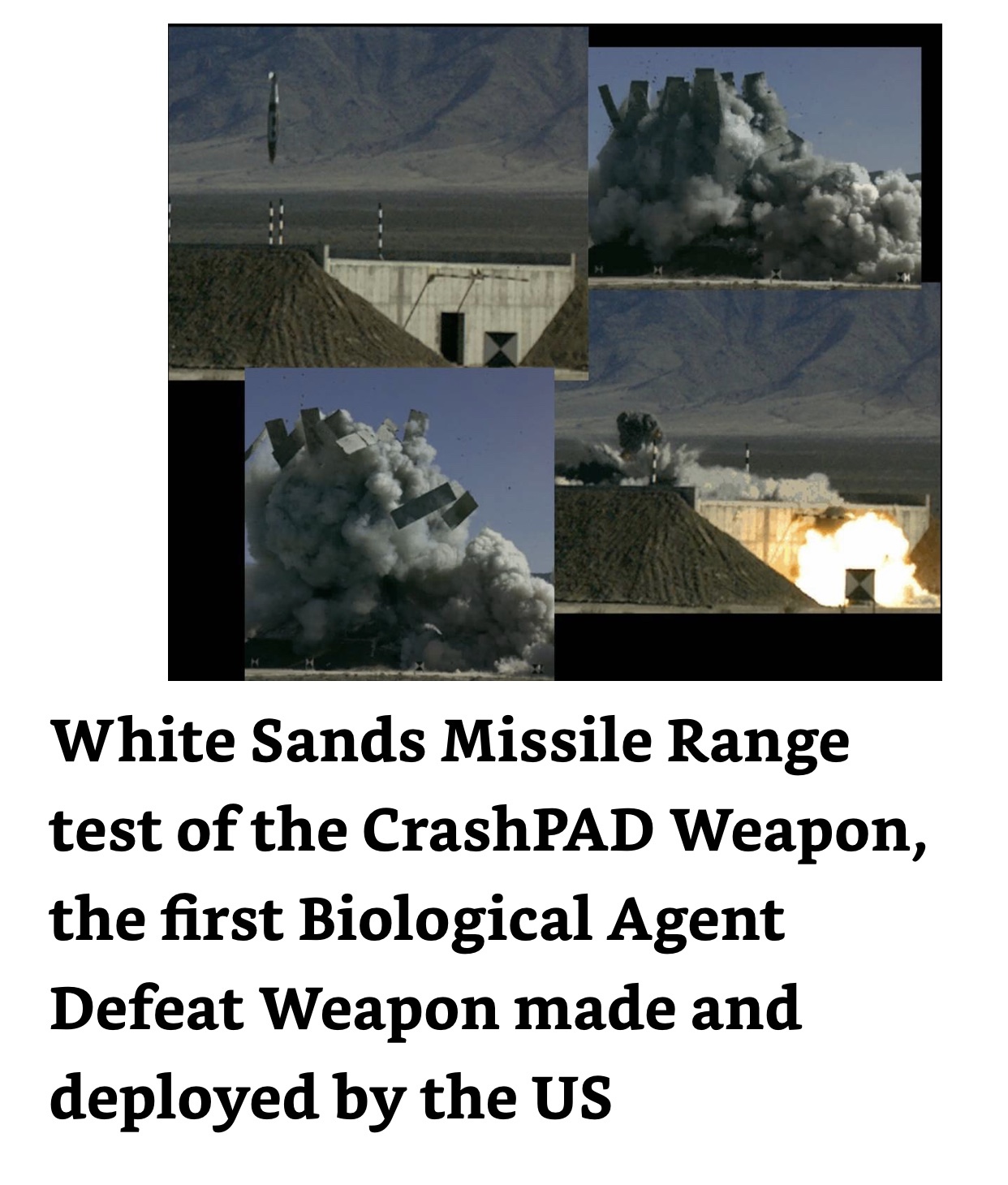
First test of a chem/bio defeat weapon in 1998
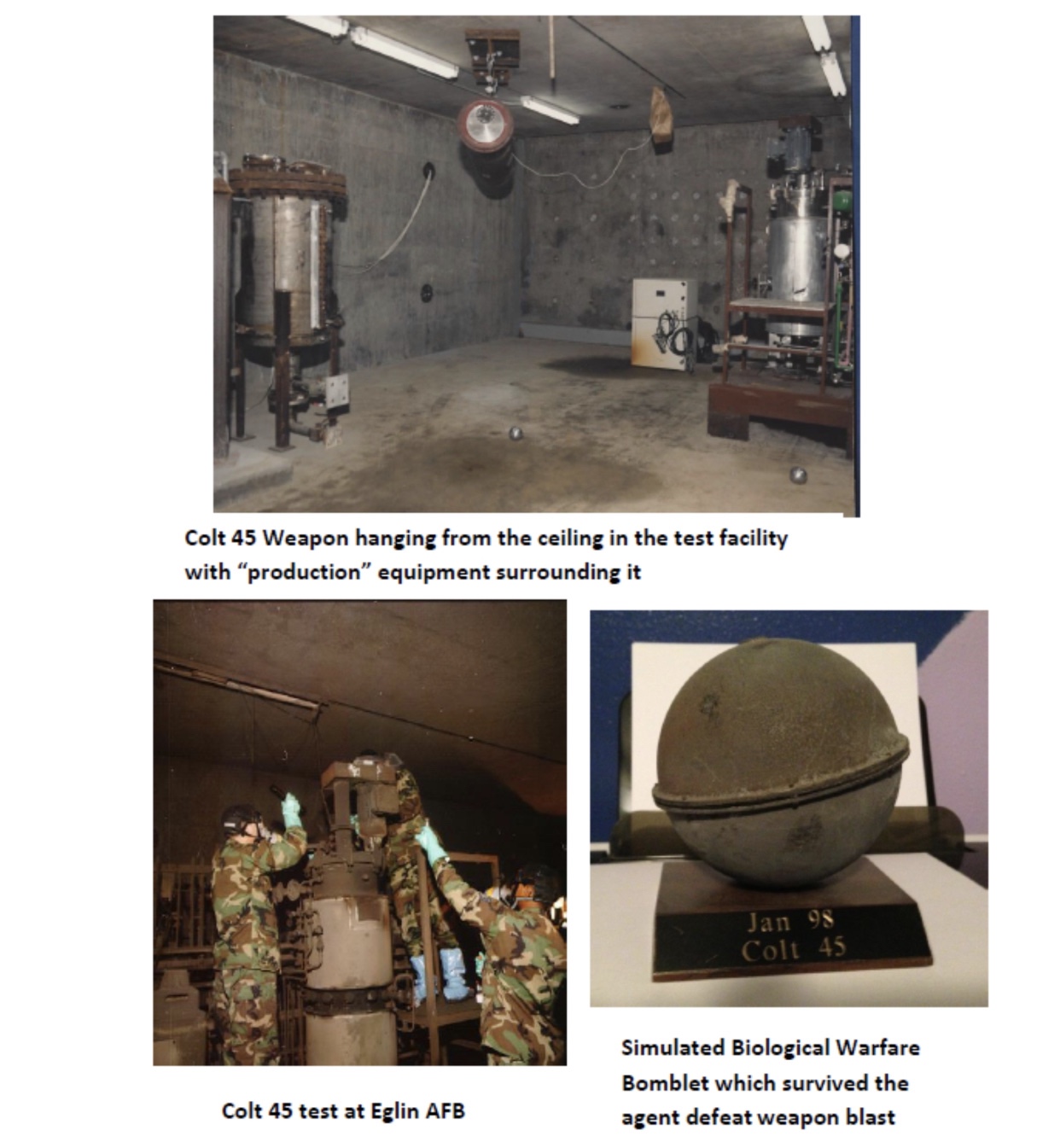
Before and after the agent defeat test, Colt 45, in 1998
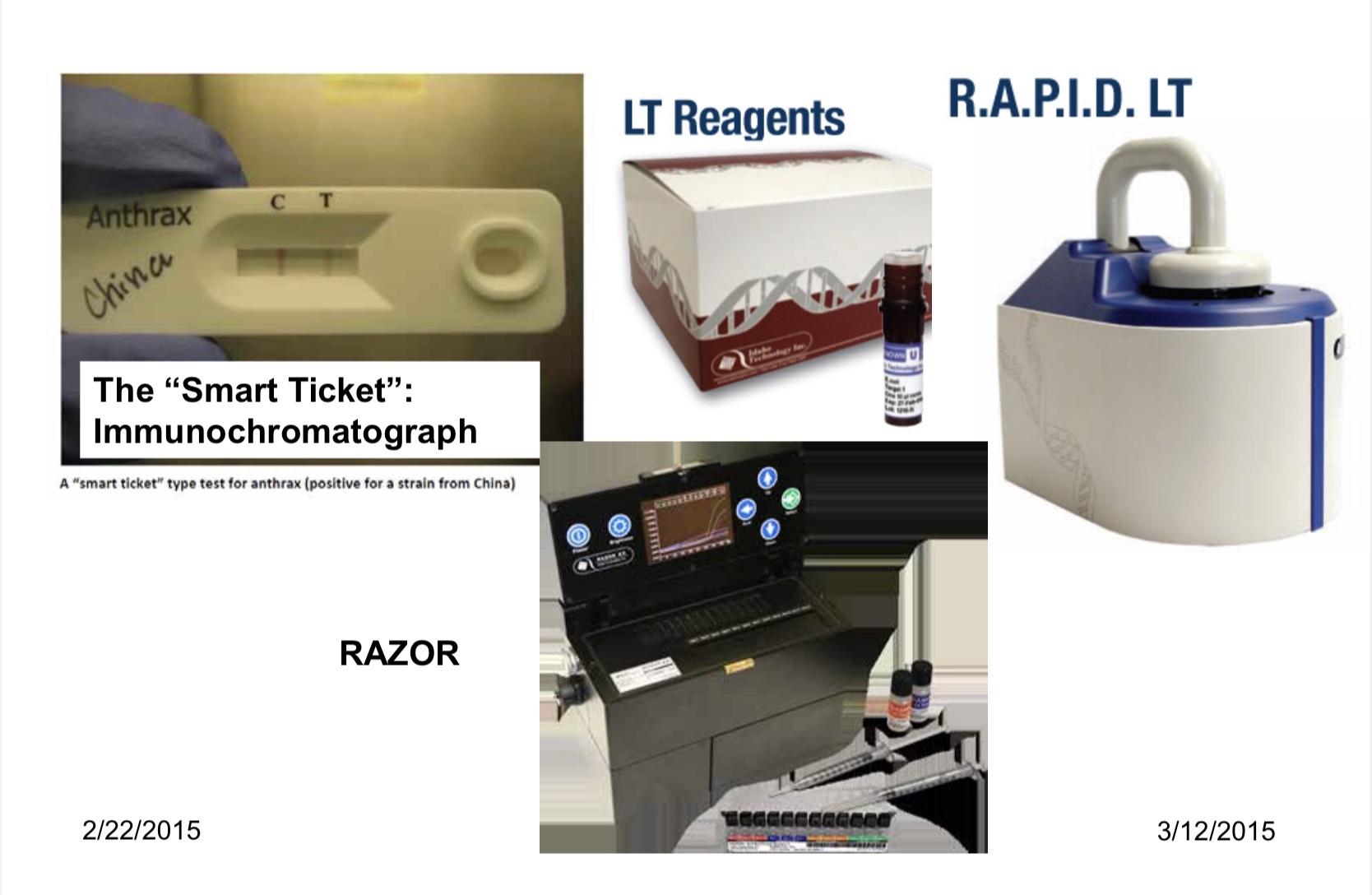
The Brooks CP Team helped evaluate these technologies, ruggedized the PCR RAPIDS device for identifying biological warfare and other infectious agents in the field in adverse field environments, and facilitated their fielding.
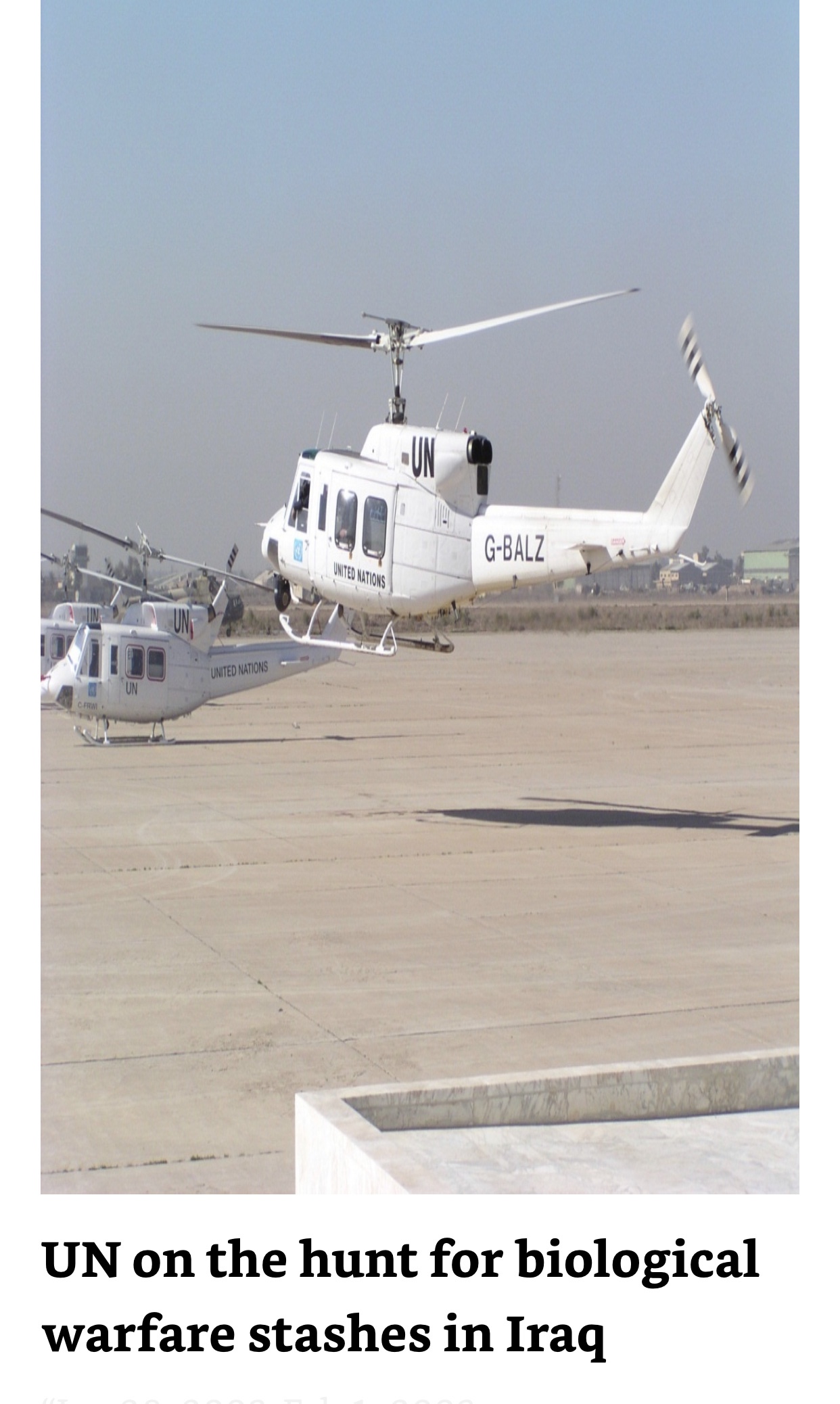
Our man was imbedded in the UN Teams
The Brooks CP Team in collaboration with the Army’s Dugway Proving Ground Team collected air and facility samples for biological surrogate assays to confirm the effectiveness of the weapon in destroying biological agent
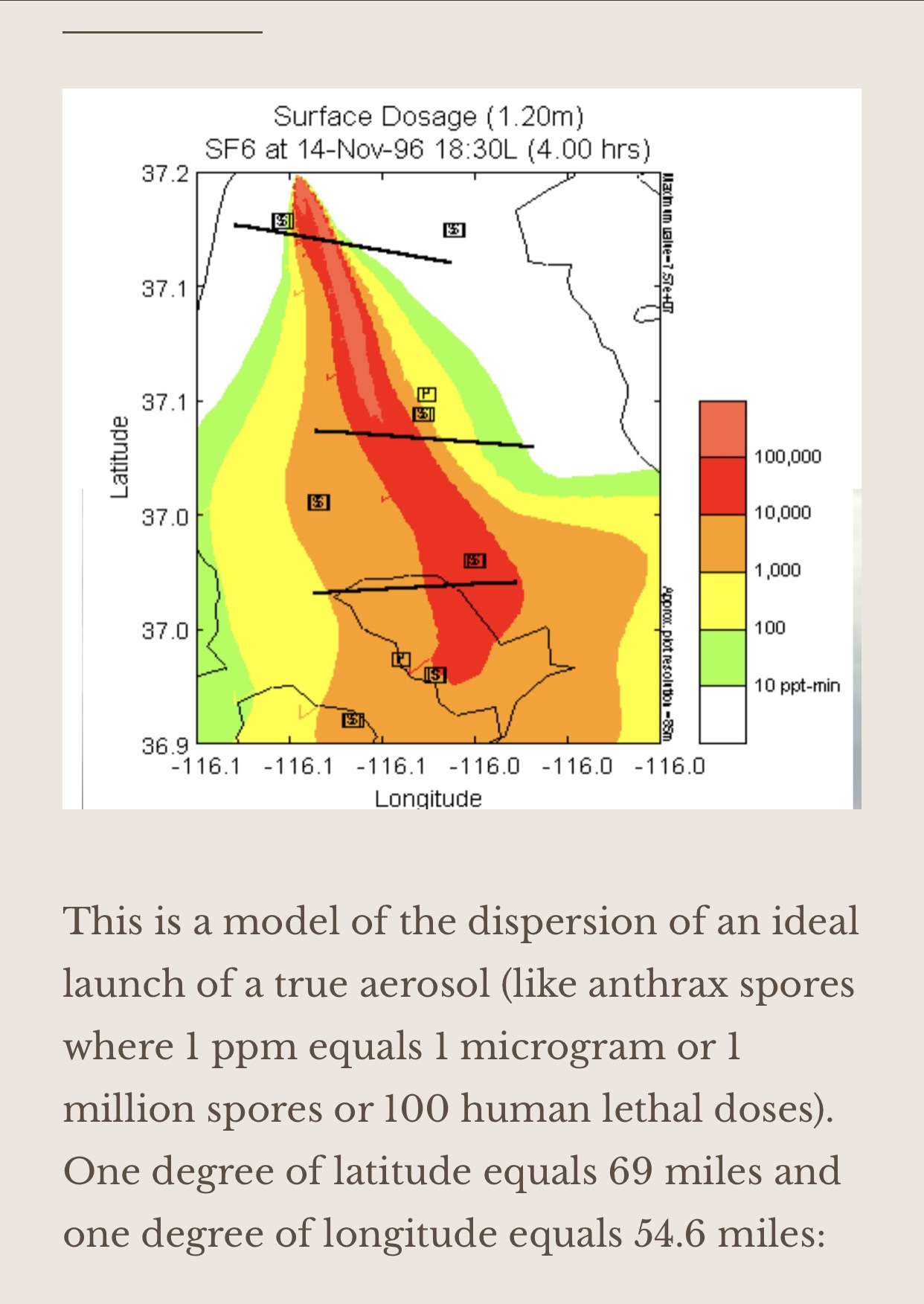
The Brooks CP Team tested such models by collecting samples in the field under comparable test conditions, using living non-pathogenic biological surrogates
Testing the decontamination of aircraft
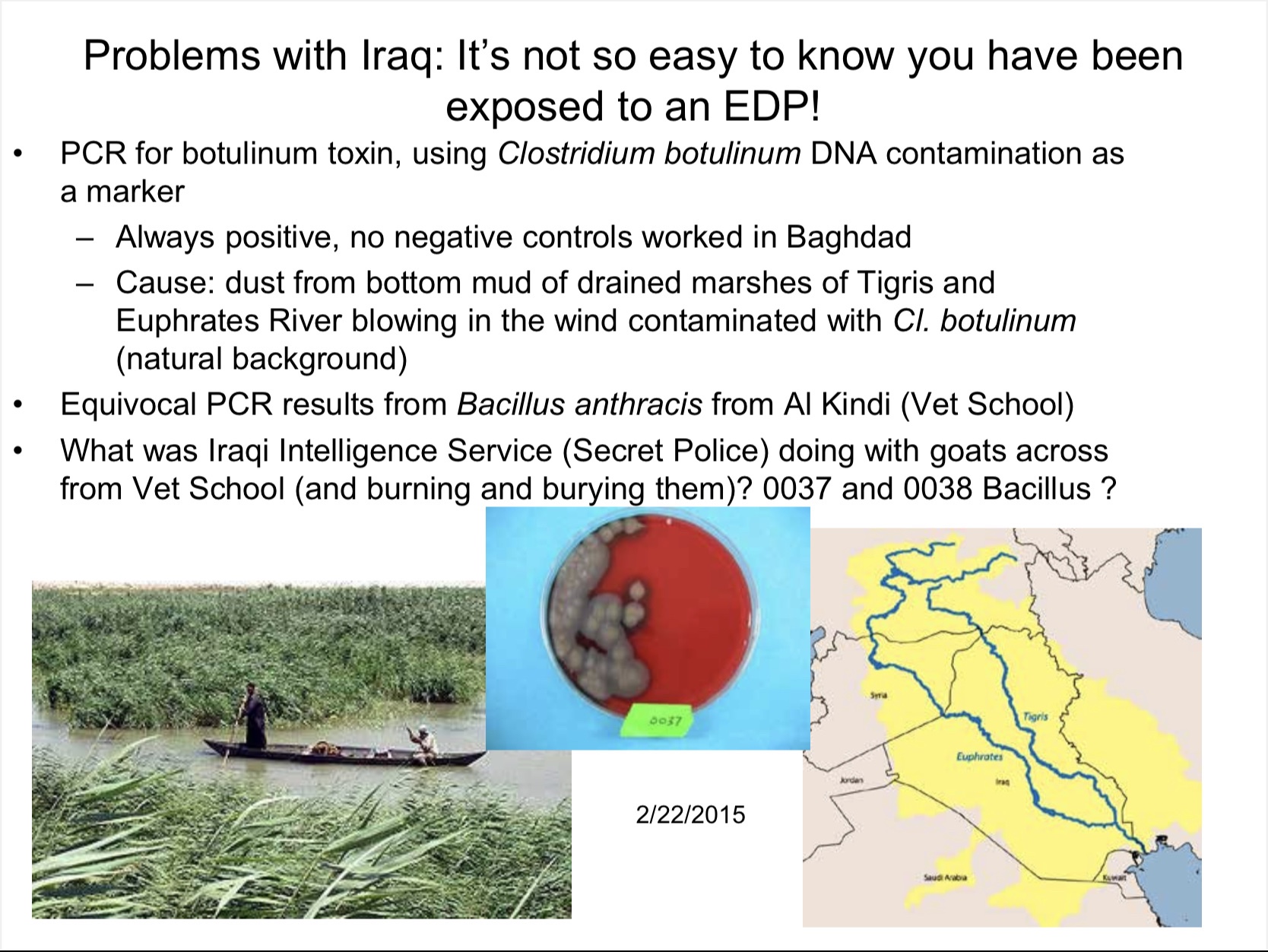
Difficulties in collecting and identifying samples of real agents in active and post war zones
Brought back by our imbedded team member
Preparing real agent for comparison testing to surrogate agent in aircraft decontamination experiments
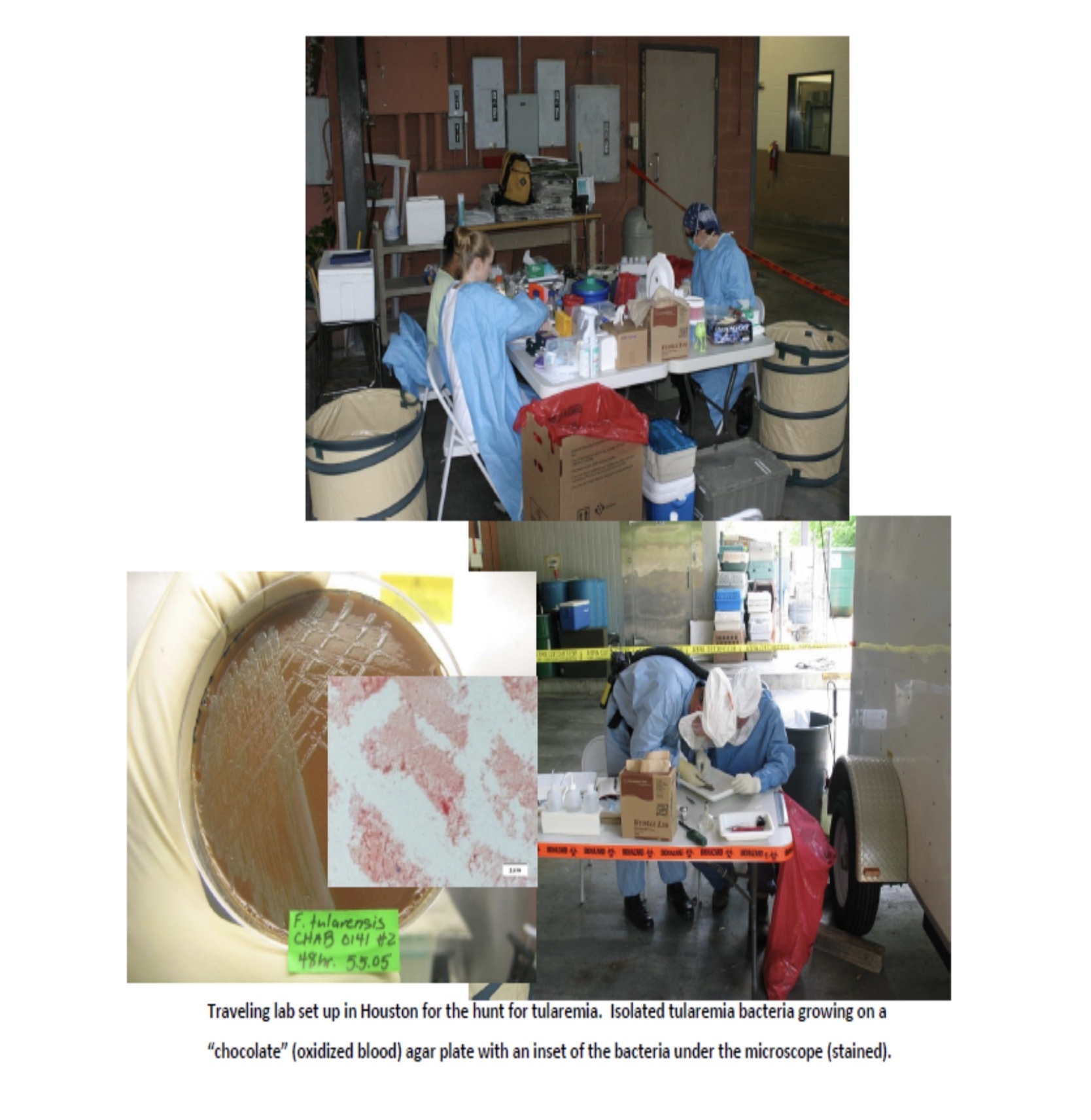
Mobile laboratory for collecting especially dangerous pathogens in the field—tularemia

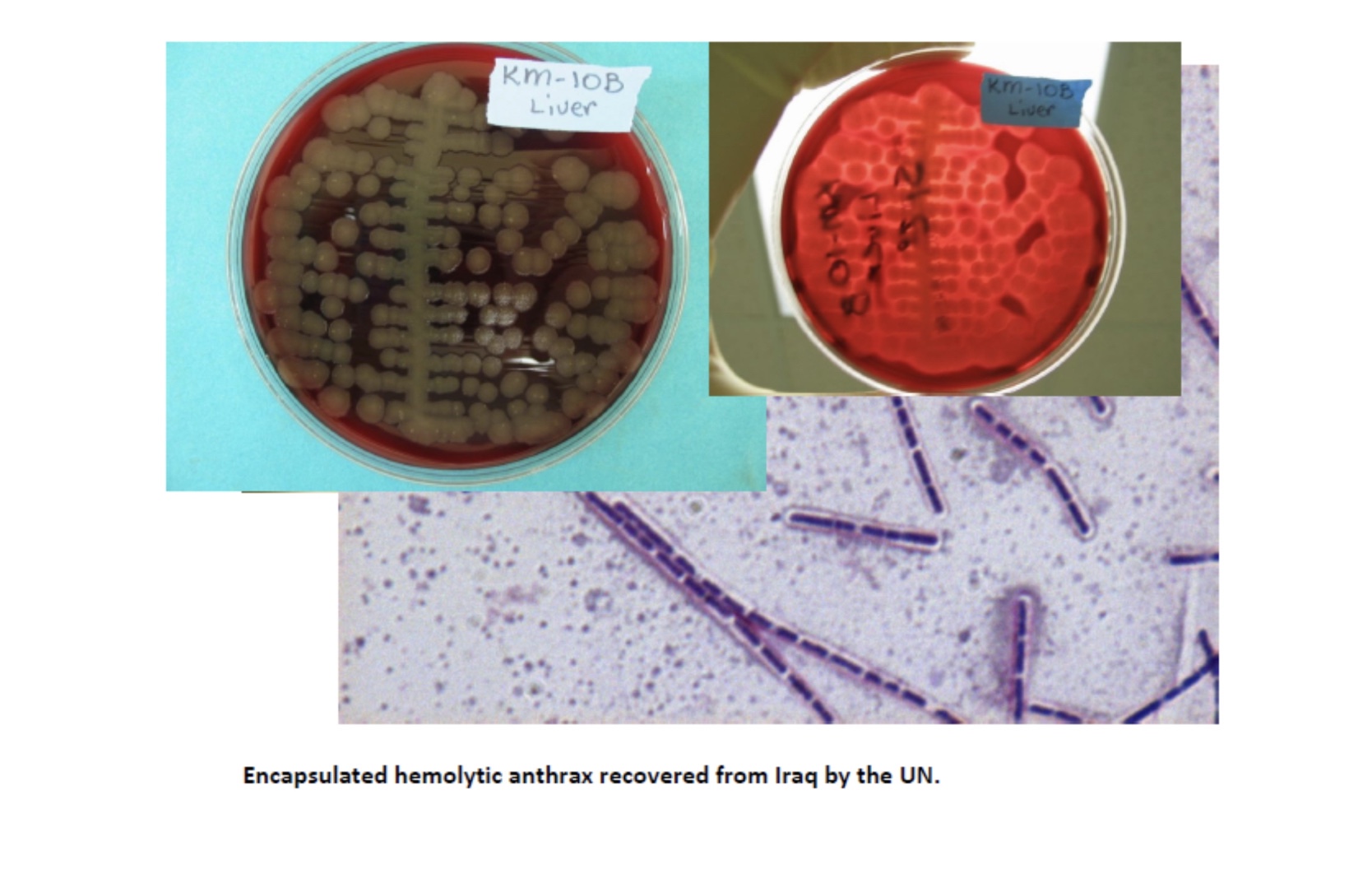
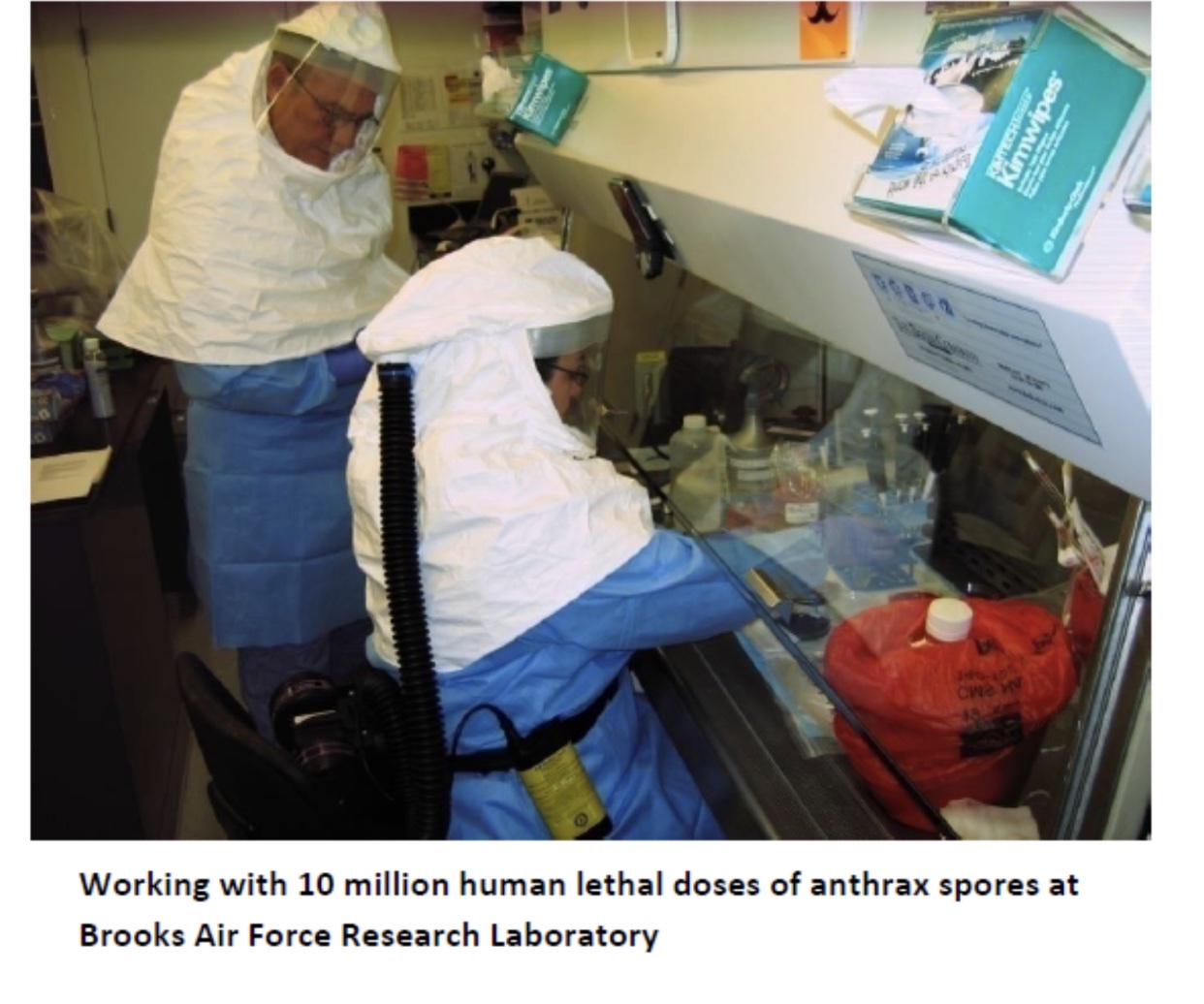
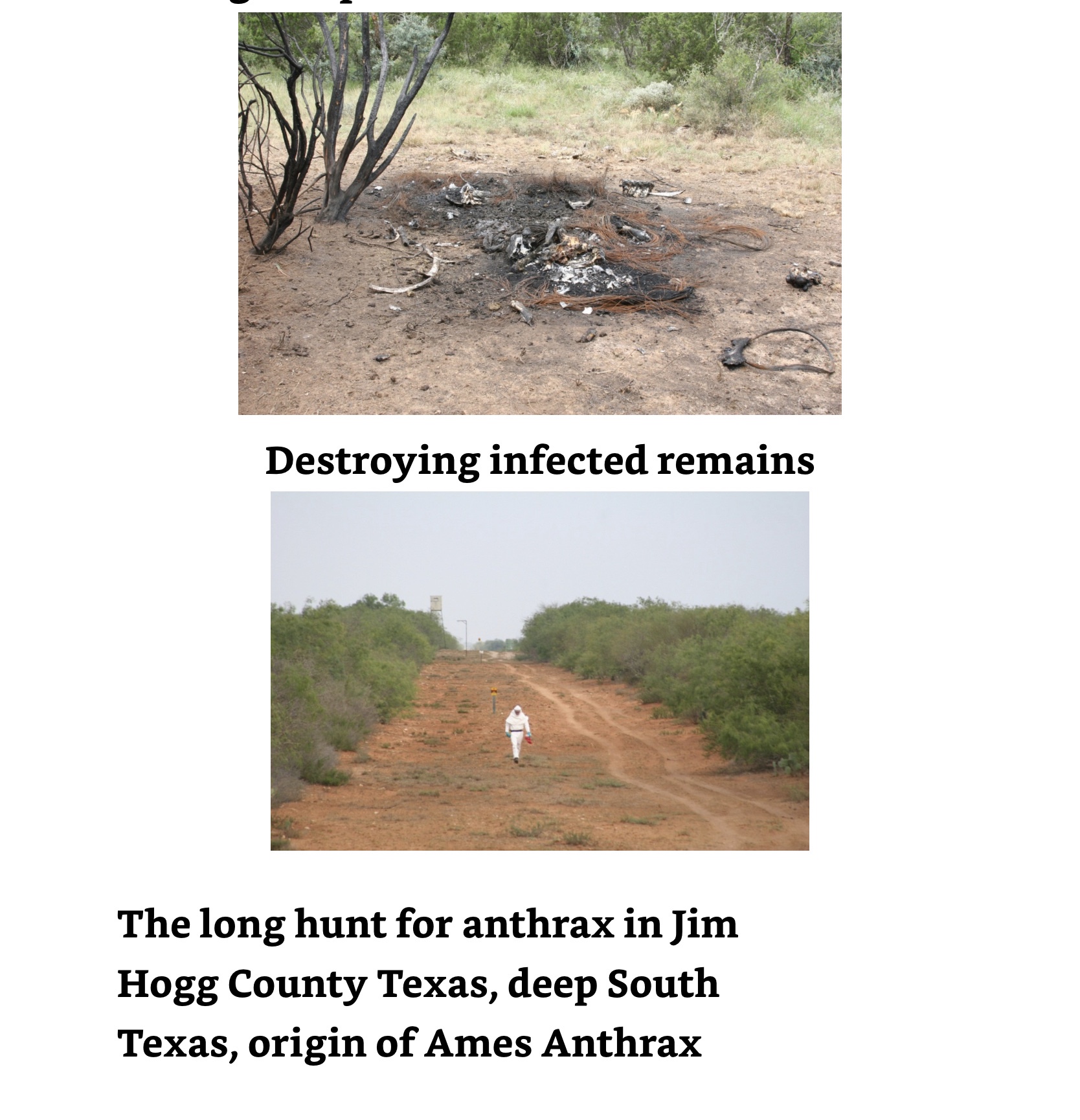
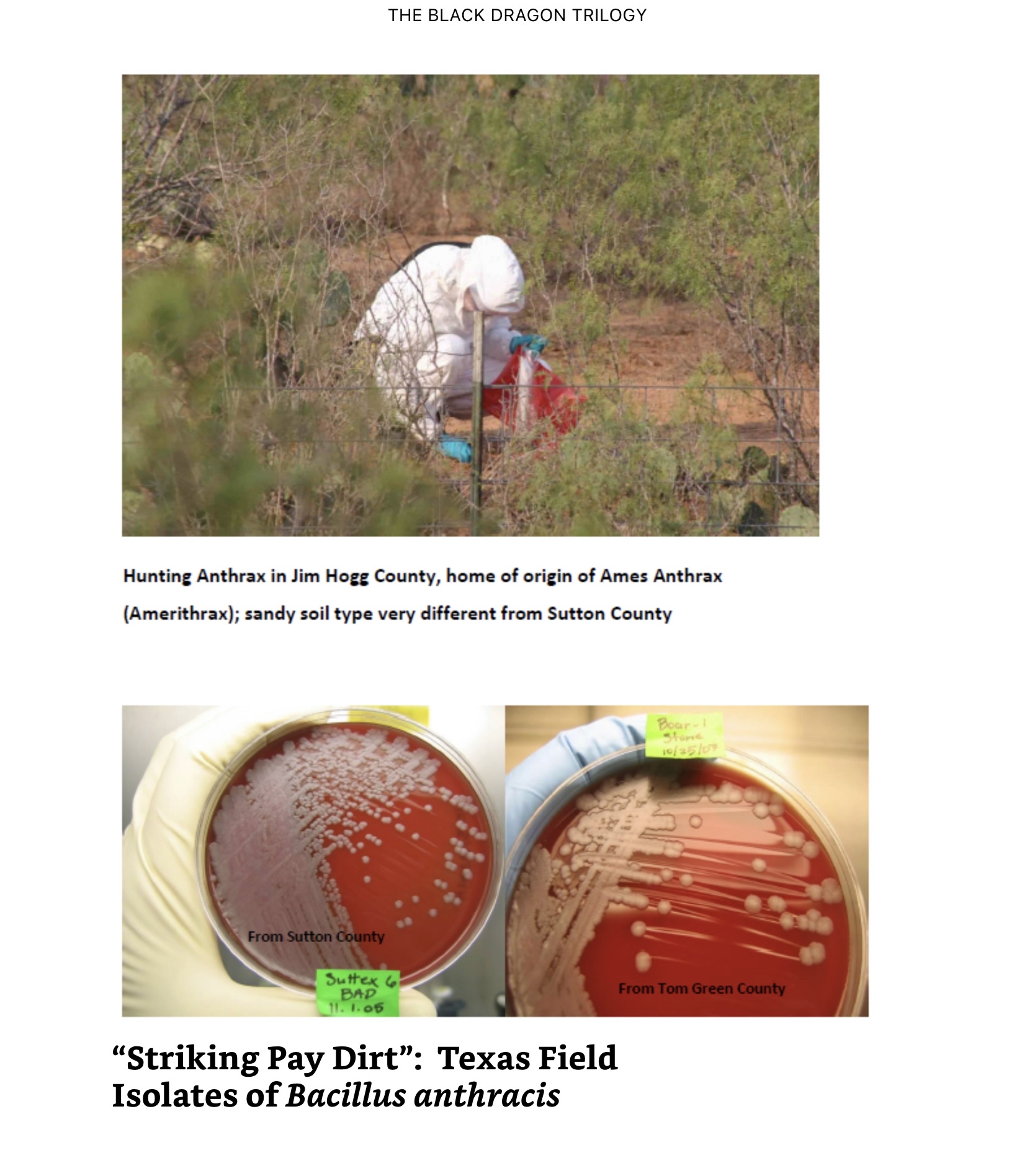
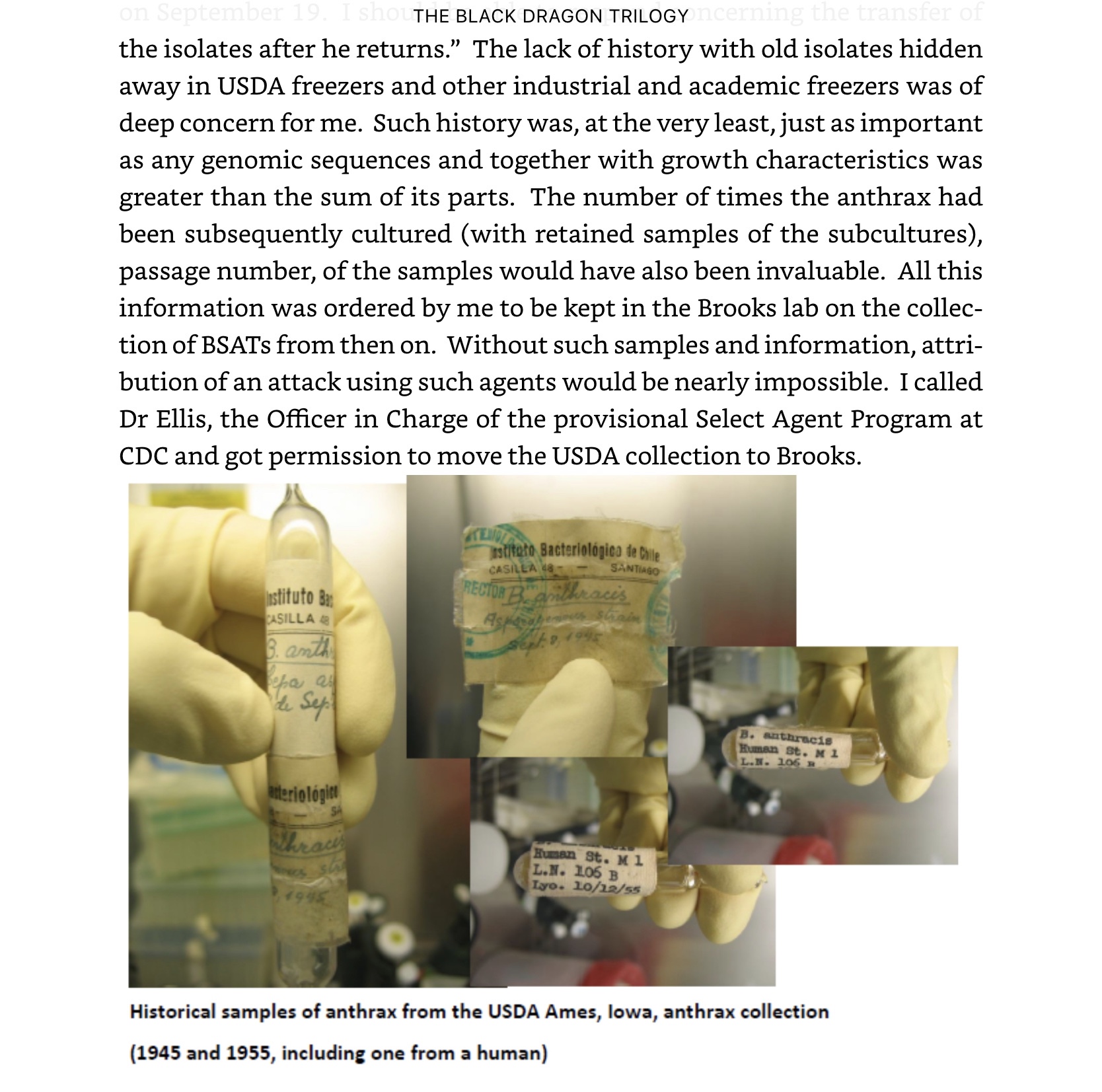
Interference in the operations of the Brooks Counterproliferation Team (by DHHS, Department of Human Health Services) began on 13 Dec 2002, when DHHS published 42 CFR Parts 73 rules in Federal Register to implement the USA PATRIOT ACT and the Public Health Security and Bioterrorism Preparedness and Response Act of 2002. The USDA published 7 CFR Part 331 and 9 CFR Part 121 in the same issue and required a USDA export/import permit to transfer, even within the USA, not only Select Agents, but all isolated infectious, disease-causing microbes. Even more rules started flowing from Washington on 4 Feb 2003; the Office of the Secretary of Defense issued an Interim Policy for Safeguarding Biological Select Agents and Toxins, and on 24 Feb 2003, our lab and all other Select Agent Labs were notified to file under new CDC rules by 12 Mar 2003, and that they must have prior approval to ship BSATs (Biological Select Agents and Toxins) after that date. I sent two of my team to Ames, Iowa, again, on 8 Jul 2003, to transfer a second USDA anthrax collection (Dr Schuman’s collection from 1969: 32 isolates) found hidden in a freezer when the Ames lab was inventorying their collection for the new Select Agent rules. They wanted them out or they would destroy them. I had to get emergency permission from Dr Ellis at CDC to save the collection. In 1986, Dr Knudson, of USAMRIID, had published a vaccine study using the “Ames strain,” which was unusually hardy, deadly and fast-growing. Researchers shared the strain with as many as 20 labs in the United States, Canada and Britain. His mistake arose from Dr Whitford’s (the State Bacteriologist of Texas State Veterinary Diagnostic Laboratory) sending Dr Knudson a box containing the anthrax with a pre-paid mailing label provided by the National Veterinary Diagnostic Lab at Ames, Iowa, containing their return address rather than Dr Whitford’s. The technician that received the box simply removed the sample and labeled it the “Ames strain” based on that label. Dr Bruce Ivins, who has been attributed as the source of the “Ames strain” used in the Amerithrax attacks, revealed in his papers on his vaccine work that he was completely unaware of the real source of the strain and considered it to be from the USDA Ames Lab. In his 1995 paper in the Journal Vaccine, he stated, “The virulent Ames strain of B. anthracis, obtained from the US Department of Agriculture, Ames, IA, was cultured….” The first transfer of a historical anthrax collection from USDA, Ames, Iowa, had occurred on October 2002. Bringing back anthrax samples from Ames took 16 hours of driving and one overnight in a motel. I never let the box or the car containing the box out of our sight. I even slept with it on my night stand by my bed in the motel. When we got the box back to the lab at Brooks, we carefully unpacked it under biosafety lab conditions and swabbed and cultured the surface of each layer of the box from the outside in to check for anthrax contamination. We found it on the second layer and called the isolate the “hitch hiker” isolate. Fortunately, it was missing one of the two plasmids (small pieces of circular DNA in addition to the main chromosome) that make anthrax dangerous.

In March 2003, Dr Holwitt brought back K strain anthrax from the Bacterial Research Laboratory, Zoonoses Unit, of the Baghdad Veterinary College, which was originally a gift from Al-Kindi Co. for Production of Veterinary Vaccines & Drugs to the Vet College and collected by him as part of his duties with the United Nations Monitoring, Verification and Inspection Commission (UNMOVIC). He had to depart in a hurry. He was the last American on the ground in Baghdad before the Second Gulf War began and when he left the bombs were about to fall. The Brooks CP Team’s mission was nearly ended because of the FBI’s response to Dr Holwitt’s bringing back the last anthrax from an Iraqi lab, by raiding our lab, unannounced of course, on 5 Sept 2003. They provided a handwritten receipt for the anthrax samples they took (duplicates). It was signed by Dr Douglas J. Beecher of the FBI Laboratory, Hazardous Materials Response Unit, 2501 Investigation Parkway, Quantico, Virginia. I was interrogated by FBI agents for three hours in my office. They especially wanted to talk to Dr Holwitt who was not present because he was on leave at the time. On 6 August 2008, the US Attorney declared Bruce Ivins to be the sole perpetrator in the Amerithrax case, and later, on 19 February 2010, the FBI formally closed the case. In the meantime on 15 August 2008, Lieutenant General Darnell, USAF, DCS, Operations, Plans and Requirements, officially closed my CP Team’s BSL-3 at Brooks and declared that the transportation or shipment of USAF Biological Select Agents and Toxins (BSATS) and working with BSATS was to immediately cease until the personnel so engaged were properly enrolled in and monitored by a Biological Personnel Reliability Program (BPRP). Of course, this amounted to a total lock out, in violation of the CDC regulations and Federal Statute requiring the Responsible Official (RO) to have complete access and control over the BSATS. The RO was I. There had never been a BPRP program and one was not yet implemented. To avoid complete default on the Air Force Program and potential abandonment of the BSATS, the Detachment 5 Commander quickly appointed an Alternate RO (ARO) from the ranks of the military to take over. Finally, on 30 March 2009, Lt Gen Darnell sent out a letter resuming the BSAT operations at Brooks. The facility had been down for 8 months and the effect was nearly fatal. New rules were implemented including the two-man rule of entry and working with BSATS in the lab (which I had had in force since 2000), that at least one person had to be BPRP certified, and both had to be on the CDC Select Agent registration as approved for access to Select Agents. This delay and the closing of the lab under the Base Realignment and Closure Act, ostensibly to save money and increase Federal efficiency, destroyed the USAF AFRL mission of global biosurveillance and development of science and technology for that purpose to serve the greater mission of Counterproliferation. It was ended.

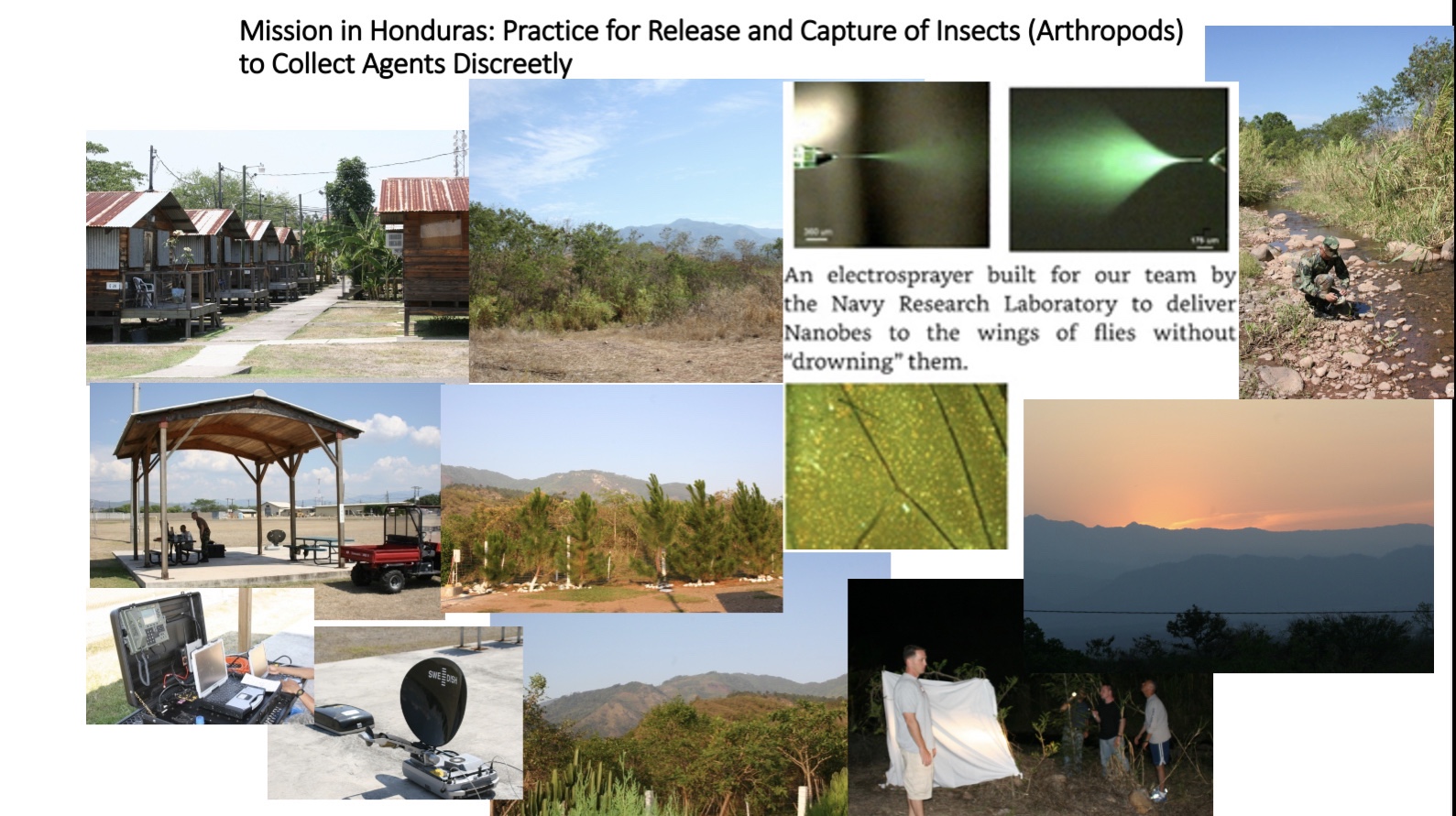
Field testing nanotaggants for biological agents using insects
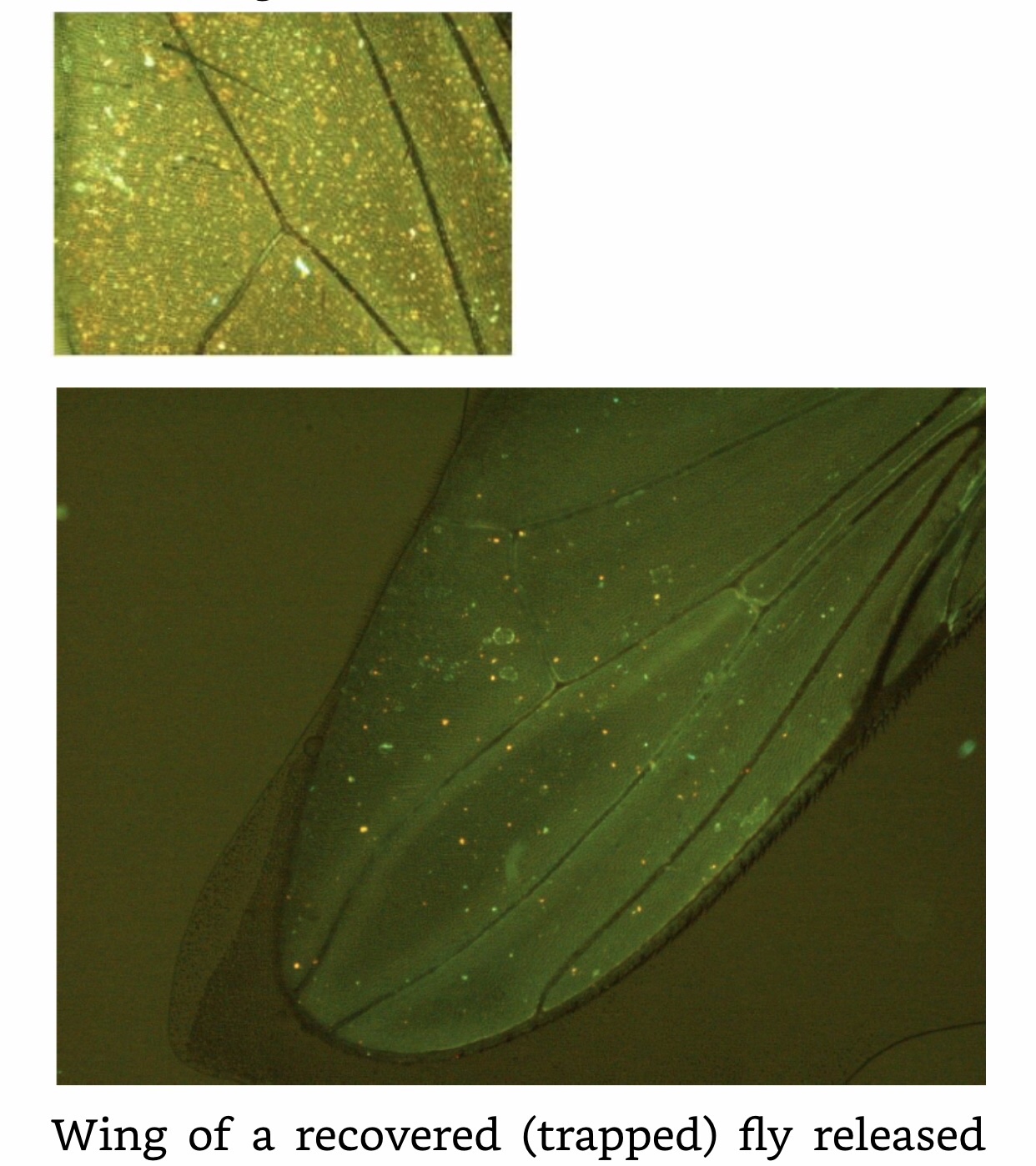
Quantum Dot nanotaggants on the wing of a fly recovering biological agent
The new BSL-3 Lab being installed at Wright-Patterson AFB, Ohio, intended to replace the BSL-3 at Brooks and supposedly to continue the Counterproliferation mission; the latter did not occur
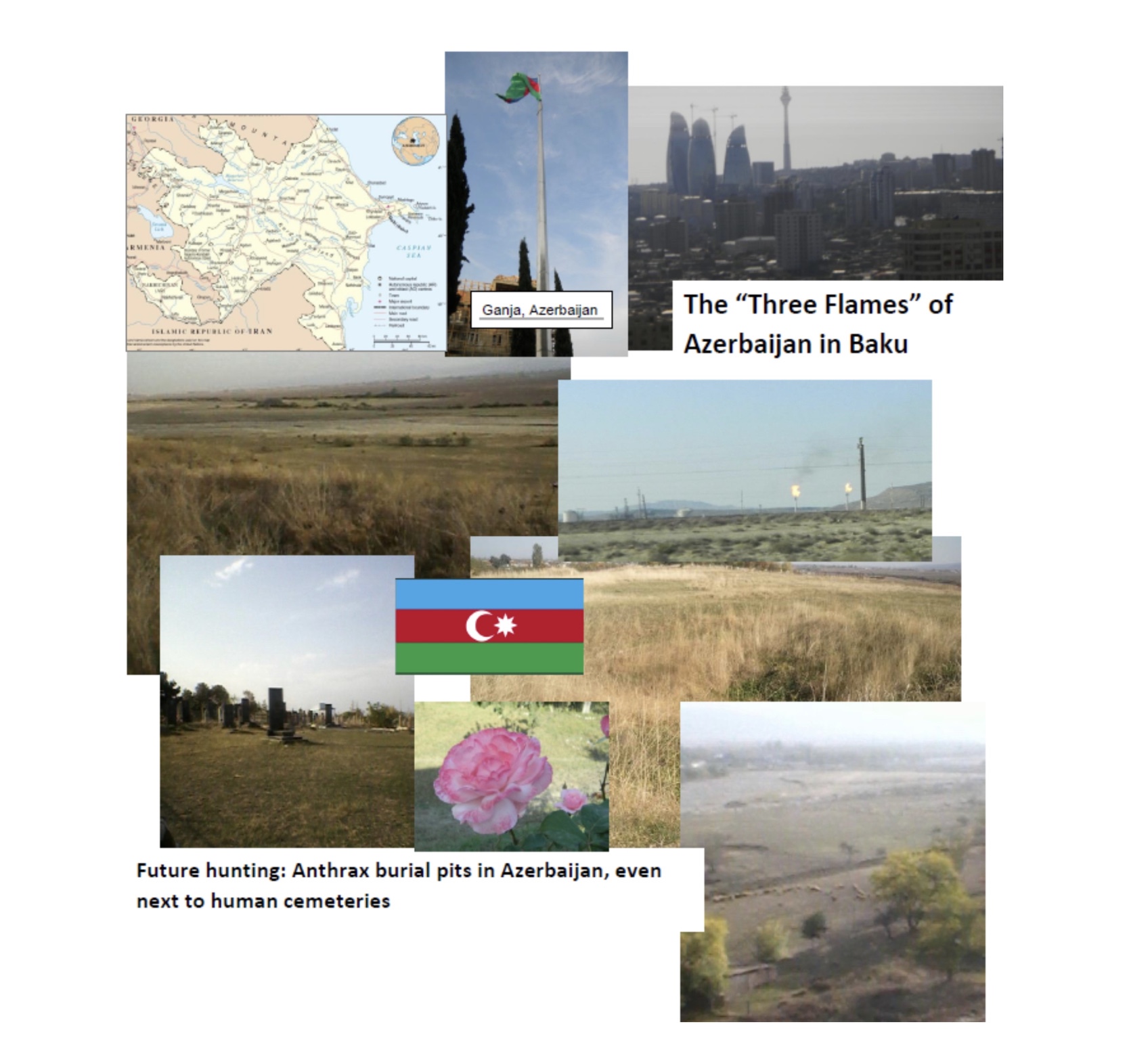
Since the end of the Brooks CP Team in the summer of 2011, I had served as a subcontractor for the Defense Threat Reduction Agency under the Cooperative Biological Engagement Program (CBEP) in Azerbaijan (AJ), Uzbekistan, and Kazakhstan as part of the Biological Threat Reduction Integrating Contract (BTRIC)( 2011-2015). The principles of biosurveillance that I have demonstrated here were applied to these programs.
The “death knell” of Nanobes: Their ability to transform pathogens by biosynthetic Nanobes made by non-pathogenic E. coli: The “dual use dilemma”

“Thanks to you all. Goodbye.” Remember us; for one moment in history, we were the Titans.”— The Black Dragon Trilogy by JOHNATHAN KIEL
https://a.co/bdT2NXF

Lest we forget who is about to come into control: The Power of Pseudoscience leading to Quackery: Why mRNA Vaccines are not Genetic Engineering, Resulting in GMOs

In a recent article, Robert F. Kennedy, Jr. (an American environmental lawyer and activist, author, and anti-vaccinationist) stateswhat sounds likes scientific evidence and reasons why we should not take the new mRNA vaccines. For those with limited scientific knowledge, they sound plausible. All vaccines have caveats around them and careful steps that must be taken to assure benefits out weigh risks. Eliminating risk is not absolute, as assuring total safety can never be achieved regardless of the amount of favorable data collected. The argument of absolutes has always been used to deny the benefits of new technology, rather than to manage the risks and weigh the costs vs benefits through scientific evidence.

“The great “democratization” of information (don’t confuse this with “Knowledge” or “Wisdom”) has led to nefarious consequences which resemble an infectious disease with pathological consequences, even affecting the susceptibility and spread of actual biological infectious disease in the world or generating disease without an agent through suggestion and brain “plasticity”. It is the ultimate “divorce” of the definition of a “pathogen” from the biological into the concept, idea, the Pattern, being the “pathogen”. Although pseudoscience may be literally defined as “false” science, it is much more. It grows out of the need to promote and popularize a myth which is accepted based on some authoritarian view or bias, religious, political, or philosophical, and the need to justify that view with “facts” which are carefully selected to support the view and presented in a way to mimic the scientific method.”

“One of the more notorious of these was Peter Duesberg’s campaign against HIV causing AIDS. This example shows that scientists can also be lured into supporting pseudoscience if they do not manage their biases and remain true to the scientific method even when it contradicts their most favorite hypotheses (I did not say “theories”, which are often confused with the term “theoretical”). Scientific hypotheses are just that, they remain to be tested with well-designed experimentation, while scientific theories, like evolution, or the theory of relativity, are supported by many generations of observations and experimentation and predictive science before being generally accepted as a scientific consensus. Another major problem, which is pervasive even in “real” science, is the bias against the publication of negative data in scientific journals. This bias results in amplification of a relatively few positive reports against large numbers of negative ones, or ones in which results, of the positive one, are unable to be repeated. The popular press addresses the positive one as absolute, whereas the negative ones are ignored, or at worst, even disparaged. Some scientists are trying to remove this systemic problem by publishing negative data in journals of their own. These defenders of negative data state that scientists have the responsibility to study Nature, and based on what Einstein has stated, “The right to search for truth implies also a duty; one must not conceal any part of what one has recognized to be true,” to not hide the truth. They assert this includes documenting negative studies in peer-reviewed, acceptable scientific publications. This action is even more imperative because the research projects have most likely been funded by national, public-supported (funded) agencies. These funding agencies have the obligation to publish all results, especially negative results, not just positive ones to maintain the greatest transparency and disclosure of publicly funded research.”— The Black Dragon Trilogy by JOHNATHAN KIEL
https://a.co/dIFEnFy.

Therefore, it is essential that these COVID vaccine trials have full disclosure of results to assure safety, efficacy and an acceptable cost/benefit ratio.

Kennedy’s destructive comments go beyond merely another internet opinion to a display of medical scientific authority and, more so, knowledge he does not possess. “….next Covid-19 vaccination. For the first time in the history of vaccination, the so-called last generation mRNA vaccines intervene directly in the genetic material of the patient and therefore alter the individual genetic material, which represents the genetic manipulation, something that was already forbidden and until then considered criminal.”….”Dear patients, after an unprecedented mRNA vaccine, you will no longer be able to treat the vaccine symptoms in a complementary way. They will have to live with the consequences, because they can no longer be cured simply by removing toxins (SARS-CoV-2 does not make toxins that need clearing from the body—pseudoscience) from the human body, just as a person with a genetic defect (mRNA is not a genetic defect nor a change in the genome which would be necessary for a permanent change) like Down syndrome, Klinefelter syndrome, Turner syndrome, genetic cardiac arrest, hemophilia, cystic fibrosis, Rett syndrome, etc.), because the genetic defect is forever!” https://principia-scientific.com/robert-f-kennedy-jr-covid19-vaccine-should-be-avoided-at-all-cost/?fbclid=IwAR13qqTYiHOTzhRDlaVngMtJHdWl0j-VUVEcQmJlcUvMqWMgSzxGeIFqdCI. This is completely wrong and endangers effective vaccination necessary to bring the pandemic under control. It encourages vaccine hesitancy in the midst of the uncontrollable rise in COVID in the US. We are now facing the onslaught of pseudoscience from people like Robert F. Kennedy Jr. https://apple.news/Act3bYCTrQ0GRWfRYshPprg.

SARS-CoV-2 will not reach herd immunity without vaccination for reasons discussed in an earlier post. A smoldering endemic form will persist with periodic epidemic and even pandemic outbreaks. With this persistence, the potential for escape mutations from any vaccine effort will become more likely statistically as the number of persistently replicating viruses within a population increases. Again, mRNA administration is NOT genetic engineering; mRNA does not change the genome and does not persist forever. The opposite is true. His comparison of genetic errors and chromosomal issues in the human genome to mRNA vaccine demonstrates his ignorance or intentional spreading of malicious misinformation. As I discussed in a previous post, it is difficult to sustain RNA in a cell due to natural frequent turnover. This introduction of mRNA is transient transfection; defined as the introduction of nucleic acid in the cell only for a limited period of time and not integrating the nucleic acid into the genome. Therefore, transiently transfected genetic material is not passed from generation to generation during cell division, and it can be lost by environmental factors or diluted out during cell division. However, the high copy number of the initial transfected genetic material leads to high levels of expressed protein within the period that it exists in the cell. Needed for effective vaccination. The mRNA (with added appropriate sequences) would need reverse transcriptase from a retrovirus to turn it into DNA and insert it into the genome. mRNA vaccination, at a minimum, is no different from SARS-CoV-2 infection, but without the pathogenic parts. If what he said were true, then every person who recovered from COVID would be genetically engineered. This man is a dangerous not-medically- qualified quack, who uses equivocation and nonsequiturs to make GMO=mRNA vaccines=genetic engineering of the genome, Technobabble. The official Pfizer protocol shows that mRNA vaccine is transient: it uses 2 shots (A PHASE 1/2/3, PLACEBO-CONTROLLED, RANDOMIZED, OBSERVER-BLIND, DOSE-FINDING STUDY TO EVALUATE THE SAFETY, TOLERABILITY, IMMUNOGENICITY, AND EFFICACY OF SARS-COV-2 RNA VACCINE CANDIDATES AGAINST COVID-19 IN HEALTHY INDIVIDUALS, PF-07302048 (BNT162 RNA-Based COVID-19 Vaccines) Protocol C4591001).

Even true examples of gene transfer to the genome, like our original DALM Nanobes, described in my earlier posts, are genome modifying technology which has limited capability to transfer that genetic material horizontally to naive cells. The ability is more limited in human cells than bacterial cells, even though the Nanobes that transfected them contained DNA. The subsequent transfected human cells only produce empty DALM nanoparticles or those which contain RNA, which, in turn, can be transferred to progeny cells. New Nanobes made in human cells , which could only make RNA that could be transferred to naive cells, could only mediate transient transfection at most.

The Nanobe gene transfer in bacteria and potential horizontal RNA transient transfer by transfected animal or human cells to naive cells; Kiel, J.L., Tijerina, A., Holwitt, E.A., Sloan, M.A., Woitaske, M., and Fan, M. Compositions, Methods and Uses for Biosynthetic Plasmid Integrated Capture Elements;
US Patent.: US8,628,955B2, Jan.14,2014.
What Kennedy fears but we have only seen in bacteria, not in animal or human cells. This is worrisome enough, but even in bacteria, the
transferability was only for three iterations after which it ended.
Nanobe transformed Bacillus anthracis (outlined in red) BaSOAJ7, on secure deposit at American Type Culture Collection (ATCC), which was destroyed

Making RNA Stable (for vaccines and aptamers): Lessons Learned from Viruses, Viroids, Virusoids…..and Nanobes?

No one can deny the great achievements of Pfizer and Moderna in developing vaccines that provide protective immunity to COVID that appear, based on the data they have presented, to be more than 90% and 94% effective, respectively. They both involve the delivery of mRNA which translate into in situ in vivo SARS-CoV-2 spike protein immunogens. Both vaccines because of the inherent instability of RNA need “cold chains” that are more demanding than for current vaccines for other viral diseases. Moderna’s vaccine remains stable in conventional refrigerators (4C) for a month and ordinary freezers (-20C) for six months. The Pfizer–BioNTech vaccine must be stored at -70C. The latter requires an ultra low freezer. This is because RNA is sensitive to environmentally abundant RNAase enzymes and oxidative damage, which break it down or renders it unusable. How can this be, if viruses like coronaviruses, contain RNA which does not suffer this fate as easily? There are even infectious agents that are composed entirely of RNA (viroids) which survive ordinary environmental conditions and the onslaught of host cell ribonucleases. In fact, many viruses produce their own ribonucleases to breakdown host cell messenger RNA (mRNA). Are there lessons to be learned from these agents that would lead to more stable vaccines, even to those that would not need a cold chain at all ? BioNTech/Pfizer and Moderna encapsulated their mRNA vaccines within lipid nanoparticles while the University of Oxford/Astrazeneca and CanSino incorporated antigen-encoding sequences within the DNA carried by adenovirus to yield mRNA to produce the spike protein immunogen. These physical barriers protect the mRNA until it has to be exposed while being translated into protein by host ribosomes, Novavax placed external recombinant S proteins of SARS-CoV-2 onto their proprietary virus like particle nanoparticles, providing direct stimulation to the immune system. All these to provide stability to the RNA and some direct immunogens, and consistency in dose delivery. Nanoparticles can codeliver adjuvants to help prime the desired immune responses, as well. Adjuvants are immunostimulatory molecules administered together with the vaccine to help boost immune responses mainly by activating additional molecular receptors that predominantly recognize pathogens or danger signals, but are inherently, in themselves, nonspecific. While the vaccine stimulates recognition and response of lymphocytes, in preference to innate cells, the activation of the innate immune cells is required to activate the lymphocytes, both B and T-cell responses. Encapsulation and/or conjugation of both the adjuvant and antigen or mRNA within the same nanoparticle enables targeted, synchronous delivery to the same antigen presenting cells (APC). Uptake of the antigen and adjuvant by APCs at separate times, can sometimes lead to autoimmunity against host proteins because the adjuvant can activate APCs that are not primed against the immunogen, but rather against self-antigens. BioNTech/Pfizer, composed their SARS-CoV-2 receptor binding domain (RBD) immunogens onto a T4 fibritin-derived “foldon” trimerization base to resemble the trimeric natural structure of the spike protein. Fibritin is a structural protein of bacteriophage T4, which catalyzes a phage-assembly process. It promotes the assembly of the long tail fibers of the bacteriophage and their attachment to the tail baseplate which attaches to host bacteria; it is also a sensing device that controls the retraction of the long tail fibers in adverse environments and prevents infection of target bacteria under those unfavorable conditions https://pubs.acs.org/doi/pdf/10.1021/acsnano.0c07197.

All this containment and, as mentioned in a previous post, certain sequence changes to discourage adverse innate or off target adverse effects, have only limited effect on stability. Viruses have developed several strategies to protect the stability of their RNA including inherent RNA shields, appropriating host RNA stability factors, incapacitating host RNA degradation and changing the general host RNA stability in cells using virally encoded nucleases. Viral RNA with poly(A) tails of the transcript, form an inhibitory structure for ribonucleases. Another common RNA structure that provides protection from a class of RNA degradation enzymes is the stable terminal stem loop found at the 3’ end of all viruses that lack a poly(A) tail. These structures prevent exosome-associated exoribonuclease from attacking viral RNAs, thereby keeping the 3’ end intact and blocking the 3’to-5’ degradation of the transcript.

Some viruses encode proteins that specifically protect viral RNAs from degradation during infection. An example of this is the nucleocapsid protein of negative sense RNA viruses such as vesicular stomatitis virus which assembles on the viral genome and antigenomic RNAs cotranscriptionally and renders the RNA resistant to RNases. Another example is the KSHV ORF57 protein, which binds to a specific viral element and protects intronless transcripts from degradation in the nucleus. In summary, these inherent defense mechanisms seem to be used by numerous viruses as a general way of protecting non-coding RNAs or RNAs, that are not translated, from degradation by the cellular RNA degradation machinery. This assists in the accumulation of viral templates for replication, transcription and packaging. Viral mRNAs, however, do not seem to employ this strategy for stabilization because it might be largely incompatible with efficient translation by cellular ribosomes. Instead, using host cell RNA stability factors is preferable for the latter. One attractive strategy for viruses to confound host cell RNAase enzymes is for their mRNAs to use cellular factors whose natural function is to stabilize cellular transcripts. The two most widely studied cellular RNA stability factors are HuR and poly(C)-binding protein 2 (PCBP2). The ubiquitously expressed HuR protein has been demonstrated to bind and stabilize well over 50 independent mRNAs by interacting with uridine-rich or adenine-uridine-rich elements. Alphaviruses such as Sindbis virus have been shown to contain high-affinity U-rich HuR protein-binding sites in their 3’ untranslated regions (UTRs) and to use HuR protein to stabilize viral mRNAs and promote a productive infection. Segmented RNA viruses remove the caps along with a small portion of the 5’ UTR from cellular transcripts and incorporate them into their own transcripts to facilitate the stability and translation of viral mRNAs. RNA viruses also encode their own ribonucleases or factors that can stimulate RNA degradation. Cap-stealing endonucleases encoded by many segmented RNA viruses, for example, selectively target cellular mRNAs for decay by 5’-to-3’ exonu- cleases and this dramatically changes the regulation of mRNA stability in infected cells. Segmented RNA viruses use the capped oligomers generated by endonuclease cleavage to initiate transcription of their own mRNAs. The nucleocapsid protein of Lassa fever virus, a member of the Arenaviridae, has recently been shown to possess 3’-to-5’ exonuclease activity. This exonuclease is essential for the virus to interfere with aspects of the interferon and other innate immune responses. The only other RNA virus known to date to encode an exonuclease is the Nsp14 protein of the SARS coronaviruses. This protein is similar to that of the Lassa fever virus nucleocapsid protein, thereby, also probably attacking RNAs from the 3’ end using a catalytic mechanism with two metal ions. Small RNA from viral genomic transcripts can also aid in protecting viral RNA. All insect-borne flaviviruses use the cellular Xrn1 5’-to-3’ exonuclease to generate a small flavivirus RNA (sfRNA) from the 3’ UTR of the virus. This small RNA is generated because of a set of pseudoknot structures capable of stopping the exonuclease. The small sfRNA generation is important for viral replication and cytopathology in West Nile Virus infection. Furthermore, instead of avoiding the RNAi (interference RNA) machinery, HCV, another member of the Flaviviridae, uses the abundant liver miRNA-122 to increase the accumulation of its mRNA during infection. miRNA-122 binds to two sites in the 5’ UTR of HCV and forms a unique structure required for efficient viral replication. Finally, viruses use nucleases to increase the rate of viral RNA evolution. Mutations in the Nsp14 exonuclease of independent coronaviruses result in a 15–21-fold decrease in replication fidelity. Therefore, the presence of this exonuclease can clearly influence viral RNA mutation rates and the generation of quasispecies https://www.ncbi.nlm.nih.gov/pmc/articles/PMC3123725/pdf/main.pdf.

Viroids are small circular RNAs that mostly infect plants, mimic DNA in secondary structure in order to use host DNA-dependent RNA polymerase to replicate and do so by a rolling circle method that does not require the ring of RNA to open. The linear replicates are then ligated into new circles by a host ligase. This process avoids open ends that would be attacked by cell exonucleases and the necessity for start/stop sequences. They encode a hammerhead ribozyme which can cut and splice RNAs. The replication cycles of viroids include, for members of Pospiviroidae, replication in an asymmetric cycle. DNA-dependent RNA polymerase (polII) transcribes mature circular RNA into oligomeric (−) intermediates and these into oligomeric (+) intermediates. The (+) intermediates are enzymatically cleaved into monomers and ligated with DNA ligase 1 into mature circles. Members of Avsunviroidae replicate in a symmetric cycle where circular RNA is transcribed into oligomeric intermediates by nuclear-encoded polymerase (NEP). The intermediates are cleaved into monomeric units by the internal hammerhead ribozyme and ligated by host tRNA (transfer RNA) ligase into circles. The presence of thermodynamically stable as well as metastable structures of RNA are essential through the entire process so RNA structure determines fitness for replication. Virusoids are essentially viroids that have been encapsulated by a helper virus coat protein (providing a viral physical barrier to protect stabilize its RNA). They are thus similar to viroids in their means of replication (rolling circle replication) and due to the lack of expressible genes (into protein) but they differ in that viroids do not possess a protein coat https://www.ncbi.nlm.nih.gov/pmc/articles/PMC6237808/.

Artificial stability can be built into synthetic RNAs. This has been necessary for diagnostic and especially therapeutic use of aptamers. These are small synthetic nucleic acids selected in vitro from a large library of sequences for their ability to bind to proteins and other targets specifically and strongly and then to be amplified by PCR. Derivatives or replacements of the phosphate and sugar backbone while maintaining base integrity allows them in many cases to still replicate. Some of these modifications are phosphorothioate (PS) bond substituting a sulfur atom for a non-bridging oxygen in the phosphate backbone of an oligonucleotide; and 2′-O-Methyl (2’OMe), a naturally occurring post-transcriptional modification of RNA, 2’OMe found in tRNA and other small RNAs. Oligonucleotides can be directly synthesized to contain 2’OMe. This modification increases the Tm (melting temperature) of RNA:RNA duplexes, but results in only small changes in RNA:DNA stability. It prevents attack by single-stranded endonucleases, but not exonuclease digestion. 2′-fluoro bases have a fluorine-modified ribose which increases binding affinity (Tm) and also confers some relative nuclease resistance compared to native RNA. Inverted dT can be incorporated at the 3′ end of an oligonucleotide, leading to a 3′-3′ linkage that will inhibit degradation by 3′ exonucleases and extension by DNA polymerases. In addition, placing an inverted, 2′,3′ dideoxy-dT base (5′ Inverted ddT) at the 5′ end of an oligonucleotide prevents spurious ligations and may protect against some types of enzymatic degradation. Phosphorylation of the 3′ end of oligonucleotides will inhibit degradation by some 3′-exonucleases. Phosphoramidite C3 Spacer can be incorporated internally, or at either end of an oligo to introduce a long hydrophilic spacer arm for the attachment of fluorophores or other pendent groups. The C3 spacer also can be used to inhibit degradation by 3′ exonucleases. https://www.idtdna.com/pages/education/decoded/article/modification-highlight-modifications-that-block-nuclease-degradation. Other modifications include the replacement of the phosposaccharide backbone with a polypeptide. For aptamers and Nanobes some of these modifications and others have been employed:

In Nanobes, we chose double-stranded DNA aptamers to provide the most stable unmodified synthetic nucleic acids. However, these are still vulnerable to nucleases of certain types. Also, DALM, in Nanobes, chelates metals that are necessary to certain nucleases, inhibiting them, but not all non-metal nucleases. The final modification in Nanobes that has yet to be tried is replacement of circular RNA or DNA with micro linear nucleic acid capped at the ends with carbon nanotubes and/or nanoparticles:

Nanobes in general do not require lipids to enter cells and can have aptamers on their surfaces which direct them to certain cells to maximize therapeutics or vaccines to optimal effects.

First paper showing DALM binds to and co-purifies with DNA from bacteria: E. coli and Bacillus anthracis
Dynamics of fluorescence and thermoluminescence of genetically engineered E. coli as it produces DALM in culture
Kinetics of thermochemiluminescence of DALM produced by Bacillus anthracis over days of culture
DALM production and attachment to DNA by Bacillus anthracis in culture measured by thermochemiluminescence
DALM coated DNA recovered from bacteria can still undergo PCR indicating that it is still biologically functional
Transfer of genes to Human Kidney Cells (HK2) by synthetic and biosynthetic (vortexed) DALM coated DNA (DALM nanoparticles) demonstrated by PCR (with negative and positive controls) . Mouse macrophage (MH-S) and human kidney cells (HK-2) showing bacterial nitrate reductase (in plasmids) taken up when in a DALM nanoparticle. This procedure was also successful with Human Lung Epithelial Cells (H441), confirmed by PCR. When the nanoparticles were expanded to include carbon nanotubes, the process was also successful and could be demonstrated by electron microscopy showing the presence of intracellular carbon nanotubes.

Sharing the Whole Truth Nothing But the Truth: The Black Dragon Trilogy: Personal Account of Science and Global Biosurveillance of

a.co/bhx6lj9

The Black Dragon Trilogy collection tells the story behind this blog and the principles upon which it is based as truthfully as I can. It is for those who wish to explore the subjects of this blog more deeply and thoughtfully. It has become most relevant in these turbulent times, this time of COVID.

How it began:

.