
Science has dramatically and classically demonstrated its failure to communicate to the general populace with fatal consequences in the last 2 years (2019-2021) for COVID. I have not been exempt from this failure. In the last 10 years, I have published eBooks with catchy titles (making them available from popular outlets as cheaply as possible), used social media: Facebook, Twitter and LinkedIn and this blog to attempt to educate the public in science, in general, and infectious diseases, specifically. I shouldn’t have been surprised by the underwhelming response. Even among scientists, communication among disciplines is very difficult and seemingly fails because of specialization, jargon and disinterest and because of stove piping, mostly because of funding mechanisms and not seeing how this “other science” could possibly benefit their scientific pursuits. Type-B Cytochromes : Sensors and Switches, my specialized science book by CRC Press, Taylor & Francis Group, CRC Revivals 2018, now 8 editions published between 1995 and 2018 in English is held by 147 WorldCat member libraries (including Harvard, Stanford, Johns Hopkins, Princeton, etc) worldwide, costing between $51-$237, while my popularized book The Black Dragon Trilogy, 2012-2018, Amazon eBooks $0-$2.99, has been read by almost no one. I have not received any royalties from these; the first because it was done while I was a Federal employee and the latter because no one has bought it. I published them more to convey knowledge and wisdom than to make any money.
The latter book collection is about my general interest in science and my last unfinished scientific work, and the former specifically about my research for the Air Force Research Laboratory up until it was published. But I am really about conveying to the public the joy of scientific discovery and the benefits of science to human kind. I deeply admire and tried to emulate Carl Sagan, who was one of the few in Science able to and succeeded at doing this.
Another more successful engagement of the public in science and technology has been through movies, like Star Trek, although less scientifically accurate, but even inspiring scientists to try to attain their fictional achievements in the real world. I also find the James Bond series has a similar technological appeal, discounting its early misogyny, continued sexism, action and romantic appeal (cultural sophistication and beautiful places besides people). But the most amazing thing about it is its timely relevance to current events and technologies (even if the characters covered too much time and changed without changing its suspension of disbelief). There appears an unlikely connection between my science and technology work and the James Bond technology themes. In particular, two movies Golden Eye (Release date: November 13, 1995,USA) and the most recent “No Time to Die” (https://www.007.com/no-time-to-die/). The former (Golden Eye) involved a Soviet era electromagnetic pulse weapon that destroys electronic devices, including aircraft. We investigated such a potential Russian weapon during the Cold War, not only for its electronic warfare effects but for its potential health effects on military personnel. Later, after the fall of the Soviet Union, the Russians offered to sell us such a prototype device. The theme of “No Time to Die” mirrors my last research, before my retirement, for USAF and DoD, that remains unfinished. The technological theme of the movie engages the MI6 scientist Valdo Obruchev who is kidnapped from an MI6 laboratory. With M‘s approval Obruchev had developed Project Heracles, a bioweapon containing nanobots that infect like a virus upon touch and are coded to an individual’s DNA, rendering it lethal to the target and their relatives but harmless to others.
We developed bionanotechnology that has the potential for similar nefarious use. My attempts to further develop it for biomedical applications post retirement failed for unknown reasons (https://link.springer.com/book/10.1007/978-3-031-63006-4). The proof of the technology is in 30 years of basic and applied research documented in peer-reviewed scientific publications, government reports and patents in the public record. Also, my books, particularly Nanowarfare (2016), and its subsequent inclusion in The Black Dragon Trilogy (2018), describe the bionanotechnology, designated Nanobes in further detail. One component of the technology, developed in collaboration with the Nobel Laureate who discovered PCR, Dr Kary Mullis, was transferred through a US affiliate, to a British company Centauri LTD, and is still being developed in the United Kingdom to fight antibiotic resistant bacterial infections. Many of the other posts in this blog describe various aspects of this technology. However, I will describe its salient features here, again, in brief, in comparison to the fictional technology in “No Time to Die”. Perhaps, the detail and specifics I have given in the past are too much and only create a fog obscuring its good and bad potential. The comparison may make it crystal clear and make the technology more plausible for all its various applications. Sometimes we draw patterns from observations that are not really there, but the similarities I am about to describe are uncanny and the potential nefarious applications, especially by our potential adversaries, have been noted and described and the warnings given years before the movie. Suspicion that others following our progress were contemplating such nefarious use was clearly illustrated in an open literature publication: “Ultramicro, Nonlethal, and Reversible: Looking Ahead to Military Biotechnology by Colonel Guo Ji-wei, The People’s Liberation Army, China, and Xue-sen Yang, MILITARY REVIEW July-August 2005, https://www.armyupress.army.mil/Portals/7/military-review/Archives/English/Dir-Select/nano-technology.pdf. I presented a paper at the Twelfth Annual Directed Energy Symposium, 2-6 November 2009, San Antonio, Texas, titled “Biotechnological Nanowarfare: Directed Electromagnetic Energy Control” which warned: 1) Chinese and Russian researchers follow our (Brooks Team) research on genetic engineering of microbes and animal/ human cells and their interactions with directed energy. 2) The Chinese are hotly pursuing aptamer development, biotechnological manipulation and nanoparticle delivery systems, especially for the brain. 3) Even if we never make Nanobes, we will have to face them. So the mood was set to be aware of the technology being subverted into a nefarious military offensive use to selectively attack, control, or even dispatch undesirable individuals or ethnic groups just like in the movie while eliminating collateral damage, “infection” and injury to non-targeted individuals.
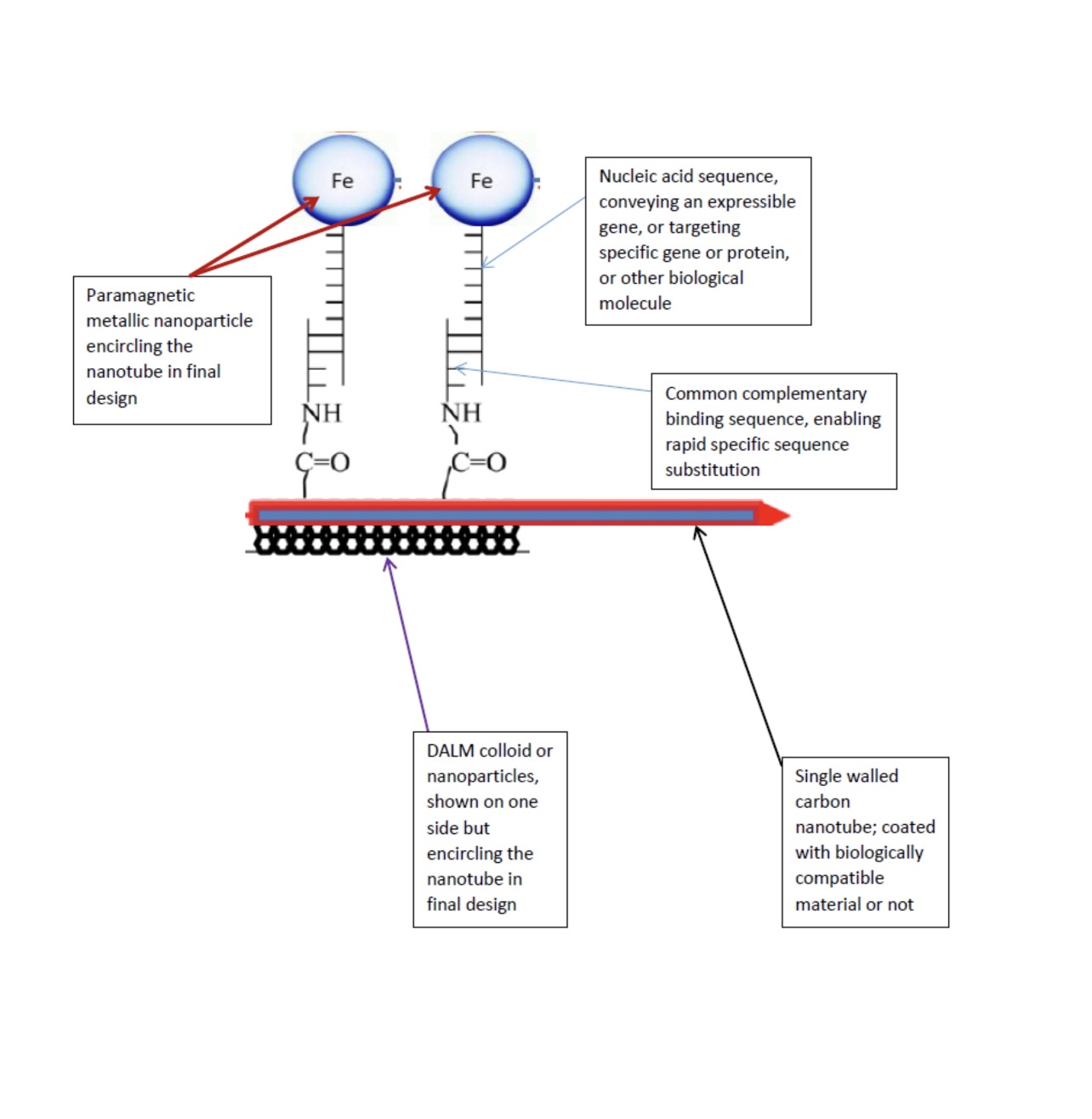
Here we are at 2021 and a James Bond movie is describing a nanobot comparable to our Nanobe, which has been described as a nanomachine (“nanobot” is more an engineering term describing a mechanical nano device and the term “Nanobe” is more biological but closer to the viral substitute description and energized by an external wireless electromagnetic power source, especially pulsed radio frequency or microwave radiation). These Nanobes are able to induce the host cells to make enzymes which manufacture more polymer to encapsulate more Nanobe DNA or RNA equivalent sequences to be transferred to new naive host cells just like a virus, but not coated with proteins which would trigger a host immune response. Thus Nanobes evade immune clearance and enzymatic breakdown in a host. In the movie, the nanobots infect individuals for life even if they do not kill them, but can be transferred to another targeted individual with lethal consequences. The nanobots are programmed with the target’s DNA. Nanobes are programmed with synthetic DNA or RNA which hybridizes to host DNA sequences, selected or designed to bind specifically to proteins, specific nucleic acid sequences, or other biological molecules or whole cells and specific tissues and organs. They can re-direct an immune response to a new antigen, transfer functional genetic material, or simply mark a small target like a microbe, virus or even a cancer cell for very focused electromagnetic radiation energy mediated destruction. Both nanobots and Nanobes can penetrate skin. The latter can penetrate the host by inhalation into the lungs or the mucous membranes of the nose and directly enter the brain. The Nanobes, unlike the nanobots, have a fail safe function triggered by absorbing enough electromagnetic energy locally to destroy them. The bionanotechnology is described in detail in Bionanotechnology: Radio Controlled Antimicrobial and Genetic Vectors, Springer-Nature, 2024, https://link.springer.com/book/10.1007/978-3-031-63006-4.
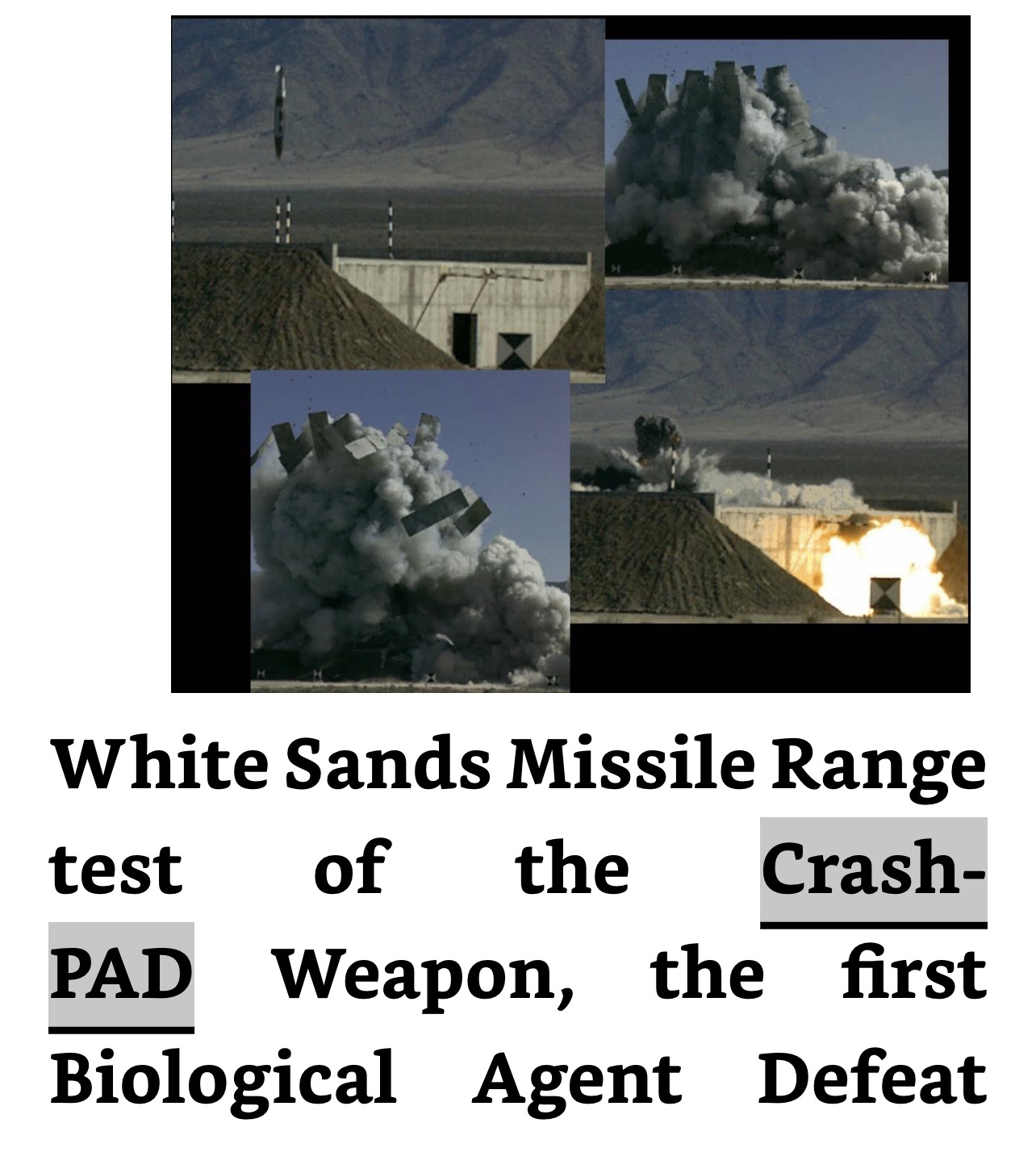
In the end, the USAF (Agent Defeat Weapons: CrashPAD) reality and the movie both destroy the manufacturing and storage facilities of bioweapons with munitions and incendiaries.
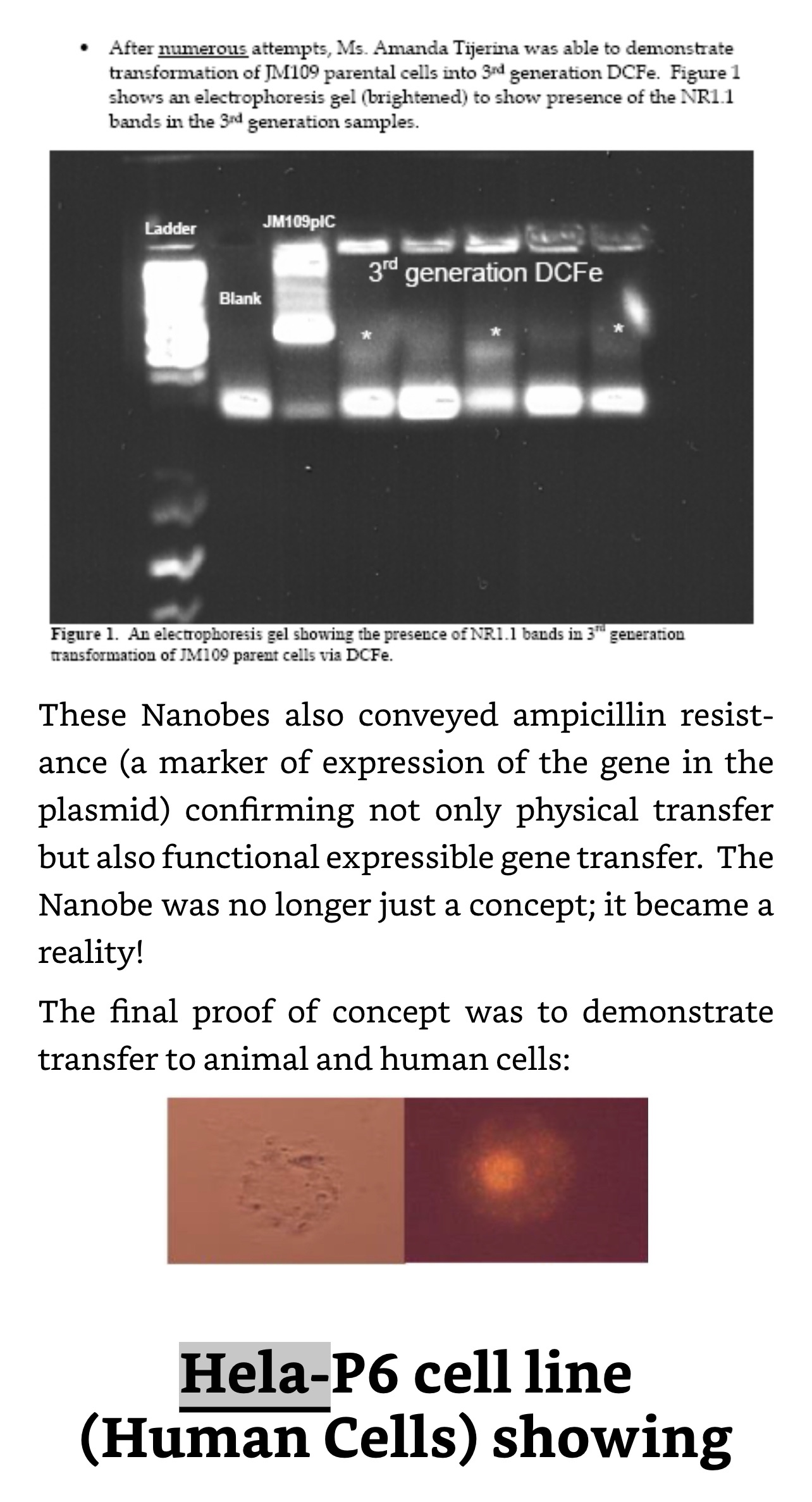
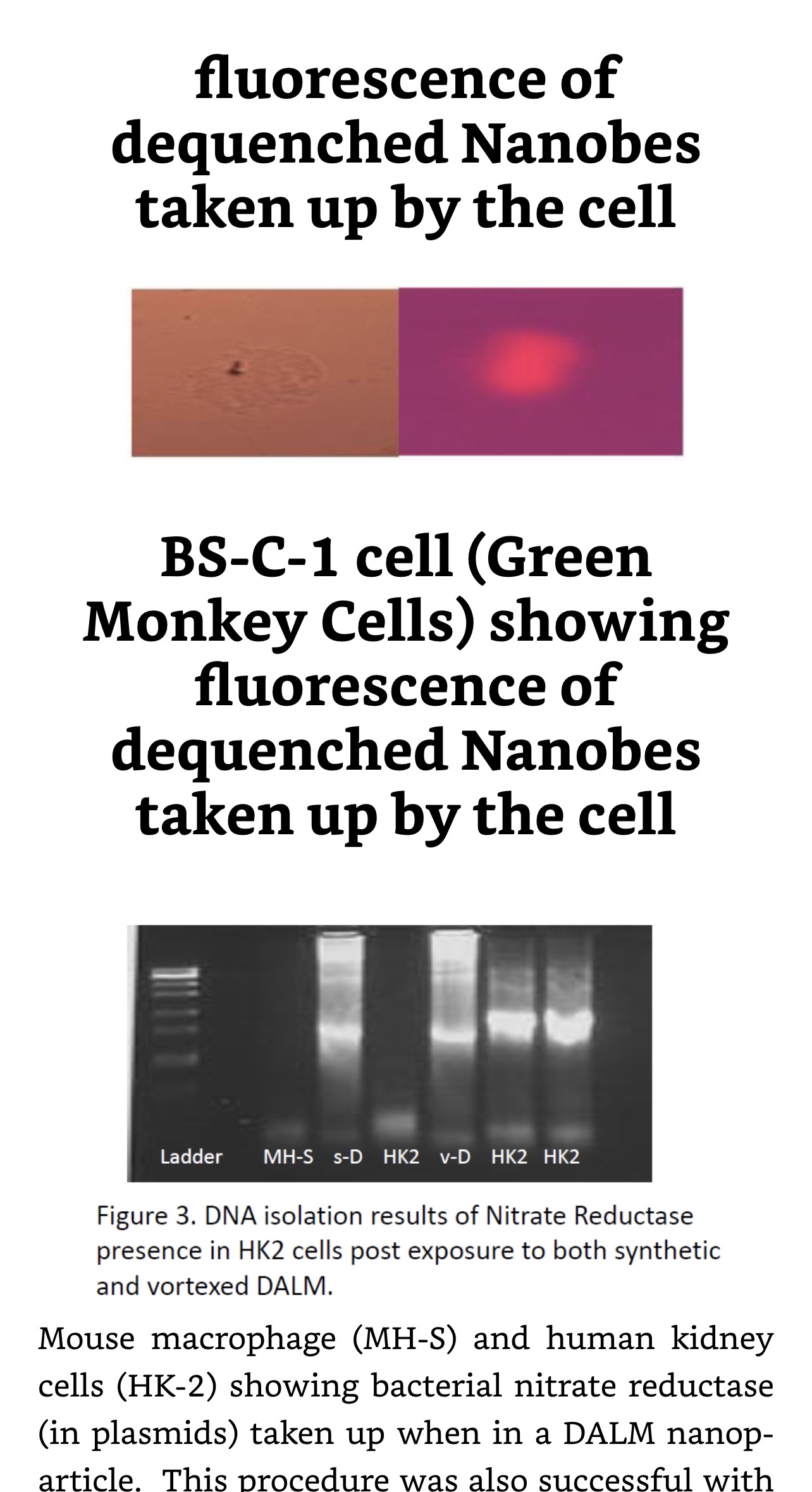
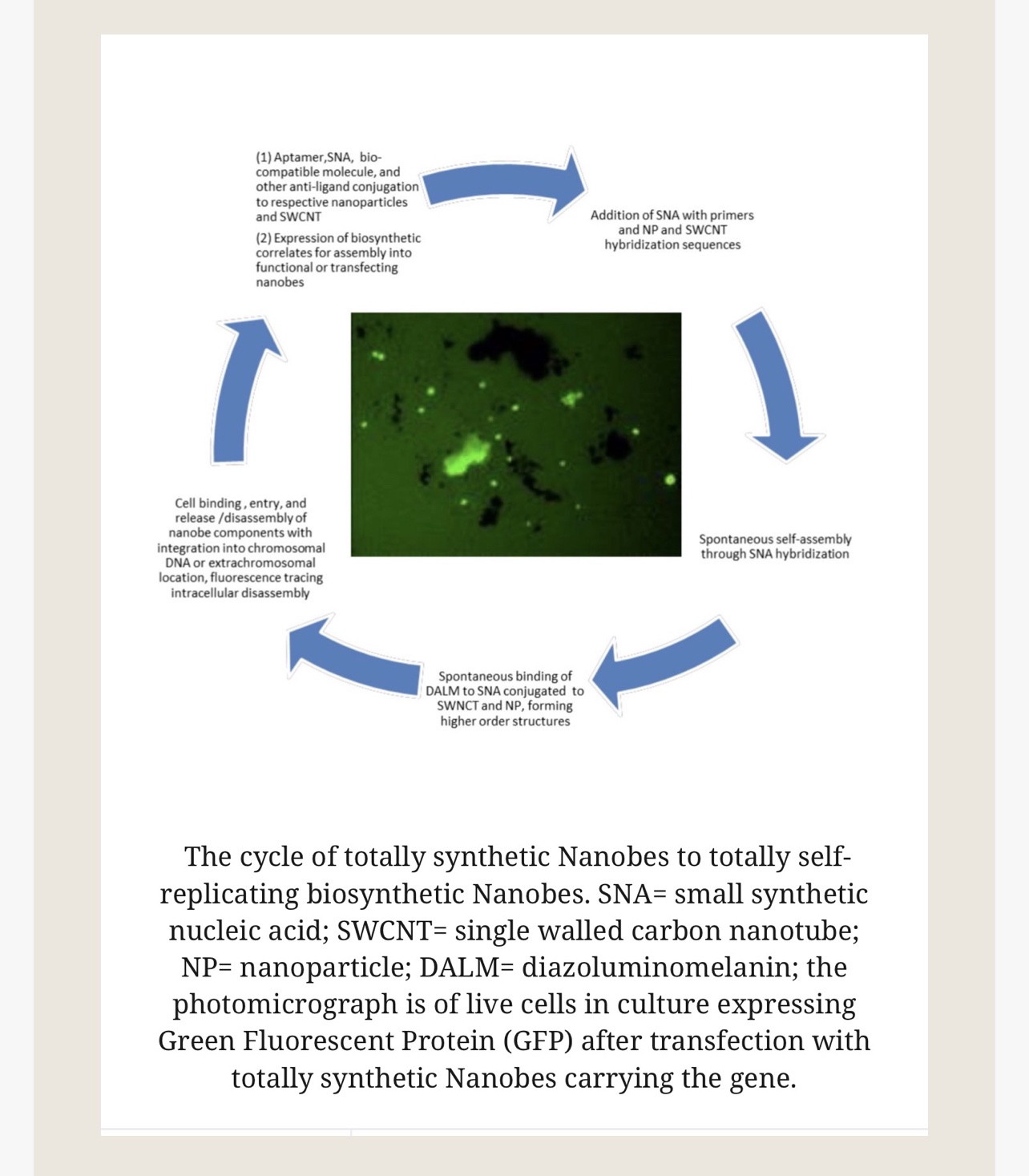
The following illustrations and photographs display tracing the Nanobes in target cells with fluorescent quantum dots and polymerase chain reactions (PCR) to show gene transfer and the final Nanobe design:


 Global Biosurveillance