
The Antibody Dependent Enhancement (ADE) process is usually seen with antibody that is not against the primary receptor binding protein, non-neutralizing antibodies; like with whole virus inducing many different types of antibodies which do not neutralize the virus. The uptake by a cell is enhanced by the Fc portion of the antibody binding to a Fc receptor on the cell (macrophages where the virus replicates).This complement binding portion of antibody also activates the complement cascade that non-specifically destroys microbes. In viruses like SARS-CoV-2 which can induce anti-complement antibodies then the whole virus can induce Fc receptor activated inflammation without killing the virus. Dengue vaccines exacerbate disease when vaccinated for one strain followed by infection with another different strain, but not neutralized by the vaccine induced antibodies. The CMV virus is a herpes virus all of which are never cleared but only suppressed by the immune system. The current COVID vaccines are aimed at the RBP in the spike of the virus. Unlikely to cause the ADE but a whole attenuated CoV vaccine could possibly cause this as the actual viral infection followed by infection with a different strain (because of induction of non-neutralizing antibody).
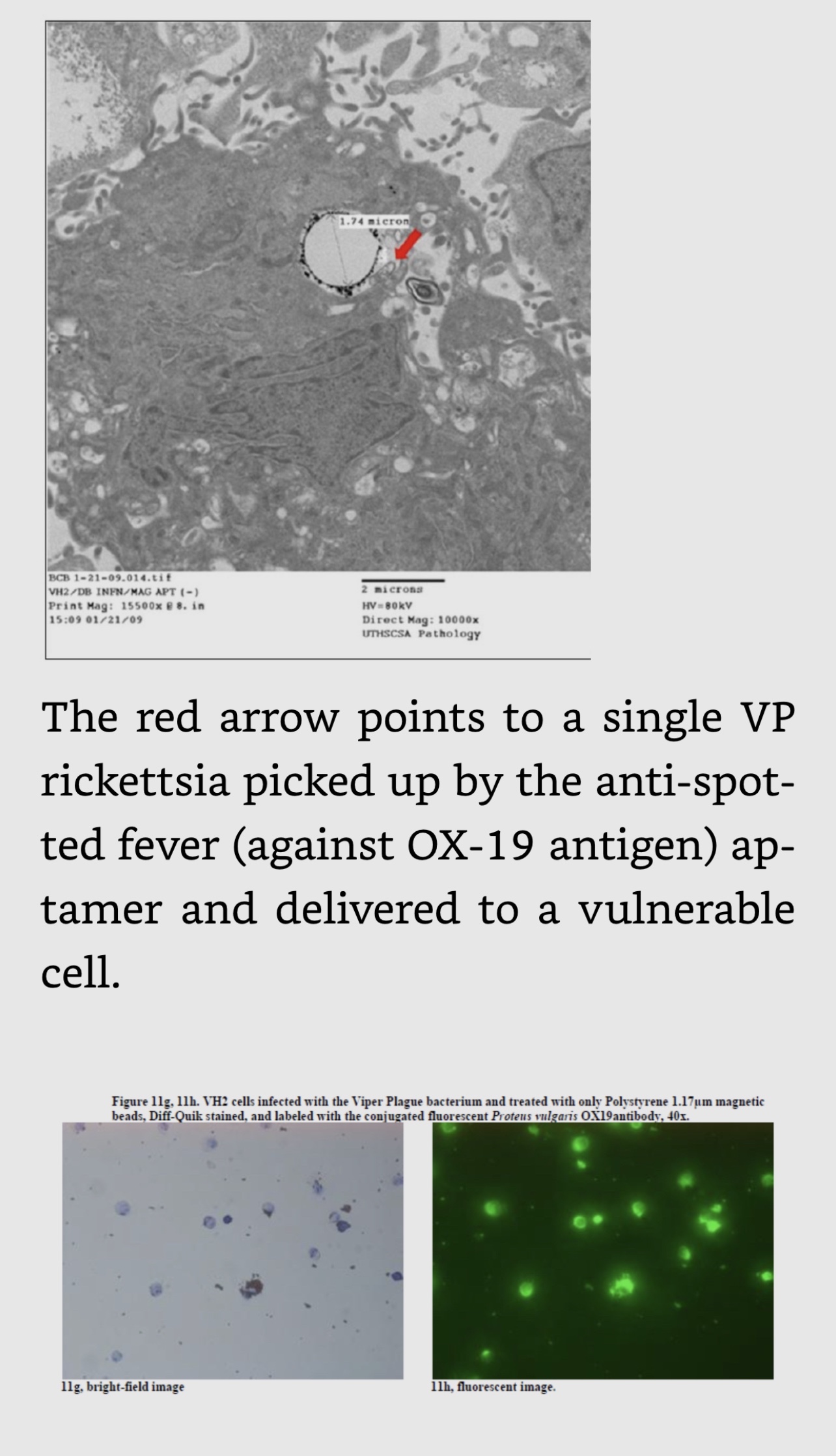
ADE has been known for a long time. It was seen in animals with SARS-1 but overcome in vaccine development. The vaccine was never needed because SARS-1 disappeared in 6 months. We even developed enhanced uptake (infection) in our lab at Brooks of an intracellular bacterium Rickettsia artificially using aptamers in place of antibody:
Recent evidence has arisen, giving at least some insight, into how the immune system can reduce COVID-19 into a mild, unimpactful infection and then, in some cases, progress into a high mortality and morbidity form. Some hint was given by its early history of causing a mild phase progressing into a severe phase after 10-12 days of symptomatic infection, if including 2 days or more of asymptomatic infection, about the length of time (14 days or more) to develop a full humoral response. The most compelling case is for the development of humoral autoimmunity, autoantibody. Patients with life-threatening COVID-19 pneumonia have neutralizing IgG autoantibodies against Interferon-ω, the 13 types of interferon-α, or both, at the beginning of severe disease; a few also have autoantibodies against the other three type I Interferons. The autoantibodies neutralize the ability of the type I interferons to block SARS-CoV-2 infection in cell cultures. These autoantibodies are not found in those with asymptomatic or mild SARS-CoV-2 infection and only rarely in healthy individuals https://science.sciencemag.org/content/sci/early/2020/09/23/science.abd4585.full.pdf. This mechanism also explains the Kawasaki-like syndrome, the multisystem inflammatory syndrome (MIS-C), seen on rare occasion in young children and adolescents. The development of effective and lasting immunity appears to depend on cellular-mediated immunity (CMI; largely, T lymphocytes and production of gamma interferon) https://www.biorxiv.org/content/10.1101/2020.05.26.115832v1.full.pdf. The serum concentrations of IL-17A (a protein that recruits monocytes and neutrophils to an inflammatory site) and IFN-γ, but not TNF-α or IL-6, decrease with age of patients; therefore, gamma interferon’s ability to prevent viral replication but not induce oxidative damage to host cells, as with TNF-α, is more important in children’s responses. Recent evidence supports decline in soluble IL17A receptors, which block TNF-alpha and interferon gamma production by competing with the cellular T17 lymphocyte receptor, leads to more severe COVID19 https://science.sciencemag.org/content/sci/early/2020/10/14/science.abe9403.full.pdf. Adults show a more robust T cell response to the viral spike protein compared to pediatric patients shown by increased expression of CD25+ on CD4+ T cells and the frequency of IFN-γ+CD4+ T cells. Also, serum neutralizing antibody titers and antibody-dependent cellular phagocytosis are higher in adults than in pediatric COVID-19 patients. The neutralizing antibody titer increases with age while the IL-17A and IFN-γ serum concentrations decrease. Therefore, neutralizing antibody levels alone are not sufficient to decrease severity of COVID. The first effective response to the SARS-CoV-2 virus is innate, involving the triggering of interferon 1 production (a complex of 13 proteins) leading to predominantly interferon omega, a form that recruits upregulation of the phagocytic activities of whole blood cells, macrophages and NK (Natural Killer) cell activities with decreased viral excretion https://www.karger.com/Article/Fulltext/495897#top. Type 1 interferons induce type III interferon (IFN-λ), which is primarily restricted to mucosal surfaces and is thought to confer antiviral protection without driving damaging proinflammatory responses. The interferon 1 released from infected cells prevents neighboring cells from replicating virus. The phagocytes produce NO, nitric oxide, that yields inhibition of viral replication and in greater amounts cell death, which may result in killing cells before virus can replicate, and damaging viral RNA. Greater amounts of NO can lead to swelling and further non-specific inflammation if it gets out of control. In children and those adults who recover from mild infection, the virus is eliminated by these innate and adaptive cellular immunity. If virus persists and disseminates in the lungs and other tissues, a strong humoral adaptive response may ensue. If with autoantibodies, phagocytes, with accompanying cytokine inflammation, will be directed against infected tissues, causing sepsis and perhaps death https://www.the-scientist.com/news-opinion/the-immune-hallmarks-of-severe-covid-19-67937. Antibody directed enhancement (ADE) may also ensue, wherein antibody increases viral uptake by white blood cells and endothelial cells by linking the viral bound antibody to the target cells through Fc receptors or complement component linkers/anti- ligands on the cells, and leading to more viral replication https://www.ncbi.nlm.nih.gov/pmc/articles/PMC7165974/pdf/IMR-268-340.pdf.
There may be correlates in animals. Cats get an enteric coronavirus which has little or no signs, but, in certain young cats, it becomes disseminated, causing peritonitis with lethality usually 100%. CMI provides an effective immune response that resolves the infection in the enteric, intestinal form. If it does not, a strong humoral response kicks in and selects for a more pathogenic form of the virus which infects and replicates in macrophages https://www.ncbi.nlm.nih.gov/pmc/articles/PMC7112361/pdf/main.pdf. Also, autoantibodies form. There seems to be genetic predisposition toward this resulting in peritonitis https://www.ncbi.nlm.nih.gov/pmc/articles/PMC2819880/. Peritonitis pathology involves severe systemic inflammatory damage of serosal membranes and widespread pyogranulomatous lesions in the lungs, liver, lymph tissue, and brain. The host immune system produces profound T-cell depletion from the peripheral and lymphatic tissues and changes cytokine expression. The clinical finding of hypergamma-globulinemia-associated feline infectious peritonitis is indicative of over production of antibody against an antigen which cannot be cleared, like a host cell-associated antigen. Therefore, like COVID-19, the feline coronavirus virus disease has this dichotomy, based on viral dissemination and autoantibody. The selection of the appropriate immune pathway with vaccination becomes very important to avoid adverse effects. Other viruses have had a similar warning due to overt responses, predominantly in children, resulting in hemorrhagic disease, when becoming immune (for life) to one strain but then becoming infected with another as in Dengue (4 strains), a mosquito-borne virus. The right antigen for the right vaccine must be selected to prevent such adverse effects. Another way that the viral replication and subsequent damage can be reduced is to stop or delay an overt response without altering it directly by using the anticoagulant heparin which blocks virus’ binding to the target cells https://www.cell.com/action/showPdf?pii=S0092-8674%2820%2931230-7. (No longer a viable option because of the finding of anti-heparin antibodies in COVID: COVID-19 patients often show high-titer non-platelet-activating anti-PF4/heparin IgG antibodiesJ Thromb Haemost 1 May;19(5):1294-1298.doi: 10.1111/jth.15262. Epub 2021 Apr 7).
The 2003 outbreak of severe acute respiratory syndrome (SARS) may have left some survivors with pan coronavirus neutralizing antibodies. Former SARS patients who have been vaccinated against COVID-19 appear able to defend against all extant variants of SARS-CoV-2 (https://url2151.isid.org/ss/c/TLh_csrC34X_iXpbYoMam9jBwU6UUz6NJPZ04_cCUCL3644PNl-ALRgE0mFO6PwGe5X-VMh61_QdppWA_Rt5zQzaP0DvIIfJpW6Myagfu8XJSvXPtvEIYNwaJ89jkhOm2FatxVUPahWt0W2Y-bJ3esjVNEAmyKqtVA5l4Gv-740/3el/HxrT06euQNqqGKe7EBUHdw/h2/Jo2MuHI5q-FuEA-kMgKblceH5fHY6jN7au2pmKduPhI).
Stopping selecting the self-destructive immune pathway is what Dr Mullis’ chemically programmed immunity, mentioned in an earlier posting, sought to accomplish as well.

 Global Biosurveillance