January 31 is the anniversary of my receiving my PhD and embarking on my One Health career. The following excerpts are from my book collection, The Black Dragon Trilogy. They are not just history. They are for now, especially in the time of COVID along with all my previous posts, and show how relevant my studies have been to COVID-19 and more to come. Acts 2:17 : “In the last days,’ God says, ‘I will pour out my Spirit upon all people. … Your young men will see visions, and your old men will dream dreams.” Everyone eventually faces their last days.

I give my own professional life story not to win your sympathy, admiration, or brag, but to show that there are different, no less authentic, paths than the academic one to great discoveries and these should not be discarded by society but judged on their stand-alone-merit. After all great things have come out of a little patent office in Switzerland. One Health is my story. The acceptance of a message should not be based on the authority of the messenger but the content of the message.
“I was eager to return to academia, to research. Because of my financial limitations, I decided to commit longer to the USAF by entering the Air Force Institute of Technology Civilian Institutions Program to obtain my PhD. I wanted one in biochemistry because I thought the molecular approach was the future of microbiology and the response to infectious agents, immunology. The USAF wanted me trained as a field microbiologist to go to Indonesia or Egypt and serve in one of the Navy field infectious disease surveillance laboratories for encephalitis virus or blood flukes (schistosomiasis) in those countries respectively. The Navy does not have veterinarians or veterinary specialists so at that time the USAF provided them and later the Army. I convinced the USAF program manager that I could get a double interdisciplinary PhD in both biochemistry and microbiology in 3 years (the limit on the length of the program for each student). I entered Texas Tech University Health Science Center, School of Medicine, Graduate School, in the Departments of Biochemistry and Microbiology, as one of their first PhD students, in the summer of 1977 at Lubbock, Texas. My dissertation research was on the cytotoxic mechanisms of peroxidases, a principle antimicrobial and anti-parasitic enzyme in granulocytes and macrophages of animals and humans. I wanted to study the effects of eosinophilic peroxidase on blood flukes (an animal counterpart of Schistosoma called Heterobilharzia americana) but my graduate committee and the safety officer would not approve of my keeping my infected snails in an aquarium in the laboratory. Therefore, I turned to peroxidase killing cancer cells. Most of the research at that time, in the laboratories there, was focused on cancer treatments. I found the Novikoff hepatocarcinoma in rats an available and convenient model already being studied in the Biochemistry Department. My biochemistry professor was studying immobilized enzymes, so I decided to immobilize peroxidase and glucose oxidase on implants in rats with this cancer. The usually fatal cancer was cured in most cases if the implants were placed at the right time and place in the rats. This led to a patent with the USAF and university. However, except for legal action and hard feelings over the patent rights, not much ever came of this laboratory “curiosity”. In 1979, just prior to me finishing my last year of my PhD, I was commissioned as a regular officer Captain in the USAF. Soon after, the Vet Corps of the USAF was dissolved, leaving the only Vet Corps being in the Army. I was transferred to the USAF Biomedical Science Corps. The powers to be tried to get me to transfer to the Army Vet Corps and gave me the tour of USAMRIID, the US Army Medical Research Institute of Infectious Disease, to entice me to transfer, but I decided not to transfer. I had to go to my next assignment at Brooks AFB, Texas, the School of Aerospace Medicine, at San Antonio, Texas. I had not finished writing my dissertation at the end of the 3-year term at Texas Tech so I requested a 6 month extension because I knew that I might not be given the time to complete it at my new assignment and get my degree. I finished my dissertation and graduated from the TTHSC in Jan 1981 with my interdisciplinary PhD in biochemistry and microbiology. My new research assignment was not in microbiology or biochemistry. I was to become a veterinary research officer in radiobiology, specifically non-ionizing radiation bioeffects, the bioeffects of radar, microwaves and radiofrequency radiation. I spent the first few weeks trying to find out what that was by reading Professor Ted (E H) Grant’s book. “The Dielectric Behaviour of Biological Molecules in Solution” (Oxford University Press, 1979). I worked in this area from 1981 until about 2000, sponsored primarily by the Air Force Office of Scientific Research. In 1994, I received the Air Force Basic Research Award for work on the mechanisms of radio frequency radiation bioeffects. I stayed involved in Veterinary Microbiology and passed the board exams for the American College of Veterinary Microbiologists, with prior tutoring from some of my professors and colleagues at Texas A& M Vet School, Dr Syed Naqi and Dr Richard Hidalgo (most recently at the Louisiana State University School of Veterinary Medicine at Baton Rouge. LA). I became a consultant to the Surgeon General of the USAF in Veterinary Microbiology (I believe the last one). This involvement was put to use in 1989, just in time, to develop a field assay for determining the viability of anthrax spores, for use in the first Iraqi War. In 2002, I became the Senior Scientist for Counterproliferation and Electromagnetic Effects of the then Air Force Research Laboratory, Brooks AFB, Tx. I retired 6 May 2011, forced retirement, after I decided not to move to Wright Patterson AFB, Ohio, as part of the Base Realignment and Closure Act implementation closing Brooks City-Base (formerly Brooks AFB). So, ended the tenure of the last Senior Scientist for Counterproliferation and Electromagnetics Bioeffects in the USAF. After retirement, I became an independent consultant serving the Defense Threat Reduction Agency in Biological Agent Defeat and in the Cooperative Biological Engagement Program in Azerbaijan (until a disagreement in approach with the prime contractor forced me to resign) and Kazakhstan until 2015. I was also accepted as a Charter Diplomate of the newly boarded specialty of Veterinary Parasitology in April 2011. I will not go into the details, but since my retirement I tried on many occasions to get employed by the USAF electromagnetic research group as a contractor or annuitant temporary employee and contacted many of my old colleagues in academia looking for a job in research, but no one would even respond or give me an interview.”— The Black Dragon Trilogy by JOHNATHAN KIEL
https://a.co/e2PwEwK
My professional mission was to stop biological agents, whether nefarious or natural, in non-permissive territory, not letting them enter the US or its territories, and to protect our military, and by extension, civilian populations, by developing detection, isolation and identification methods and neutralization and decontamination technologies and ways to confirm the kill. COVID has become my worst case scenario of an uncontrolled strategic biological agent (weapon). I had hoped “I would be welcomed back to the fight” and that “This time I know our side will win,” but my participation looks like it is not to be, even for a patriot.

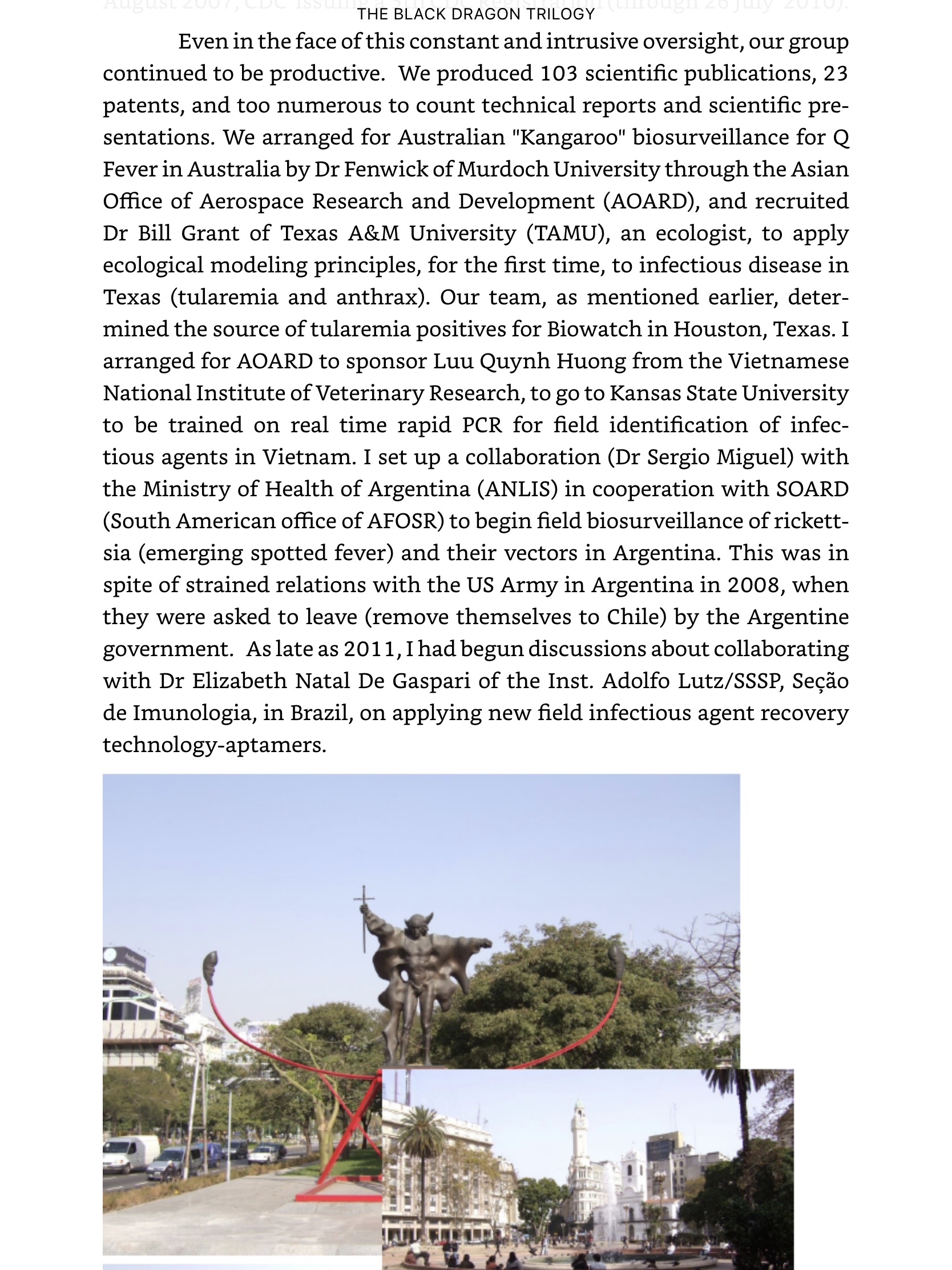
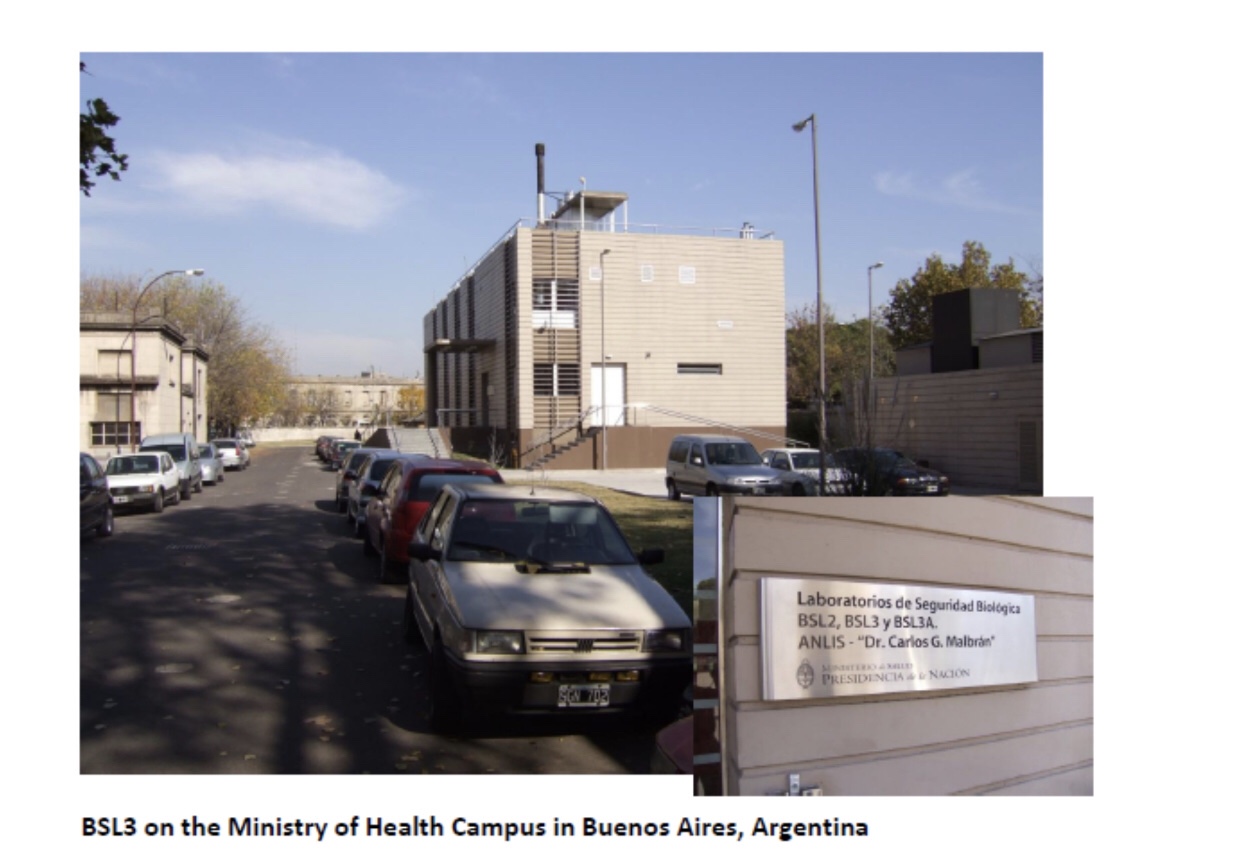
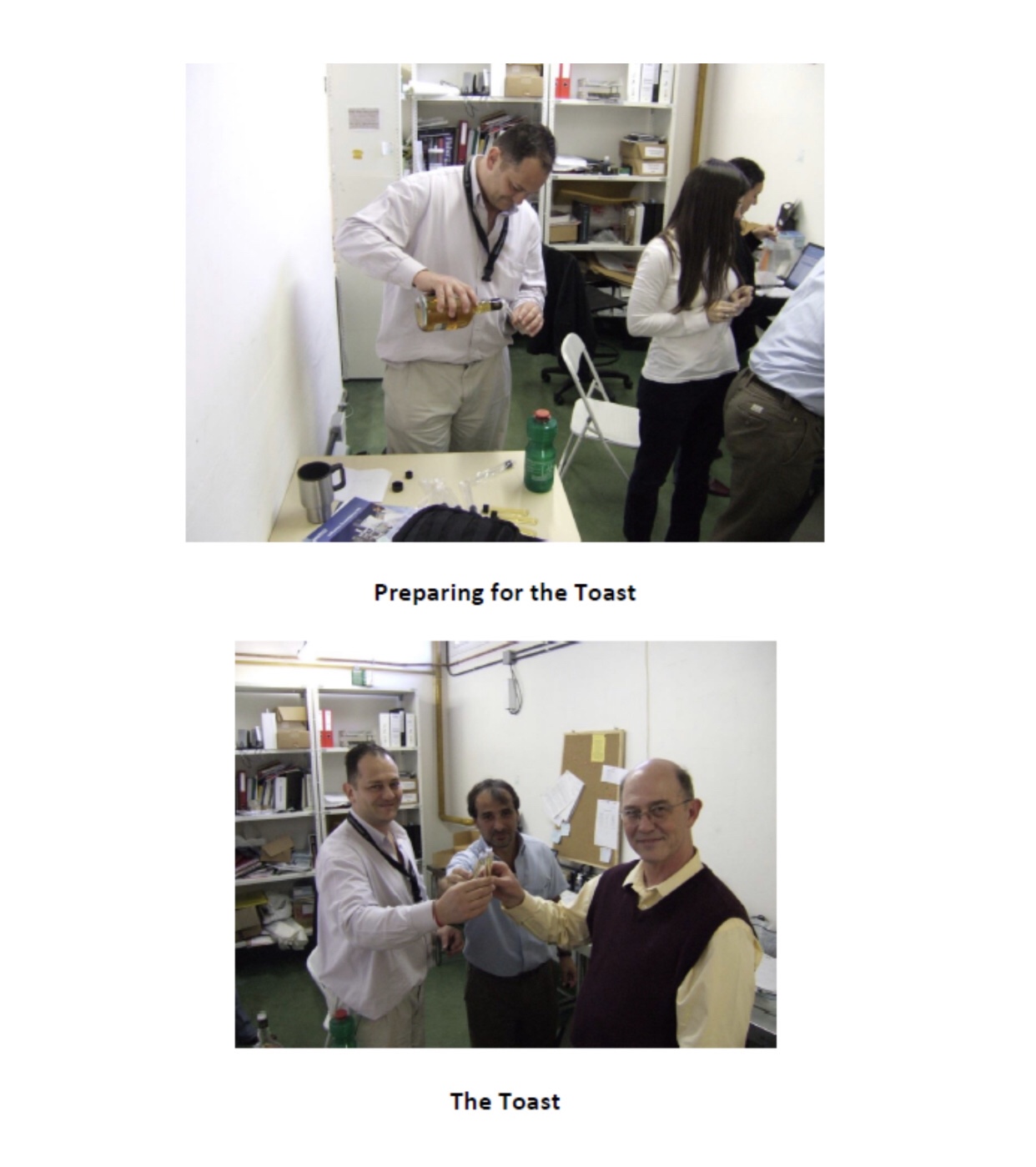
My final guidance written so it may not be forgotten: “These books approach the same place, the convergence, where Pathogenic Ecology intends to be, where nature has maintained these pathogens in sylvatic and wild cycles for millennia awaiting the disturbances which lead to epidemics and pandemics among humankind and their domestic animals.”— The Black Dragon Trilogy by JOHNATHAN KIEL
https://a.co/barCq6l.


 Global Biosurveillance