
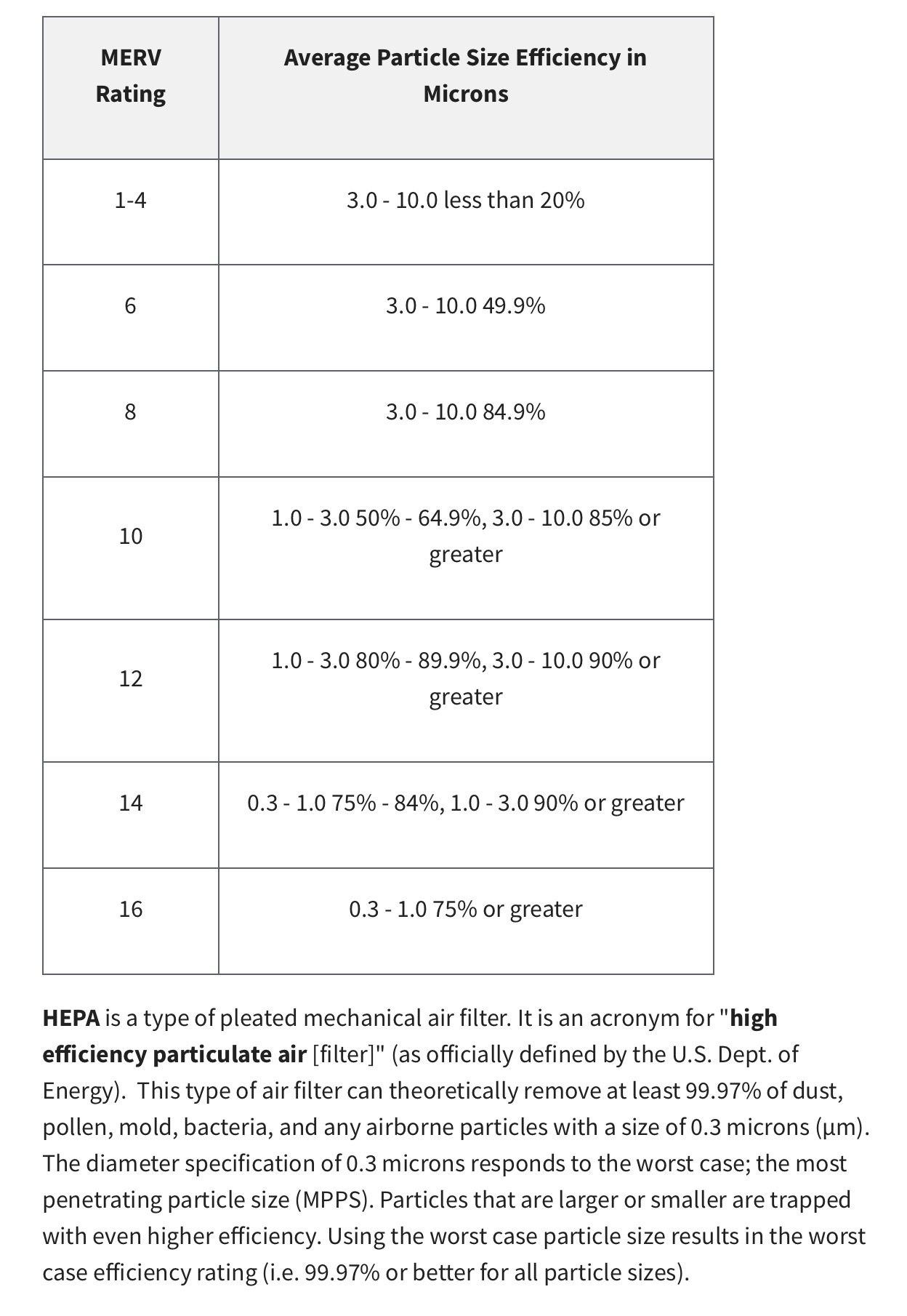
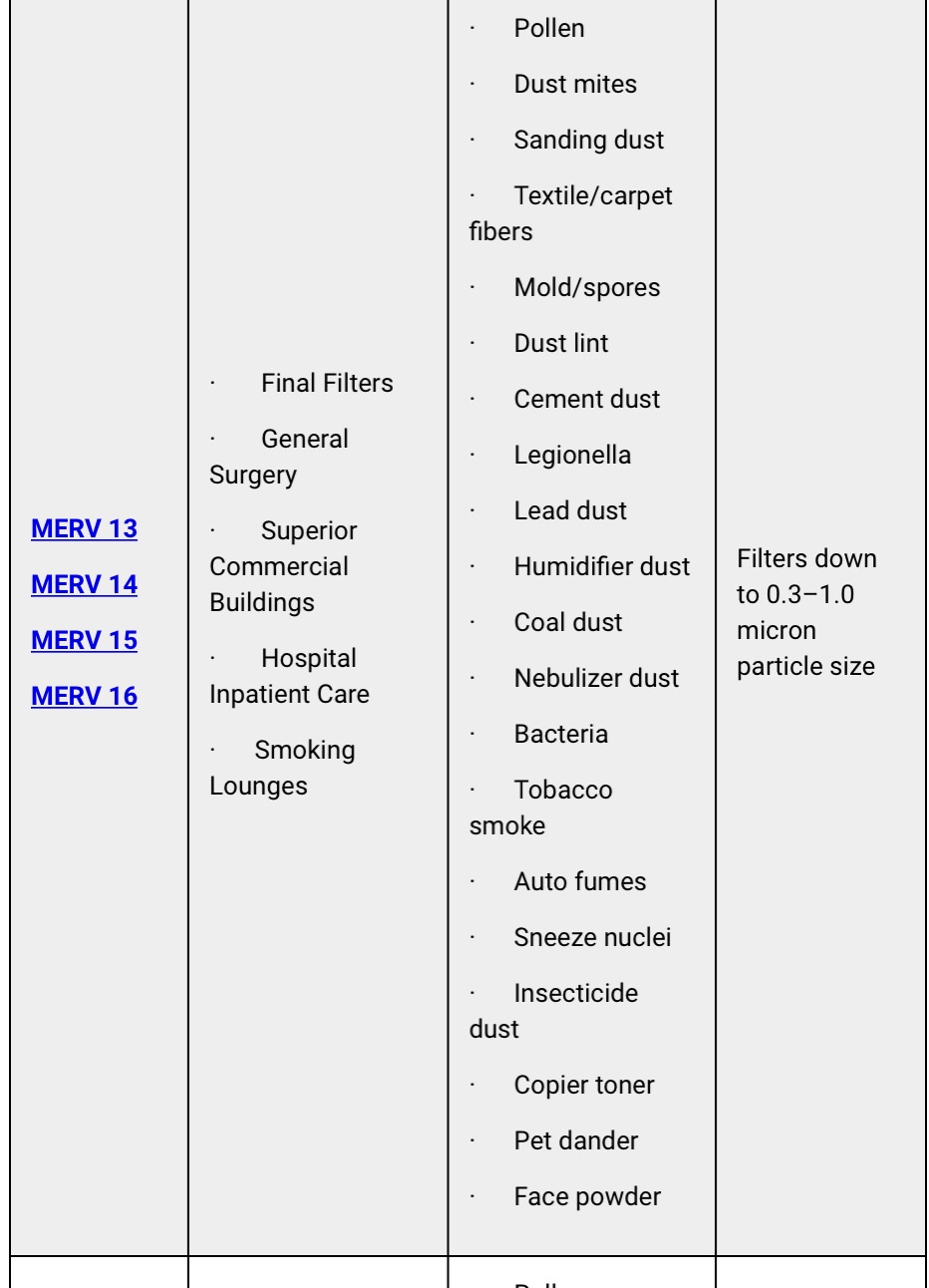
Controlling the spread of SARS-CoV-2 within buildings is tied to air quality, flow, dilution with outside air, filtration, and active decontamination. A recent webinar was held discussing how buildings can be made safer in the presence of SARS-CoV-2: Heating, Ventilation, and Air Conditioning Strategies for COVID-19 by Federal Facilities Council, Wed, October 28, 2020, 1:00-2:30 pm CST. The bottom line was that dilution of internal air with frequent external air intake exchanges is the “gold standard” to reduce levels of indoor infectious virus, but depending on outside air temperature and humidity characteristics, conditioning could prove expensive, especially for old systems in aging buildings. Measures which achieve comparable air quality to dilution were discussed. Filtration is the next best and cost effective, if the proper filter is chosen, installed in the right part of the HVAC system and installed properly so air doesn’t go around it. It effectively reduces numbers of airborne infectious particles which, in turn, reduces the exponential decay effect and increases the efficacy of active decontamination methods. The most cost effective filter is rated MERV 13, as long as it has not achieved this rating by being electrostaticly charged (when the charge is lost as with condensation, the filter rating drops to 6-8). Particles that were of most concern were around 500 nm because, as I discussed in the post on aerosol vs airborne, these are not subject to the described mechanisms of deposition and can enter deep into the respiratory system. The presentation stated these made up 90% of the air suspended particles for up to 41 hours, but did not indicate what portion of original expelled particles these represented (since the range in absolute numbers is indeterminate). Previously reported averages in that post were around 800 nm aerodynamic diameter.
According to the American Society of Heating, Refrigerating and Air-Conditioning Engineers (ASHRAE), this filtration helps provide healthier indoor air quality.
Minimum Efficiency Reporting Values, or MERVs (Minimum Efficiency Reporting Values)
UVC (254 nm wavelength) was considered the most effective active decontamination technology. The presenters stated that UVC should be positioned downstream of the cooling coils, to kill 90 % of the virus and to keep clean condensation pans from Legionella bacteria. UV lamps were also recommended to be placed in ceilings out of eye and skin damage range (radiation drops off 1/re2 with distance from the source). My experience with such lamps is they continue to visibly shine even after they have lost much of their UVC output, and that output is drastically reduced by dust accumulated on the bulbs. Besides the hazard and that not enough UVC for the required dwell time may reach infectious particles to fully inactivate a dose in transit, in spite of controlled optimized laboratory experiments demonstrating high efficacy, they fall short in prolonged field use unless closely monitored and maintained.
Examining UV dose of disinfection in a precise way, the inactivation ratio is determined by the applied UV dose through the disinfecting unit. The UV dose (mJ cm−2) is calculated by the delivered irradiance or fluence rate to microbial cells (mW cm−2) multiplied by the exposure time (s). Therefore, for UV- induced reactions, the most accurate report of the kinetic data is related to UV dose rather than time. If there were no confounding factors, the disinfection of biological agent contaminated air and surfaces with UVC could be straightforward and predictable. The required UV dose for 90% viral inactivation is increased by 1.5−2 times for a surface compared with air due to microscopic aggregation on surfaces. Other surfaces have microscopic irregularities, crevices, and roughness which counter the line of sight killing of the virus or microbe on that surface. A similar shadowing effect in air treatment can be caused by the presence of larger particles and dust in the air stream. In addition, the microbial cells may be attached and agglomerated on dust, which require higher UV doses for inactivation. One study indicated 120 mJ cm−2 of UVC dose is required to reduce the tissue culture infective dose (TCID) from 3.8 × 10e7 to 180 TCID50/mL, which is a more than 99.999% reduction. Based on this observation, SARS-CoV-1 (and most likely SARS-CoV-2) is similar to influenza virus and hepatitis A virus in being eliminated by UV radiation https://pubs.acs.org/doi/pdf/10.1021/acsphotonics.0c01245.
Another active decontamination method discussed at the webinar was Photocatalytic Oxidation (PCO), commercially available hydroxy-free radical generating systems that are 95% effective and “smoke eaters” which destroy VOCs, volatile organic compounds. in general. At Brooks, we tested our own in-lab-manufactured device under field conditions to efficiently destroy biological warfare stimulants.
Since hydroxyls result from water vapor, hydroxyl generation requires significant relative humidity in the air. One such commercial system, HYDRA PRO XL solves the low-humidity problem by generating and transferring water vapor to a direct injection manifold inside the machine which evenly distributes the vapor over UV lamps to maximize hydroxyl production https://www.boie.us/hydra-pro-xl.php.
In addition to this PCO mode, the HYDRA PRO XL’s has three AOP modes which can double to triple hydroxyl free radical production. They are low concentration Hydrogen Peroxide Vapor (HPV), low concentration UV Ozone (O3/UV) and a combination process. In the PCO mode (Safe Mode), the HYDRA PRO XL uses water, UV light and a catalyst, titanium oxide, to safely generate hydroxyl free radicals which remove organics causing odors, kill bacterial spores and pathogens. PCO mode can be used with or without the included water vapor injection system, depending on site conditions. The resulting byproducts are harmless carbon dioxide and water.
PCO hydroxyl generation, originally developed by NASA, is ozone-free and safe to use indoors for continuous operation in unventilated spaces for as long as it takes to remove odors and break down contaminants.
Contaminated air is drawn through an odor-neutralizing pre-filter and a HEPA filter to trap most particulates. Then, the unit uses six germicidal (253-nm UVC) lamps in a 2-layer crosshatch pattern along with 3 layers of nano-catalyst to produce hydroxyl radicals which breakdown volatile organic compounds (VOCs) and other contaminants that pass through the unit’s air flow. The next mode, AOP Mode 1, uses vaporous hydrogen peroxide in a direct injection system instead of pure water. The resulting low-concentration hydrogen peroxide vapor (HPV) breaks down into hydroxyl free radicals when exposed to the unit’s germicidal UV light without requiring the catalyst. To initiate AOP Mode 1, one adds a commercially-available hydrogen peroxide solution to the unit’s direct injection reservoir and runs the Advance in PCO mode. PhotoCatalytic reactions will occur simultaneously. No ozone is generated in Safe Mode, however, HPV levels in the air must be monitored if workers are present. This AOP is the simplest method to generate hydroxyl radicals using UV light: Hydrogen Peroxide / UV Light:
H2O2 + UV —› 2 •OH
To maintain safe air quality they must be tested routinely for ozone production. Ionizing air systems from producing airborne ions to plasma-induced active (singlet) oxygen and monoatomic oxygen species are also effective but also must not produce ozone. Ozone is a poor decontamination component in the output of these systems when compared with hydroxyl radicals, singlet oxygen or monoatomic oxygen or thermal electrons generated at the plasma source.
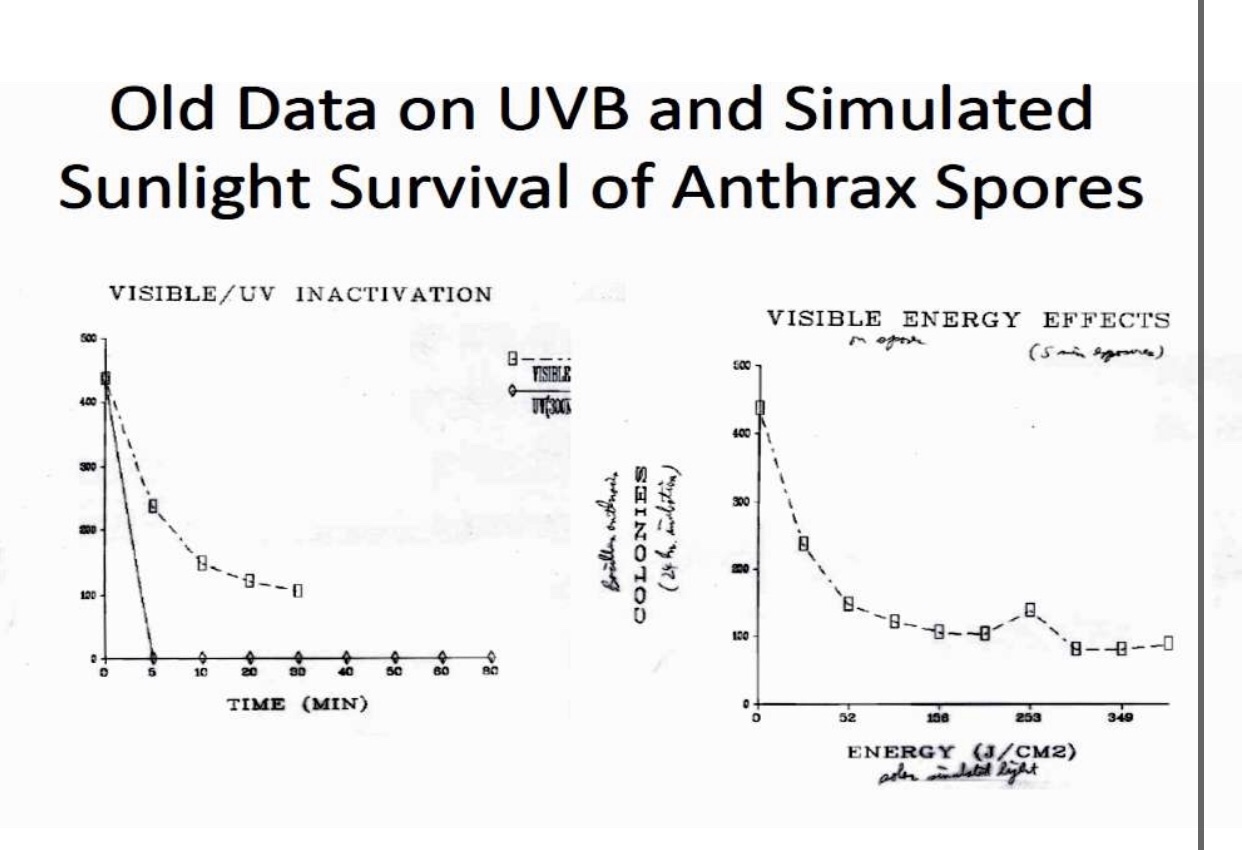
As noted in an earlier post, the initial amount of an infectious agent greatly influences significantly surviving amounts of the agent, regardless of method of active decontamination, based on the conversion of the deactivation of the agent from linear to exponential decay. The following graphs show such a conversion, not with amount of anthrax spores, although this has been seen with large amounts of anthrax spores exposed to ionizing radiation, but with the addition of other wavelengths of light (visible) to the UV exposure. This is not biological repair but chemical passive repair which could occur in viruses or by the viral genome being reassembled from damaged pieces into infectious virus once they enter host cells. The damage by UV or higher energy electromagnetic radiation, like X-rays and gamma radiation, is dependent on unobscured line of sight and intensity, partially dependent on the particulate nature of all electromagnetic radiation, photons. Also, target theory plays a role; the smaller the RNA or DNA genome the more photons, intensity, required to destroy or damage individual viral genomes, to inactivate potential infectious doses in the environment.

In our investigations at Brooks, we discovered some viruses’ ability to reconstruct themselves from broken pieces, albeit from high numbers of original virus, even following UV damage. “The small and simple VEEV (Venezuelan Equine Encephalitis Virus, a previous biological warfare agent) has one more trick which it shares with the plant Tobacco Mosaic Virus; it can resurrect itself from broken pieces. The nsP4 sequence in VEEV is very similar to the replicases of three plant viruses, including Tobacco Mosaic Virus. The Brooks Lab performed a critical experiment using the RetroXpress(TM) system of Clontech derived from a retrovirus which could transfer genes but could not infect and replicate, my group at Brooks constructed a new virus that contained the nsP4 sequence inserted into this platform and expected that the new virus could infect cells but not replicate. It not only infected (transfected) marker genes into the target mammalian cells but also formed plaques of transformed cells (those which resembled cancer cells and formed uninhibited growth mounds of cells). These grew and multiplied in the cell culture. A new complete infectious virus had formed. How? Tobacco Mosaic Virus has been shown to repair and reactivate after exposure to UV with the help of an unknown plant nucleic acid repair system. Since we inserted only the nsP4 protein into the host cells co-infected with the defective retrovirus, we proposed that the new virus used cellular RNA dependent RNA polymerase in conjunction with the expressed nsP4 to form a repair complex which constructed a chimera virus from the retroviral pieces and other unknown viral nucleic acid components inherently present. Perhaps, the infections by killed virus from killed vaccines previously reported were not just because of contamination with whole live virus but with components which survived the formalin damage and were reassembled into whole restored infectious virus, albeit at a less effective infectious dose of original broken pieces. Intact VEEV will produce a transmissible infection with as little as 12 PFU (plaque forming units equivalent to 10 virions for a multiplicity of infection of 1 but more likely 10X10 = 100 virions). I have speculated that these broken viruses, if reconstituted from broken virions or free RNA would require 10e6 units to make one intact virion.”
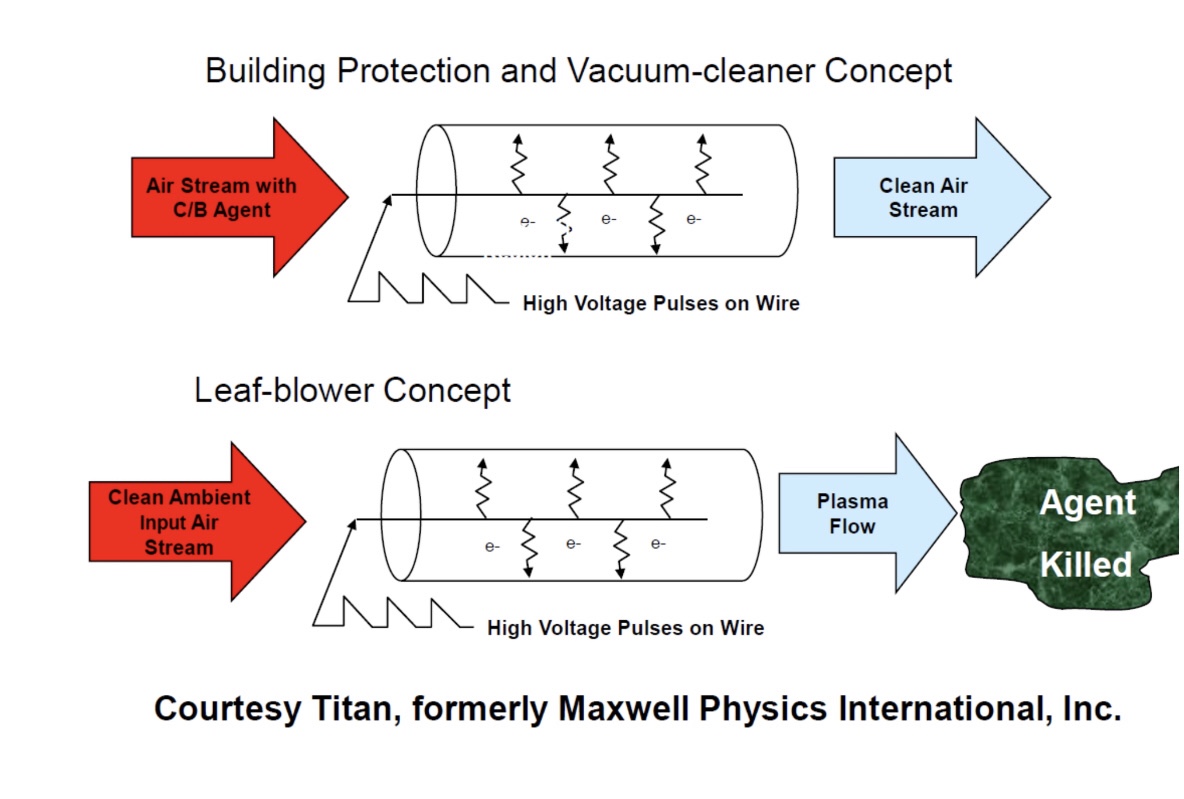
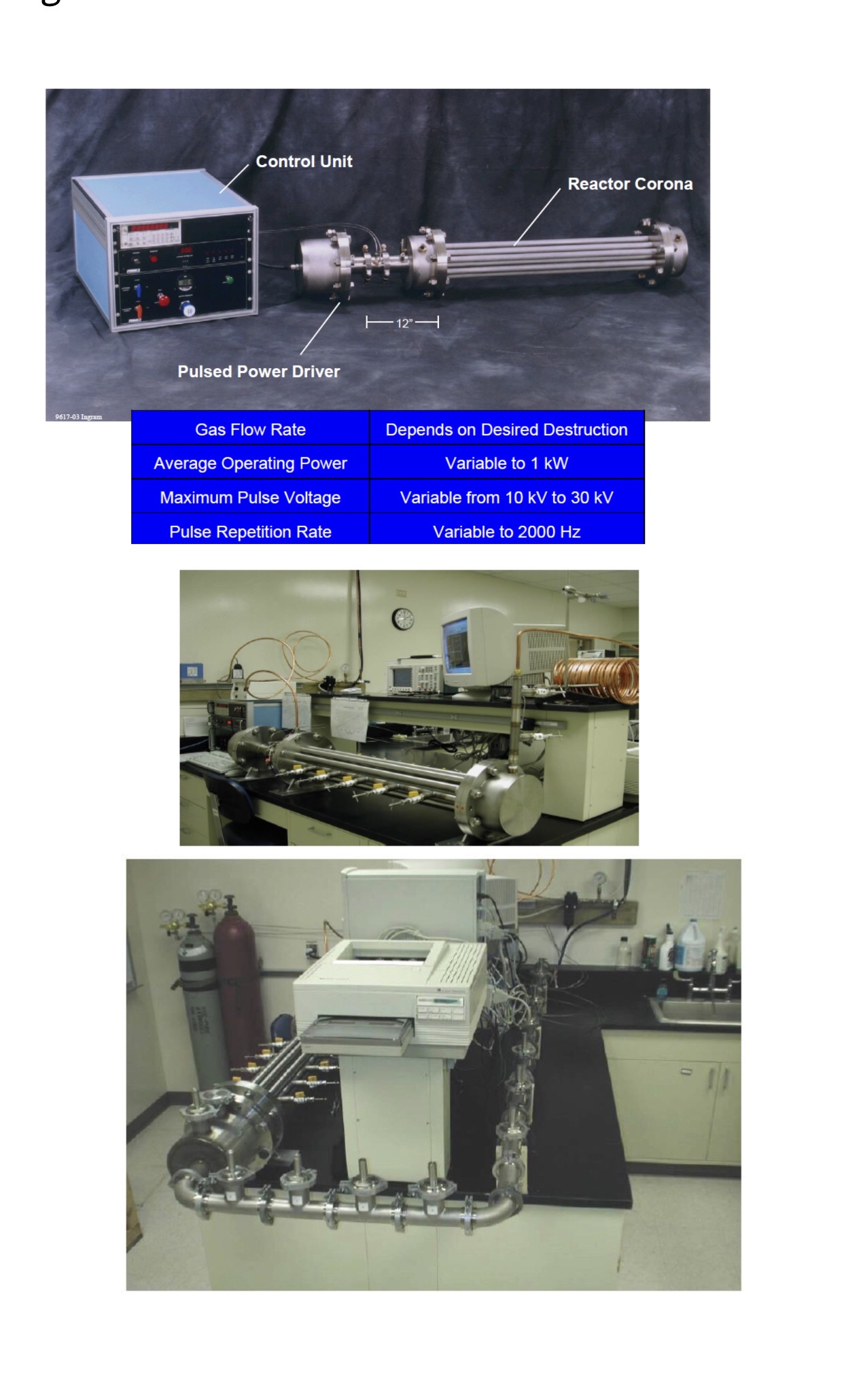
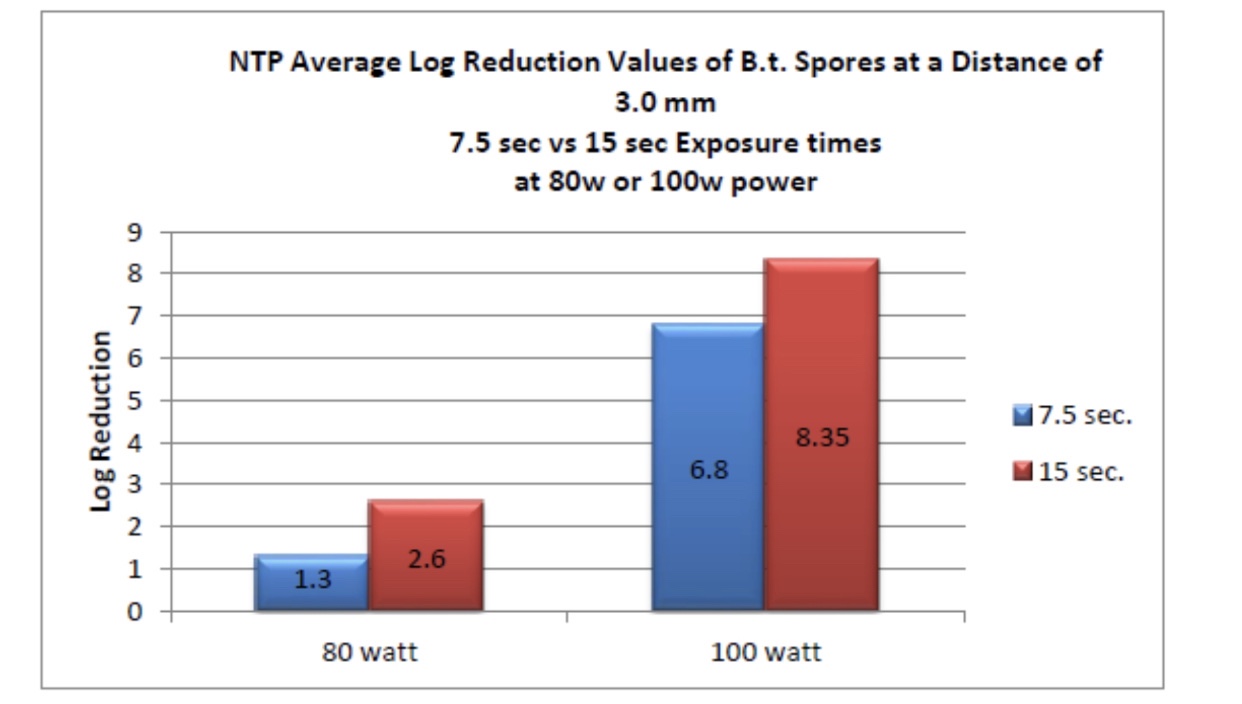
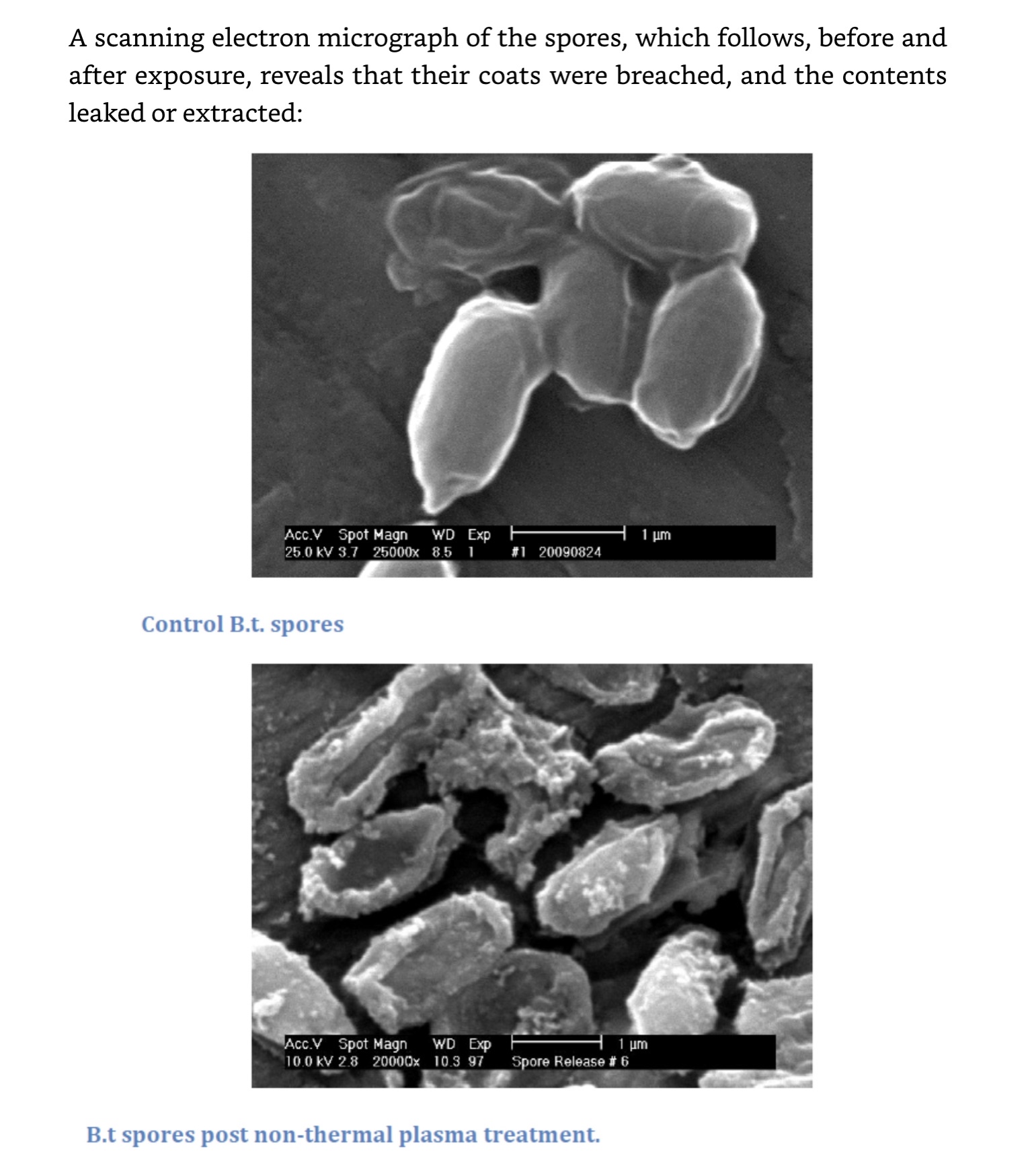
As discussed in an earlier post, cold plasma devices, which generate active oxygen species from air, require no additional chemicals only energy, but at present, are not as developed for commercial use (Sloan, M.A., Vivekananda, J., Holwitt, E.A., and Kiel J.L. U.S. Patent 7,892,484. Methods and Compositions for Neutralizing Anthrax and Other Bioagents, 22 Feb 2011).Water vapor or humidity does favor plasma gas production from the nanoparticle/pulsed microwave version. The humidity levels, which favor PCO and certain cold plasma generation, have also been shown to shorten the environmental life of SARS-CoV-2 , alone, (40-60% relative humidity), but humidifying a building holds its own unique set of problems—big challenges are the condensation problem, thermal breaks and vapor barrier.


 Global Biosurveillance