
We are motivated by our emotions, sometimes logic and unfortunately, many times, by our economic desire to accumulate objects, wealth, to guarantee our and our family’s security and future. We do not see that the resources of the Earth are finite, and that continued unlimited growth is unsustainable. To promulgate this illusion for some means others (humans, animals, and plants) must surrender resources to the point they suffer harm, often irreparable and for generations.
But does this belief in our privilege as a superior species really relieve our consciences or relieve us from the responsibility for or consequences of global domination and exploitation? Wildlife populations have plunged by 68% between 1970 and 2016, and only 25% of the planet can still be considered ‘wilderness’ according to the World Wildlife Fund and the Zoological Society of London. There are 8.7 million multicellular species on Earth, 6.5 million on land and 2.2 million in the oceans. Broken down into multicellular groups:
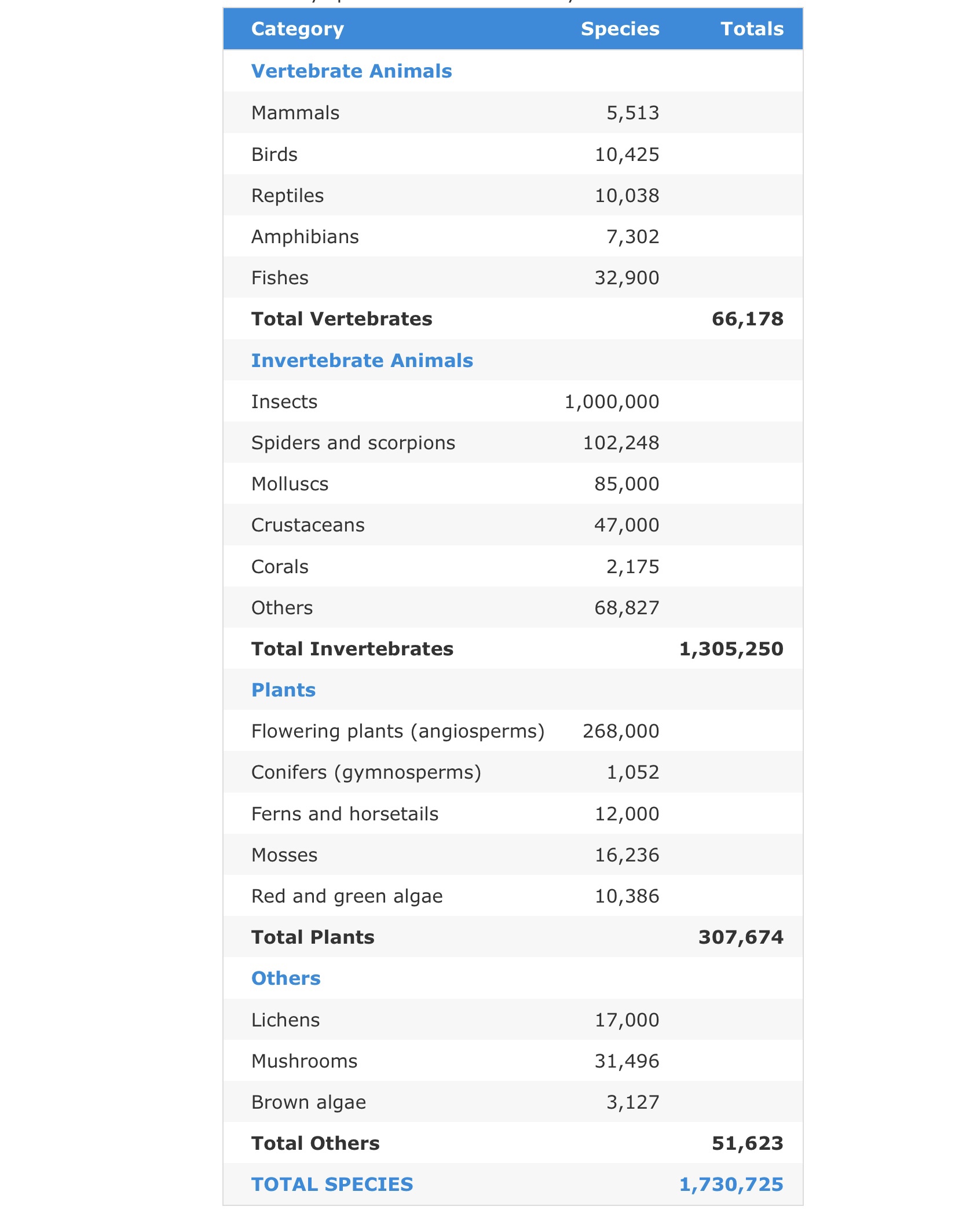
Reference
The World Conservation Union. 2014. IUCN Red List of Threatened Species 2014.3. Summary Statistics for Globally Threatened Species. Table 1: Numbers of threatened species by major groups of organisms (1996-2014).
Our current nemesis, SARS-CoV-2, and its brethren viruses, which may or may not be considered living things, are in numbers that are multiples of the above for every species, even bacteria, Archea, and some giant viruses, which have them. To represent all species on Earth, we would need a “Noah’s Ark” representing approximately 2 × 10(exp)12 tonnes (1 tonne = 1 metric ton = 1000 kg) of biomass of approximately 5 × 10(exp)30 living cells.
All these species are in danger, including human beings. We are entering the 6th mass extinction, this time caused by humans. This would not be the first time humans have faced near extinction.
“It began greater than 160,000 to 135,000 years ago from South Africa and then spread up along the east coast of Africa to the Horn of Africa and then both east and west. The westerly route took it to the Congo River Basin where it spread to the West Coast of Africa and to the talapoin monkeys, the most probable origin of modern VPV (Viper Plague Virus) through rock python predation and tick spread to the smaller ball pythons of West Africa and then to the Vipers co-mingled with them and their tick vectors in the pet trade shipments to Florida (where the modern descendant of this virus was discovered in the early 2000’s). The Easterly route to North and South America took much longer and almost wiped out the human population traveling east. They followed the mid-eastern route to the coast of India to Southeast Asia into Indonesia. The Mount Toba Volcanic Eruption in Indonesia might have wiped out much of the animal and human life west of it and spared those to the east in Indonesia, but in 2013 the idea was refuted by research which found that the artifacts found in India came from much earlier pre-modern homins which migrated out of Africa, the Neanderthals and the Denisovans, and that even they survived the volcanic fall out. It is possible that they passed the virus to modern humans in Indonesia long after they brought it from Africa. Evidence for this hypothesis is supported by the facts that between 4% and 6% of the genome of Melanesians (Papua New Guinean and Bougainville Islanders) is derived from a Denisovan population. This DNA was most likely introduced during the early migration to Melanesia. These findings agree with the results of other tests which show a relative increase in genetic sharing between the Denisovan and the Aboriginal Australians when compared to other Eurasians and Africans. Nonetheless, the Papuans of Papua New Guinea have more Denisovan DNA than Aboriginal Australians. It appears pre-human or successor modern humans, infected with the virus and passing it vertically to their offspring, slowly crossed back to the Asia mainland and spread up the east coast of China to the Arctic and crossed the Bering Land Bridge from 45,000 to 12,500 years ago. The rattlesnakes, which are contemporary with modern humans, were probably infected by biting humans, eating rodents who obtained the virus from humans, or through human tick parasites they carried with them during the migration. Evidence for this retrograde movement of the paleovirus out of Indonesia back to the Asian mainland and India can be found in the snakes of the regions.”—The Black Dragon Trilogy,
https://a.co/a4UWw0x.
The five extinctions before were: Ordovician-silurian Extinction: 440 million years ago, small marine organisms died out; Devonian Extinction: 365 million years ago, many tropical marine species went extinct; Permian-triassic Extinction: 250 million years ago, largest mass extinction event in Earth’s history affected a range of species, including many vertebrates, by end of Permian, 251 million years ago, 96% of species lost, “the great dying”; Triassic-jurassic Extinction: 210 million years ago, extinction of other land vertebrate species allowed dinosaurs to flourish; Cretaceous-tertiary Extinction: 65 Million Years Ago, end of dinosaurs other than birds, allowing mammals to flourish.
Biodiversity and wild places provide the buffer and sources of control and balance that prevent and control emerging infectious disease. Three examples of how human influence yield biological toxic and infectious diseases, beyond the COVID-19 pandemic, are as follows. This summer the California Waterfowl Association, has reported the worst avian botulism outbreak in recent history at the Klamath Basin National Wildlife Refuge Complex. Thousands of acres of wetland and marsh, usually rich and verdant havens for millions of migrating waterfowl and shorebirds, have become a wasteland of dried-up mud ponds strewn with dead ducks, geese, and other water fowl, victims of avian botulism, caused by toxin-producing bacteria, a disease which tends to affect wetlands lacking flowing water which is cool, clean, and aerated. Thanks to drought and limited water, a direct result of extraordinary temperatures and climate change, these bad conditions are exactly what have developed this summer in the refuge. The only good news, working in the makeshift field hospitals of PVC-framed tents and shallow swimming pools for the birds, at least 90 percent of the collected living birds were rehabilitated and returned to the wild in botulism-free parts of the refuge. However, field surveyors have collected about 20,000 dead birds, and they guess at least twice as many may have perished.
Even good intentions of human intervention in wild places may amplify an infectious disease problem. At a meeting on Rickettsia and Rickettsial Diseases, Marseille, France, in May 2008, a paper was presented describing how the Brazilian government decided to kill off a large portion of the giant rodent Capybara population, a reservoir for spotted fever, which kills up to 30% of people infected if untreated. When they did this, ticks in the area carrying spotted fever bacteria actually increased. They found out, like all rodent populations, killing off adults increases reproduction of those that remain, decreasing immunity to spotted fever because of more young naive individuals, in turn, infecting more ticks with higher doses of bacteria.
Going back even further, yet not as long ago as one might expect, are human influences on emergence of epidemics of plague. “Although the recurrence and extent of plague epidemics in Europe, and eventually the Americas, continued to decline and become less extensive, China, the origin of plague (also, alternatively, to China, or elsewhere, from near Lake Issyk Kul in Kyrgyzstan in 1338–1339) continued to have large outbreaks of plague killing at least 10 million people between 1855 and 1959. How could this have happened in such contrast to Europe and elsewhere? A recent study in 2014 published in the Proceedings of the Royal Society B, based on very thorough historical records from China, which allowed the investigators to reconstruct the plague’s transmission routes across China during this period, indicates the “cause” was socioeconomic. They concluded that plague spread along established transportation routes, major roads, rivers, and coastlines, and moved with the greatest speed along these routes. Weather also played a role. Heavy rains and flooding increased the movement and infectious rate to and in new areas. It is reasonable to assume the floods forced people and their social parasites, rodents to transport the plague carrying fleas and infected individuals to new locales.” The Black Dragon Trilogy by JOHNATHAN KIEL
https://a.co/cxSzMtY.
Plague outbreaks are still a yearly occurrence in the Island of Madagascar due to its severe ongoing ecological damage. The plague is mostly endemic in Congo, Peru and Madagascar; the latter saw a large outbreak in 2017 with more than 2300 cases and 202 deaths, according to WHO. In 2017, Madagascar experienced two concurrent outbreaks of plague: a
flea-transmitted bubonic plague outbreak that spread beyond the usual endemic rural areas into new rural, as well as urban, areas; and a second highly-contagious human to human transmitted pneumonic plague outbreak which spread rapidly predominantly in three main urban areas of the country.
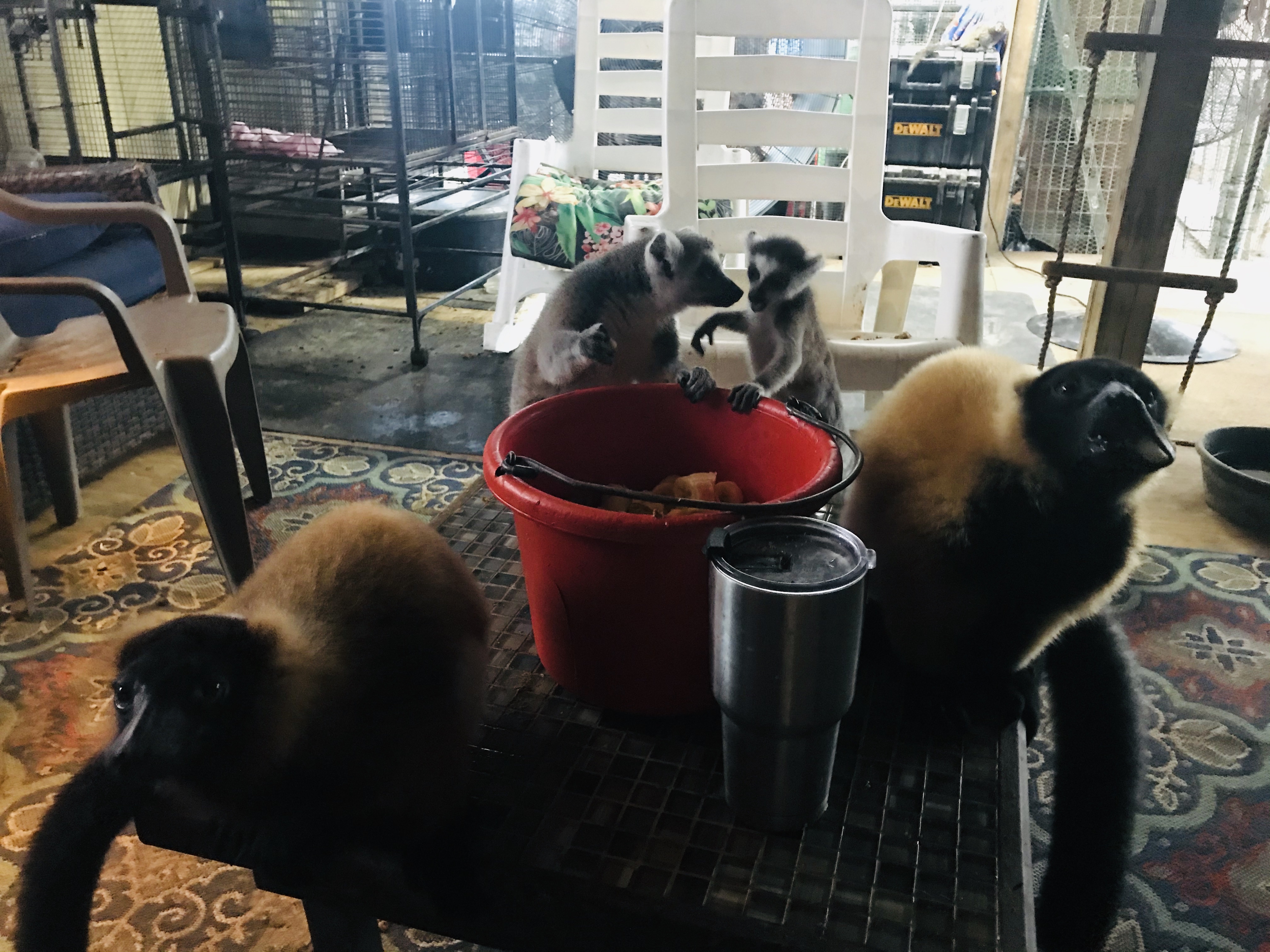
Human influence on the environment is like playing a child’s game of pick up sticks, pulling out the “wrong sticks” leads to collapse of a system, releasing a catastrophic chain of events, famine and even war, including epidemics and pandemics. Environmental quality decline, including climate change, and destruction of wild places, predominantly for agriculture to feed populations in sensitive areas, using poor and clear cutting methods expanding search for more farm land, following loss of arable land to drought and nutrient exhaustion, is leading to the sixth mass extinction, aided by the release of pandemic disease. As climate change increases drought and global warming, desertification increases, causing human and animal migrations, spreading disease, disease vectors and wild place destruction. We can aid this or learn to mitigate its progression or, if we fail, face another mass extinction which will replace us with a new dominant species.

 Global Biosurveillance