
www.atcc.org/~/ps/CRL-12510.ashx
Thanks to the contribution and sacrifice made by Henrietta Lacks, a Black America Woman, and her family, on the behalf of medical science and the American people. Henrietta was unaware she was the source of these cells from a cervical carcinoma biopsied during her treatment at John Hopkins Hospital in Baltimore, Maryland, in 1951. The cells were then grown by George Otto Gey, isolating the cell line known as HeLa, the most useful cell line for biomedical research and precursor of the genetically engineered HeLa NR1.
HeLa NR1 ATCC® CRL-13011™ is the only human cell that constitutively produces Nanobes. It is handled at Biosafety Level 2 because the cell line contains papova and SV40 viral DNA sequences. Biosafety Level 2 Cell Cultures are handled as a potentially biohazardous material under at least Biosafety Level 2 containment. These cell lines are associated with human disease, hazards include: percutaneous injury, ingestion, mucous membrane exposure (U.S. Government Publication Biosafety in Microbiological and Biomedical Laboratories). These cells have NOT been screened for Hepatitis B, human immunodeficiency viruses or other adventitious agents, unless otherwise reported on the Certificate of Analysis. Regardless of results reported on the Certificate of Analysis Universal Precautions according to 29 CFR 1910.1030 should be followed at all times when manipulating these cell lines. Biosafety classification is based on U.S. Public Health Service Guidelines, it is the responsibility of the customer to ensure that their facilities comply with biosafety regulations for their own country. Customers located in the state of Hawaii need to contact the Hawaii Department of Agriculture to determine if an Import Permit is required. A copy of the permit or documentation that a permit is not required must be sent to ATCC in advance of shipment.
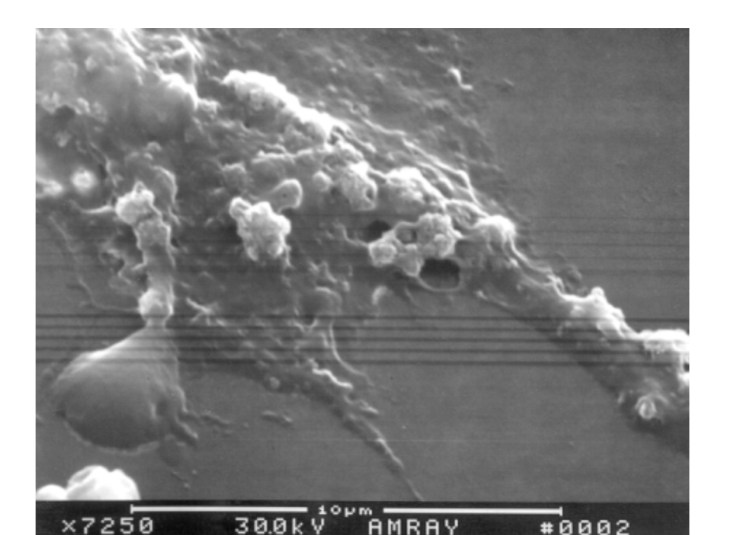
The following is a scanning electron micrograph of a HeLa NR1 cell producing biosynthetic DALM nanoparticles (clusters of white nanoparticles being exuded). The cells’ ability to horizontally transfer genetic material through these Nanobes has never been measured. The added capability, if it exists, may have therapeutic research value or be an additional hazard in handling this cell line. The Brooks Counterproliferation Team never got a chance to investigate these possibilities because they were disbanded with the closure of the Brooks AFRL facility.

 Global Biosurveillance