
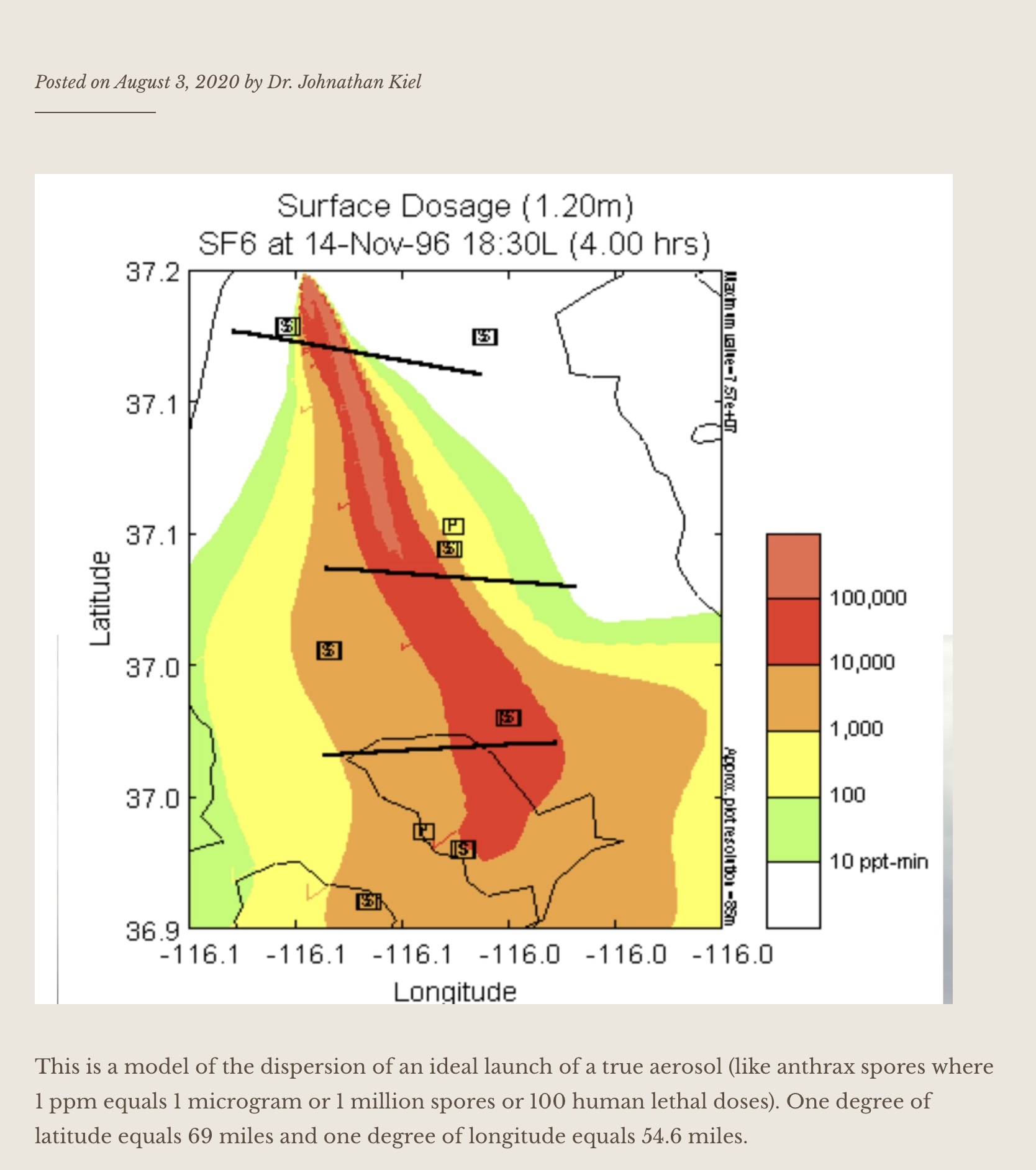
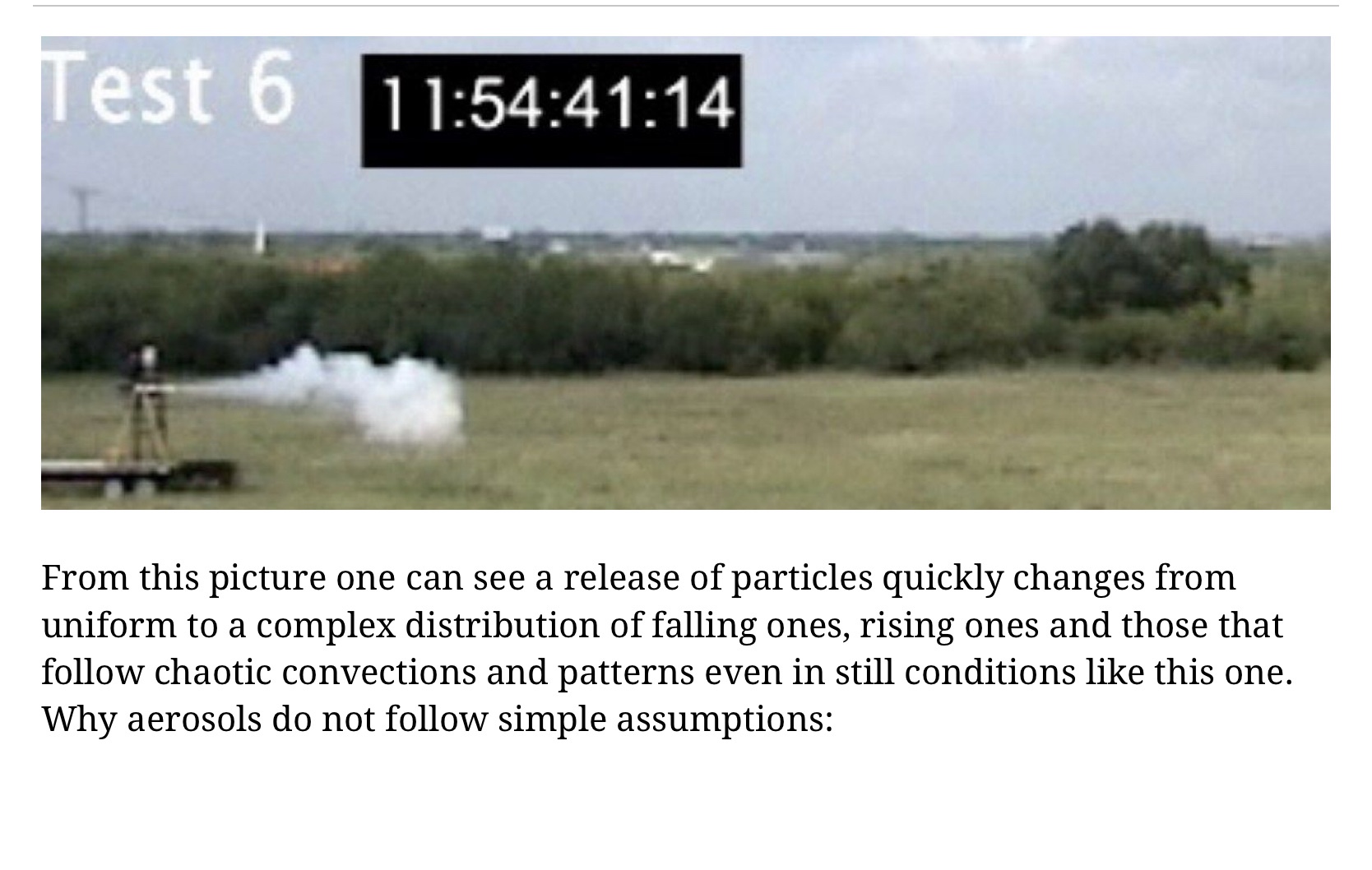
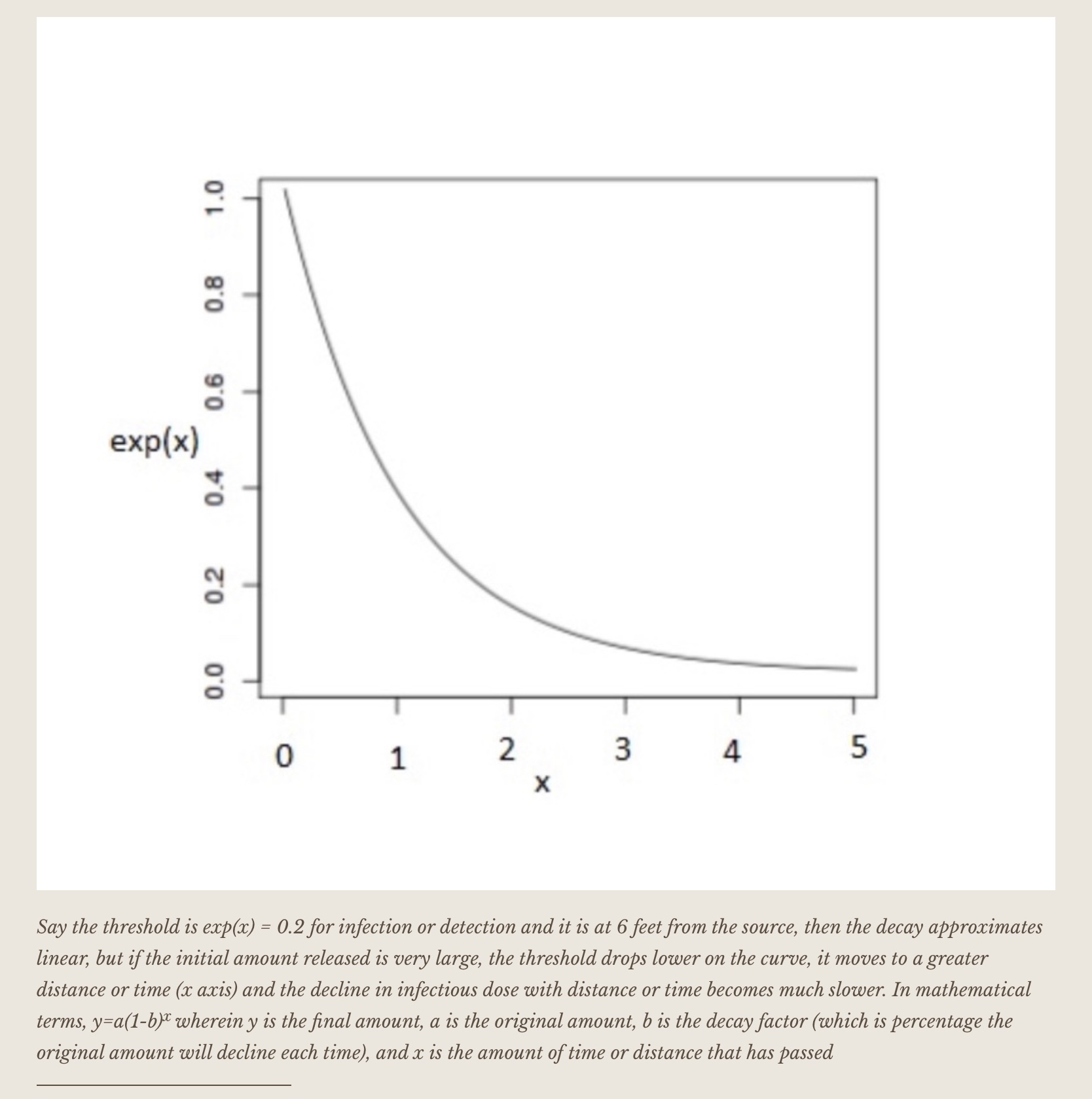
There have been some very heated discussions over whether SARS-CoV-2 is transmitted by aerosol or not and the equivocation of aerosol with airborne. The most offensive scientific one came from an aerosol scientist who used half an argument and argument from analogy (a no no in argumentation) (https://click.mail.medscape.com/?qs=0c71473589954dc3ec114d76d9de44435cfb8a0efd1e184b71f0af4095b99c4a2a10e1c0a7adb945e7ee568544f8ca712c1a3d36124dd01f) to bad mouth medical experts’conclusions which were based on clinical observations and data (Klompas M, Baker MA, Rhee C. Airborne Transmission of SARS-CoV-2: Theoretical Considerations and Available Evidence. JAMA. Published online July 13, 2020. doi:10.1001/jama.2020.12458). I will address concerns from the viewpoint of a counterproliferation scientist who worked with weapon experts, engineers, aerosol physicists, mathematical modelers, microbiologists, and laboratory and full scale tests of aerosolized biological warfare surrogates to determine how they could spread and their effects be mitigated and method of destruction prevent collateral release and biological contamination. The argument given in the Medscape article is based on mass alone and by analogy extended to pollen. The 1834 argument cited does not take into account electrical charge or convection and buoyancy (fluid displacement based on density, why a feather floats and a dense particle of the same mass falls), and Bernoulli’s principle (Hydrodynamica in 1738), that pressure decreases when the flow speed increases, causing lift of various shapes. Also he doesn’t take into account that as particles approach the nano-size (like a virus) their properties change and mass is no longer a key determinant. Studies have shown that particles stay aloft best between 300 nanometers and 1 micron in size. A minimum particle size of 500 nm is the size for which none of the main mechanisms of deposition are effective. A recent study shows aerodynamic diameters of particles expelled when speaking, singing, or coughing are in bimodal overlapping distributions with peaks at a little over 600 nm and 1.1 microns, approximately, respectively, or 800 nm compositely https://chemrxiv.org/articles/preprint/Comparing_the_Respirable_Aerosol_Concentrations_and_Particle_Size_Distributions_Generated_by_Singing_Speaking_and_Breathing/12789221. For particles larger, deposition increases with increasing particle size because of increased gravitational and inertial transport, while for particles smaller, deposition increases with decreasing particle size because of increased diffusive transport. The deepest penetration of the lungs is with 1-2 micron particles. The 5 micron deposits mostly in the upper respiratory tract and much less in the intermediate branches but receptors for CoV are in these regions. Anything less than 300 nm and more than 1 micron deposit rapidly in the environment. The best aerosols generated artificially or naturally fall between 1-10 microns with the mode at 3.5 and average size around 5 microns. Any biological can be artificially aersolized; even remain biologically active for a given time if packed in the right protein liquid matrix, but some die with drying and others, such aerosols, shrink below the optimal lofting range with evaporation or become sticky to surfaces on increasing charge. Real aerosol transmission rather than just airborne transmission (more general) is seen with Q Fever, Foot and Mouth Disease virus in cattle, and anthrax spores; it is for miles not just feet. The graphic shows an ideal aerosol release model and the picture, the complexity of a surrogate actual release, showing convection, mass and turbulence effects very soon after release. The exponential decay graphic illustrates that distance a significant dose of virus can travel is tied to the initial amount released.

 Global Biosurveillance