
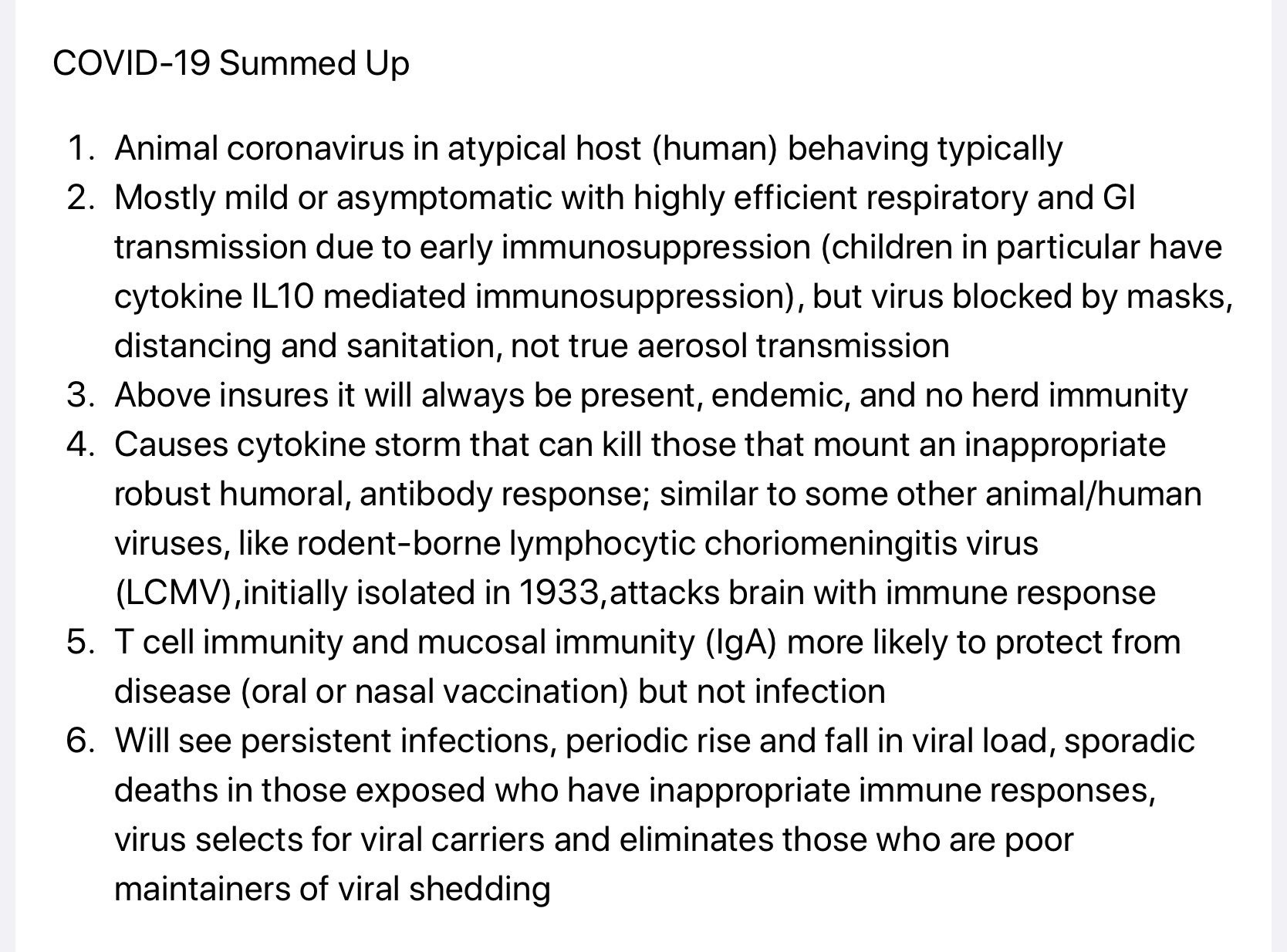
It may seem an obvious statement that SARS-CoV-2 is an animal coronavirus behaving like an animal coronavirus in an atypical host, humans, but it has meaning beyond the obvious. First, it is not seasonal nor does it just cause a cold-like syndrome like other human coronaviruses (other than SARS-1 or MERS). It also infects the respiratory tract and the gastrointestinal tract and virus is shed from both. It infects the olfactory epithelium but not the nerves providing a privileged sequestered site to avoid the immune system as well as other such privileged sites in the GI tract. Humoral IgG immunity is less effective or durable and some subtypes of IgG enhance damaging or even fatal cytokine storms, although as many as 80% of an infected population is asymptomatic or has mild symptoms but can still shed infectious doses of virus. Some of these and more severe case survivors become sustained carriers. The average percentage infected in many populations is between 6-10%; meaning natural herd immunity is unlikely. This reflects infection prevalence in bat colonies of related coronaviruses. Therefore, it has a high efficiency of transmission but limited distance of environmental transmission unless in very close, high density populations—why masks, distancing and good hygiene work against the spread but why these traits assure long term natural sustainment in a population, an evolutionary advantage to stay around and not burn out. Also, oral or nasal vaccines which initiate mucosal immunity (IgA) and/or T cell immunity (which is sustainable against SARS-CoV-2) are most likely to work, maybe preventing disease but not asymptotic or mild infection. Since IgA immunity is linked to the microbiome, probiotics may help here. These characteristics are shared by other coronaviruses in dogs, cats, and cattle.

 Global Biosurveillance